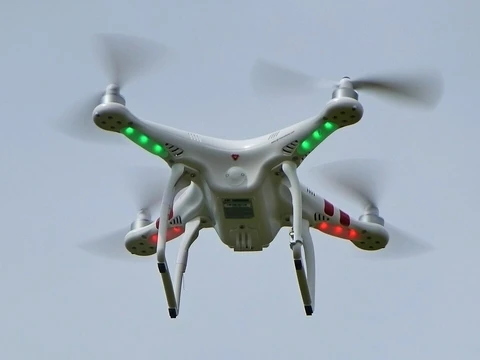
DJI Neo
A lightweight vlogging quadcopter exempt from US registration.

Liuxingy · CC BY-SA 4.0
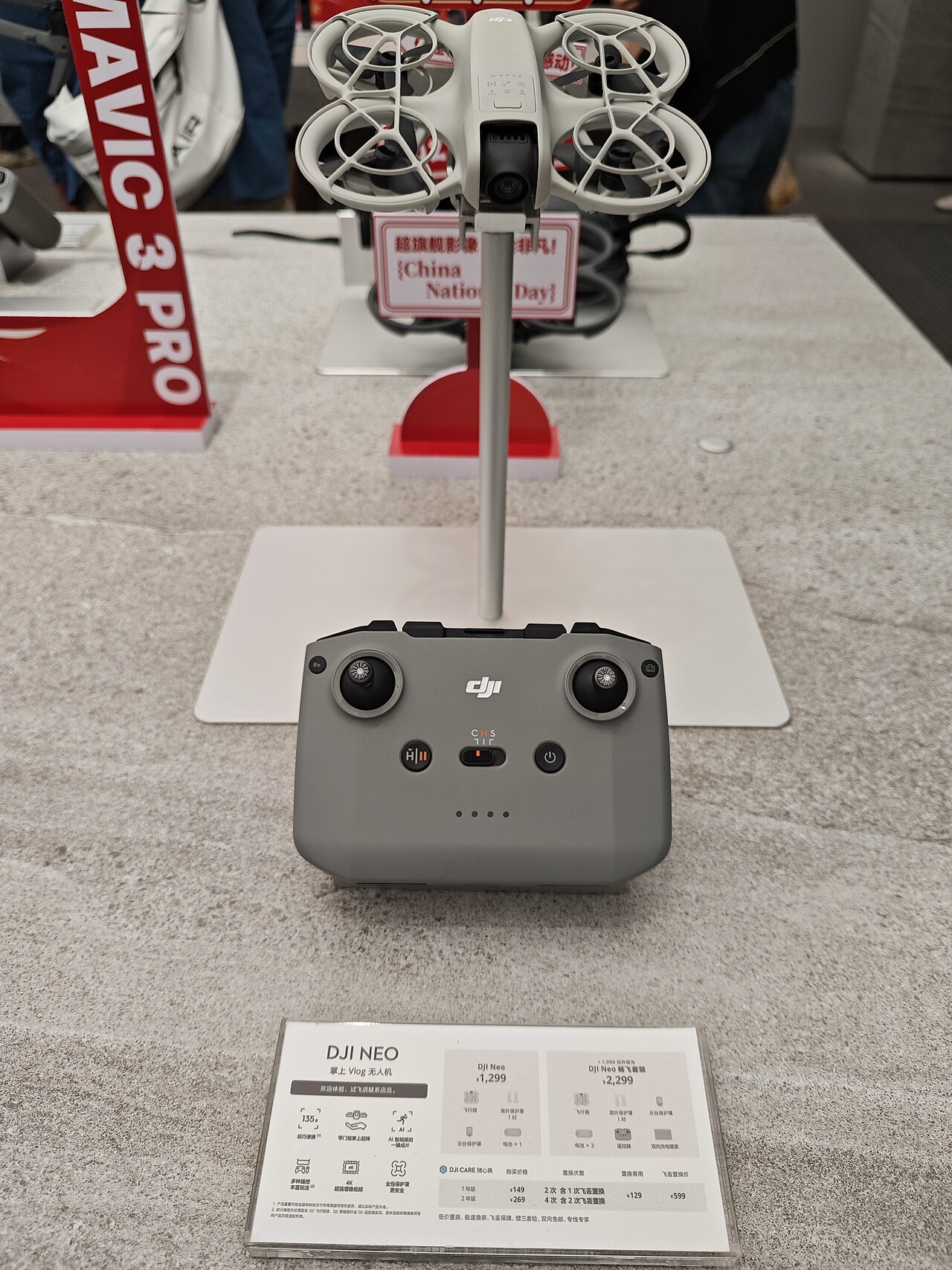
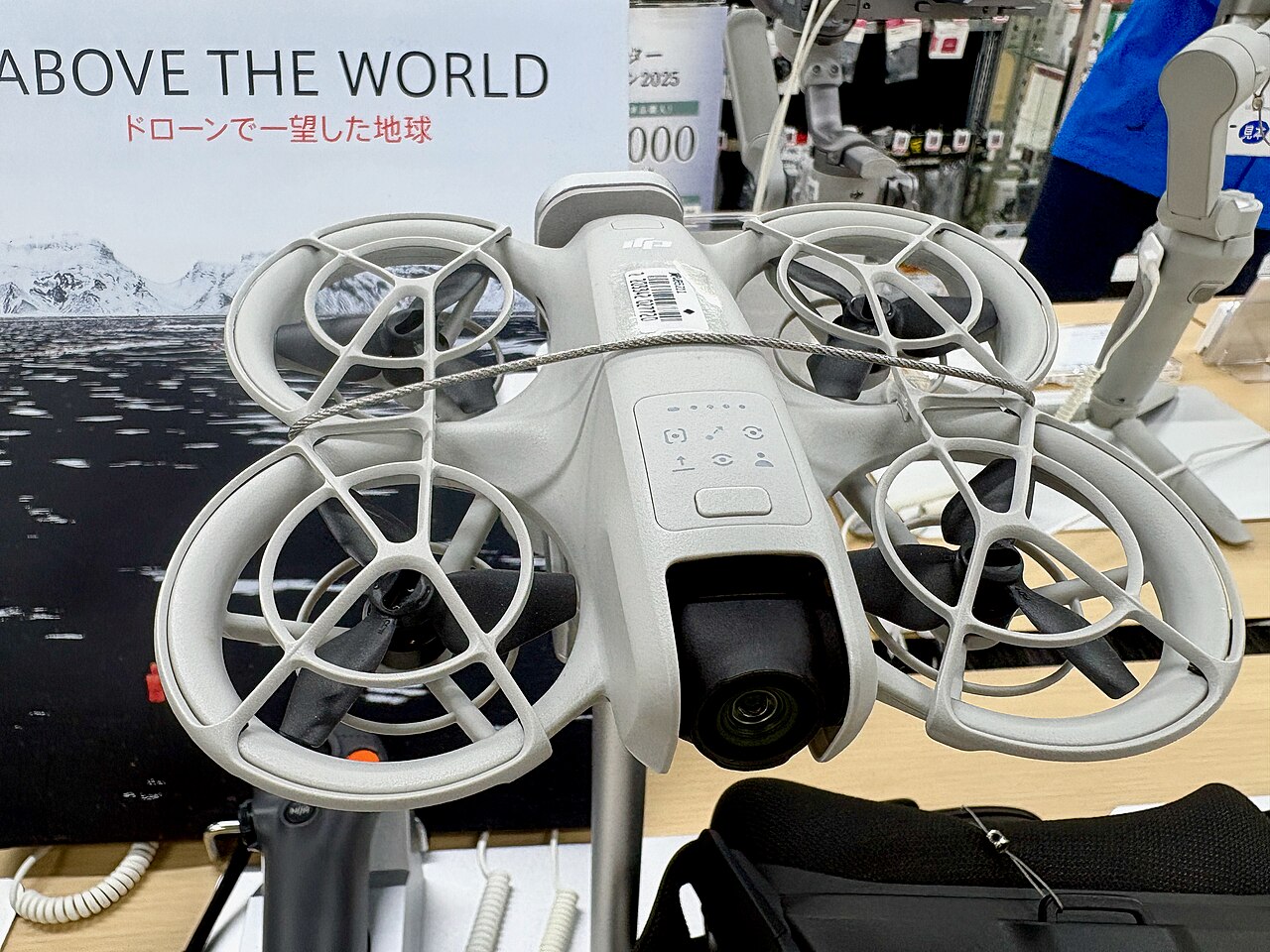
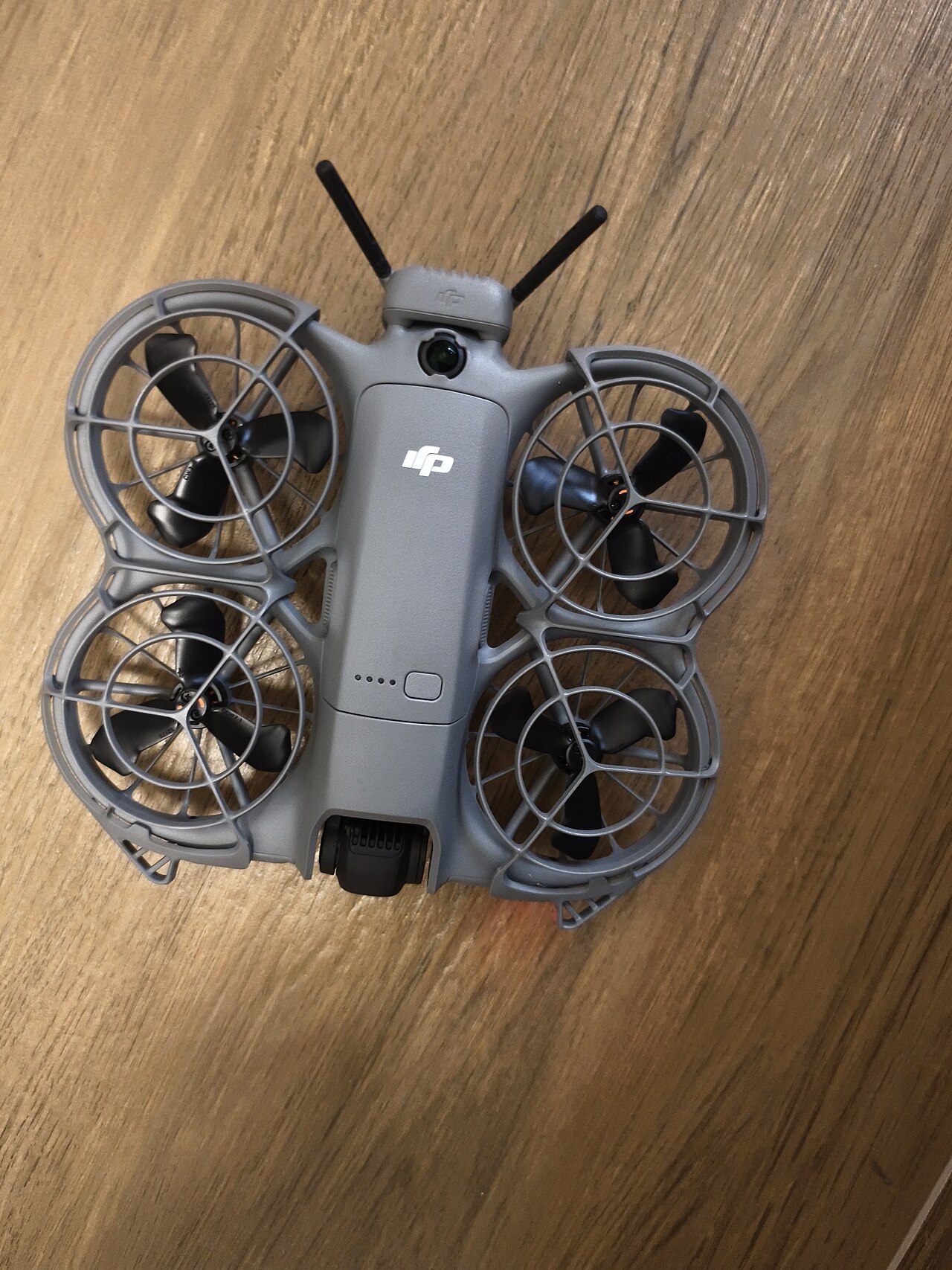
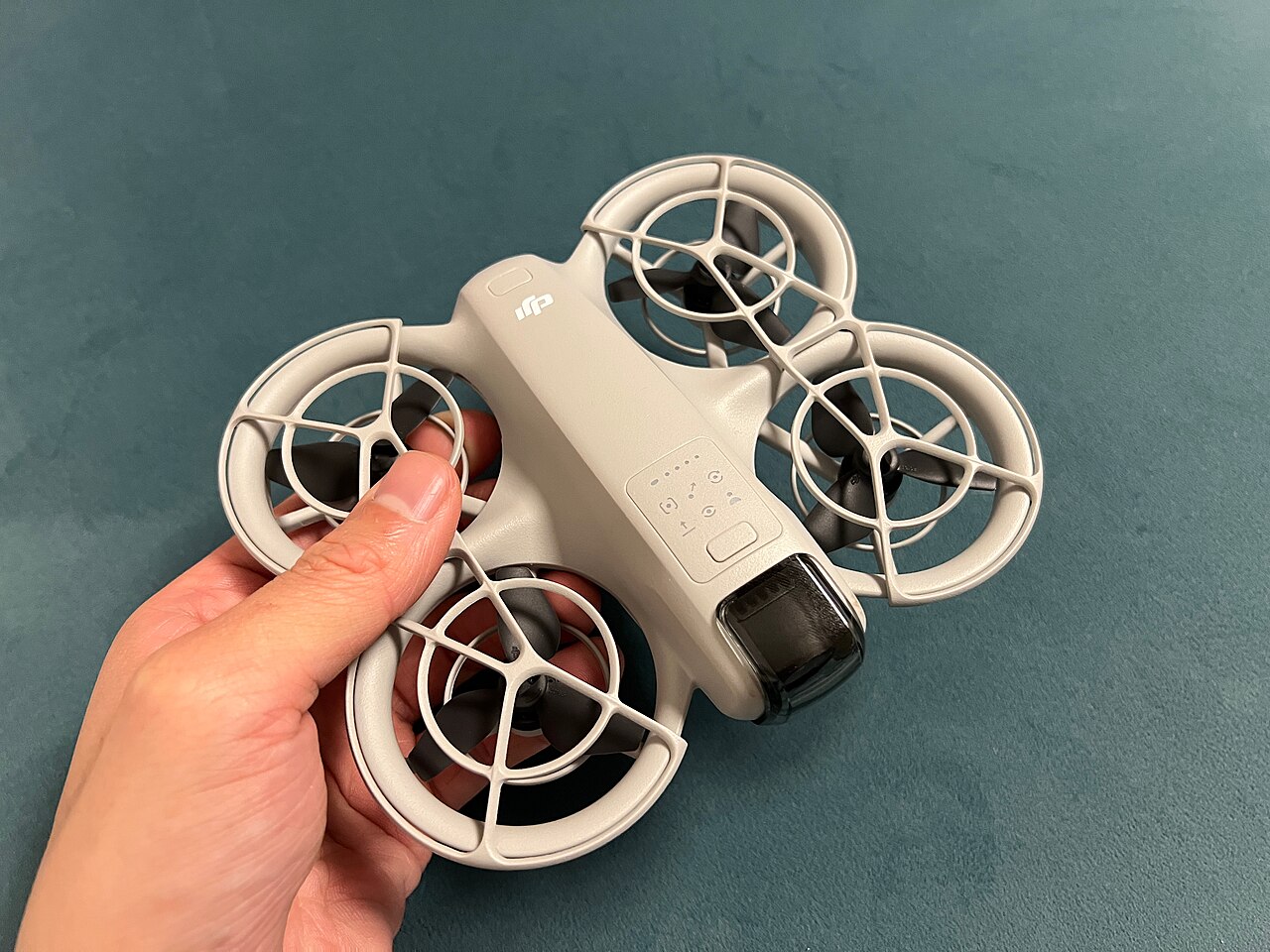
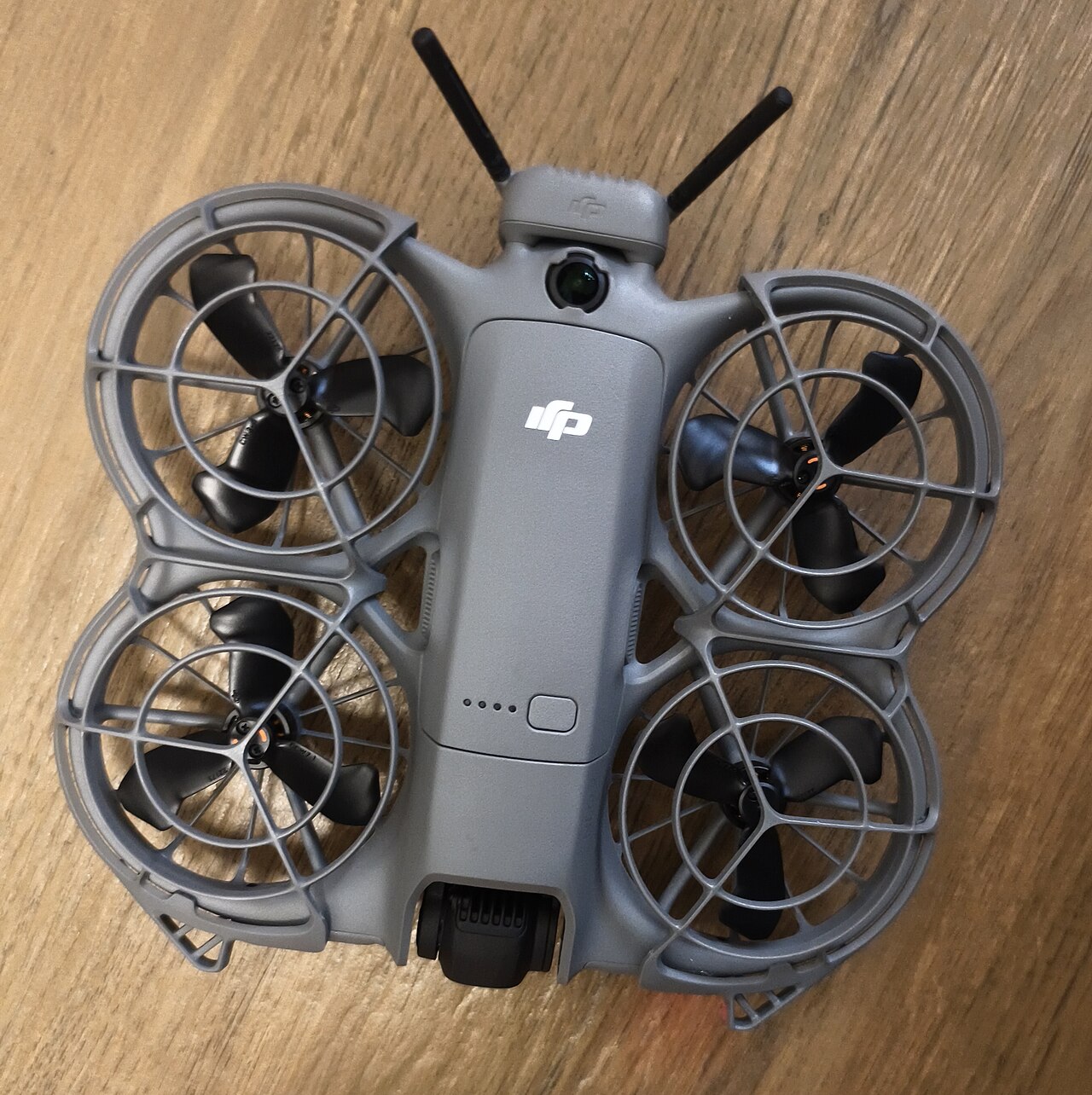
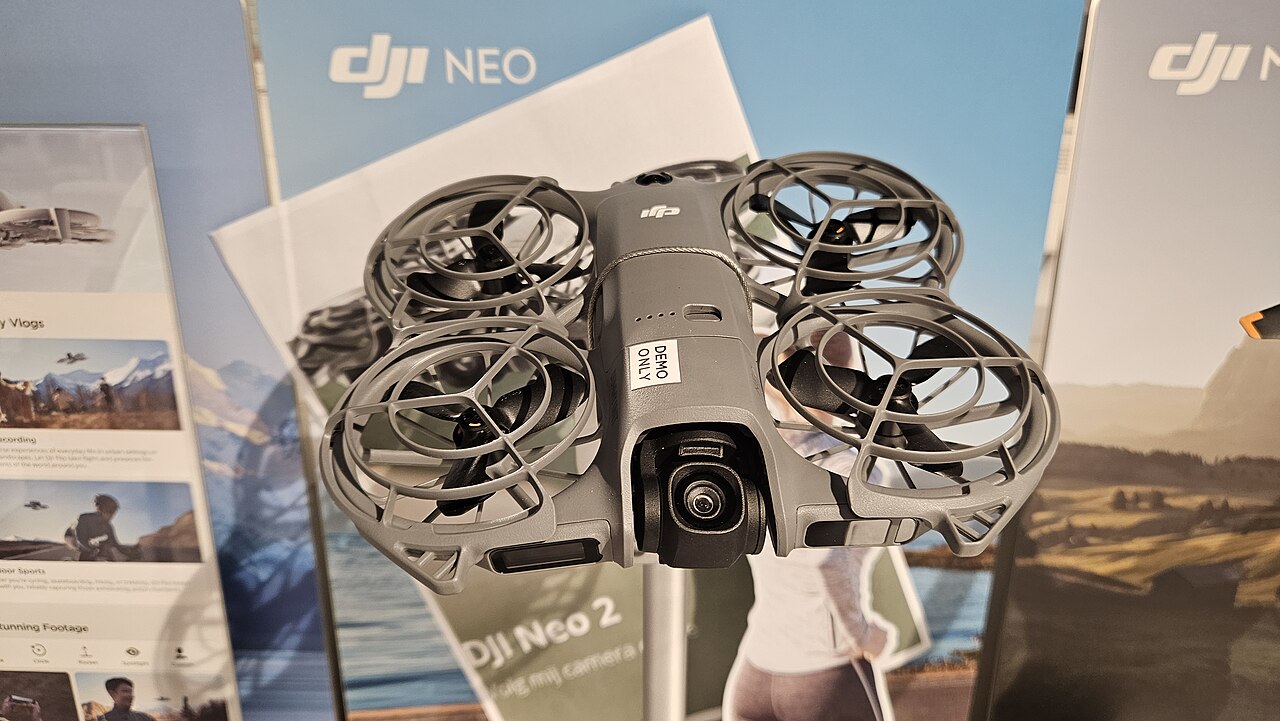
The DJI Neo is a compact quadcopter designed for vlogging, built by the Chinese company DJI. Weighing just 135 grams, it was the lightest and smallest drone DJI had released when it launched in September 2024, and its weight exempts it from US drone registration rules. Powered by four brushless DC motors with three-bladed propellers, the Neo can take off and land from a user’s hand. It is meant to be flown without a remote, using a smartphone, voice commands, or AI subject tracking, though an optional controller is available. The drone carries a single-axis gimbal with a 12-megapixel camera that records 4K video at 30 frames per second. Live video can be transmitted via Wi-Fi (with a smartphone) or through DJI’s O4 system (with a controller or FPV goggles). The Neo has no obstacle avoidance and no MicroSD card slot, but it includes 22 GB of internal memory. Its avionics feature integrated electronic speed controllers and a tiny inertial measurement unit. Six LED lights indicate the flight mode. The drone lacks Remote ID, making it unsuitable for professional use. A 1435 mAh battery provides up to 18 minutes of flight time.
An upgraded model, the Neo 2, debuted in Asia in October 2025 and globally (excluding the US) the following month. It keeps the same sensor size but offers improved image processing and a wider field of view, enabling 4K video at 60 FPS or 4K slow motion at 100 FPS. The gimbal was upgraded to a two-axis unit for stable footage in wind or during fast moves. The Neo 2 adds forward-facing lidar obstacle detection, gesture control, and faster subject tracking. It is slightly larger and heavier at 151 grams. A small screen replaces the LED lights to show flight mode, and internal storage increases to 49 GB. The onboard O4 transmission system was removed, but an external O4 transponder can be attached for use with a remote controller. A 1606 mAh battery extends flight time to 19 minutes.
Variants include the original Neo (model DN1A0626) with a 135 g weight, onboard O4 video, 12 MP camera, 22 GB storage, and a 1435 mAh battery for 18 minutes of flight. The Neo 2 (model DEN225) weighs 151 g, has an improved 12 MP camera, obstacle avoidance, gesture control, an external O4 transponder option, 49 GB storage, and a 1606 mAh battery for 19 minutes of flight.
- Weight
- 135 g
- Camera
- 12-megapixel, single-axis gimbal, 4K video at 30 FPS
- Internal storage
- 22 GB
- Battery
- 1435 mAh, 18 minutes maximum flight time
- Release date
- September 2024
- Transmission
- Wi-Fi (smartphone) or O4 (controller/FPV goggles)
- Flight modes
- Six LED lights indicate flight mode
Lore & Background
The DJI Neo was introduced in September 2024 as the successor to the DJI Spark and a competitor to the HoverAir X1. It is a quadcopter powered by four brushless DC electric motors driving three-bladed propellers. The drone is designed to launch and land from a hand and can be flown without a remote using a smartphone, voice controls, and AI subject tracking, though an optional remote is available. The Neo lacks obstacle avoidance and a MicroSD card slot, but includes 22 GB of internal memory. Its avionics feature integrated electronic speed controllers and a tiny inertial measurement unit. The drone has six LED lights to indicate its flight mode and lacks Remote ID capabilities, making it unsuitable for professional operators.
Reader's Guide
The DJI Neo represents a notable entry in the compact drone market, targeting vloggers with its lightweight design and hand-launch capability. Its 135 g weight exempts it from US registration regulations, a significant practical advantage for casual users. The drone's reliance on smartphone control, voice commands, and AI tracking reflects a shift toward accessible, controller-free operation. However, the absence of obstacle avoidance and Remote ID limits its utility for professional or complex flights. The Neo's single-axis gimbal and 12-megapixel camera capable of 4K at 30 FPS provide basic aerial video capture, while the optional O4 transmission system offers improved video feed when using a controller or FPV goggles. The drone's 22 GB internal memory and 18-minute flight time suit short vlogging sessions. The Neo's design and feature set established a foundation that was later refined in the Neo 2 model.
Did You Know?
- The DJI Neo weighs only 135 g, exempting it from drone registration regulations in the United States.
- It can launch and land from a hand and be flown without a remote using a smartphone, voice controls, or AI subject tracking.
- An improved model, the Neo 2, was released in Asia in October 2025 with a two-axis gimbal and lidar obstacle avoidance.
From Dorm Room to Shenzhen
Frank Wang, a native of Hangzhou in Zhejiang province, first encountered robotics while studying at the Hong Kong University of Science and Technology, where his team placed third in the ABU Robocon competition. Still a student, he built flight-control prototypes in his dormitory and sold the components to universities and Chinese electrical firms. That modest revenue let him relocate to Shenzhen's industrial corridor, where in 2006 he assembled a small team and formally launched the venture. Early years were turbulent: turnover ran high, a situation attributed to Wang's blunt, perfectionist management. Survival depended on a family friend, Lu Di, who injected ninety thousand US dollars and managed the books. The company scraped by on component sales until 2009, when a team using DJI parts flew a drone around the summit of Mount Everest—a quiet validation of the technology. By 2010, Wang brought in a high-school friend for marketing and began targeting hobbyist drone enthusiasts beyond China. The following year, a trade-show meeting led to a North American sales arm, though that venture collapsed in a bitter dispute two years later.
Capturing the Sky
In 2013, the company released the Phantom, a fully assembled drone priced at $629 that offered a far more intuitive experience than anything else on the market. Widely regarded as the first recreational drone to achieve broad commercial success, it introduced the modern aerial-photography form factor to a general audience and rapidly captured the consumer market from both hobbyists and professionals. Two years later, the Phantom 3 added a built-in live-streaming camera and pushed the brand to the top of the industry, driving numerous competitors out of business. That same year, the RoboMaster collegiate robot-combat tournament launched at Shenzhen Bay Sports Centre, and a strategic partnership with Hasselblad was announced; by January 2019, the company had acquired a majority stake in the Swedish camera maker. In 2017, the technology earned a Technology and Engineering Emmy for its role in productions including Game of Thrones, Better Call Saul, The Amazing Race, and American Ninja Warrior. Wang became Asia's youngest tech billionaire and the world's first drone billionaire. By June 2024, the firm commanded over ninety percent of the global consumer drone market, with its camera systems deeply embedded in the music, television, and film industries.
Scrutiny, Sanctions & Litigation
DJI's ubiquity has drawn persistent scrutiny. Its drones have been deployed by combatants on every side of the Russian invasion of Ukraine, and the company has taken steps to restrict access for terrorist groups. The United States government designated it a Chinese Military Company and imposed sanctions, yet its products remain purchasable and operational within the country. In 2017, the firm signed a cooperation agreement supplying surveillance drones to Chinese police in Xinjiang, and in 2018 it partnered with Axon to sell surveillance units to US law-enforcement agencies; by 2020, roughly ninety percent of drones used by American public-safety agencies were DJI-made. Domestically, an internal probe in January 2019 uncovered what the company described as widespread employee fraud involving inflated parts costs, estimated at up to one billion yuan (about $147 million). On the legal front, a 2023 US jury found that DJI's automatic-hovering drones infringed a Textron patent, ordering $279 million in damages; DJI's parallel challenge to the patent's validity was denied by the Patent Trial and Appeal Board. In January 2020, the US Department of the Interior grounded approximately eight hundred of its conservation and monitoring drones.
Beyond the Drone
Beyond aerial photography, DJI's reach has expanded into unexpected territory. During the 2020 coronavirus pandemic, its drones were pressed into public-health service worldwide: in China, police used them to remind citizens to wear masks, while in Morocco and Saudi Arabia they sprayed disinfectant over urban areas and monitored human body temperatures to contain the spread. In 2024 the company entered the electric-bicycle motor market, and in 2025 it launched the Romo, its first robot vacuum cleaner. The product's early days were marked by an unusual security incident: in early 2026, a France-based engineer living in Spain, Sammy Azdoufal, managed to hijack roughly seven thousand Romo units while attempting to control his own vacuum with a PlayStation gamepad. Rather than issue a stern warning, the company publicly thanked Azdoufal on X for flagging the vulnerability. Meanwhile, the firm continues to manufacture a broad portfolio spanning gimbal stabilizers, propulsion systems, enterprise software, aerial-agriculture equipment, and flight-control systems, all from its Shenzhen headquarters in Guangdong province.
Gallery
Frequently Asked Questions
What is the DJI Neo?
The DJI Neo is a pocket-sized quadcopter drone built by DJI specifically for solo vlogging and content creation. It launched in September 2024 as DJI's lightest and smallest multirotor to date, weighing only 135 grams.
How do you control the DJI Neo without a remote?
The Neo is designed to launch directly from your palm and be piloted entirely through a smartphone app, spoken voice commands, or its built-in AI subject-tracking system. An optional handheld controller paired with FPV goggles is available for those who prefer a more traditional flying experience.
What camera does the DJI Neo carry?
It houses a 12-megapixel sensor on a single-axis gimbal that records 4K video at 30 frames per second. The drone also includes 22 GB of internal storage so you can shoot without carrying a memory card.
Why doesn't the DJI Neo need US drone registration?
At just 135 grams, the Neo falls below the 250-gram threshold that triggers FAA registration requirements for recreational flyers in the United States. This makes it one of the few consumer drones you can legally fly without first registering it.
How long can the DJI Neo stay in the air on one battery?
Its 1435 mAh battery delivers up to 18 minutes of maximum flight time per charge. The drone uses four brushless DC motors with three-bladed propellers to keep power consumption efficient at that weight class.
More in Quadcopters and Multirotor Drones 1-23
Spotted an error? Know more?
Reader corrections go straight into our review queue. Suggest an edit · How this site is sourced