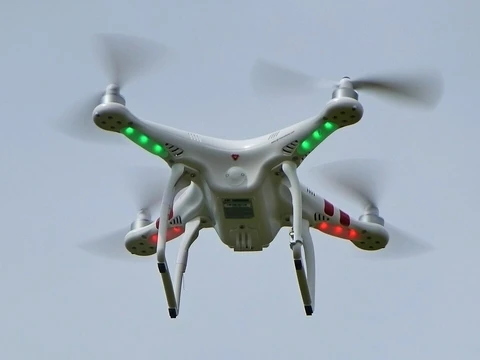
DJI Air
A portable quadcopter series evolving from the DJI Mavic.

Jacek Halicki · CC BY-SA 4.0
The DJI Air, first sold as the DJI Mavic Air, is a line of compact quadcopter drones designed for both personal and commercial aerial photography and videography. Made by the Chinese company DJI, it was created as a more portable version of the DJI Mavic. A licensed version, the Specta Air, is manufactured in Malaysia by Cogito Tech.
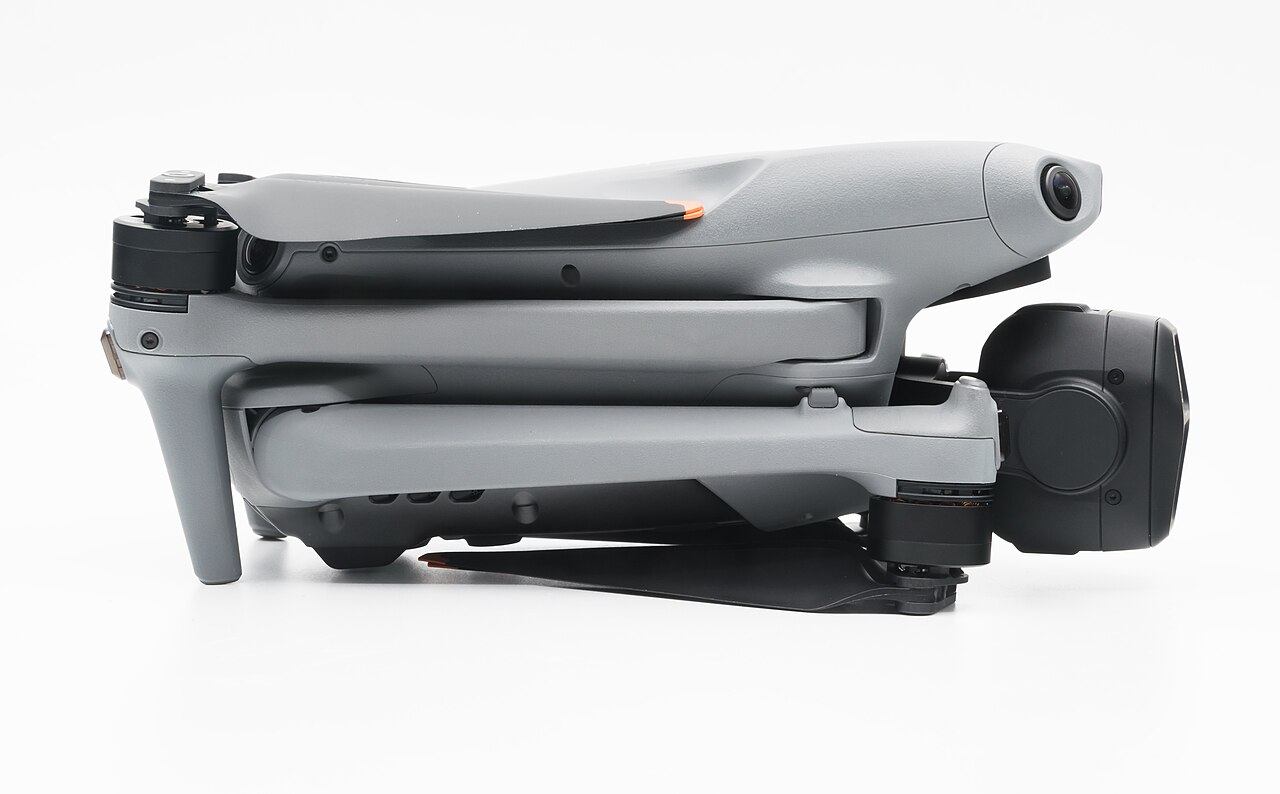
The original Mavic Air launched in January 2018. It folds up smaller than the Mavic, with arms and propellers that tuck flush against the drone’s sides, making it half the size and 41% lighter (430 g) than the Mavic Pro. It has a 1/2.3-inch CMOS camera with a 24 mm lens on a three-axis gimbal, capturing 4K video at 30 frames per second (FPS) and 1080p at 120 FPS. A new panorama mode stitches 25 photos in eight seconds for a “Sphere Panorama.” It includes SmartCapture gesture control, a three-directional obstacle avoidance system with seven sensors, and a 2375 mAh battery for 21 minutes of flight. Antennas on its landing gear give it a 2.5-mile range.
The Mavic Air 2, announced on April 27, 2020, has a redesigned body closer to the Mavic 2 Pro. It uses a 1/2-inch CMOS camera that supports raw images, a 48-megapixel mode, HDR video, and 240 FPS slow-motion Hyperlapse. Its 3500 mAh battery provides 34 minutes of flight. The Wi-Fi transmission system was replaced with OcuSync 2.0, operating on 2.4 GHz and 5.8 GHz for less interference and up to 10 km range. Obstacle avoidance uses APAS 3.0 with front, back, and underside sensors. Some units included an ADS-B safety feature warning of nearby aircraft, but COVID-19 supply chain issues limited its availability in certain regions.
On April 15, 2021, DJI announced the Air 2S, dropping the Mavic name. It features a 1-inch CMOS camera shooting 20 MP JPEG and RAW photos, plus 10-bit 5.4K video at 30 FPS and 4K at 60 FPS. Flight time dropped to 31 minutes, and the transmission system upgraded to O3, sending 1080p video up to 12 km. New modes include SmartPhoto, Hyperlapse, and MasterShots. APAS 4.0 uses front, back, top, and bottom sensors, and an ADS-B system warns of nearby aircraft.
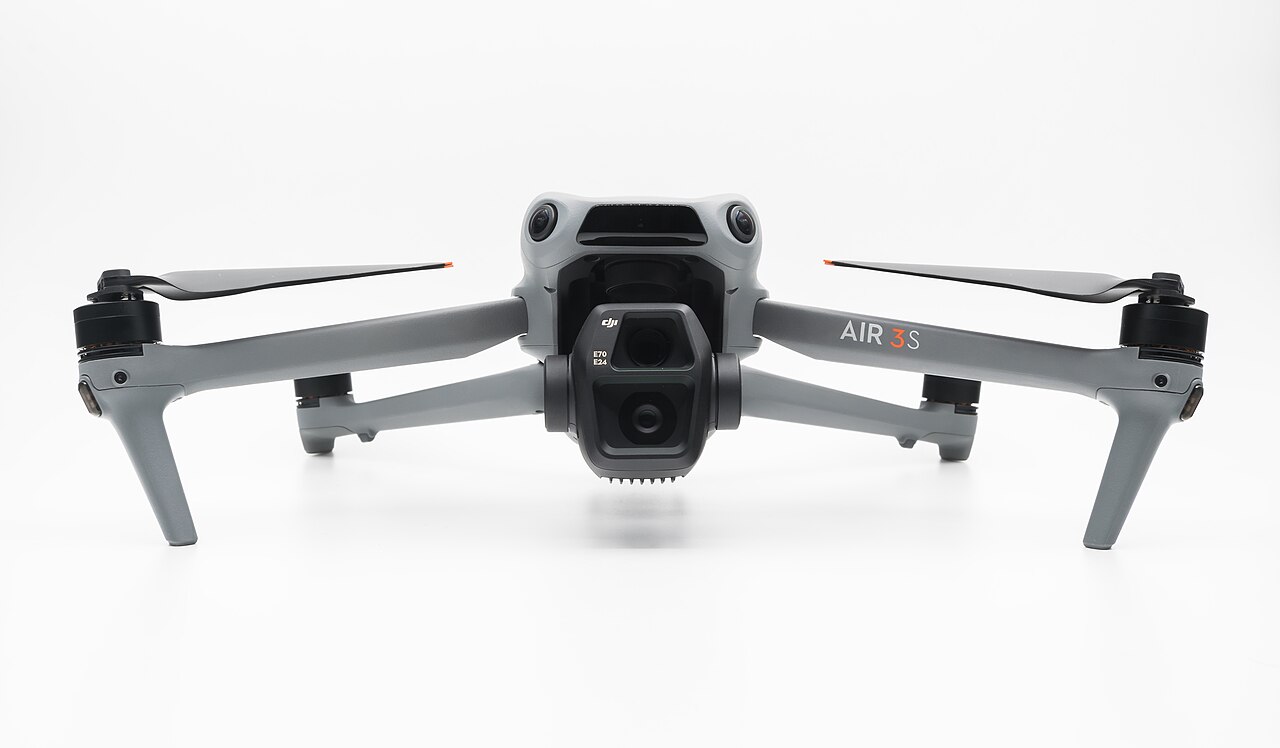
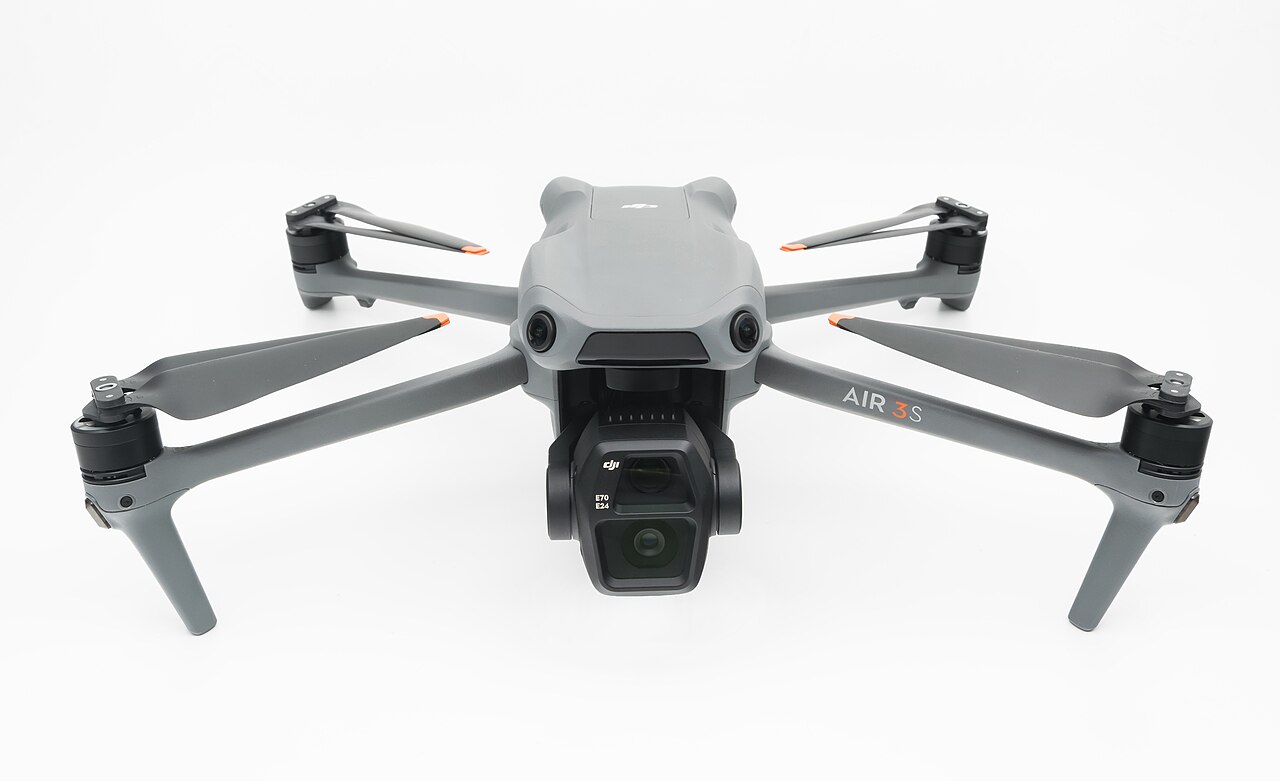
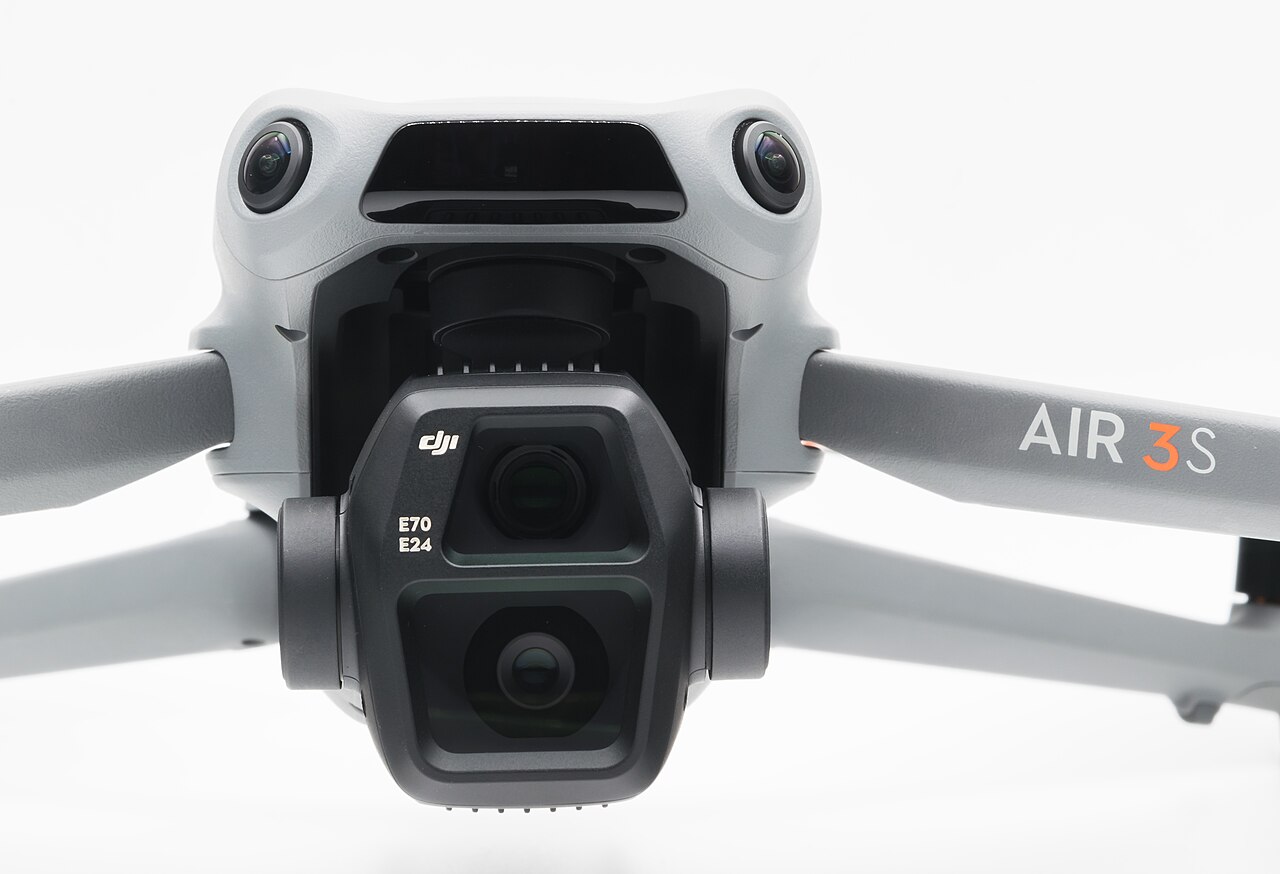
The Air 3, released in July 2023, updates the design to resemble the Mavic 3 Pro. It has a dual-camera gimbal with wide-angle and telephoto lenses, both using a 48 MP 1/1.3-inch stacked CMOS sensor, with the telephoto offering 3x zoom.
- First model announced
- January 2018
- Weight (original mavic air)
- 430 g
- Battery capacity (air 3s)
- 4276 mAh
- Maximum flight time (air 3s)
- 45 minutes
- Camera sensor (air 3s)
- 50MP 1" CMOS wide-angle
- Transmission system (air 3)
- O4
- Maximum transmission range (air 3)
- 20 km
Lore & Background
The Mavic Air was announced in January 2018 as a more portable development of the DJI Mavic. Like the Mavic, the Mavic Air is a foldable quadcopter, though the arms and propellers fold to be flush with the side of the drone as opposed to the Mavic's over/under configuration. This allows the Mavic Air to be half the size of the Mavic Pro and at 430 g is 41% lighter. The Mavic Air was equipped with a 1/2.3" CMOS camera with a 24 mm lens on a 3-axis gimbal capable of capturing 4K video at 30 FPS and 1080p video at 120FPS. The camera has a new panorama mode, which stitches together 25 photos in eight seconds to create a 'Sphere Panorama'. The Air also has a SmartCapture feature, a three-directional obstacle avoidance system with seven sensors, and a 2375 mAh battery giving it a maximum flight time of 21 minutes. Due to antennas mounted on its landing gear, the drone has a 2.5 mile range. Like the DJI Spark, the Mavic Air also features the 'Smart Capture' mode, in which the drone can be controlled by hand gestures.
The Mavic Air 2 was announced on 27 April 2020, introducing a redesigned form that more closely resembles the Mavic 2 Pro than its predecessor. The Mavic Air 2 is equipped with a 1/2" CMOS camera which supports raw image format, 48-megapixel mode, HDR video, and Hyperlapse 240FPS slow-motion mode. Battery capacity was increased to 3500 mAh, giving it a maximum flight time of 34 minutes. The Wi-Fi transmission system of the original Mavic Air was replaced with the dedicated OcuSync 2.0 running in the 2.4 GHz and 5.8 GHz ranges. This promises less interference from ambient Wi-Fi networks and offers a better range of up to 10 kilometers. The Mavic Air 2 uses an Advanced Pilot Assistance Systems (APAS) 3.0 obstacle avoidance system with sensors on the front, back, and underside, but no sensors on the top and sides. Some Mavic Air 2 drones were equipped with an ADS-B safety feature that warns users about nearby aircraft, but supply chain issues caused by the COVID-19 pandemic meant that this was not available in all regions.
On 15 April 2021, DJI announced an updated version of the Mavic Air 2 as the Air 2S, dropping the Mavic name. The Air 2S features a 1" CMOS camera capable of shooting 20MP JPEG and RAW photos and up to 10-bit 5.4K video at a maximum frame of 30 FPS as well as 4K video at a maximum frame rate of 60 FPS. Maximum flight time was reduced to 31 minutes, and the transmission system was upgraded to the new O3 allowing up to 1080p resolution at 12 km. The Air 2S also includes new photo and video modes such as SmartPhoto, Hyperlapse, and MasterShots allowing more flexibility of the camera capabilities. It also features an upgraded APAS 4.0 obstacle avoidance and detection system making use of sensors on the front, back, top, and bottom of the drone, as well as an ADS-B system to warn the operator of nearby aircraft.
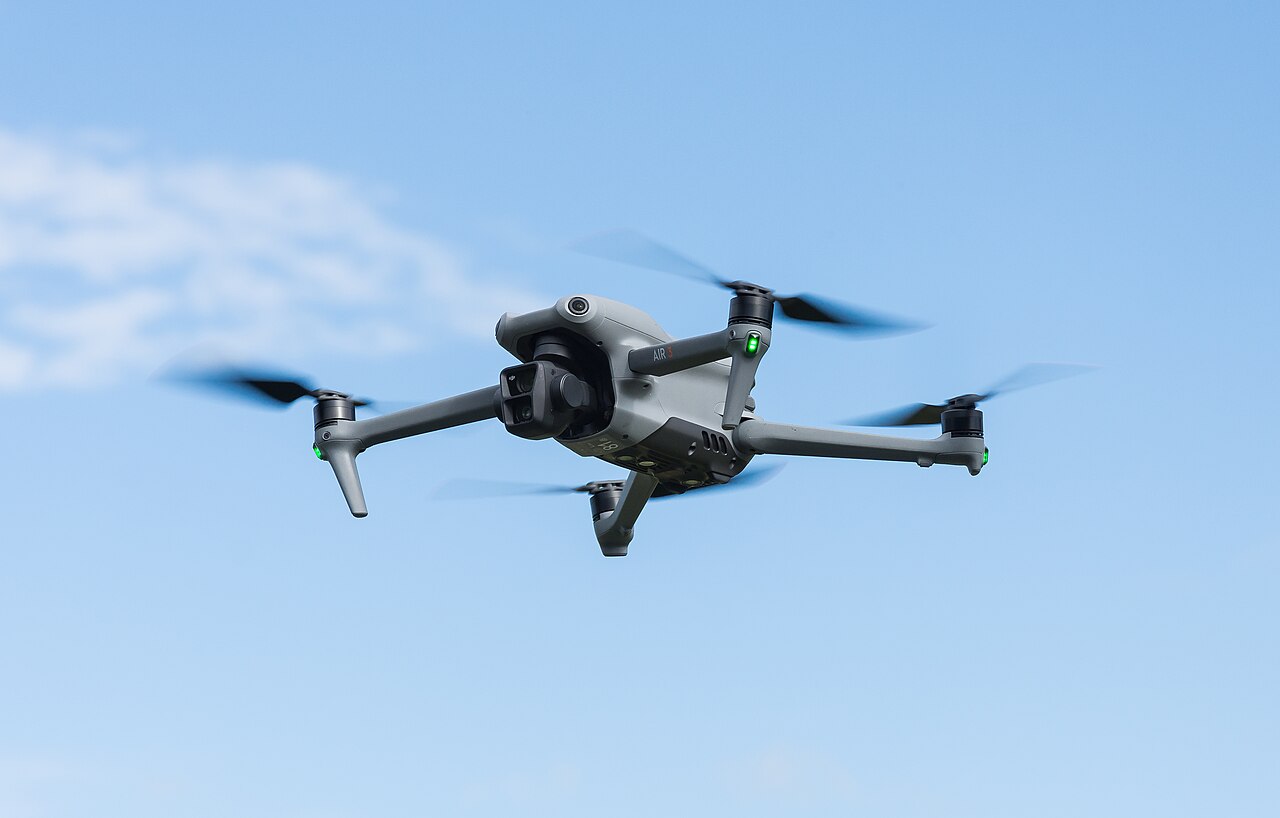
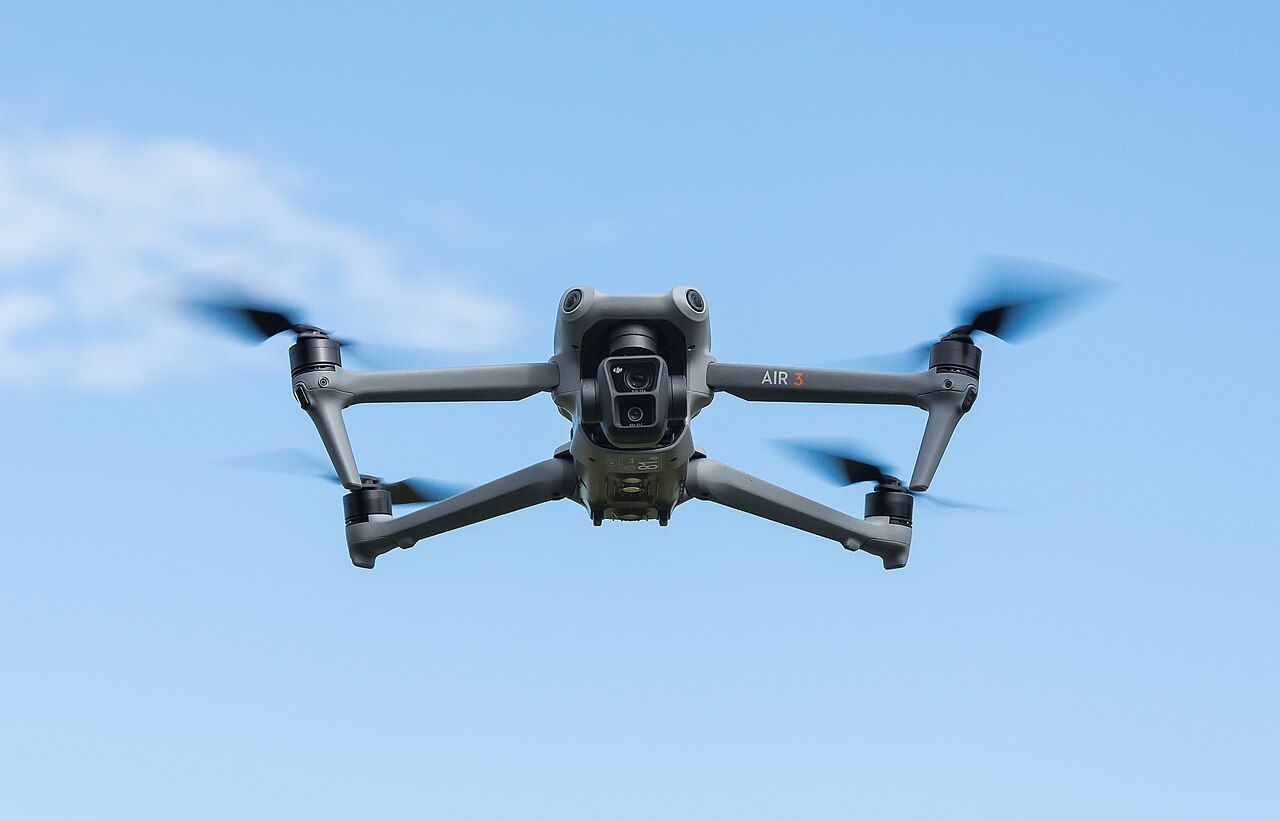
The Air 3 was released in July 2023 and introduced several updates compared to its predecessor. The overall design was updated once again to resemble the Mavic 3 Pro, and the gimbal now mounts a dual camera system with both a wide-angle and telephoto camera. Both cameras feature a 48 MP 1/1.3" CMOS stacked sensor, and the telephoto camera is capable of 3x zoom. The drone has a weight of 720 g, which is an increase from the 595 g of the Air 2S. Most of this weight came from the battery, which was increased to 4241 mAh capacity and gives the Air 3 a maximum flight time of 46 minutes. The video transmission system was upgraded to O4, which is transmitting 1080p video up to 20 km away. The Verge noted that while the drone remains loud during operation, its larger propellers results in a sound that has a lower frequency and is less piercing than its predecessor.
In October 2024, DJI released the Air 3S with an upgraded 50MP 1" CMOS wide-angle camera. The drone's weight and battery capacity were slightly increased to 724 g and 4276 mAh, respectively, while flight time was slightly reduced to 45 minutes.
Hong Kong-based Cogito Tech produces a licensed version of the Air 3 as the Specta Air. Though Cogito denied any connection to DJI, The Hill reported the Specta Air and Specta Mini (the company's version of the DJI Mini 2 SE) are virtually identical to their Chinese counterparts, including performance and software, and likely use DJI's proprietary OcuSync video transmission system.
Reader's Guide
The DJI Air series represents a significant evolution in compact aerial photography and videography, bridging the gap between ultra-portable drones and professional-grade imaging. Starting with the Mavic Air in January 2018, the series established a new standard for portability by folding its arms and propellers flush with the drone's sides, achieving half the size and 41% less weight than the Mavic Pro. This design philosophy continued through successive models, each iteration refining camera capabilities, flight time, and transmission systems. The Mavic Air 2 introduced OcuSync 2.0 for reduced interference and longer range, while the Air 2S upgraded to a 1-inch sensor and O3 transmission. The Air 3 marked a major shift with a dual-camera system and O4 transmission reaching 20 km, and the Air 3S further improved the wide-angle camera to 50 megapixels. The series also saw the introduction of obstacle avoidance systems (APAS 3.0, 4.0) and ADS-B safety features, though the latter was inconsistently available due to pandemic supply chain issues. A licensed version, the Specta Air, is produced in Malaysia by Cogito Tech, with reports noting its virtual identity to the Air 3 despite Cogito's denial of connection to DJI. The series' legacy lies in its consistent push for smaller, lighter, and more capable drones that maintain professional-level features.
Did You Know?
- The original Mavic Air folds its arms and propellers flush with the sides, unlike the over/under configuration of the Mavic.
- The Mavic Air 2's ADS-B safety feature was not available in all regions due to COVID-19 pandemic supply chain issues.
- The Air 3S has a weight of 724 g and a 4276 mAh battery, giving it 45 minutes of flight time.
- The licensed Specta Air, produced by Cogito Tech in Malaysia, is reported to be virtually identical to the Air 3.
Engineering Simplicity as a Design Philosophy
The multirotor concept rests on a fundamental engineering trade-off: sacrificing the mechanical complexity of variable-pitch rotors in exchange for a simpler, more robust flight-control system. Traditional single- and double-rotor helicopters demand intricate mechanisms that continuously adjust blade pitch as each rotor spins, a requirement born from the need for stability and directional control. Multirotors sidestep this entirely by relying on fixed-pitch blades. Instead of twisting individual blades, the pilot or autopilot modulates the rotational speed of each motor independently, thereby altering the thrust and torque each rotor contributes. A few designs take a different route, adjusting the pitch angle of each rotor rather than its speed, but the underlying principle remains the same—distribute control authority across multiple rotors rather than concentrating it in a single complex mechanism. This architectural choice is what makes multirotors accessible to hobbyists and engineers alike, lowering the barrier to entry for both construction and piloting.
A Taxonomy of Rotor Configurations
The multirotor family spans a wide spectrum of rotor counts and arrangements, each carrying its own nomenclature. Three-, four-, six-, and eight-rotor platforms are commonly called tricopters, quadcopters, hexacopters, and octocopters, respectively. Beyond these standard counts, hybrid layouts exist: the X8, sometimes dubbed the octo-quad, pairs a quadracopter-style frame with eight rotors, where the lower set spins in the opposite direction to the upper set. Coaxial configurations push further by mounting two motors on each arm—one facing upward, one downward—so that their opposing rotations cancel rotational torque, freeing the design to carry more power and stability without adding weight. At the other end of the spectrum, quadplanes graft horizontal propellers onto a four-vertical-rotor airframe, while lifting-wing multicopters add non-horizontal wings to the mix. Most of these machines remain small, battery-powered, and limited in range, endurance, and payload, which is why they dominate the radio-control and unmanned aerial vehicle hobby spaces.
Manned Multirotor Pioneers, 1922–1961
Long before consumer drones filled the sky, engineers were already experimenting with multirotor platforms large enough to carry a human pilot. The de Bothezat helicopter, an American four-rotor machine, took its maiden flight on December 18, 1922, and subsequently entered military evaluation, making it one of the earliest serious attempts at practical multirotor flight. Decades later, the British Cierva Air Horse pushed the concept in a different direction: a three-rotor heavy-lift helicopter that first flew in 1948. Its designers chose three rotors specifically to generate substantial lifting force without overloading the structural strength of any single rotor. The Bensen B-12, an American experimental personal helicopter that first flew on November 2, 1961, initially featured ten rotors before the design was revised to eight rotors driven by sixteen motors. These early manned projects laid the groundwork for the multirotor thinking that would later migrate into the unmanned and electric domains.
The eVTOL Wave: Electric Multirotors Aimed at Passengers
The most recent chapter in multirotor history is defined by a wave of electric vertical take-off and landing programs targeting passenger transport. Airbus's A³ Vahana project produced two American-built tiltwing octocopter prototypes before development was folded into the CityAirbus effort in 2019; CityAirbus itself has evolved from experimental multinational ducted X8 helicopters into hexacopter configurations. Boeing's Passenger Air Vehicle pairs an octocopter frame with a pusher propeller and three wings to enable horizontal flight. In Sweden and Italy, the Jetson One takes a radically different approach, fitting four coaxial rotor booms around a motorcycle-like cockpit. Pivotal's BlackFly, an American octocopter, is designed to rotate its entire orientation to transition between vertical and horizontal flight, echoing the tail-sitter concept. Germany's Volocopter line includes the 2X and Volocity, the latter sporting 18 rotors and becoming the first electric multicopter to achieve crewed flight; its large bank of low-cost motors delivers economy, quiet operation, and redundancy sufficient to maintain control even with up to four motors failed.
Gallery
Frequently Asked Questions
Who is DJI Air?
The DJI Air is a family of compact, folding quadcopter drones produced by the Chinese manufacturer DJI, debuting in January 2018 under the name Mavic Air. It was conceived as a more pocketable sibling to the full-size Mavic line, aimed at hobbyists and commercial photographers alike.
What are DJI Air's powers and role?
Its core role is aerial photography and videography, with arms and propellers that fold flush against the airframe for easy carry. The original 2018 model weighed 430 g and carried a 1/2.3-inch CMOS sensor, while the current Air 3S upgrades to a 50MP 1-inch CMOS wide-angle camera.
Why is DJI Air important to the multirotor scene?
It demonstrated that a capable aerial camera could be roughly half the size and 41% lighter than the Mavic Pro while keeping a useful sensor, setting a new benchmark for portable drone design. Its folding-arms layout became a widely imitated form factor across the industry.
What transmission system does the latest DJI Air use?
The DJI Air 3 relies on DJI's O4 transmission system for its control and video link. This is a generational step up from the original 2018 Mavic Air's radio hardware, offering greater range and more stable video streaming.
More in Quadcopters and Multirotor Drones 1-23
Spotted an error? Know more?
Reader corrections go straight into our review queue. Suggest an edit · How this site is sourced