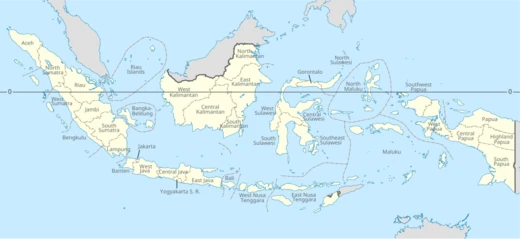
Bangka Belitung Islands
Indonesian province of two main islands, rich in tin and culture.

via Wikipedia: Bangka Belitung Islands · see source
Here is the rewritten encyclopedia entry about the Bangka Belitung Islands.
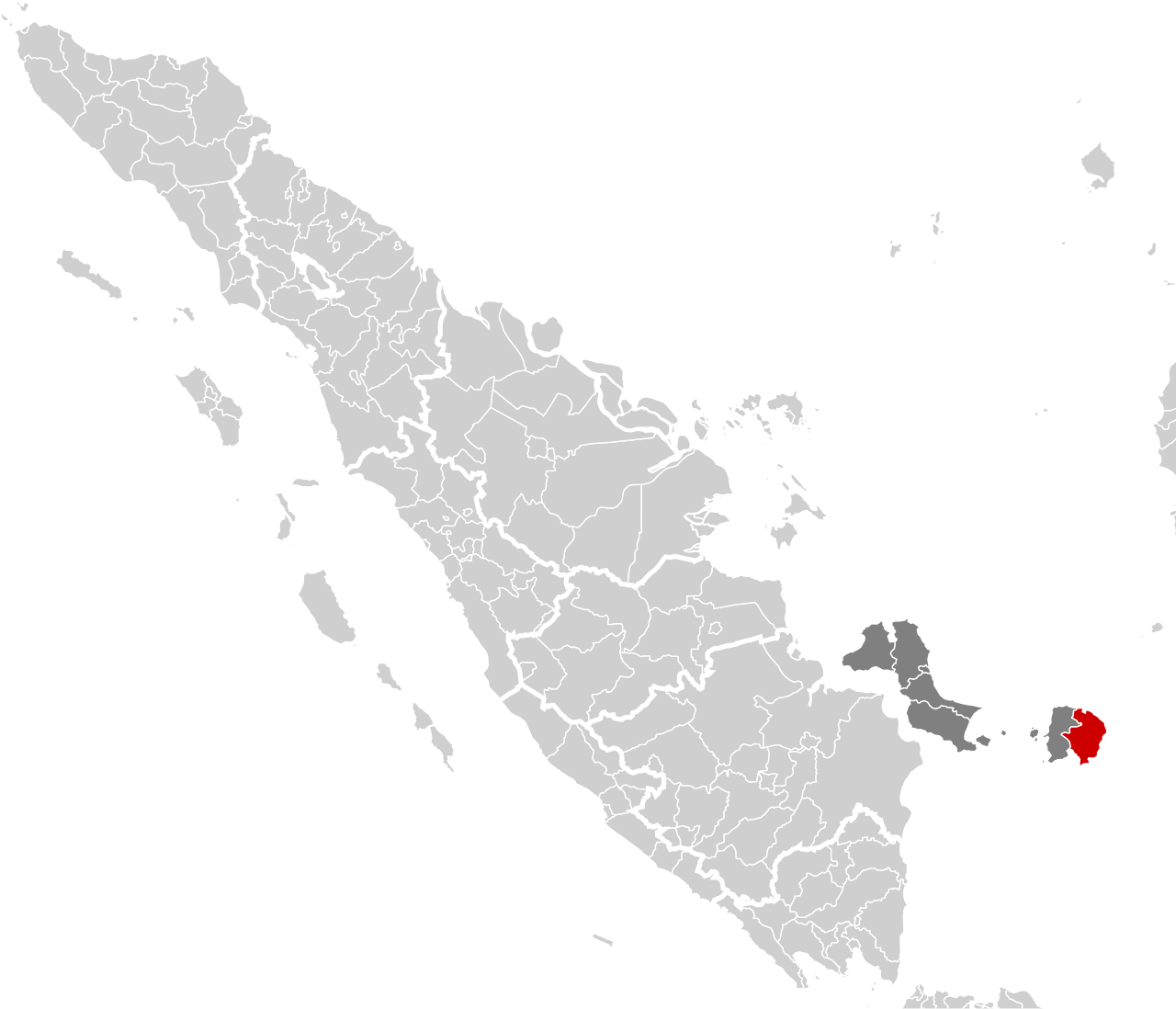
The Bangka Belitung Islands form a province of Indonesia, located off the southeastern coast of Sumatra. The province consists of two primary landmasses, the islands of Bangka and Belitung, along with many smaller islands. Its capital and largest city is Pangkalpinang. The province is bordered by the Bangka Strait to the west, the Natuna Sea to the north, the Java Sea to the south, and the Karimata Strait to the east. The Gelasa Strait separates the two main islands, containing smaller islands such as Lepar, Pongok (also known as Liak), and Mendanau. Bangka Belitung shares maritime borders with several other Indonesian provinces: South Sumatra to the west, Riau Islands to the north, Banten, Jakarta, West Java, and Central Java to the south, and West Kalimantan to the east. The province covers a land area of 16,690.13 km². According to the 2020 census, its population was 1,455,678, with an official mid-2024 estimate of 1,531,530 (786,010 males and 745,520 females).
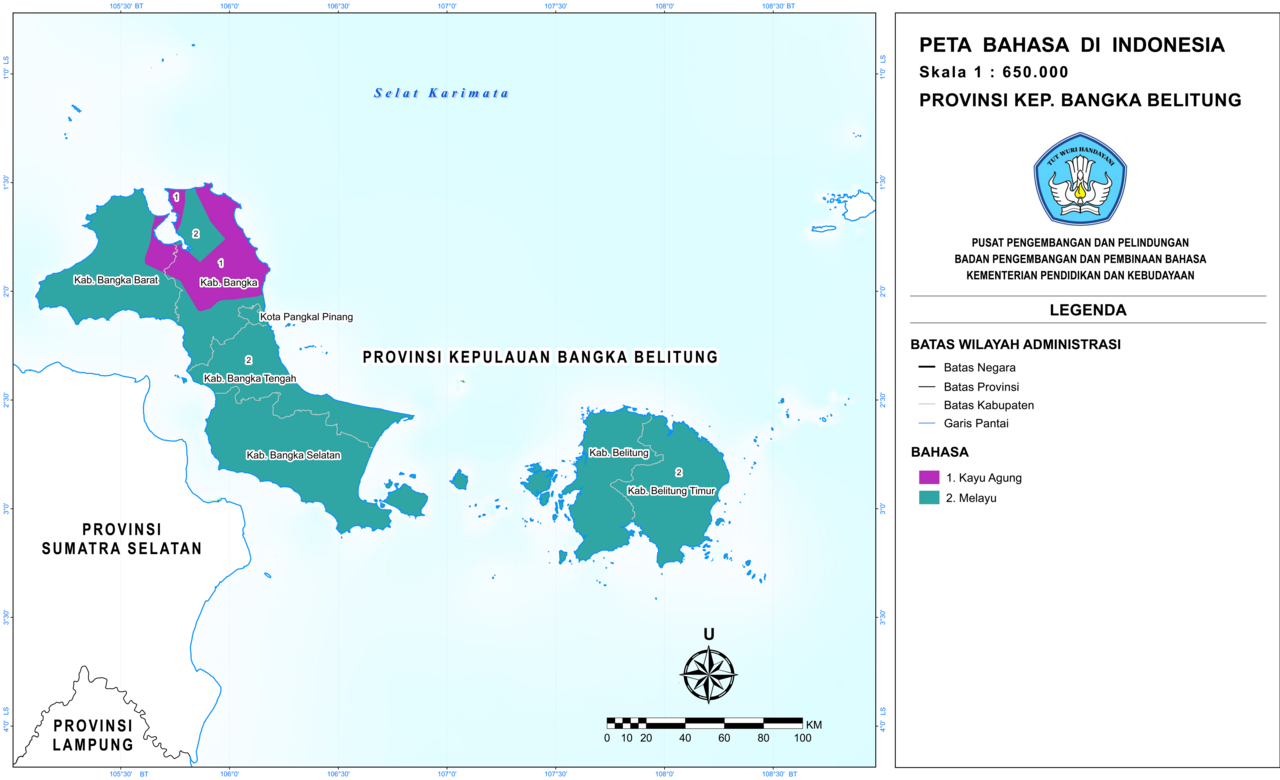
The province has an equatorial climate and is home to tropical rainforests, though these are diminishing due to deforestation. The highest point is Mount Maras on Bangka Island. Major rivers include the Sebuku, Baturusa, and Mendo. The population is ethnically, culturally, and linguistically diverse, with major groups including Malays, Chinese, and Javanese. Indonesian is the official language, while a local Malay dialect and Hakka serve as the lingua franca.
Historically, the islands were part of the Sriwijaya, Majapahit, and Palembang kingdoms before being colonized by the Dutch, British, and Japanese. During the Dutch colonial period, the region was a residency within the Dutch East Indies. After Indonesia's independence, it was administered as part of Sumatra and later South Sumatra. Bangka Belitung officially became Indonesia's 31st province on 4 December 2000.
The name "Bangka" comes from the Sanskrit word *wangka* (वन्च, 'vanca'), meaning "tin," reflecting the region's rich tin mining history. The name "Wangka" first appears alongside "Swarnabhumi" in the 1st-century BC Indian text *Milindrapantha*. Swarnabhumi is identified as Sumatra, and it is strongly suggested that "Wangka" refers to Bangka Island. Scholar Louis-Charles Damais affirmed that Bangka derives from the word *vanca*. The name "Belitung" comes from *Billitonite*, the Dutch term for black meteorites commonly found on Belitung Island, discovered during tin mining. Dutch academics later used the name Billitonite or Billiton for the island. Today, these black meteorites are a distinct souvenir from Belitung.
The first Europeans to arrive in Bangka were the British, on 20 May 1812. However, following the Anglo-Dutch Treaty of 1824, the British left and the Dutch took control. A coup attempt by local elites Depati Barin and his son Depati Amir led to a war from 1849 to 1851 against Dutch colonization, which the Dutch won. Depati Amir was exiled to Kupang in East Nusa Tenggara; he is now recognized as a national hero, and the regional airport, Depati Amir Airport, is named after him. During World War II, the Empire of Japan briefly occupied the region. After Japan's surrender, the islands became part of an independent Indonesia.
Chinese migration, primarily Hakka, has a long history in Bangka Belitung, beginning in the 13th century. In the 17th century, the rulers of Palembang established tin mines in Belitung. The Dutch later brought contract workers from mainland China to work these mines, resettling them in Belitung. Tin mining drove the islands' development. Some Chinese migrants returned to China, while others stayed and assimilated through intermarriage, living peacefully despite religious and ethnic differences. During the anti-Chinese riots in parts of Indonesia at the end of the Suharto regime in 1998, locals and those of Chinese descent in Bangka Belitung remained largely unconcerned and continued to live peacefully.
The province was created as Indonesia's 31st province by Law No. 27 of 2000, having previously been part of South Sumatra. The provincial capital is Pangkalpinang. In 2007, the average monthly moisture ranged from 77.4% to 87.3%, with an average of 83.1%. The average air pressure was approximately 1010.1 MBS. The average temperature that year reached an average maximum and minimum; the highest maximum temperature occurred in October, and the lowest minimum temperatures occurred in February and March. The Bangka Belitung Islands have a tropical climate influenced by monsoons.
- Capital
- Pangkalpinang
- Land Area
- 16,690.13 km²
- Population (2020 census)
- 1,455,678
- Population (mid-2024 estimate)
- 1,531,530
- Highest Point
- Mount Maras (699 m)
- Official Language
- Indonesian
- Province Status
- 31st province of Indonesia (since 4 December 2000)
Verified Timeline
Lore & Background
The name 'Bangka' is derived from the Sanskrit word 'wangka' (वन्च, 'vanca') meaning 'tin', because this region is rich in tin mining. The name 'Wangka' first appeared along with the name 'Swarnabhumi' in the Indian literary book Milindrapantha from the 1st century BC. Louis-Charles Damais, in his book Epigraphy and History of the Nusantara, affirms that Bangka comes from the word vowel (vanca). The name 'Belitung' is derived from Billitonite meaning the Black Meteorite in Dutch, which is commonly found on the island of Belitung. This stone itself was discovered at the time of tin mining in Belitung. Bangka Belitung has an equatorial climate with tropical rainforests, which, however, are disappearing due to deforestation. Mount Maras, located on the island of Bangka, is the province's highest point, with a height of 699 m. There are several rivers in the province, such as the Sebuku River, Baturusa River, and the Mendo River. Bangka Belitung is ethnically, culturally and linguistically diverse; major ethnic groups including Malays, Chinese and Javanese. Indonesian is the official language, while the local Malay dialect and Hakka serves as the lingua franca of the province.
Reader's Guide
Bangka Belitung's significance lies in its historical role as a tin-rich region that attracted colonial powers and Chinese migrants. The first Europeans arrived in Bangka was the British on 20 May 1812. However, with the Anglo-Dutch Treaty of 1824, the British left Bangka Belitung, and the Dutch took over. There was a coup attempt by local elite through Depati Barin and his son Depati Amir causing a war from 1849 to 1851 to oppose the colonization in Bangka Belitung, the war was won by the Dutch and Depati Amir was exiled to Kupang in East Nusa Tenggara. Depati Amir was memorialized as a national hero and his name was remembered through its regional airport, the Depati Amir Airport. During WWII, the Empire of Japan briefly occupied the region. Following the surrender of Japan and the end of the war, the islands become part of an independent Indonesia. Bangka Belitung has a long history of Chinese in-migration, mainly Hakka. Chinese people in the 13th century had started to migrate into the Bangka region. In the 17th century, the rulers of Palembang saw there was extraordinary potential and later they founded tin mines in Belitung. The tin mine was the main reason the Dutch decided to bring contract workers from mainland China, resettling in Belitung. When anti-Chinese riots occurred in some parts of Indonesia at the end of the Suharto regime in 1998, the locals and those of Chinese descent were not much concerned and still lived peacefully in the Bangka Belitung province. Bangka Belitung province was created as the 31st province by the Government of the Republic of Indonesia based on Law No. 27 of 2000, having been formerly part of the province of South Sumatra.
Did You Know?
- The name 'Bangka' comes from the Sanskrit word 'wangka' meaning 'tin', first appearing in the Indian literary book Milindrapantha from the 1st century BC.
- The name 'Belitung' is derived from 'Billitonite', meaning the Black Meteorite in Dutch, discovered during tin mining on the island.
- Mount Maras, the province's highest point, stands at 699 m on the island of Bangka.
- Depati Amir, who led a war against Dutch colonization from 1849 to 1851, was exiled to Kupang and is now memorialized as a national hero with the regional airport named after him.
- Bangka Belitung officially became the 31st province of Indonesia on 4 December 2000, based on Law No. 27 of 2000.
Etymology & Naming Origins
The name "Bangka" traces back to the Sanskrit word "vanca" (वन्च), meaning tin, reflecting the region's deep historical association with tin extraction. The term "Wangka" first surfaced alongside "Swarnabhumi" in the Indian literary work Milindrapantha, dating to the first century BC. Swarnabhumi is identified as Sumatra, and scholars strongly allege that "Wangka" refers to Bangka. French scholar Louis-Charles Damais, in his work Epigraphy and History of the Nusantara, confirmed this etymological link. "Belitung" carries a different origin, derived from "Billitonite" — the Dutch term for a black meteorite commonly found on the island. This distinctive stone was first noticed during tin mining operations in Belitung, and Dutch academics writing in East Indies publications began referring to the island itself as Billitonite or Billiton. Today, the black meteorite remains a signature souvenir of Belitung, tying the island's very name to a geological curiosity that continues to define its identity.
Colonial Encounters & Local Resistance
European contact with Bangka Belitung began when the British arrived on Bangka on 20 May 1812, though their presence proved short-lived. The Anglo-Dutch Treaty of 1824 saw the British withdraw, ceding control to the Dutch, who administered the region as a residency within the Dutch East Indies. Local resistance was fierce: in 1849, the elite leader Depati Barin and his son Depati Amir launched an armed uprising against Dutch colonization. The conflict lasted until 1851, ending in a Dutch victory and Depati Amir's exile to Kupang in East Nusa Tenggara. He is now honored as a national hero, with the province's regional airport bearing his name. During World War II, the Empire of Japan briefly occupied the islands. After Japan's surrender, the region joined independent Indonesia, initially administered as part of Sumatra and later South Sumatra, before finally being elevated to the 31st province of Indonesia on 4 December 2000 under Law No. 27 of 2000.
Chinese Migration & Cultural Synthesis
Chinese presence in Bangka Belitung stretches back to the 13th century, when Hakka migrants first settled in the Bangka region. The 17th century saw the rulers of Palembang recognize the extraordinary tin potential of Belitung and establish mines there, which in turn prompted the Dutch to bring contract workers from mainland China to resettle on the island. Tin became the economic engine that shaped the archipelago's development. Over generations, some Chinese migrants returned to their homeland while others remained, gradually assimilating with local communities through intermarriage and shared daily life. This blending produced a society where Malays, Chinese, and Javanese coexist across ethnic, cultural, and linguistic lines, with Indonesian as the official language and local Malay dialect and Hakka serving as everyday lingua francas. Notably, when anti-Chinese riots erupted in parts of Indonesia at the end of the Suharto regime in 1998, the residents of Bangka Belitung — both local and of Chinese descent — remained largely undisturbed, continuing to live peacefully despite the turmoil elsewhere.
Geography, Climate & Natural Landscape
Bangka Belitung comprises two principal land masses — the islands of Bangka and Belitung — along with numerous smaller islands, all situated off the southeastern coast of Sumatra. The two main islands are divided by the Gelasa Strait, which contains lesser islands such as Lepar, Pongok (also called Liak), and Mendanau. The province is bordered by the Bangka Strait to the west, the Natuna Sea to the north, the Java Sea to the south, and the Karimata Strait to the east. With a total land area of approximately 16,690 square kilometers, the province's highest point is Mount Maras on Bangka, rising to 699 meters. Several rivers, including the Sebuku, Baturusa, and Mendo, thread through the landscape. The climate is equatorial, shaped by monsoon patterns that bring seven wet months and five dry months each year. Tropical rainforests once covered much of the terrain, yet deforestation is steadily eroding these ecosystems. In 2007, average temperatures hovered around 26.7 °C, with humidity averaging 83.1% and rainfall ranging from 58 to 476 millimeters per month.
Gallery
Frequently Asked Questions
What is Bangka Belitung Islands?
It is Indonesia's 31st province, made up of two principal islands—Bangka and Belitung—plus a scattering of smaller ones, sitting off the southeastern coast of Sumatra. Pangkalpinang serves as both the capital and the largest city.
When did Bangka Belitung become its own province?
The territory was carved out of South Sumatra and officially inaugurated as a separate province on 21 November 2000. Prior to that split, the islands had been administered under the Sumatra Selatan region.
What is Bangka Belitung most famous for?
Tin mining is the province's signature industry, with Bangka long regarded as one of the world's major tin-producing zones. The region also carries a deep cultural legacy linked to the historical kingdoms of Sriwijaya, Majapahit, and Palembang.
How big is Bangka Belitung in area and population?
The province spans roughly 16,690 square kilometres of land and counted about 1.46 million residents in the 2020 census, with mid-2024 estimates nudging the figure toward 1.53 million. Its highest elevation is Mount Maras at 699 metres above sea level.
What languages do people speak in Bangka Belitung?
Indonesian is the official language used in government and education across the province. In everyday life, residents also speak local Malay-based dialects, and the legacy of Dutch, British, and Japanese colonial periods left additional linguistic traces in the region.
More in Provinces Of Indonesia 1-24
Related in Provinces Of Indonesia
Links follow this subject's own source article.
Spotted an error? Know more?
This is a living reference — every entry is fact-audited, and reader corrections feed straight into our audit queue. Suggest an edit · See this site's audit record