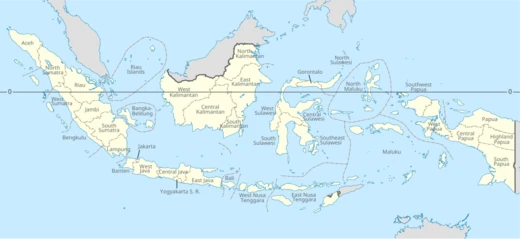
Central Java
Province in central Java, Indonesia, third-most populous in the nation.

via Wikipedia: Java · see source
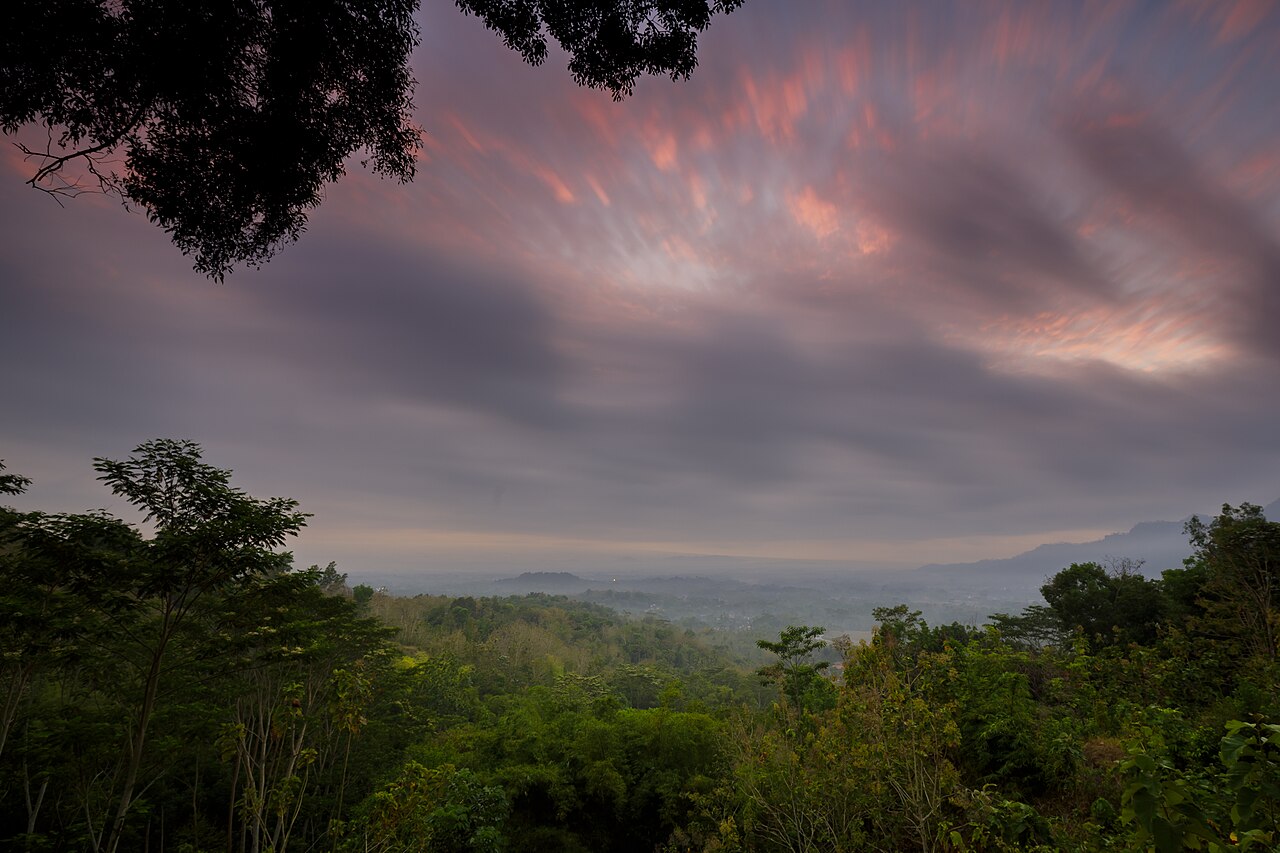
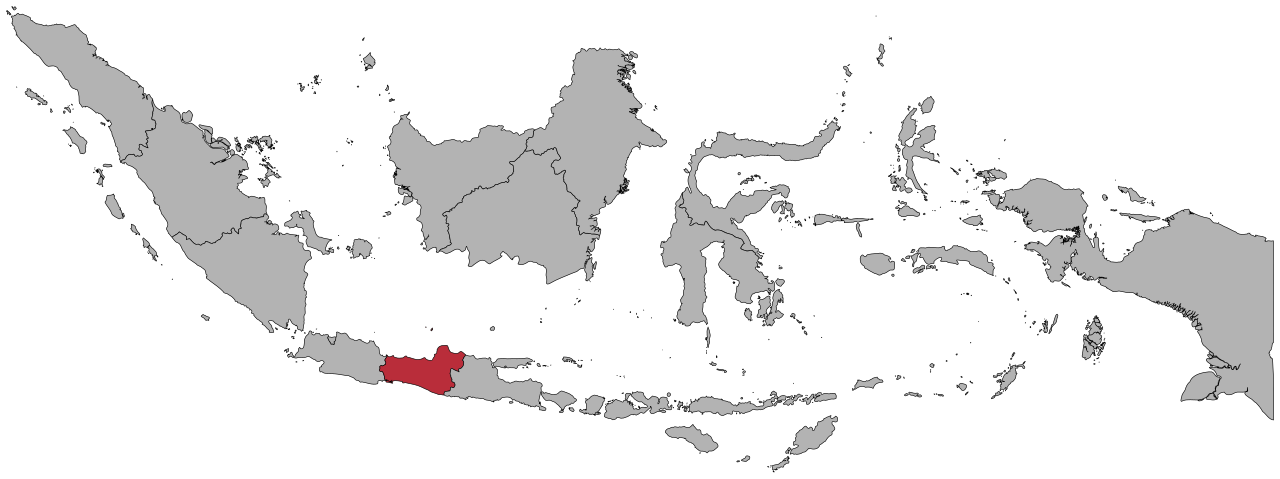
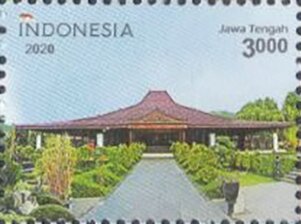
Central Java is a province of Indonesia located in the middle of the island of Java, with its administrative capital at Semarang. It is bordered by West Java to the west, the Indian Ocean and the Special Region of Yogyakarta to the south, East Java to the east, and the Java Sea to the north. Established as a province on 19 August 1945, it is the 25th largest province by area in the country, covering 34,347.43 square kilometers, and as of mid-2025 had an estimated population of over 38 million. While Indonesian is the official language, the daily language of most people is Javanese, with the Solo-Jogja or Mataram dialect considered the standard. The province’s Javanese dialects are broadly divided into two groups: *kulonan* (western), which includes the Banyumasan and Tegal dialects (often called *Basa Ngapak*), and *timuran* (eastern), which includes the Mataram, Semarang, and Pati dialects. In the western districts of Brebes and Cilacap, Sundanese is also spoken, marking the border between Javanese and Sundanese cultural worlds. Central Java is regarded as the heart of Javanese culture, with the ideals of politeness, nobility, and grace from the courts exerting a strong influence on the people. The Javanese cultural area within the province can be divided into two main regions: the *Ngapak* culture west of the Dieng Plateau, Pekalongan, and Kebumen, and the *Kejawèn* culture in the central and eastern parts. The province is renowned for its batik, with distinct styles: the coastal (*gaya pesisir*) style centered in Pekalongan, and the heartland (*gaya kejawèn*) style from Surakarta and Yogyakarta. Its architecture blends old and new, with European colonial buildings in northern coastal cities like Semarang, Tegal, and Pekalongan, and notable religious structures including the Borobudur and Prambanan temple complexes. Javanese court dances are slow and graceful, a style reflected even in folk dances, and are often performed at traditional weddings.
- Capital
- Semarang
- Location
- Central Java, Indonesia
- Major ethnic groups
- Javanese, Sundanese, Chinese Indonesians, Arab Indonesians, Indian Indonesians
Quick Facts
- Native Name
- id · Jawa Tengah
- Official Name
- Province of Central Java / id · Provinsi Jawa Tengah
- Shield Size
- 110
- Motto
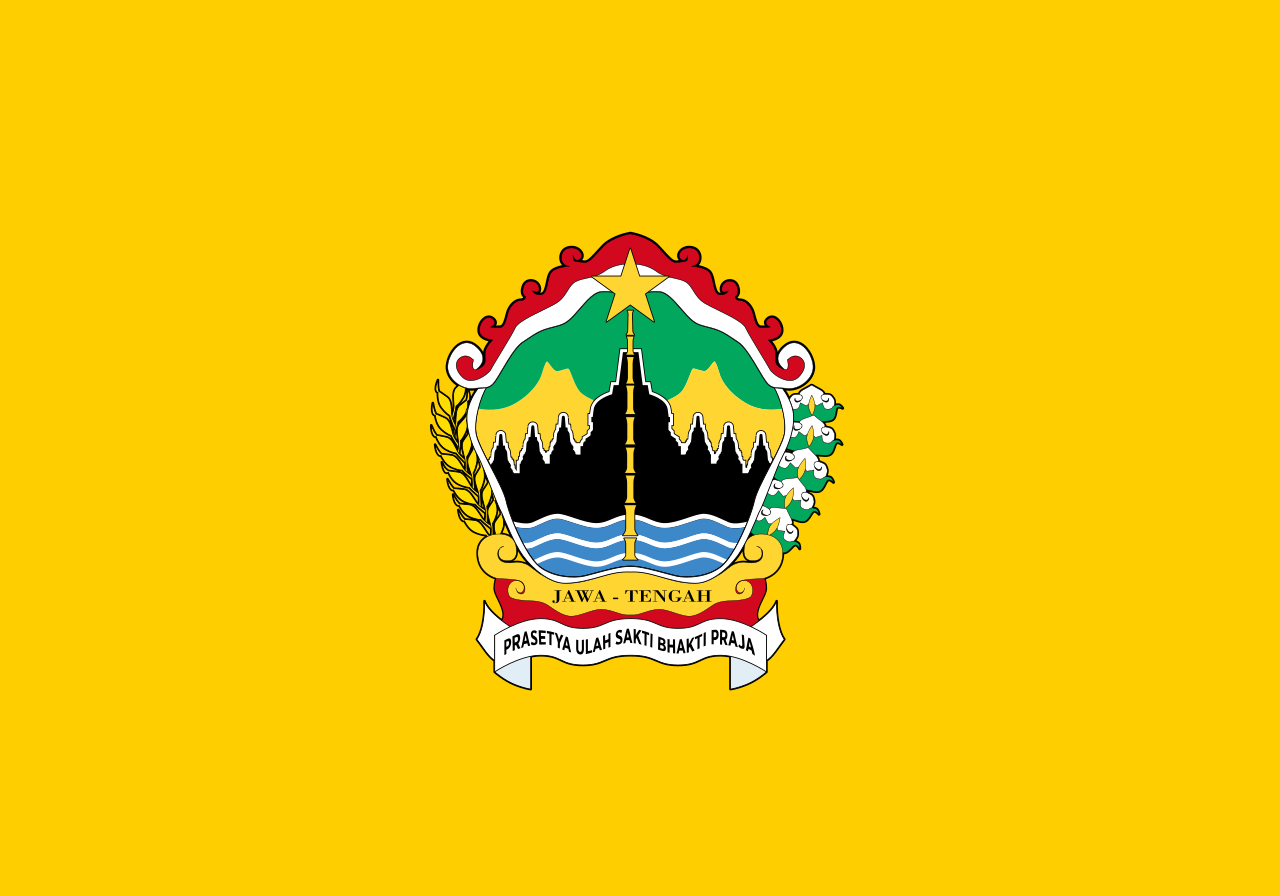
- jv · Prasetya Ulah Sakti Bhakti Praja (Javanese) / ꦥꦿꦱꦼꦠꦾꦲꦸꦭꦃꦱꦏ꧀ꦠꦶꦧꦏ꧀ꦠꦶꦥꦿꦗ / "The Powerful Devotion for the Country"
- Subdivision Type
- Country
- Subdivision Name
- Indonesia
- Subdivision Type1
- Region
- Subdivision Name1
- Java (Western Indonesia)
- Established Title
- Established
- Established Date
- 19 August 1945
- Seat Type
- Capital / and largest city
- Seat
- Semarang
Facts from the source article.
Lore & Background
Central Java is a province on the island of Java, Indonesia, established on 19 August 1945, with Semarang as its capital. The province covers an area of 34,347.43 square kilometers, ranking 25th in size among Indonesian provinces, and had an estimated population of 38,233,930 in mid-2025. Its motto, in Javanese, translates to "The Powerful Devotion for the Country." The region is considered the heartland of Javanese culture, where the ideals of politeness, nobility, and grace from the royal courts have deeply influenced the people, who are often described as soft-spoken and polite. The Javanese language is the primary daily tongue, with the Solo-Jogja (Mataram) dialect regarded as the standard. Two main dialect groups exist: the western *kulonan* (including Banyumasan and Tegal, known as *Basa Ngapak*) and the eastern *timuran* (including Mataram, Semarang, and Pati dialects). A mixed dialect zone lies in Pekalongan and the Kedu Plain. Sundanese is spoken in parts of Brebes and Cilacap districts. Culturally, Central Java is divided into the western Ngapak and central Kejawèn regions, with the eastern Arek cultural boundary lying in East Java. The province features diverse architecture, from European colonial buildings in northern coastal cities like Semarang, Tegal, and Pekalongan, to the ancient Buddhist Borobudur and Hindu Prambanan temple complexes. Traditional Javanese mosques often have Meru-like roofs rather than domes, as seen in the Mosque of Kudus. Central Java is renowned for its batik, with distinct styles: the coastal *gaya pesisir* of Pekalongan and the heartland *gaya kejawèn* of Surakarta and Yogyakarta. Court dances are slow and graceful, influencing folk dances, and are often performed at traditional weddings. The province also has a rich tradition of theatre and performing arts.
Reader's Guide
Central Java's significance lies in its role as a historical and cultural heartland of Java, influencing Indonesia's political, economic, and cultural life. It was a center of Hindu-Buddhist kingdoms like Mataram and Majapahit, and later Islamic sultanates such as Demak and Mataram. The province contains major archaeological sites like Sangiran Early Man Site, with Homo erectus remains, and temples like Borobudur and Prambanan, both UNESCO world heritage sites. During the Dutch colonial period, Central Java was part of the core of the colonial Dutch East Indies. The province was also central to the Indonesian independence movement during the 1930s and 1940s. Today, it remains the third-most populous province in Indonesia, with a diverse population including Javanese, Sundanese, and Chinese, Arab, and Indian Indonesians.
Did You Know?
- Central Java is home to the Sangiran Early Man Site, a UNESCO world heritage site where fossilised remains of Homo erectus dating back 1.3 million years were found along the Bengawan Solo River.
- Four of Indonesia's eight UNESCO world heritage sites are located in Java, including Borobudur Temple and Prambanan Temple in Central Java.
- The most active volcano in Java and also in Indonesia, Mount Merapi (2,930 metres), is located in Central Java.
Demographic Weight and National Dominance
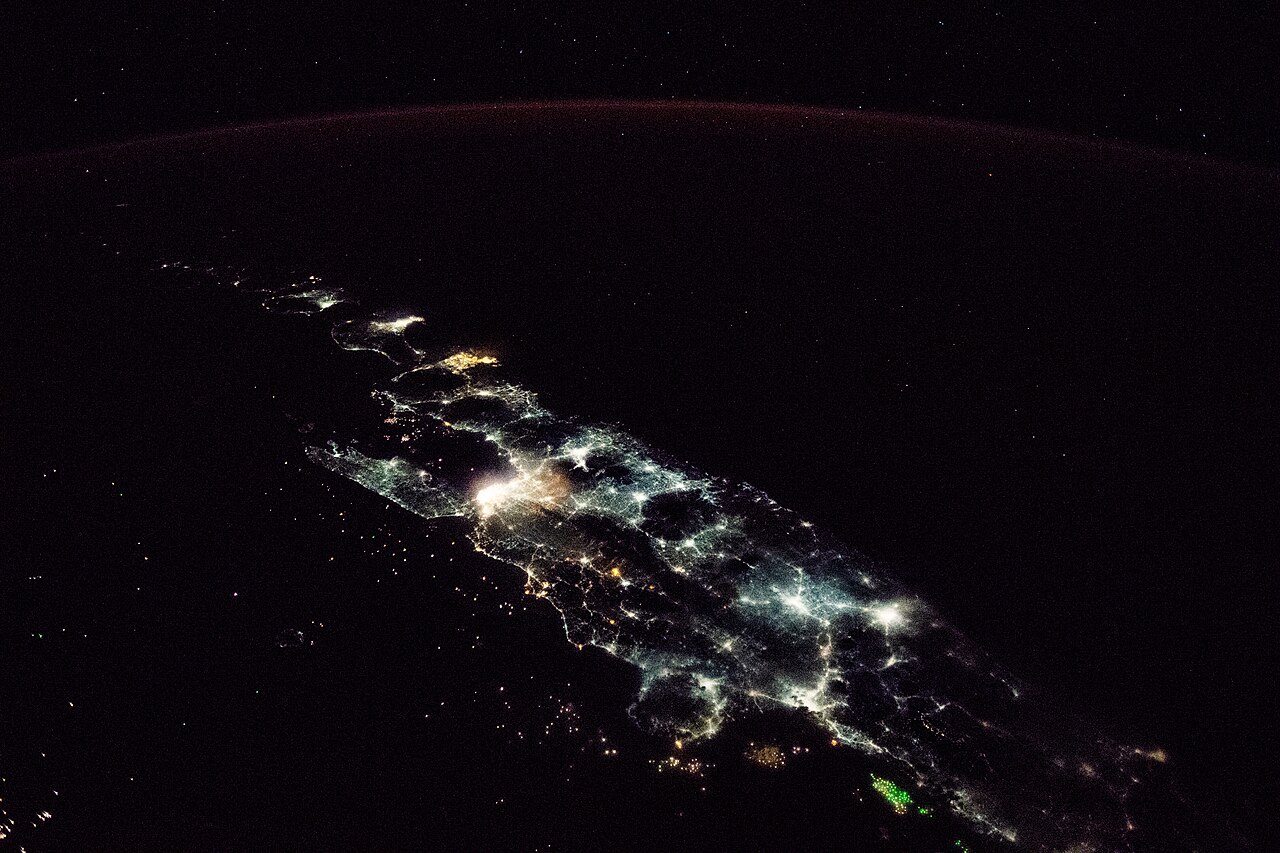
Java holds the distinction of being the most densely inhabited island on Earth, sheltering roughly 159.2 million residents. That staggering figure represents approximately 56 percent of Indonesia's total population, all crammed onto a landmass that accounts for merely seven percent of the nation's territory. The island's gravitational pull on national life is unmistakable: Jakarta, the country's capital, sits on its northwestern shore, and the broader political, economic, and cultural machinery of Indonesia has long been anchored here. The island also served as the crucible for the independence movement of the 1930s and 1940s, making it the stage on which modern Indonesia was forged. Its cultural prestige is further underscored by the fact that four of the nation's eight UNESCO World Heritage designations—Ujung Kulon National Park, the Borobudur and Prambanan temple complexes, and the Sangiran Early Man Site—call Java home. In short, no other single territory in the archipelago carries comparable weight across so many dimensions of national identity.
A Volcanic Spine and Fertile Valleys
The island owes its very existence to the relentless collision of tectonic plates. As the Australian Plate slides beneath the Sunda Plate, volcanic eruptions have built Java layer by layer over deep time. The result is a landscape dominated by a chain of 38 mountains running along an east–west axis, all of which have been active volcanoes at some point in their history. In total the island hosts 112 volcanoes, 35 of them still breathing fire and ash. Mount Semeru towers at 3,676 metres as the highest peak, while Mount Merapi, at 2,930 metres, claims the title of Indonesia's most active volcano. These rugged highlands carve the interior into a patchwork of relatively isolated basins, each well suited to wet-rice cultivation that has produced some of the world's richest paddies. Java also holds the distinction of being the first site where Indonesian coffee was cultivated, a tradition that began in 1699 and continues today with arabica grown on the Ijen Plateau. The 600-kilometre Solo River, fed by the Lawu volcano, is the island's longest waterway, draining into the Java Sea near Surabaya.
A Name Travelled Through Millennia
The etymology of Java remains debated, yet the name's journey through the world's literary traditions is extraordinary. The most widely accepted theory links it to jawa, the foxtail millet plant, tracing back to the Proto-Austronesian root *zawa. The historian Michael Laffan proposed a derivation from an older form *yaba, while the early-nineteenth-century British scholar Stamford Raffles suggested the Malay word jauh, meaning beyond or distant. The toponym first surfaces in foreign texts around the turn of the Common Era. Sanskrit epics such as the Ramayana call it Yavadvīpa, the Tamil epic Maṇimēkalai spells it Shavakam, and the Pāli scripture Mahāniddesa references it as a destination reachable by boat. The Greek geographer Ptolemy rendered it as Iabadiu in his second-century Geographia. Chinese sources evolved their rendering over centuries, from Yèdiào and Yépótí in the early first millennium to the modern Zhǎowā by the Yuan Dynasty. In the later Middle Ages, Arabic writers used the broad term al-Zabaj, which often encompassed both Sumatra and Java, and it was this Arabic form rather than the Greek that most influenced late medieval European cartographers.
A Mosaic of Tongues and Peoples
Java is a remarkable linguistic and ethnic tapestry woven across just four main spoken languages: Javanese, Sundanese, Madurese, and Betawi. The Javanese people occupy the central and eastern stretches of the island, while the Sundanese are concentrated in the west. The Madurese, found in the eastern salient, are in fact migrants from the nearby Madura Island, which is administratively part of East Java Province. The Betawi, centered in the capital Jakarta, represent a hybrid community drawn from various ethnic groups across Indonesia. Despite this diversity, most residents are bilingual, with Indonesian serving as either a first or second language. Religiously, the majority of Javanese residents are Muslim, yet the population encompasses a wide spectrum of beliefs, ethnicities, and cultural practices. Administratively, the island is divided into four provinces—Banten, West Java, Central Java, and East Java—alongside two special regions, Jakarta and Yogyakarta, each carrying a distinct constitutional status within the Indonesian state.
Gallery
Frequently Asked Questions
Who is Central Java?
Central Java is a province positioned in the middle of Java island, with Semarang serving as its administrative capital. It ranks as the third-most populous province in Indonesia, housing roughly 36.5 million people per the 2020 Census.
What is Central Java's role in the Javanese story?
Widely regarded as the cultural heart of Javanese civilization, the province has long been a seat of power for Hindu-Buddhist kingdoms, Islamic sultanates, and the Indonesian independence movement. Its influence stretches across centuries of religious and political transformation on the island.
Where does Central Java sit on the map?
It occupies the central stretch of Java, bordered by West Java to the west, East Java to the east, and the Special Region of Yogyakarta to the south, while the Java Sea and Indian Ocean frame its northern and southern coasts. The province covers approximately 34,347 square kilometers.
How many people call Central Java home?
The 2020 Census counted 36,516,035 residents, and a mid-2025 estimate places the figure near 38.2 million. This makes it the third-most populous province both on Java and across all of Indonesia.
Who are the major ethnic groups in Central Java?
The province is home to a diverse population that includes Javanese, Sundanese, Chinese Indonesians, Arab Indonesians, and Indian Indonesians, reflecting centuries of trade, migration, and cultural exchange.
More in Provinces Of Indonesia 1-24
Spotted an error? Know more?
This is a living reference — every entry is fact-audited, and reader corrections feed straight into our audit queue. Suggest an edit · See this site's audit record