
Sleep
A conserved behavioral state essential for restoration and brain cleansing.

Tungster24 · CC BY-SA 4.0
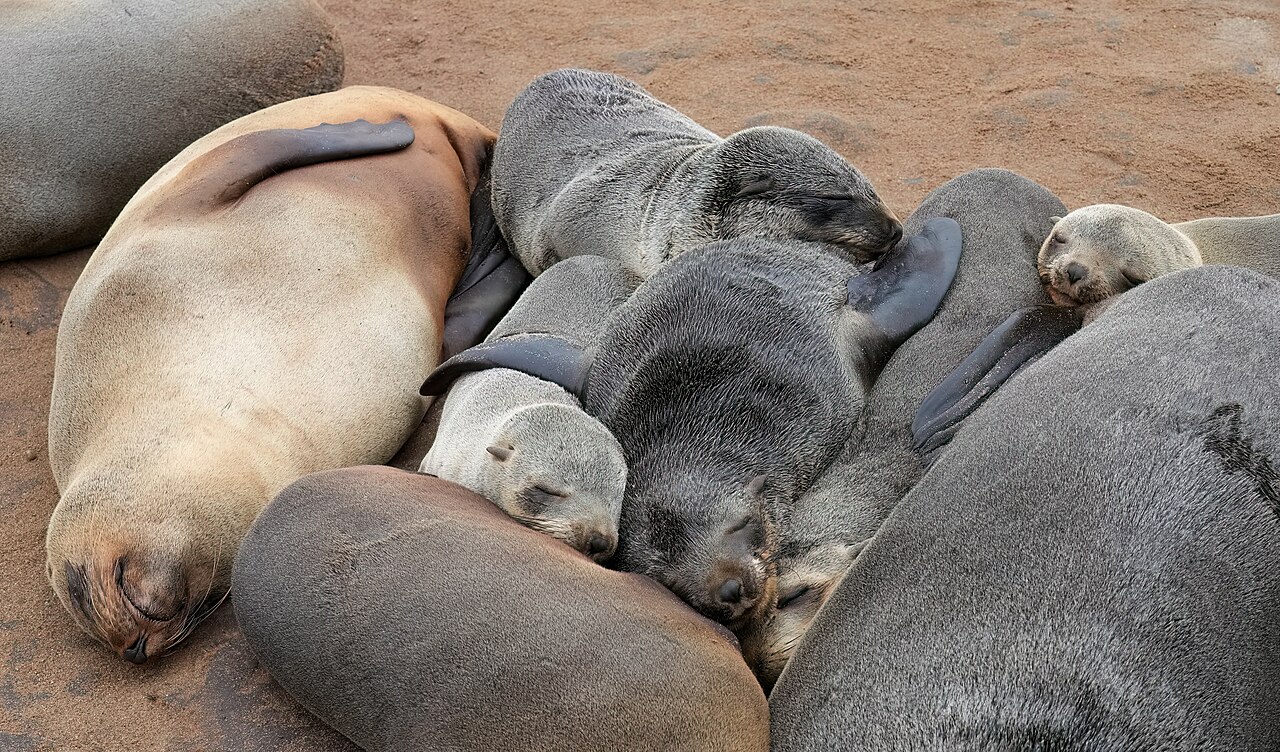
Sleep is a biological state where both mental and physical activity wind down, consciousness shifts, and some sensory input gets muted. Muscle activity drops sharply, and while a sleeping person is less responsive to their surroundings than when awake, the brain remains active—far more so than in a coma or other disorders of consciousness. Sleep happens in repeating cycles that flip between two distinct modes: rapid eye movement (REM) sleep and non-REM sleep. Despite its name, REM sleep involves more than just eye movements; it also brings near-total muscle paralysis. Dreams—sequences of images, ideas, emotions, and sensations that arise involuntarily—tend to occur during certain sleep stages. Most of the body’s systems shift into an anabolic state during sleep, working to repair the immune, nervous, skeletal, and muscular systems. This restoration is crucial for mood, memory, and cognitive function, and it heavily influences the endocrine and immune systems. An internal circadian clock nudges humans to sleep at night when it’s dark, though daytime naps—currently being studied as “power naps”—can also play a role. Researchers are still investigating sleep’s many purposes and mechanisms, but it appears to be a deeply conserved behavior across animal evolution, possibly dating back hundreds of millions of years. One leading idea is that sleep originally evolved as a way for the brain to flush out waste, including amyloid proteins, and this cleansing may be a core function. Humans can experience a range of sleep disorders: dyssomnias like insomnia, hypersomnia, narcolepsy, and sleep apnea; parasomnias such as sleepwalking and REM sleep behavior disorder; bruxism; and circadian rhythm sleep disorders. Artificial light has dramatically changed human sleep patterns. Outdoor lighting and digital screens (smartphones, televisions) emit large amounts of blue light, which mimics daytime and disrupts the release of melatonin, the hormone that helps regulate the sleep cycle. The brain undergoes the most striking physiological changes during sleep. It uses significantly less energy than when awake, especially during non-REM sleep. In areas where activity drops, the brain replenishes its supply of adenosine triphosphate (ATP), the molecule that stores and transports energy. In quiet wakefulness, the brain accounts for about 20% of the body’s total energy use, so this reduction has a noticeable impact on overall energy consumption. Sleep also raises the sensory threshold: a sleeping person perceives fewer stimuli but can still respond to loud noises or other salient events. During slow-wave sleep, the body secretes bursts of growth hormone, and all sleep—even daytime naps—is linked to prolactin release. Key tools for monitoring sleep include electroencephalography (EEG) for brain waves, electrooculography (EOG) for eye movements, and electromyography (EMG) for skeletal muscle activity. Collecting these measurements together is called polysomnography, typically done in a sleep lab. Researchers also use simplified electrocardiography (EKG) for heart activity and actigraphy to track movement. The electrical activity captured by EEG appears as brain waves. The amplitude of these waves at specific frequencies corresponds to different points in the sleep-wake cycle—whether someone is awake, falling asleep, or asleep. Alpha, beta, theta, gamma, and delta waves each appear in various sleep stages, with distinct frequencies and amplitudes. Alpha waves occur when a person is resting but fully conscious, often with eyes closed and body still, as the system begins to slow down. Beta waves take over when someone is alert and focused, such as while completing a task; they have the highest frequencies and lowest amplitudes. Gamma waves appear during intense concentration. Theta waves emerge when a person is awake and continue into Stage 1 and Stage 2 of sleep. Delta waves are seen in Stages 3 and 4, during the deepest sleep. Sleep splits into two broad types: non-rapid eye movement (non-REM or NREM) sleep and rapid eye movement (REM) sleep. They are so different that physiologists consider them distinct behavioral states. Non-REM sleep comes first, and after a transitional period, it becomes slow-wave or deep sleep. During this phase, body temperature and heart rate drop, and the brain uses less energy. REM sleep, also called paradoxical sleep, makes up a smaller portion of total sleep time. It is the main period for dreams (or nightmares) and is marked by desynchronized, fast brain waves, eye movements, loss of muscle tone, and a suspension of homeostasis. The sleep cycle alternates between NREM and REM roughly every 90 minutes, repeating 4 to 6 times in a full night. The American Academy of Sleep Medicine (AASM) divides NREM into three stages: N1, N2, and N3 (the last also called delta or slow-wave sleep). A typical cycle goes N1 → N2 → N3 → N2 → REM, with REM occurring as a person returns from deep sleep to lighter stages.
Quick Facts
- Field
- Physiology, Neuroscience
- Known for
- Repeating cycles of REM and non-REM sleep
- circadian regulation
- and restorative functions
Facts from the source article.
Lore & Background
Sleep involves a marked decrease in muscle activity and interactions with the surrounding environment, though it still involves active brain patterns. The brain uses significantly less energy during sleep, especially during non-REM sleep, and restores its supply of adenosine triphosphate (ATP). During slow-wave sleep, humans secrete bursts of growth hormone, and all sleep is associated with the secretion of prolactin. The sleep cycle of alternate NREM and REM sleep takes an average of 90 minutes, occurring 4–6 times in a good night's sleep. Non-REM sleep occurs first and includes slow-wave or deep sleep, during which body temperature and heart rate fall. REM sleep, also known as paradoxical sleep, is the main occasion for dreams and is associated with desynchronized brain waves, eye movements, and loss of muscle tone. Sleep timing is controlled by the circadian clock (Process C) and sleep-wake homeostasis (Process S). The suprachiasmatic nucleus (SCN) is considered the most important nexus for the circadian process. The use of artificial light, especially blue light from screens, disrupts the release of the hormone melatonin needed to regulate the sleep cycle.
Gallery



Frequently Asked Questions
What is Sleep?
Sleep is a recurring physiological state in which the brain and body dial down their activity, shifting consciousness and dampening sensory processing. It unfolds in repeating cycles that alternate between REM and non-REM phases.
What does Sleep actually do for the body?
It provides a dedicated maintenance window during which the immune, nervous, skeletal, and muscular systems carry out repair and restoration. It also gives the brain a chance to flush out the metabolic waste products that build up while you are awake.
How is Sleep regulated day to day?
An internal circadian clock sets a roughly 24-hour schedule that tells the body when to prepare for rest. That clock coordinates the timing and order of REM and non-REM cycles so they repeat in a predictable sequence night after night.
Why is Sleep considered so critical to health?
Without it, multiple organ systems lose their primary repair window, leading to weakened immunity, impaired tissue healing, and disrupted neural function. It is one of the most fundamental physiological requirements for long-term survival.
How did Sleep evolve across species?
Sleep is a deeply conserved behavior shared across a wide range of animal lineages, pointing to a very early origin in evolutionary history. One leading hypothesis is that it originally emerged as a strategy allowing the brain to clear out accumulated waste products.
More in Physiology & Medicine
Spotted an error? Know more?
Reader corrections go straight into our review queue. Suggest an edit · How this site is sourced