Acne
A common skin condition involving clogged follicles, with genetic and hormonal factors, treatable by various methods.

Wikimedia Commons · CC BY 4.0
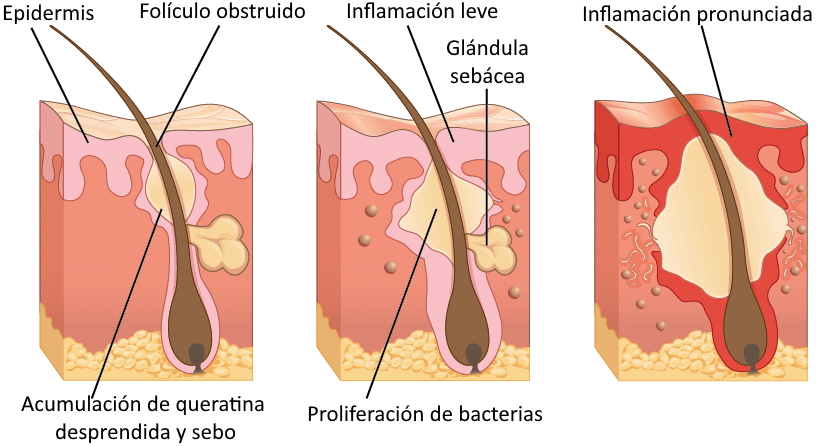
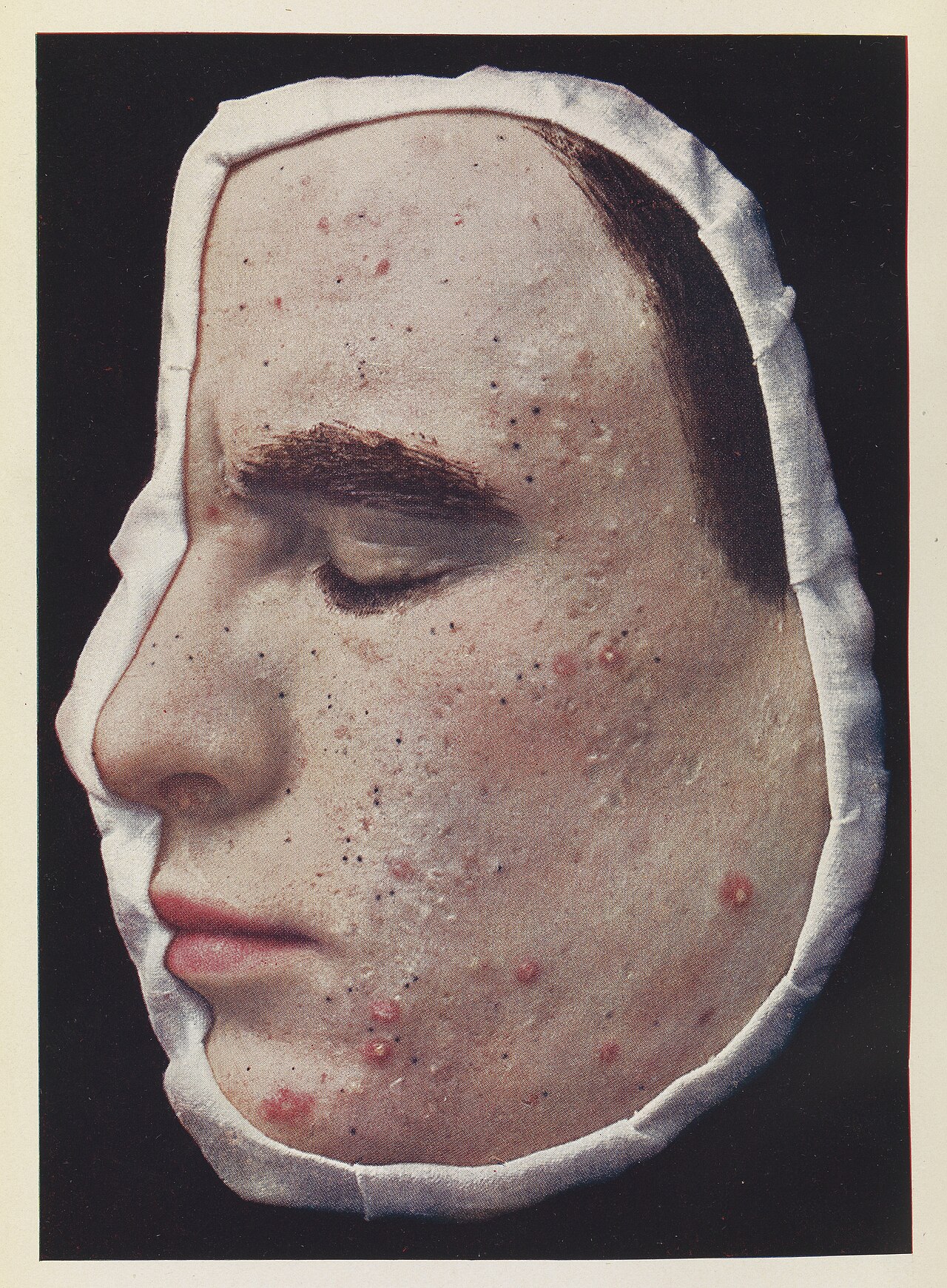
It is the eighth-most common chronic disease worldwide, affecting about 633 million people in 2015.[1] The condition can lead to psychological problems including anxiety, reduced self-esteem, and depression.[2][3] A long-term skin disorder, acne vulgaris, arises when hair follicles become obstructed by a mixture of dead skin cells and sebum, and it most often appears on body sites rich in oil glands such as the face, upper chest, and back.[2]
Quick Facts
- Field
- Dermatology
- Symptoms
- Blackheads
- whiteheads
- pimples
- oily skin
- scarring
- Complications
- Anxiety
- reduced self-esteem
- depression
- thoughts of suicide
- Onset
- Puberty
- Types
- blackhead
- whitehead
- papule
- pustule
- nodule
- cyst
- Risks
- Genetics
- Differential
- Folliculitis
- rosacea
- hidradenitis suppurativa
- miliaria
- perioral dermatitis
- Treatment
- Lifestyle changes
- medications
- medical procedures
Facts from the source article.
Key facts and history
Heritability accounts for 81% of the population variance in acne susceptibility.[4] Androgens, a class of hormones, are thought to contribute to the underlying disease process by stimulating greater sebum output.[5] The anaerobic bacterium Cutibacterium acnes plays a part in acne development, although its precise contribution remains incompletely understood.[6] Diets with a high glycemic load have been observed to influence acne severity to varying extents.[7]
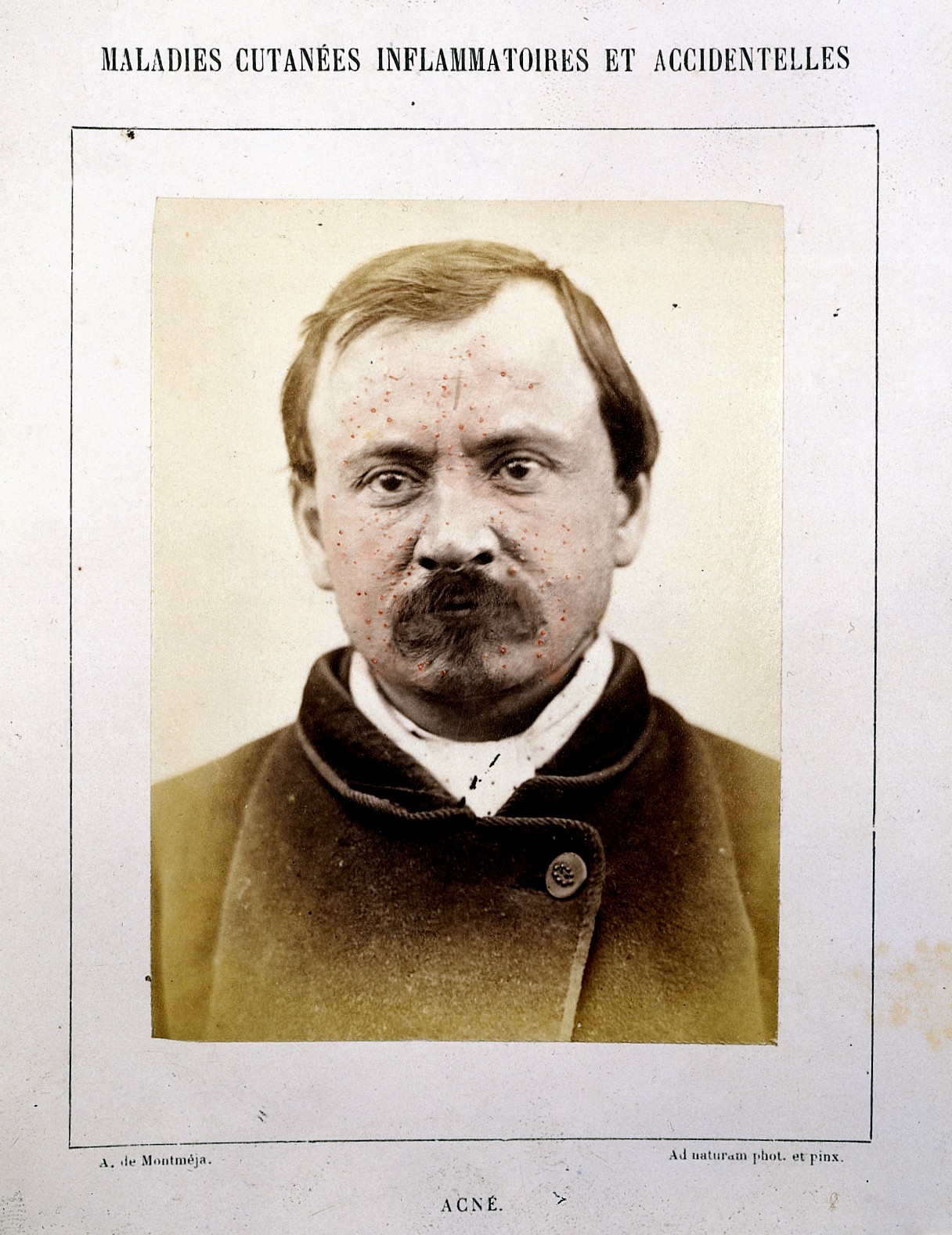
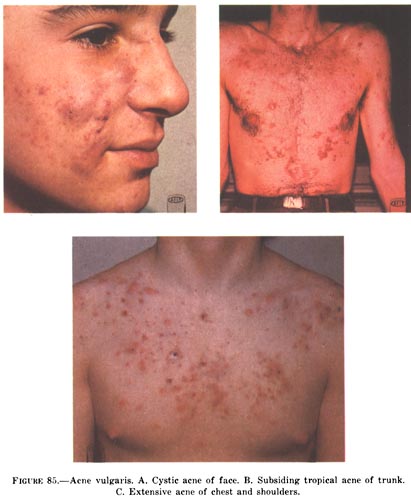
Blackheads, whiteheads, papules, pustules, nodules, and cysts constitute the six principal categories of acne lesions.[8] Isotretinoin is regarded as the most potent pharmaceutical option for treating acne.[9]
What the research sources say
The Titus review in American Family Physician states that grading acne based on lesion type and severity can help guide treatment.[10] Mahmood and Bowe note in the Journal of Drugs in Dermatology that the prevalence of adult acne in the US appears to be increasing over the last few decades.[11] The same authors report that genetics can strongly influence a patient's risk of developing acne.[11] The Healio article on medical nutrition therapy observes that cause and effect is rarely observed with diet and dermatologic conditions, but associations have been drawn between diet and disease severity.[12]
The National Institute of Arthritis and Musculoskeletal and Skin Diseases states that for most people, acne tends to go away by their thirties, but some in their forties and fifties continue to have the problem.[13]
Gallery
References
- Wikipedia, "Acne" (CC BY-SA 4.0), which cites: "Global, regional, and national incidence, prevalence, and years lived with disability for 310 diseases and injuries, 1990-2015: a systematic analysis for the Global Burden of Disease Study 2015", Lancet, October 2016, p; "The global burden of skin disease in 2010: an analysis of the prevalence and impact of skin conditions", The Journal of Investigative Dermatology, June 2014, p. 1527–1534; "Pathways to inflammation: acne pathophysiology", European Journal of Dermatology, May–June 2011, p. 323–33; "Acne vulgaris", The BMJ, May 2013, p. 30–33; "Ac en.wikipedia.org
- Wikipedia, "Acne" (CC BY-SA 4.0), which cites: "Emerging drugs for the treatment of acne", Expert Opinion on Emerging Drugs, March 2015, p. 91–101; "Selected Disorders of Skin Appendages--Acne, Alopecia, Hyperhidrosis", The Medical Clinics of North America, November 2015, p. 1195–211; "Epidemiology of acne vulgaris", The British Journal of Dermatology, March 2013, p. 474–85; "Acne vulgaris", Nature Reviews. Disease Primers, September 2015; "Frequently Asked Questions: Acne", U.S. Department of Health and Human Services, Office of Public Health and Science, Office on Women's Health, July 2009; en.wikipedia.org
- Wikipedia, "Acne" (CC BY-SA 4.0), which cites: "Acne vulgaris", The BMJ, May 2013, p. 30–33 (we also read that source) en.wikipedia.org
- Wikipedia, "Acne" (CC BY-SA 4.0), which cites: "Acne Vulgaris", The New England Journal of Medicine, October 2018, p. 1343–1352; "Epidemiology of acne vulgaris", The British Journal of Dermatology, March 2013, p. 474–85; "Acne Vulgaris", The New England Journal of Medicine, October 2018, p. 1343–1352 (we also read that source) en.wikipedia.org
- Wikipedia, "Acne" (CC BY-SA 4.0), which cites: "Epidemiology of acne vulgaris", The British Journal of Dermatology, March 2013, p. 474–85; "Epidemiology of acne vulgaris", The British Journal of Dermatology, March 2013, p. 474–85; "Acne vulgaris: pathogenesis, treatment, and needs assessment", Dermatologic Clinics, January 2012, p. 99–106, viii-ix; "Acne vulgaris in children and adolescents", Minerva Pediatrica, August 2011, p. 293–304; "Clinical practice. Acne", The New England Journal of Medicine, April 2005, p. 1463–72; "Acne Vulgaris", The New England Journal of Medicine, October 2018, p. en.wikipedia.org
- Wikipedia, "Acne" (CC BY-SA 4.0), which cites: "Epidemiology of acne vulgaris", The British Journal of Dermatology, March 2013, p. 474–85; "Immunotherapy for acne vulgaris: current status and future directions", American Journal of Clinical Dermatology, December 2013, p. 429–35 (original not read by us) en.wikipedia.org
- Wikipedia, "Acne" (CC BY-SA 4.0), which cites: "[Diet and acne update: carbohydrates emerge as the main culprit]", Journal of Drugs in Dermatology, April 2014, p. 428–35; "Diet in dermatology: Part I. Atopic dermatitis, acne, and nonmelanoma skin cancer", Journal of the American Academy of Dermatology, December 2014, p. 1039.e1–1039.e12; "Acne: risk indicator for increased body mass index and insulin resistance", Acta Dermato-Venereologica, November 2013, p. 644–9; "Diet in dermatology: Part I. Atopic dermatitis, acne, and nonmelanoma skin cancer", Journal of the American Academy of Dermatolog en.wikipedia.org
- Wikipedia, "Acne" (CC BY-SA 4.0), which cites: ""acne", "vulgar"", Oxford University Press, 2009; "Acne vulgaris", The BMJ, May 2013, p. 30–33; "Acne Vulgaris", The New England Journal of Medicine, October 2018, p. 1343–1352; "Acne vulgaris", The BMJ, May 2013, p. 30–33; "Acne vulgaris", The BMJ, May 2013, p. 30–33; "Acne vulgaris", The BMJ, May 2013, p. 30–33; "Fitzpatrick's Dermatology in General Medicine", McGraw-Hill, 2012, p. 897–917 (we also read that source) en.wikipedia.org
- Wikipedia, "Acne" (CC BY-SA 4.0), which cites: "[Diet and acne update: carbohydrates emerge as the main culprit]", Journal of Drugs in Dermatology, April 2014, p. 428–35; Titus, "Diagnosis and Treatment of Acne", American Family Physician, 15 October 2012, p. 734–740; Titus, "Diagnosis and Treatment of Acne", American Family Physician, 15 October 2012, p. 734–740; "Propionibacterium acnes: an update on its role in the pathogenesis of acne", Journal of the European Academy of Dermatology and Venereology, March 2014, p. 271–8; Titus, "Diagnosis and Treatment of Acne", American Family Physician, en.wikipedia.org
- Titus, "Diagnosis and Treatment of Acne", American Family Physician, 15 October 2012, p. 734–740. facts only, no text reused. aafp.org
- "[Diet and acne update: carbohydrates emerge as the main culprit]", Journal of Drugs in Dermatology, April 2014, p. 428–35. facts only, no text reused. jddonline.com
- "Medical nutrition therapy shows positive benefits in dermatologic conditions", healio.com. facts only, no text reused. healio.com
- Garrick, "Acne", National Institute of Arthritis and Musculoskeletal and Skin Diseases, 1 September 2016. facts only, no text reused. niams.nih.gov
Each numbered sentence above was checked against the source it cites before publication. Sentences citing Wikipedia adapt text from the English Wikipedia article Acne (contributors), used under CC BY-SA 4.0; this entry is available under the same licence. Other sources were used for facts only; no text or images are copied from them.
More in Physiology & Medicine
Spotted an error? Know more?
Reader corrections go straight into our review queue. Suggest an edit · How this site is sourced