KeyBank Center
Home of the Buffalo Sabres since 1996.

Michael Barera · CC BY-SA 4.0
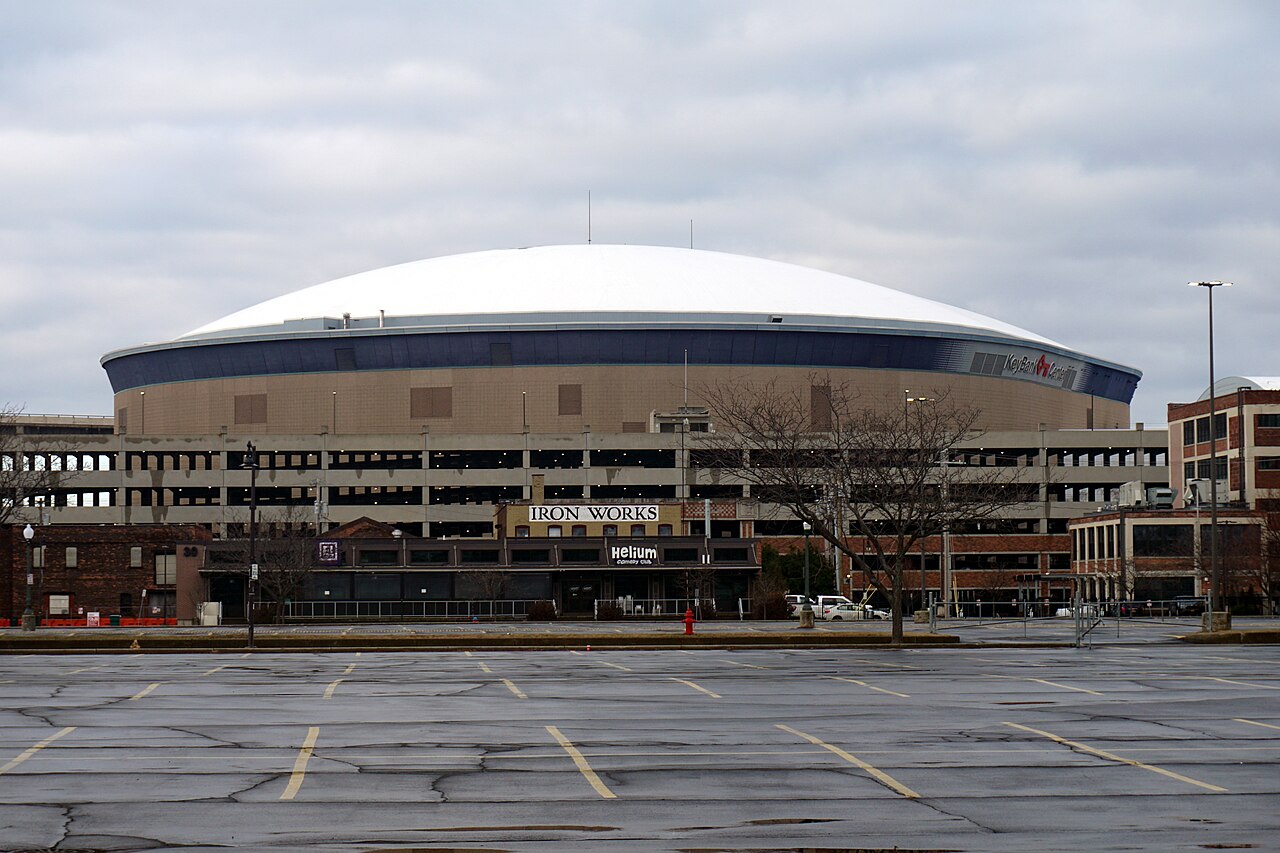
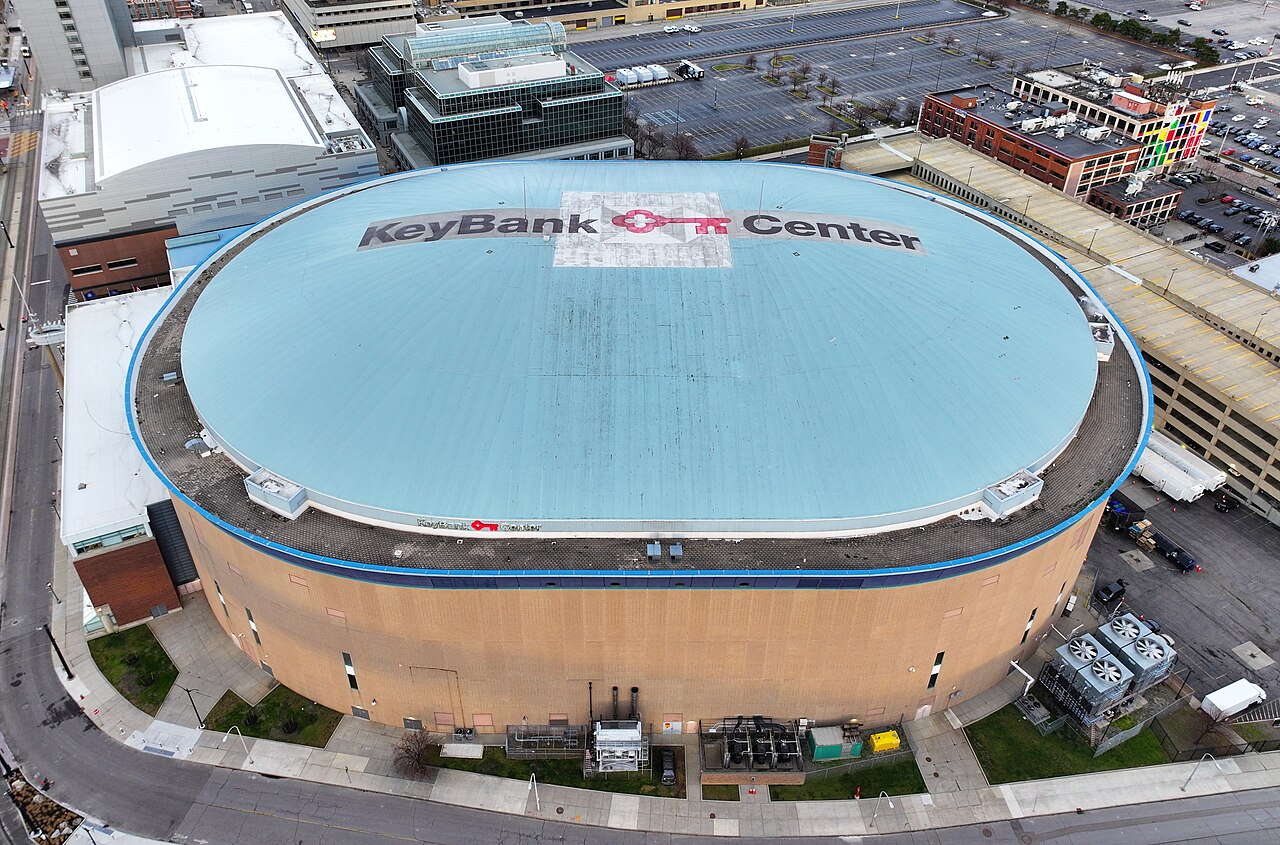
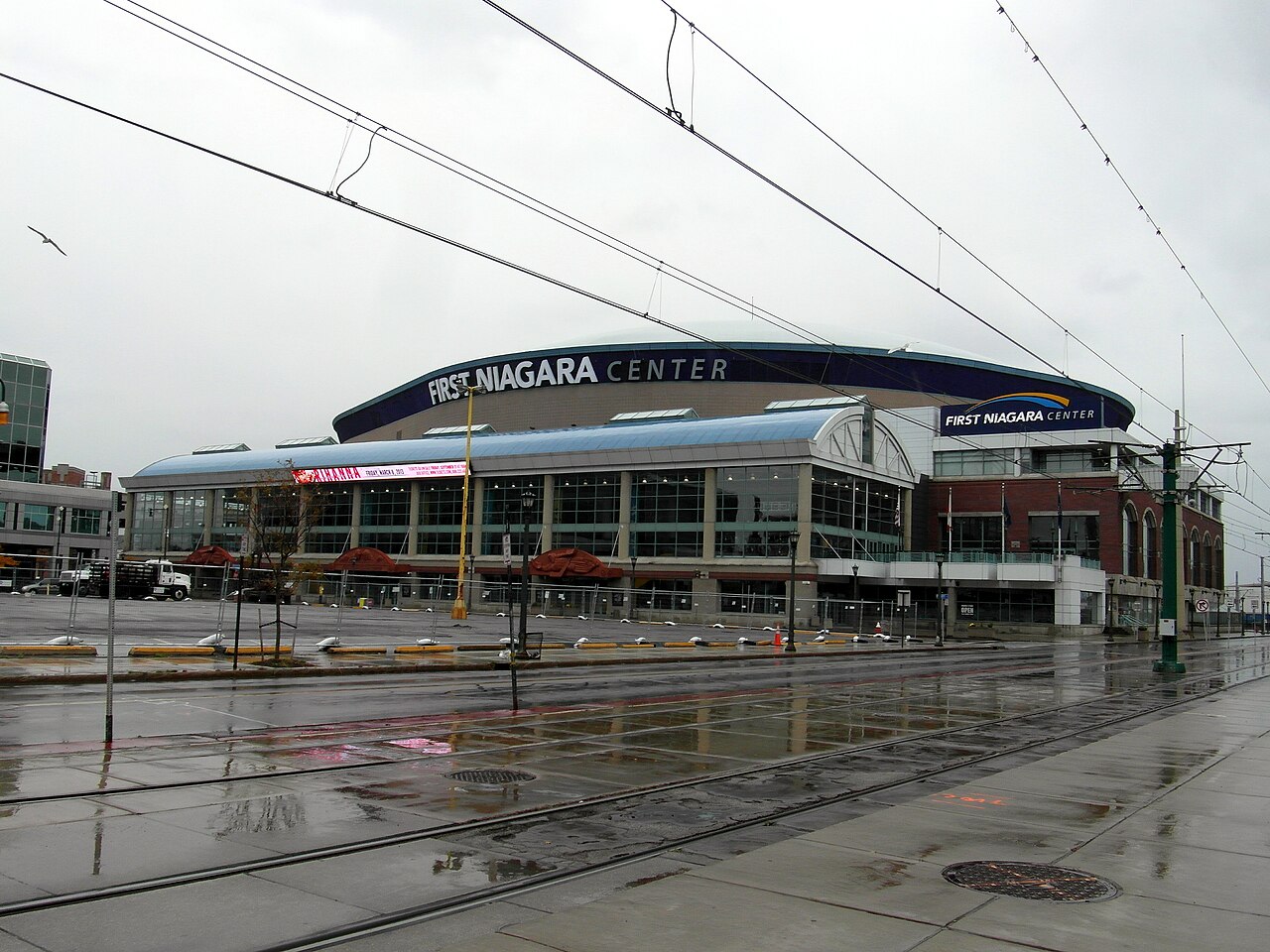
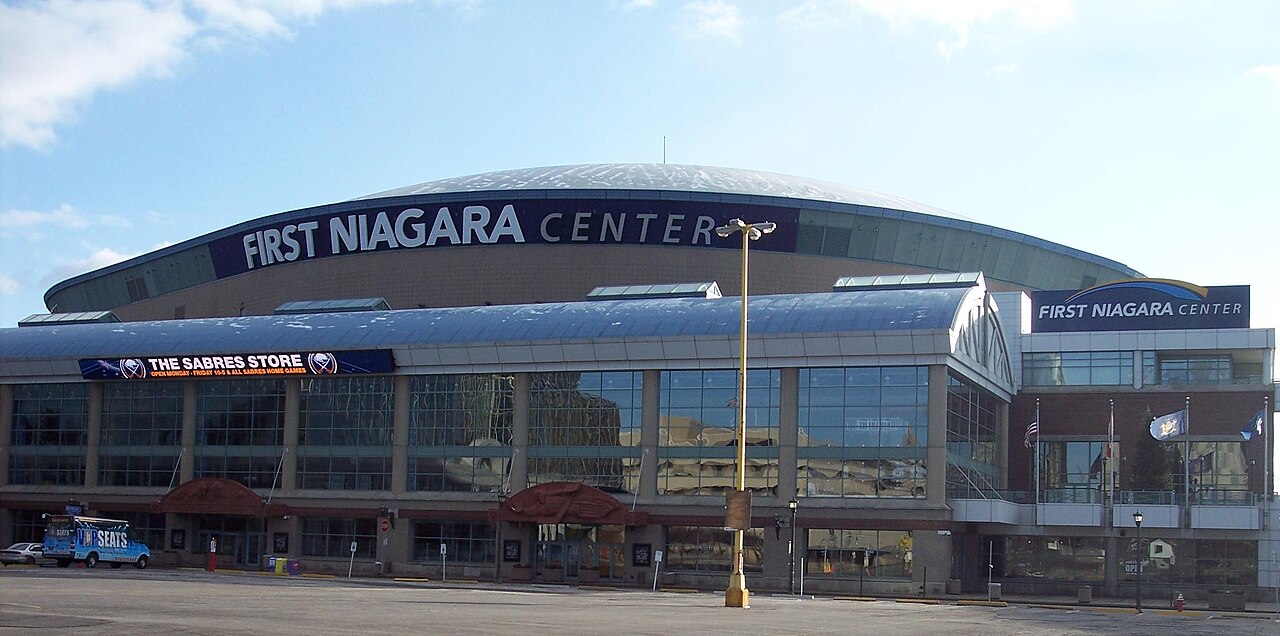
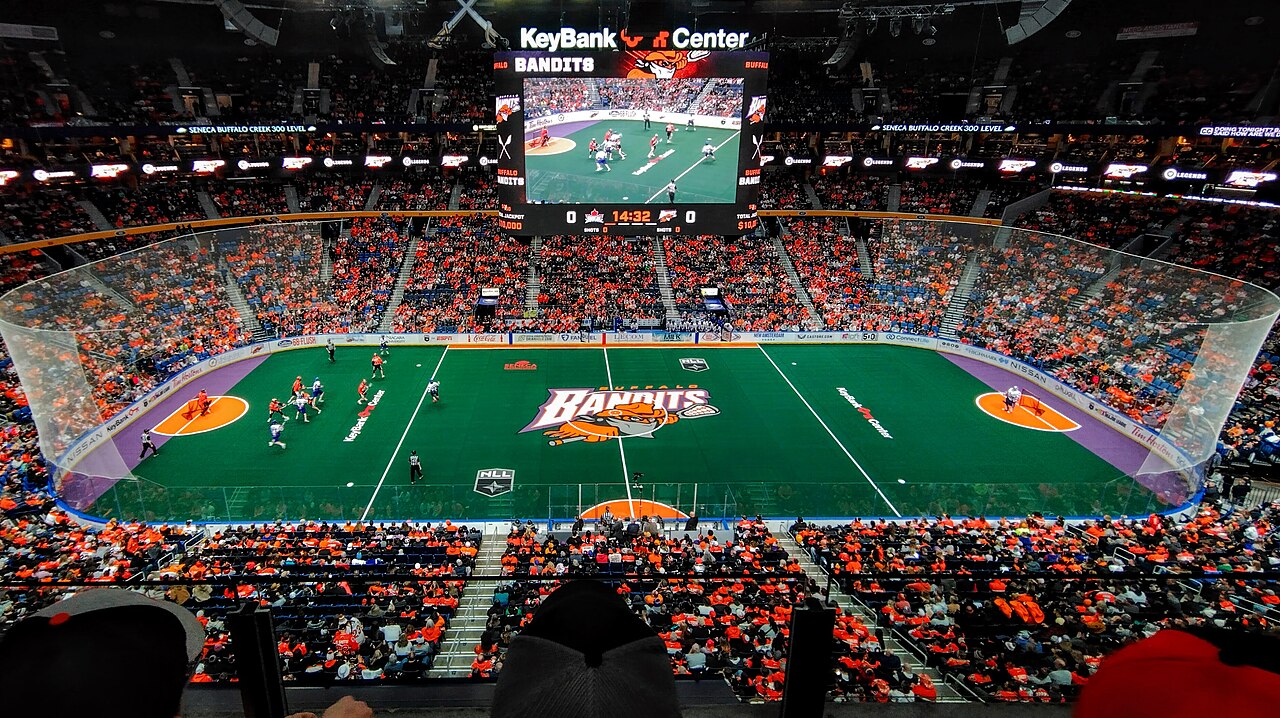
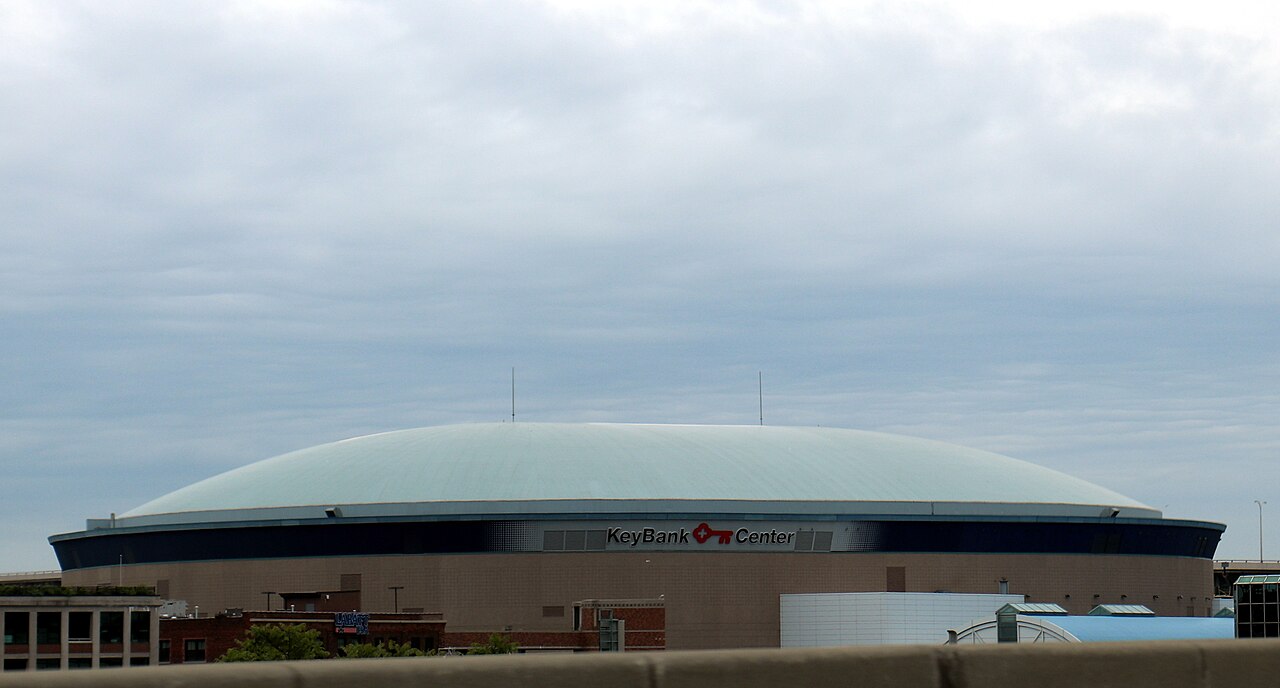
KeyBank Center, a multi-purpose indoor arena in Buffalo, New York, opened on September 21, 1996, as Crossroads Arena. It replaced the Buffalo Memorial Auditorium, which had been the Sabres' home from 1970 to 1996. The venue has undergone several name changes: Marine Midland Arena, HSBC Arena, and First Niagara Center before becoming KeyBank Center. With a seating capacity of 19,070, it is the largest indoor arena in Western New York. Since 1996, it has been the home of the NHL's Buffalo Sabres, and it also hosts the Buffalo Bandits of the National Lacrosse League. Since 2015, the arena has co-hosted the annual NHL draft combine alongside the Harborcenter.
The arena's construction cost $127.5 million (roughly $262 million in 2025 dollars). Its downtown location was originally proposed in the 1960s for a domed stadium intended for the Buffalo Bills and a potential MLB team, but that project was abandoned. On November 16, 1996, just hours before a Sabres-Bruins game, the arena's original eight-sided Daktronics JumboTron fell to the ice while being remotely moved. No one was injured, but the game was postponed, and the scoreboard was replaced later that season.
The first alteration came after the 1998–1999 hockey season, when 95 seats were added behind the last row of the 300 level, raising hockey and lacrosse capacity from 18,595 to 18,690. In 2002–2003, the matrix board on the second bowl's face was replaced with an LED ribbon, and the original seamless glass boards were swapped for boards with clear plastic stanchions that gave upon impact. Prior to the 2007–2008 season, two illuminated Sabres logos were installed in the upper pavilion, new LED ribbon boards were added to the seating bowl, and a new HD Daktronics scoreboard was installed. That scoreboard features four large HD screens, two 360-degree LED ribbons, and Sabres logos that emit smoke from the buffalo's nostrils after goals or home wins. Later in 2008, a mural near the main entrance commemorated the 2008 NHL Winter Classic at Highmark Stadium in Orchard Park.
The fourth major update, during summer and fall of 2011, involved a $6 million renovation led by Cannon Design. The Sabres' locker room expanded from 8,000 to 15,220 square feet, becoming a circular room with illuminated logos on floor and ceiling.
Quick Facts
- Address
- 1 Seymour H. Knox III Plaza
- Location
- Buffalo, New York, U.S.
- Groundbreaking
- November 4, 1994
- Opened
- September 21, 1996
- Owner
- Erie County (lands owned by the City of Buffalo)
- Operator
- Buffalo Sabres
- Cost
- $127.5 million / ($ in US dollarsUS)
- Architect
- Ellerbe Becket / Bergmann Associates PC
- General Contractor
- Huber, Hunt & Nichols
- Former Names
- Marine Midland Arena (1996–2000) / HSBC Arena (2000–2011) / First Niagara Center (2011–2016)
- Tenants
- Buffalo Sabres (NHL) 1996–present / Buffalo Blizzard (NPSL) 1996–2001 / Buffalo Wings (RHI) 1997 / Buffalo Bandits (NLL) 1997–present / Buffalo Destroyers (AFL) 1999–2003
- Capacity
- Basketball: 19,200 / Concerts: 18,500 / Ice hockey/Lacrosse: 18,595 (1996–1999) / 18,690 (1999–2013) / 19,070 (2013–present) / Wrestling: 16,597
Facts from the source article.
Lore & Background
Originally known during construction as Crossroads Arena, the venue opened on September 21, 1996, replacing Buffalo Memorial Auditorium. Its central downtown location was originally proposed as the site of a domed stadium in the 1960s for the Buffalo Bills and a potential Major League Baseball team before that project was abandoned. On November 16, 1996, the arena's first JumboTron fell to the ice while being remotely moved, minutes after practice ended and hours before a game between the Buffalo Sabres and Boston Bruins; no one was injured, but the game was postponed. The scoreboard was replaced later that season.
Reader's Guide
KeyBank Center has undergone numerous updates since opening. The first update added 95 seats after the 1998-1999 season. In 2002-2003, a LED ribbon replaced the matrix board and seamless glass boards were replaced with boards having clear plastic stanchions. Prior to the 2007-2008 season, a new HD scoreboard with four large HD video screens and LED ribbon boards was installed, along with speaker upgrades. A major renovation in summer and fall 2011 included new locker rooms, training facilities, and public space upgrades, costing $6 million. The ice rink received a new dehumidifier system and cooling tower, and Zamboni machines were upgraded with laser beam leveling. In 2012, the Tops Markets Alumni Plaza was created, featuring a bronze statue of The French Connection. The arena's capacity was raised to 19,070 after the 2011-12 season. In 2016, the arena was renamed from First Niagara Center to KeyBank Center, with new exterior signage and an LED lighting system. The main scoreboard and roof were replaced in spring/summer 2024 with a 27 ft. x 43 ft. Mitsubishi scoreboard, the largest center-hung video board in an indoor sports arena in New York State.
Did You Know?
- The arena's original JumboTron fell to the ice on November 16, 1996, hours before a Sabres-Bruins game, but no one was injured.
- The arena's capacity of 19,070 is symbolic of the team's founding in 1970.
- The arena was originally proposed as the site of a domed stadium for the Buffalo Bills and a potential MLB team in the 1960s.
Origins & the JumboTron Fiasco
The downtown Buffalo site carried a long history of ambitious plans before the arena arrived. In the 1960s, the location was proposed for a domed stadium intended to house the Buffalo Bills and a potential Major League Baseball franchise, but that project never materialized. Decades later, the same central spot became the home of what was called Crossroads Arena during construction. The venue opened on September 21, 1996, at a cost of $127.5 million (roughly $262 million adjusted to 2025 dollars), replacing the aging Buffalo Memorial Auditorium where the Sabres had played since 1970. The arena's early days were marked by a memorable mishap: on November 16, 1996, the venue's first JumboTron—an eight-sided Daktronics scoreboard fitted with Sony video screens—crashed onto the ice while being remotely repositioned. The incident occurred minutes after players finished practice and hours before a scheduled Sabres-Bruins game. No one was hurt, but the contest was postponed, and the scoreboard was replaced later that season.
A Chameleon of Names and Tenants
Throughout its history, the arena has cycled through several corporate identities before settling on its current moniker. It debuted as Marine Midland Arena, later became HSBC Arena, then First Niagara Center, and now carries the KeyBank name. Beyond its primary role as the NHL home of the Buffalo Sabres since 1996, the venue has served as a home for a rotating cast of other teams. The Buffalo Bandits of the National Lacrosse League call it home, while the Canisius Golden Griffins, Buffalo Blizzard, Buffalo Wings, and Buffalo Destroyers all previously played here across various collegiate and professional leagues. The arena's versatility extends well beyond sports: it has hosted NCAA Division I men's basketball tournament games, professional wrestling events, and major concerts. Since 2015, it has also shared hosting duties for the annual NHL draft combine with the adjacent Harborcenter complex, cementing its role as a central hub for both local and national sporting events.
Decades of Reinvention
The arena has undergone five major rounds of upgrades since opening. The first, after the 1998-99 season, added 95 seats behind the 300 level, bumping capacity to 18,690. The 2002-03 update swapped matrix boards for LED ribbons and replaced seamless glass boards with clear plastic stanchions. The 2007-08 overhaul brought a new HD Daktronics scoreboard with four large video screens, 360-degree LED ribbons, illuminated Sabres logos with smoke effects triggered on goals, and a reworked speaker system. The most ambitious renovation came in 2011: a $6 million project led by Cannon Design expanded the Sabres locker room from 8,000 to 15,220 square feet, creating a circular room with illuminated logos, a fitness center, film rooms, a players lounge with a team chef, and a Wall of Fame incorporating limestones salvaged from the old Memorial Auditorium. The 2012 update created the Tops Markets Alumni Plaza, where plaques honoring every Sabres player in franchise history are mounted on brick-covered columns.
Carrying the Past Forward
The arena's relationship with Buffalo's hockey heritage is woven into its very fabric. When the 2011 renovation created the new Sabres locker room, the design team salvaged limestones from the demolished Buffalo Memorial Auditorium—the venue where the franchise had played from 1970 to 1996—and encased them in glass panels listing the names of every player in team history. This deliberate nod to the past sits alongside a Wall of Fame displaying retired jersey numbers and a dedicated post-game interview room. Outside, the Tops Markets Alumni Plaza extends the tribute into the public realm, with custom plaques available for fans to purchase and display alongside those of every team member in franchise history. The 2008 addition of a mural in the lower pavilion, depicting scenes from the NHL Winter Classic held at nearby Ralph Wilson Stadium, now Highmark Stadium, further anchors the arena within the broader landscape of Buffalo sports. The venue thus functions not merely as a building but as a living archive of the city's athletic identity.
Gallery
Frequently Asked Questions
What is KeyBank Center?
KeyBank Center is a multi-purpose indoor arena in Buffalo, New York, that has served as the home rink for the NHL's Buffalo Sabres since 1996. It opened on September 21, 1996, under the name Crossroads Arena and has since cycled through several naming-rights sponsors before settling on its current title.
What teams play at KeyBank Center?
The Buffalo Sabres of the NHL have called this arena home since its 1996 opening, and the Buffalo Bandits of the National Lacrosse League also use it as their primary venue. It is the largest indoor arena in the Western New York region.
What was KeyBank Center called before?
The venue has gone through several name changes over the years, including Crossroads Arena, Marine Midland Arena, HSBC Arena, and First Niagara Center. Each name reflected a different naming-rights sponsor before the KeyBank deal took effect.
How many people fit in KeyBank Center?
The arena seats 19,070 spectators, making it the biggest indoor venue in Western New York. It was built at a cost of roughly $127.5 million at the time, which would be around $262 million in today's dollars.
What did KeyBank Center replace?
It took over from the Buffalo Memorial Auditorium, which had housed the Sabres from 1970 until 1996. The new arena was constructed to give the franchise a modern, purpose-built home after decades in the aging Memorial Auditorium.
More in NHL Arenas 1-24
Spotted an error? Know more?
Reader corrections go straight into our review queue. Suggest an edit · How this site is sourced