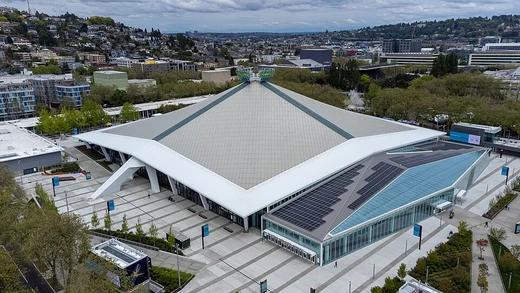
Canada Life Centre
Home of the Winnipeg Jets, built on the former Eaton's store site.

Ken Lund from Reno, Nevada, USA · CC BY-SA 2.0
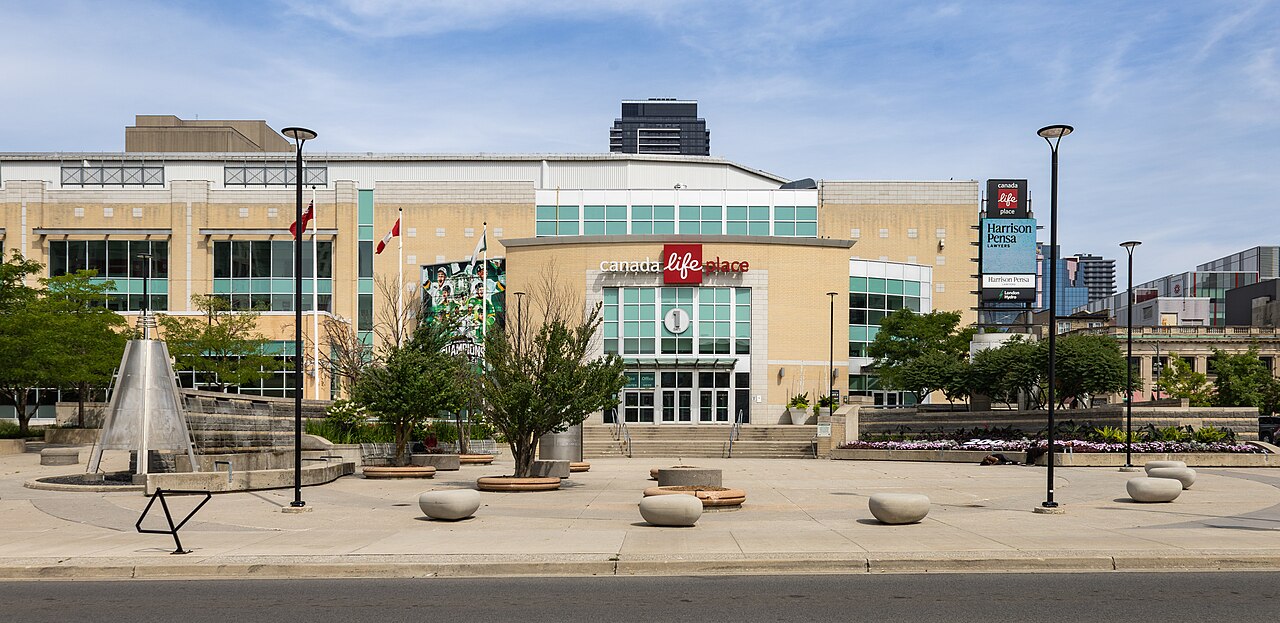
Canada Life Centre, previously known as Bell MTS Place and originally MTS Centre, is a multi-purpose indoor arena located in downtown Winnipeg, Manitoba. It serves as the home venue for the NHL's Winnipeg Jets, their AHL affiliate the Manitoba Moose, and the CEBL's Winnipeg Sea Bears. The arena sits on the former site of the Eaton's Winnipeg store and is owned and operated by True North Sports & Entertainment.
The 440,000-square-foot building cost C$133.5 million to construct and opened on November 16, 2004, replacing the now-demolished Winnipeg Arena. Its seating capacity is 15,225 for hockey games and 16,345 for concerts.
After the iconic Eaton's retailer went bankrupt, various ideas for the building's reuse were proposed, including residential condominiums. However, Winnipeg Mayor Glen Murray and True North determined that an arena was the most viable option for the struggling downtown. Despite some local opposition and a "group hug" of the store by about 180 people in 2001, the building was demolished in 2002 to make way for the entertainment complex.
To honor Eaton's history, red bricks were incorporated into the arena's façade, and an original store window with a Tyndall stone surround was installed in the concourse to display Eaton's memorabilia. Two war memorials were also included, and the Timothy Eaton statue, once a main feature of the store, now stands on the concourse, one floor above its original location.
During planning and construction, the arena was called the "True North Centre." It was named MTS Centre under a naming rights deal with Manitoba Telecom Services. Following Bell Canada's acquisition of MTS, it became Bell MTS Place on May 30, 2017. On June 15, 2021, True North announced a 10-year naming rights agreement with Winnipeg-based Canada Life Assurance Company, renaming it Canada Life Centre.
The Manitoba Moose were the arena's first tenant, playing there from 2004 to 2011 before relocating to St. John's to make way for the NHL's return. The Moose returned for the 2015–16 season, making the arena the first (along with SAP Center) to house both an NHL team and its AHL affiliate. Most Moose games use only the lower bowl, which seats 8,812. The arena hosted the AHL All-Star Classic on February 1, 2006, where Team Canada beat Team PlanetUSA 9–4.
Quick Facts
- Address
- 300 Portage Avenue
- Location
- Winnipeg, Manitoba, Canada
- Elevation
- 236 m AMSL
- Groundbreaking
- April 16, 2003
- Built
- April 2003 – November 2004
- Opened
- 2004-11-16
- Owner
- True North Sports & Entertainment
- Surface
- Ice
- Cost
- C$133.5 million / ($ in CACA)
- Architect
- Sink Combs Dethlefs / Number TEN Architectural Group / Smith Carter
- Structural Engineer
- Martin/Martin, Inc. / Crosier Kilgour
- Services Engineer
- M E/MCW-AGE
Facts from the source article.
Lore & Background
The arena was built on the site of the former Eaton's Winnipeg store after the retailer's bankruptcy. Despite resistance from the Save the Eaton's Coalition, which inspired a 'group hug' of the store by 180 people in 2001, the building was demolished in 2002. Red bricks from the original store were incorporated into the arena's façade, and an original store window with Tyndall stone surround is mounted in the concourse, housing Eaton's memorabilia. The Timothy Eaton statue, once a main feature of the store, is also housed on the concourse, one floor above where it stood in the original building.
Originally known as 'True North Centre' during planning, it was named MTS Centre under a naming rights agreement with Manitoba Telecom Services. It was renamed Bell MTS Place on May 30, 2017, following Bell Canada's acquisition of MTS, and then Canada Life Centre on June 15, 2021, under a 10-year agreement with Canada Life Assurance Company. The arena replaced the since-demolished Winnipeg Arena, which had been in operation since 1955.
Reader's Guide
Canada Life Centre is notable as the home of the NHL's Winnipeg Jets, who relocated from Atlanta in 2011 after the original Jets had moved to Phoenix in 1996. The arena's capacity of 15,225 for hockey was well below that of the next-smallest NHL arena at the time, but owner Mark Chipman stated the size was sufficient due to the unique economics of the local market. The arena also hosts the AHL's Manitoba Moose, making it one of the first arenas to be home to both an NHL team and its AHL affiliate. It has hosted major events including the 2008 Tim Hortons Brier, UFC events, and the 2007 IIHF Women's World Championship. The Manitoba Hockey Hall of Fame is located on the main level. The arena's construction was deemed the most viable and beneficial use for the struggling downtown by Winnipeg Mayor Glen Murray and True North.
Did You Know?
- The arena stands on the site of the former Eaton's Winnipeg store, which was demolished in 2002.
- It was the first arena (together with SAP Center) to be home to both an NHL team and its AHL affiliate.
The Eaton's Legacy and the Arena's Birth
The Canada Life Centre occupies a site steeped in Winnipeg's commercial history. The arena was built where the famous Eaton's department store once stood on Portage Avenue. After Eaton's went bankrupt, the city faced a difficult decision about the building's future. Mayor Glen Murray and True North Sports & Entertainment championed an arena as the best option to revitalize the struggling downtown, despite other proposals like residential condominiums. The process was not without emotional pushback: a group called the Save the Eaton's Coalition rallied locals, and in 2001, a reported 180 people gathered for a group hug around the beloved Big Store. The store was demolished in 2002, clearing the way for the new complex. The arena opened on November 16, 2004, replacing the Winnipeg Arena that had served the city since 1955. To honor Eaton's memory, the design incorporates red bricks on the façade, an original store window with Tyndall stone surround displaying memorabilia in the concourse, two war memorials, and the Timothy Eaton statue positioned one floor above where it originally stood in the store.
The Long Road Back to the NHL
Winnipeg's NHL history spans two eras separated by a long absence. The original Jets played at the Winnipeg Arena from 1972 to 1996 before financial troubles forced the franchise to relocate to Arizona and become the Phoenix Coyotes. The opening of the MTS Centre in 2004 rekindled hopes for a return, though skeptics questioned whether the arena's 15,225 hockey seats—well below the next-smallest NHL venue at the time—could support a professional franchise. Mark Chipman argued the local market's unique economics made the size workable. The arena built credibility by hosting NHL preseason games annually from 2006 to 2010, including a memorable 2010 matchup featuring Winnipeg-born Jonathan Toews and the Chicago Blackhawks. On May 19, 2011, Chipman and True North were reported to be finalizing the purchase of the Atlanta Thrashers. Twelve days later, a press conference at the arena announced the deal, which the NHL Board of Governors approved three weeks later. The arena underwent renovations to meet league standards, including new press boxes, shuttered lighting, flexible rink glass, and an upgraded ice refrigeration system.
Naming Rights and Financial Architecture
The arena's identity has shifted multiple times, reflecting the commercial partnerships that sustain it. During planning and construction, the project was known as the True North Centre, named after the ownership group. Upon opening in 2004, it became the MTS Centre under a naming rights deal with Manitoba Telecom Services. When Bell Canada acquired MTS, the venue was renamed Bell MTS Place on May 30, 2017. On June 15, 2021, True North sold the naming rights to Winnipeg-based Canada Life Assurance Company under a 10-year agreement, giving the arena its current name. The 440,000-square-foot building cost C$133.5 million to construct and is owned and operated by True North Sports & Entertainment. The financial model extended beyond naming rights: to help subsidize the arena's mortgage after the Jets' return, the province of Manitoba struck a 20-year deal granting True North up to $4 million annually in gaming revenue from video lottery terminals located downtown, initially at the Tavern United sports bar adjacent to the arena, with the option to build a dedicated lounge at the nearby Cityplace mall, where True North opened a Shark Club sports bar and gaming centre in 2013.
A Multi-League Home
The Canada Life Centre is unique in serving as a shared home for multiple professional and junior hockey teams. The AHL's Manitoba Moose were the arena's first tenant from 2004 to 2011, before relocating to St. John's to make room for the Jets. The Moose returned for the 2015–16 season, making the venue one of only two arenas in North America—alongside the SAP Center—to host both an NHL franchise and its AHL affiliate. For most Moose games, only the lower bowl with a capacity of 8,812 is used. The arena also hosts the CEBL's Winnipeg Sea Bears. Beyond regular-season play, the venue has hosted marquee events, including the AHL All-Star Classic on February 1, 2006, where Team Canada defeated Team PlanetUSA 9–4. In May 2023, the WHL's Winnipeg Ice chose the larger downtown arena over their usual home to host their Championship Series games, underscoring the facility's role as Winnipeg's premier hockey venue across multiple levels of competition.
Gallery

Frequently Asked Questions
What is Canada Life Centre and where is it located?
Canada Life Centre is a multi-purpose indoor arena situated in downtown Winnipeg, Manitoba. It is owned and operated by True North Sports & Entertainment and functions as the primary home rink for the NHL's Winnipeg Jets.
Which teams call Canada Life Centre home?
The Winnipeg Jets (NHL) are the main tenant, but the venue also hosts their AHL affiliate, the Manitoba Moose, and the CEBL's Winnipeg Sea Bears.
What were the previous names of Canada Life Centre?
The arena originally opened in 2004 as MTS Centre, was later rebranded to Bell MTS Place, and has since been renamed Canada Life Centre.
How large is Canada Life Centre and what did it cost to build?
The 440,000-square-foot facility cost C$133.5 million to construct and seats 15,225 spectators for hockey, with capacity expanding to 16,345 for concerts.
What did Canada Life Centre replace and when did it open?
The arena opened on November 16, 2004, taking over from the now-demolished Winnipeg Arena. It was built on the former site of the Eaton's Winnipeg department store.
More in NHL Arenas 1-24
Spotted an error? Know more?
Reader corrections go straight into our review queue. Suggest an edit · How this site is sourced