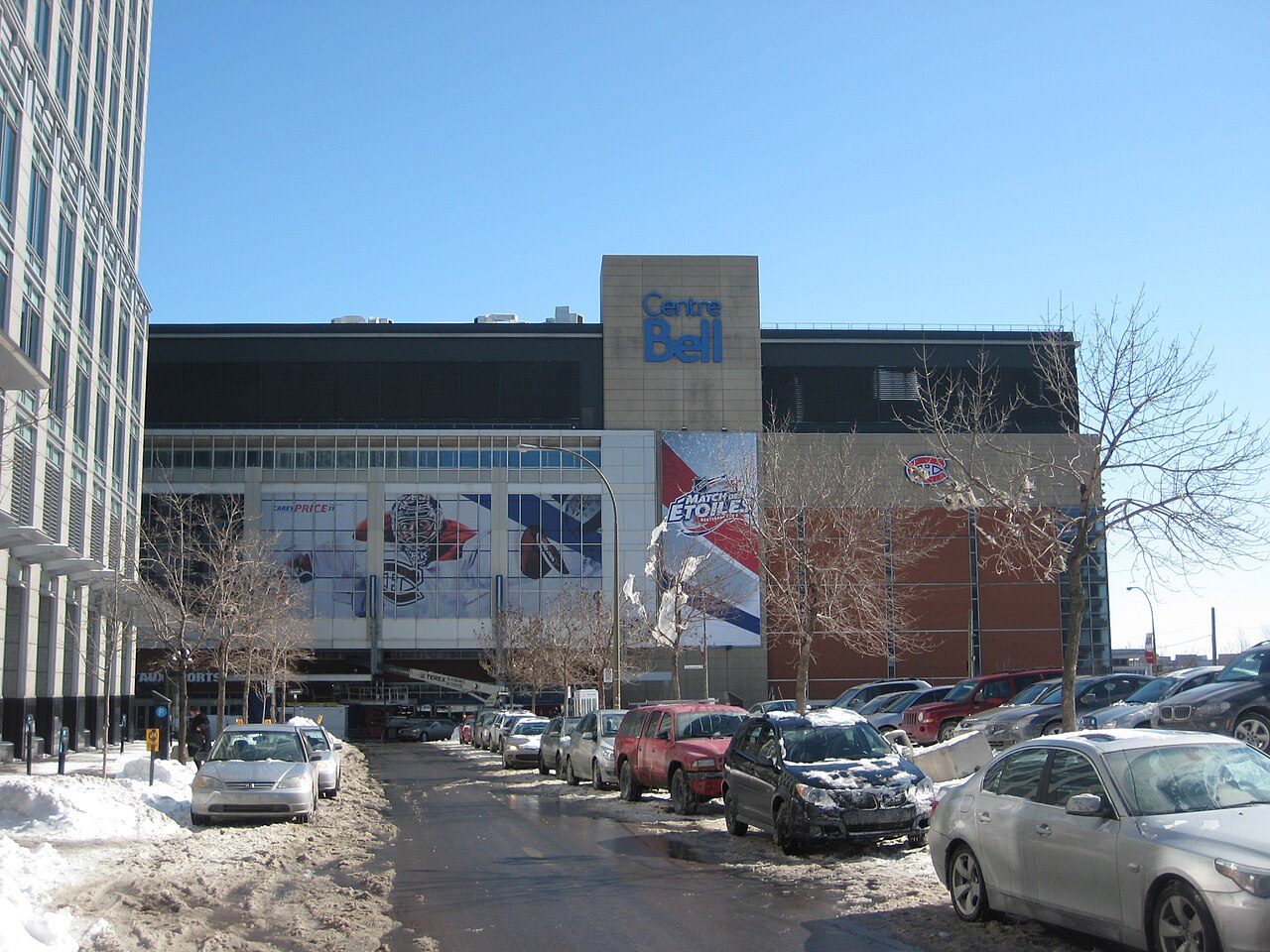
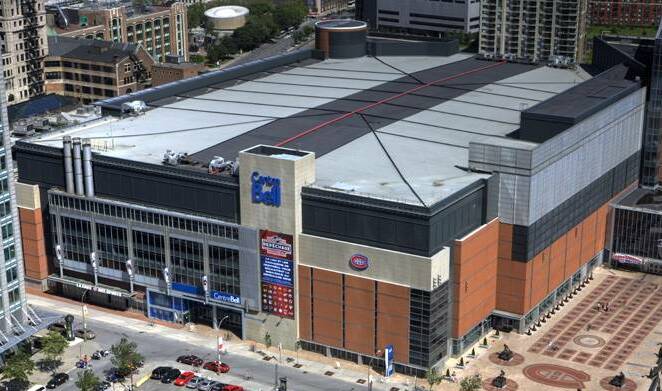
Bell Centre
Canada's largest indoor arena, home of the Montreal Canadiens.

ph0rk · CC BY-SA 2.0
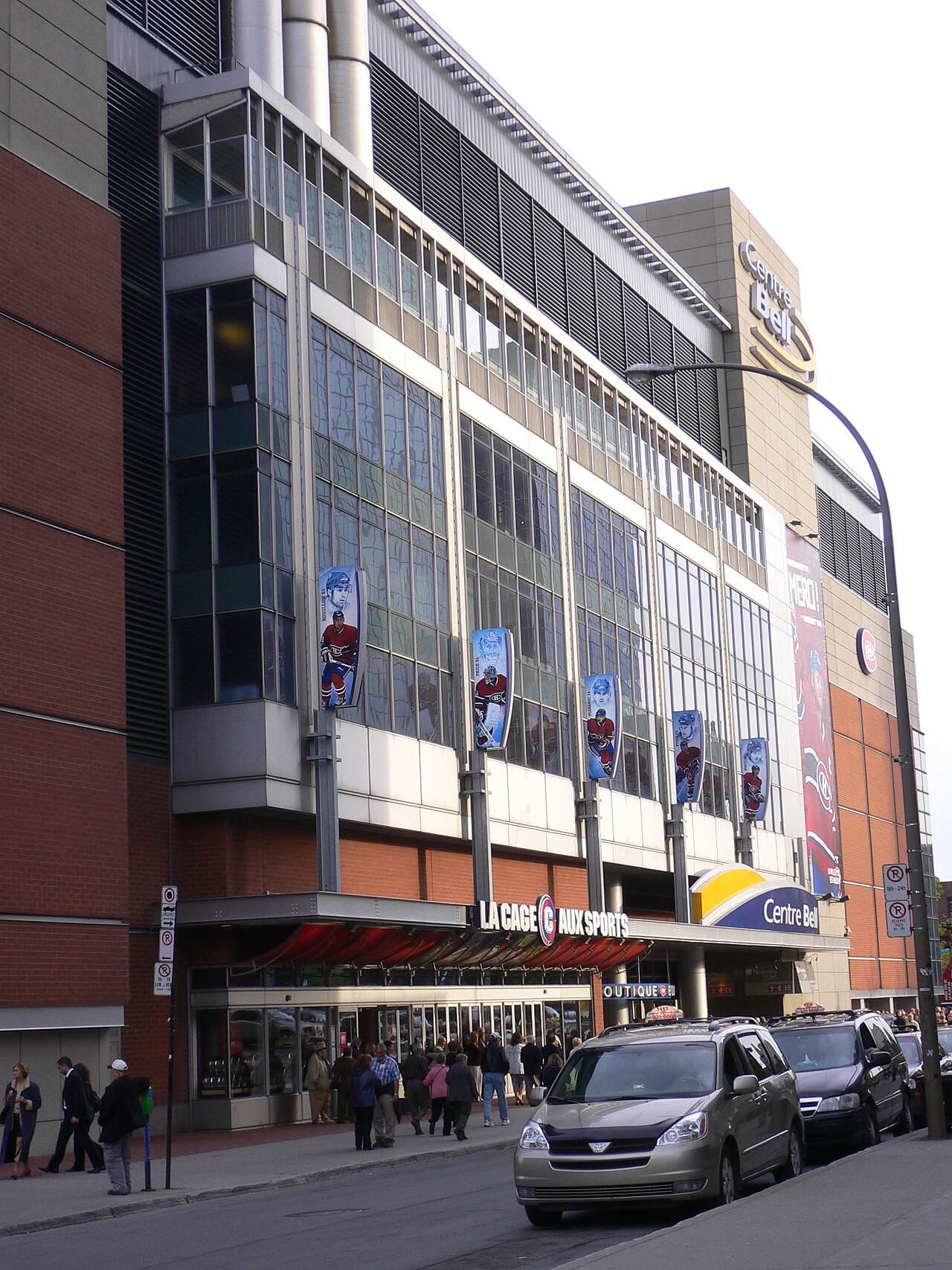
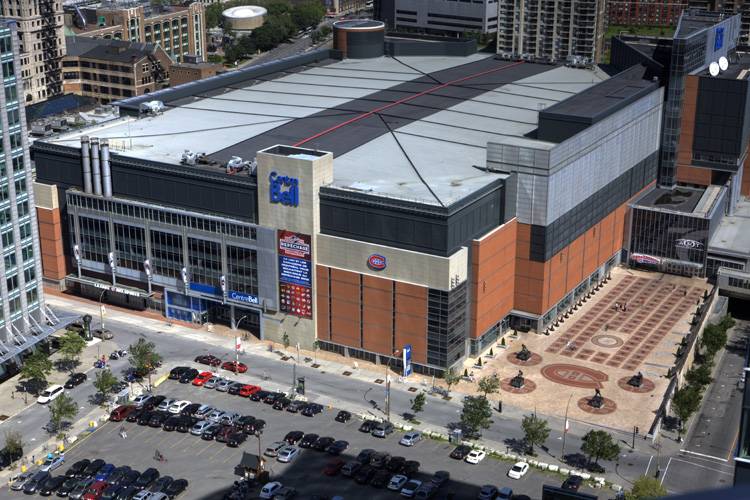
Bell Centre (French: Centre Bell) is a multi-purpose indoor arena in Montreal, Quebec, Canada. Opened on March 16, 1996, it is the home arena of the Montreal Canadiens of the National Hockey League (NHL) and the largest indoor arena in Canada. It is owned by the Molson family via Groupe CH and managed by Evenko.
Quick Facts
- Address
- 1909 Canadiens-de-Montréal Avenue
- Location
- Montreal, Quebec, Canada
- Groundbreaking
- June 22, 1993
- Opened
- March 16, 1996
- Owner
- Groupe CH / (Molson family)
- Operator
- Evenko
- Cost
- CAD270 million / ($ in CA dollarsCA)
- Architect
- LeMay & Associate, LLC. / LeMoyne Lapointe Magne
- Project Manager
- IBI/DAA Group
- Structural Engineer
- Dessau
- Services Engineer
- SNC-Lavalin
- General Contractor
- Magil Construction
Facts from the source article.
Lore & Background
Construction began on June 22, 1993, nearly two weeks after the Canadiens won their 24th Stanley Cup at the Montreal Forum. The arena originally opened as Molson Centre, named after the brewing company that then owned the team. On September 1, 2002, the name changed to Bell Centre after Bell Canada acquired naming rights. The building covers 1.568 hectares and features a three-tier layout with steeply sloped grandstands. Unlike most North American arenas designed by Populous, Bell Centre was designed by a local consortium. It is one of only two NHL arenas using an old-style siren to mark period ends, inherited from the Montreal Forum.
Reader's Guide
Bell Centre is notable as the second largest ice hockey arena in the world after SKA Arena in St. Petersburg, Russia. Since opening in 1996, it has consistently been listed as one of the world's busiest arenas, usually receiving the highest attendance of any arena in Canada. In 2012, it was the fifth-busiest arena worldwide for non-sporting event ticket sales. The arena hosted the 2009 NHL All-Star Game, the 2009 and 2022 NHL entry drafts, and games of the 1996 and 2004 World Cup of Hockey. It hosted its first Stanley Cup Final in 2021. On April 20, 2024, it set a women's hockey attendance record of 21,105 for a PWHL game. The arena also hosted selected NBA preseason games since 2010 and was a venue for the NHL 4 Nations Face-Off in February 2025.
Did You Know?
- Bell Centre replaced the Montreal Forum as the Canadiens' home arena.
- Céline Dion performed 50 times at Bell Centre between 1996 and 2020.
- A new scoreboard installed in 2024 has rounded edges and smaller angled internal screens.
- The arena's 2021 Stanley Cup Final games had a capacity limit of 3,500 due to COVID-19 restrictions.
From Forum to Future – A Decade of Rebranding and Renewal
Construction broke ground on June 22, 1993, barely two weeks after the Canadiens defeated the Los Angeles Kings at the Forum to claim their 24th and most recent Stanley Cup. The arena officially opened on March 16, 1996, and its original name reflected Molson Inc., the brewing company that owned the Canadiens at the time. When Molson eventually sold the franchise, they chose not to retain the naming rights. On September 1, 2002, Bell Canada acquired those rights and the venue received its current name. In October 2015, a $100 million renovation program was announced, encompassing a full seat replacement, refreshed hallways and concessions, new restaurants, public Wi-Fi, and the conversion of Avenue des Canadiens-de-Montréal into a pedestrian-only street. The work was planned so as not to interrupt normal operations. Ownership rests with the Molson family via Groupe CH, while day-to-day management is handled by their subsidiary Evenko.
A Local Design with Distinctive Character
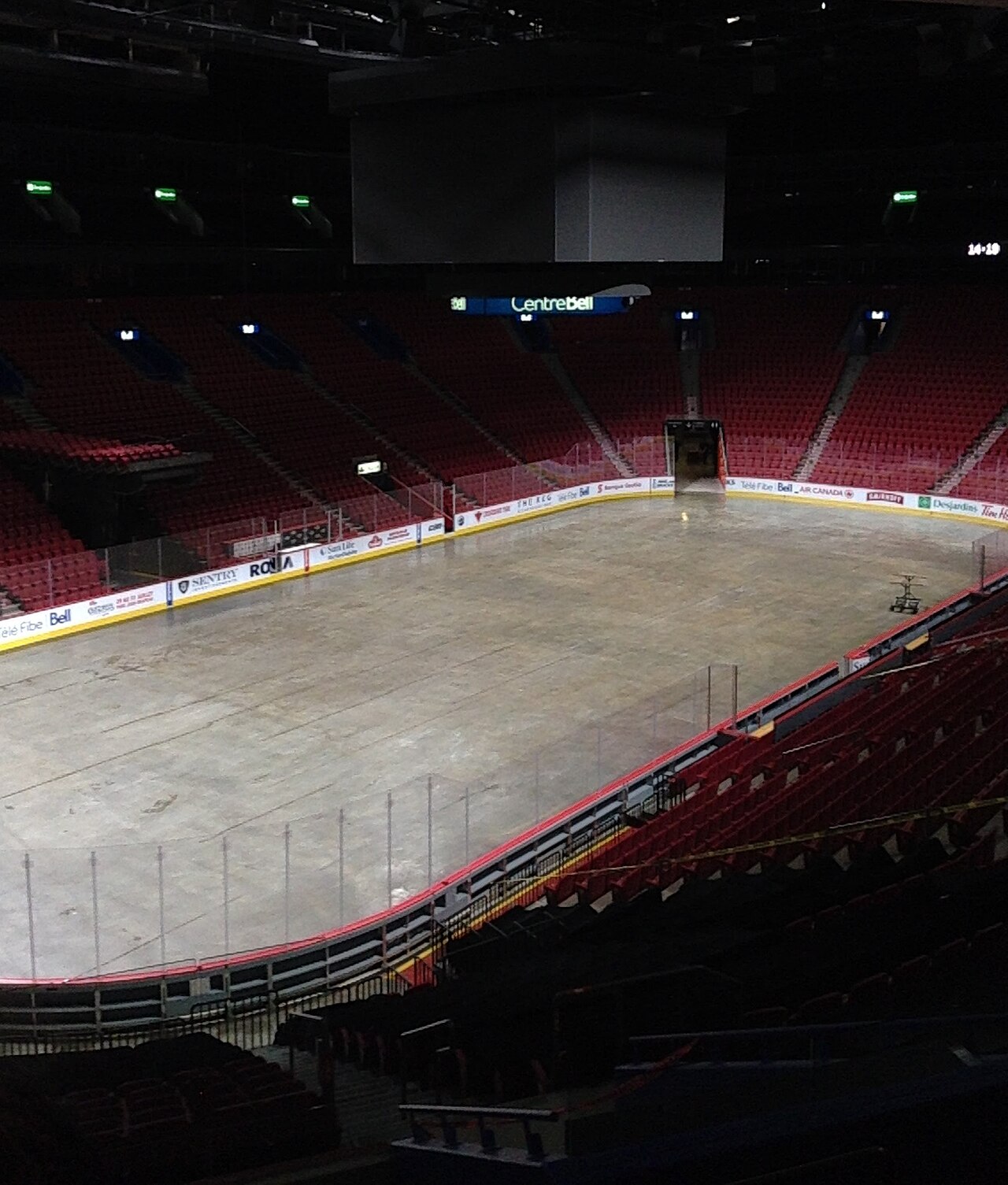
Unlike most North American arenas designed by Populous or its predecessors, Bell Centre was shaped by a local consortium, giving it a set of features found nowhere else in the NHL. The grandstands slope more steeply than typical to sharpen sight lines, and washrooms on the 100 level are centralized at each end on a dedicated lower floor. The seating is organized into three tiers: the lower 100 section, colloquially called "the reds" for its crimson seats; the 200 level, home to the Club Desjardins corporate boxes with premium seating and complimentary food and non-alcoholic beverages; and the upper 300 section, whose two ends are split into the Ford Zone, featuring cheerleaders and flashing lights, and the Family Zone, offering child-friendly pricing and limited alcohol. Sections 318, 319, and 320 behind the press gondola carry their own scoreboards mounted on the gondola's back to compensate for the blocked main view.
The Siren, the Scoreboard, and Small Rituals
One of Bell Centre's most talked-about quirks is its use of an old-style siren to signal the end of each period, a sound inherited from the now-disused Montreal Forum. Only one other NHL arena, Boston's TD Garden, retains a similar siren, passed down from the old Boston Garden. The arena's scoreboard has also evolved over the years: before the 2008–09 season, four 47-square-metre video panels were installed, making it the largest in the NHL until 2012. In 2024, a new board with rounded edges and smaller, angled internal screens was added to improve visibility for fans in lower seats. Early on, visitors noted the building felt generic compared to the Forum's character, prompting the Canadiens to gradually decorate the space with tributes to team history, including a ring of player celebrations around the top seating level and the Molson Ex Zone, which features a live band stage and its own red-themed atmosphere.
A Stage for Music and a Record-Setting Venue
Beyond hockey, Bell Centre has served as Montreal's premier large-scale entertainment venue, hosting major concerts, mixed martial arts bouts, and professional wrestling events. Since 1996, it has consistently ranked among the world's busiest arenas and typically draws the highest attendance of any Canadian venue. In 2012, it placed fifth globally in ticket sales for non-sporting events. No artist has performed there more often than Céline Dion, who logged 50 shows between 1996 and 2020 across five world tours, from Falling into You through Courage. Her final Let's Talk About Love show on December 31, 1999, marked the last concert before her three-year hiatus from the music industry. The arena's concert capacity reaches 15,000, while its amphitheatre configuration holds between 10,000 and 14,000, and a theatre setup accommodates 5,000 to 9,000.
Gallery

Frequently Asked Questions
What is Bell Centre?
Bell Centre is a multi-purpose indoor arena located in Montreal, Quebec, that serves as the home rink for the NHL's Montreal Canadiens. It is the largest indoor arena in all of Canada.
What is Bell Centre's seating capacity?
For hockey games the arena seats 20,962 fans, while concert configurations bring that number down to roughly 15,000. Smaller amphitheatre and theatre setups range from about 5,000 to 14,000 depending on the event layout.
Who owns and operates Bell Centre?
The Molson family holds ownership through their Groupe CH entity, and the company Evenko is responsible for the arena's day-to-day management and operations.
When did Bell Centre open?
The venue first opened its doors on March 16, 1996, giving the Canadiens a modern, purpose-built home in the heart of Montreal.
Why is Bell Centre significant to hockey fans?
As Canada's largest indoor arena and the Canadiens' home since 1996, it has hosted decades of playoff runs, record-setting crowds, and some of the most electric atmospheres in the NHL.
More in NHL Arenas 1-24
Spotted an error? Know more?
Reader corrections go straight into our review queue. Suggest an edit · How this site is sourced