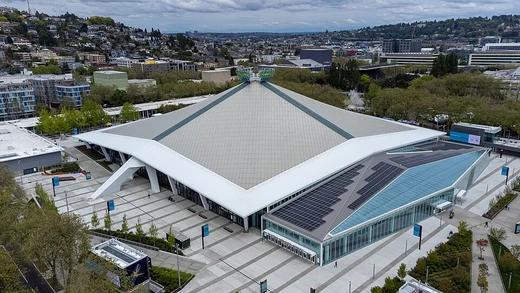
Climate Pledge Arena
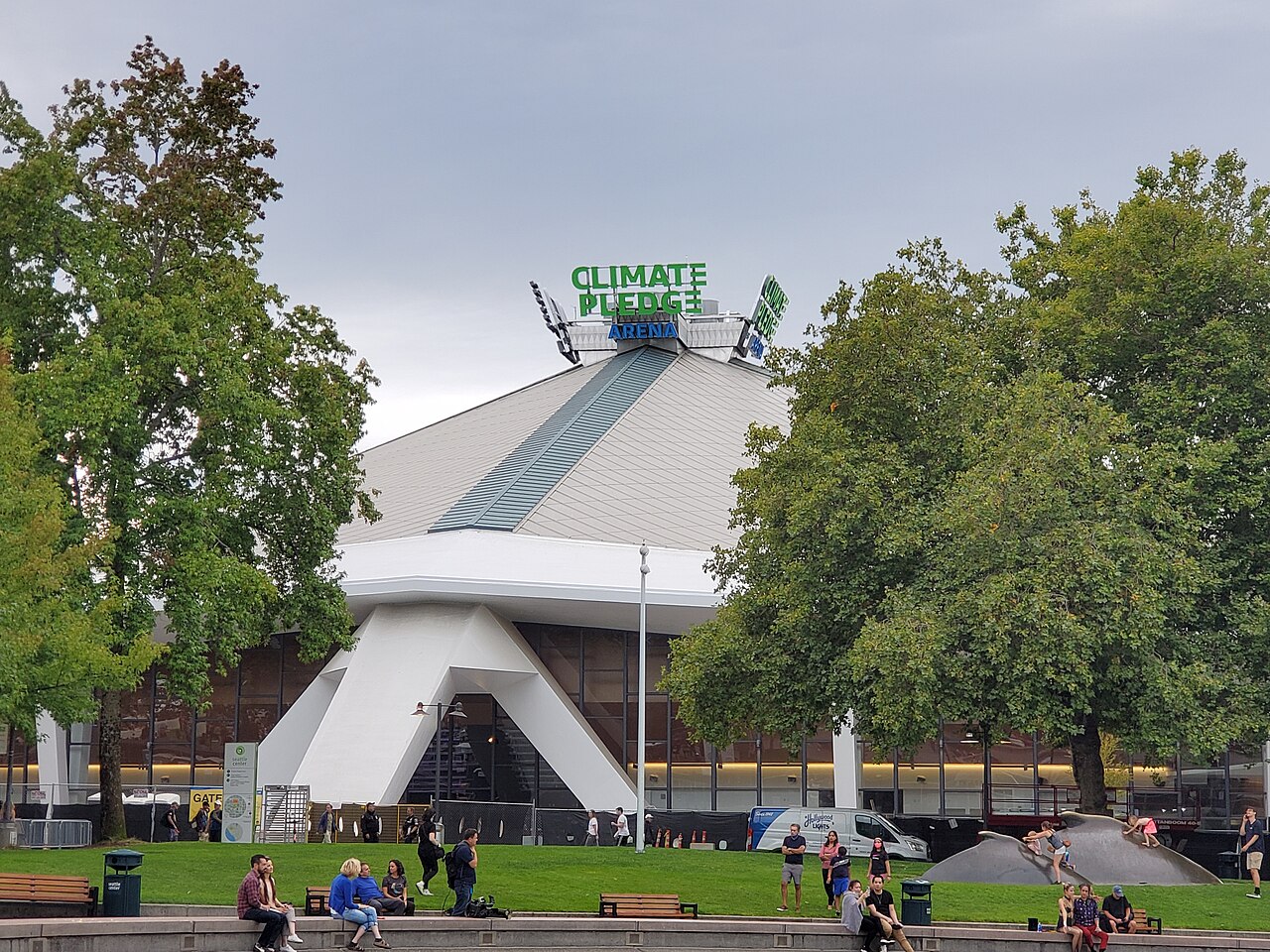
A modern arena built within a historic landmarked structure.

Another Believer · CC BY-SA 4.0
Climate Pledge Arena is a multi-purpose indoor arena in Seattle, Washington, United States, located north of downtown Seattle on the campus of the Seattle Center. It sits on the site of the original Washington State Pavilion exhibition facility, which underwent an 18-month conversion into the Washington State Coliseum. Following an extensive $1.15 billion site redevelopment from 2018 to 2021, the new arena replaced the older facility, then named KeyArena, reusing the original building's iconic roof and exterior window curtain walls, which were landmarked by the city in 2017 and added to both the Washington State Heritage Register and the National Register of Historic Places in 2018. Though opening in October 2021, Climate Pledge Arena is sometimes considered the oldest arena in the NHL due to the age of the original roof and exterior walls.
Quick Facts
- Fullname
- Climate Pledge Arena at Seattle Center
- Former Names
- Washington State Pavilion (1962) · Washington State Coliseum (1962–1964) · Seattle Center Coliseum (1964–1994) · KeyArena at Seattle Center (1995–2018)
- Address
- 334 1st Avenue N.
- Location
- Seattle, Washington, U.S.
- Groundbreaking
- 1960-05-12
- Opened
- 1962-04-21
- Renovated
- 1964, 1994–95, 2018–21
- Reopened
- October 26, 1995 / (as KeyArena) / October 19, 2021 / (as Climate Pledge Arena)
- Owner
- City of Seattle
- Operator
- Oak View Group
- Cost
- $7 million (1962) / ($ in US dollarsUS) / $74.5 million (1995) / ($ in US dollarsUS) / $1.15 billion (2021)
- Architect
- Paul A. Thiry (1962) / NBBJ (1995) / Populous (2021)
Facts from the source article.
Lore & Background
The arena opened in 1962 as the Washington State Pavilion for the Century 21 Exposition, the work of architect Paul Thiry. After the close of the Exposition, the Pavilion was purchased by the city of Seattle for $2.9 million and underwent an 18-month conversion into the Washington State Coliseum, one of the centerpieces of the new Seattle Center on the former Exposition grounds. The original arena was most notable as the long-time home of the Seattle SuperSonics of the National Basketball Association, who first played there from their founding in 1967 to 1978, returned in 1985, and left in 2008 amid a controversial relocation to Oklahoma City. The venue was renamed KeyArena after KeyCorp bought the naming rights in 1995, a name it maintained until its 2018 closure for the site redevelopment. KeyArena was the first publicly financed arena in the area that was fully supported by earned income from the building. In contrast, Climate Pledge Arena was completely privately financed with the city receiving annual rent and a portion of additional revenue generated by events and surrounding parking.
Reader's Guide
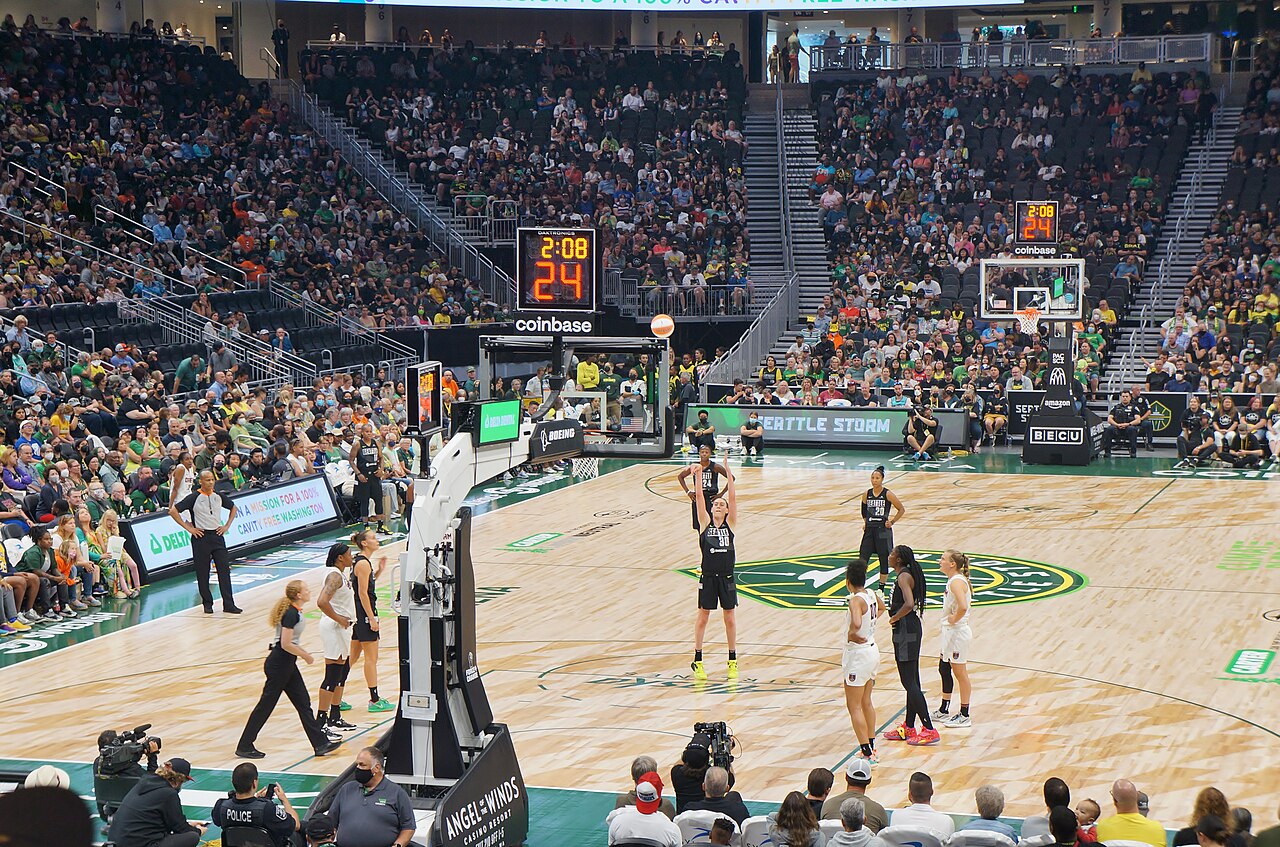
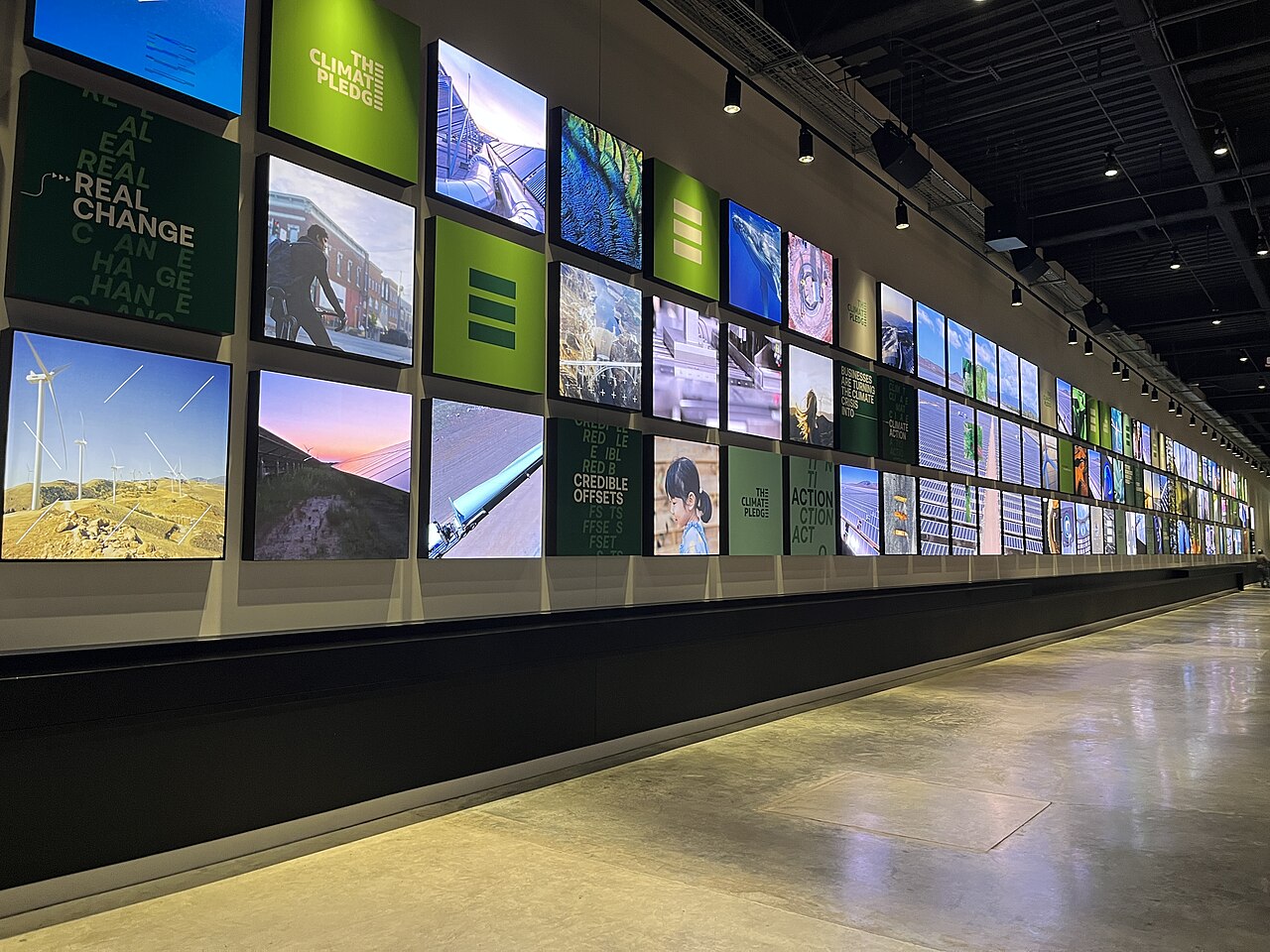
Climate Pledge Arena is currently home to the Seattle Kraken of the National Hockey League, the Seattle Storm of the Women's National Basketball Association, the Seattle Torrent of the Professional Women's Hockey League, the Seattle University Redhawks men's basketball team, and the Rat City Roller Derby league. It has also played host to the Pac-12 Conference's women's basketball tournament and may be used as a host venue for the Big Ten Conference's Women's Basketball and Men's ice hockey tournaments in the future. The arena's history includes hosting two NBA Finals, in 1978 and 1979, both between the Washington Bullets and SuperSonics, with the Sonics capturing their only championship while based in Seattle in 1979. It hosted the NBA All-Star Game once, in 1974, and the basketball competitions of the Goodwill Games in 1990. The arena was also known for hosting non-NHL hockey teams, including the Seattle Totems and the Seattle Thunderbirds. Amazon bought the naming rights in June 2020, dedicating the arena name to bringing attention to climate change, specifically the pledge promoted by the advocacy group Global Optimism for businesses to reach net zero carbon dioxide emissions by 2040.
Did You Know?
- The original arena was the site of the NBA's lone rain delayed game on January 5, 1986, when rain water leaked from the roof onto the court.
- The arena was originally built as the Washington State Pavilion for the 1962 World's Fair, the Century 21 Exposition.
A Name That Carries a Mission
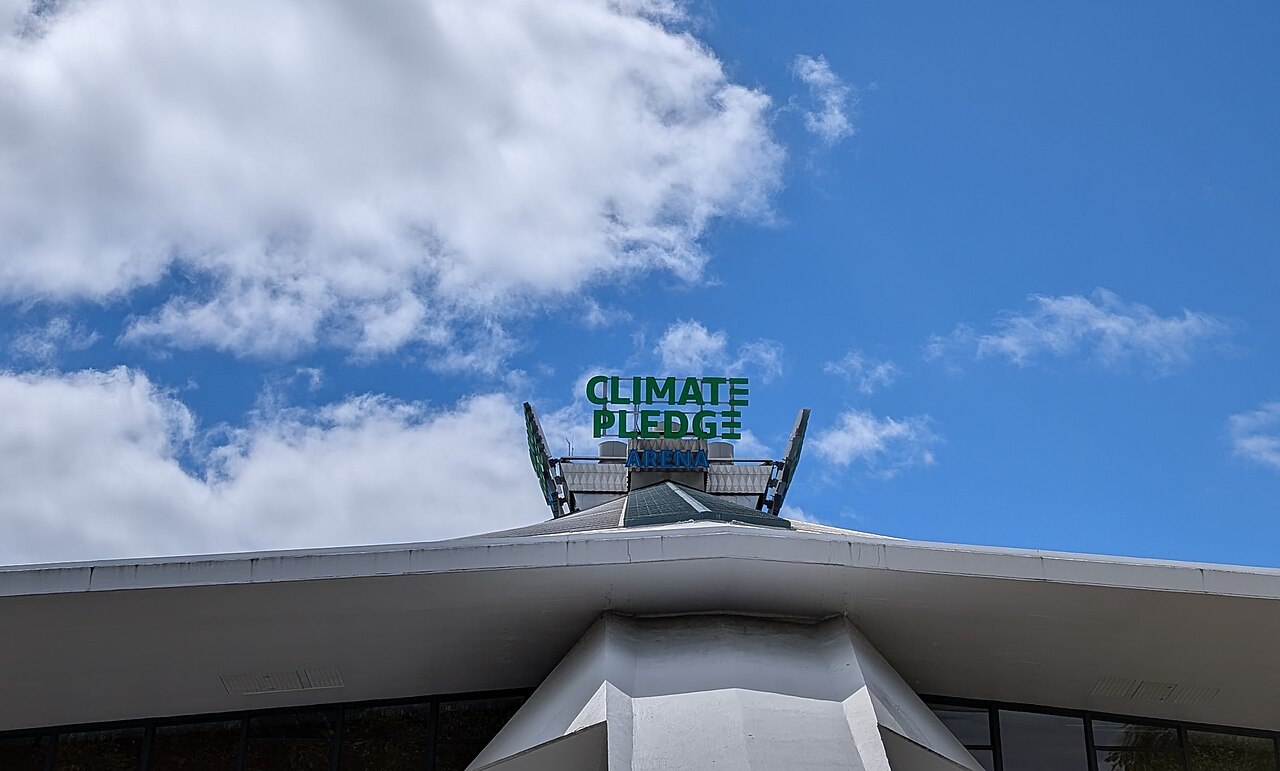
In the crowded landscape of professional sports naming rights, Climate Pledge Arena stands apart for a reason that goes beyond simple commercial branding. The arena's name is held by Amazon, one of the world's largest corporations, but the arrangement serves a purpose that extends well past revenue. Amazon leverages its naming rights contract as a platform to promote its climate change awareness initiative, effectively turning every mention of the venue into a reminder of environmental responsibility. This distinguishes it from the typical corporate sponsorship model where a brand simply buys visibility. In the broader context of current NHL arenas, Climate Pledge Arena is part of a group where corporate naming is the norm rather than the exception. Madison Square Garden remains the sole current arena in the league whose name is not tied to a corporate sponsor, making the Amazon partnership at the Seattle venue a reflection of how deeply commercial naming has permeated professional hockey's physical infrastructure. The arena's identity is thus inseparable from both a tech giant's brand and its stated environmental commitments.
Three Years of Reinvention
Between 2018 and 2021, the venue that would become Climate Pledge Arena underwent a complete reconstruction that transformed its interior while preserving its most iconic exterior element. The project delivered an entirely new arena bowl and all-new concourse spaces, essentially building a modern hockey facility from the ground up. Yet this was not a demolition-and-rebuild exercise. The entire new interior was constructed underneath the original roof of the Seattle Center Coliseum, a structure that had stood since 1962. This meant that for three years, workers were erecting a brand-new world of seating, walkways, and spectator infrastructure while the sixty-year-old roof above them remained untouched. The result is a venue where the experience of attending a game is wholly contemporary, yet the silhouette visible from the Seattle skyline still carries the identity of the 1962 Coliseum. The reconstruction period placed the arena in a transitional state, listed among current NHL venues even as its physical form was being fundamentally reimagined beneath that historic canopy.
A Seat in the League's Arena Roster
Climate Pledge Arena occupies a defined place within the NHL's comprehensive inventory of playing venues, a roster that spans arenas from the present day, those that have since closed, and even facilities that remain in the planning or proposal stage. As a current arena, it sits alongside other active venues in a league that also tracks former arenas, defunct teams, outdoor event sites, and neutral-site locations where regular-season games have been played. The league's arena landscape is not static; it is a living document that records the sport's geographic and commercial evolution. Within this broader taxonomy, Climate Pledge Arena is one of the current indoor facilities where corporate naming is standard practice. The only exception among active venues is Madison Square Garden, which retains a name free of any corporate sponsor. This distinction highlights how the Seattle venue, with its Amazon-held name, represents the prevailing model of arena identity in modern professional hockey, where the building's public name is as much a marketing instrument as it is a geographic identifier.
The Roof That Remained
The most striking architectural fact about Climate Pledge Arena is not what was built but what was kept. The roof that shelters the venue today is the original roof of the Seattle Center Coliseum, a structure that dates back to 1962. When the 2018-to-2021 reconstruction project commenced, the decision was made to preserve this sixty-year-old canopy while constructing a completely new arena bowl and concourse system beneath it. This choice created a remarkable layering of eras: a 1962 roof now crowns a 2021 interior, meaning that fans who walk through the modern concourses and settle into the new seating are, in a very literal sense, under a structure that predates the current NHL era by decades. The Seattle Center Coliseum's roof became the defining constraint and the defining feature of the rebuild, dictating the vertical envelope within which the new facility had to be designed. It is a rare example in professional sports where a single architectural element from the original building was deemed worthy of preservation, anchoring the modern venue to its mid-twentieth-century origins.
Gallery

Frequently Asked Questions
Where is Climate Pledge Arena located?
It sits on the Seattle Center campus just north of downtown Seattle, Washington, occupying the same footprint as the original 1962 Washington State Pavilion exhibition building.
How many fans does Climate Pledge Arena seat for a Seattle Kraken game?
The hockey configuration holds 17,151 spectators, making it one of the larger dedicated NHL venues in the league.
What happened to the old KeyArena building?
Rather than tearing it down, the 2018-to-2021 redevelopment preserved the city-landmarked roof and exterior window curtain walls while rebuilding essentially everything else inside and around them.
How much did the Climate Pledge Arena rebuild cost?
The full site redevelopment ran approximately $1.15 billion across the 2018-to-2021 construction window.
What makes Climate Pledge Arena architecturally unique compared to other NHL rinks?
It is a brand-new arena wrapped inside the preserved, landmarked shell of a 1962 exhibition pavilion, so fans are watching games in a modern venue nested within a historic structure.
More in NHL Arenas 1-24
Spotted an error? Know more?
Reader corrections go straight into our review queue. Suggest an edit · How this site is sourced