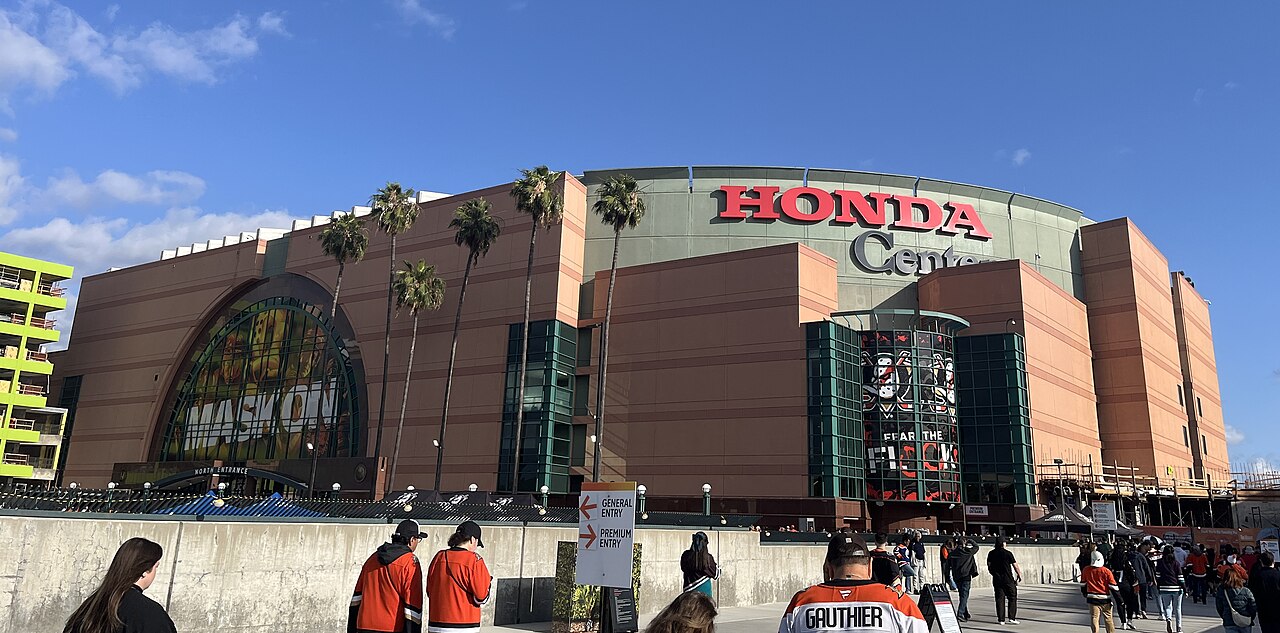
Honda Center
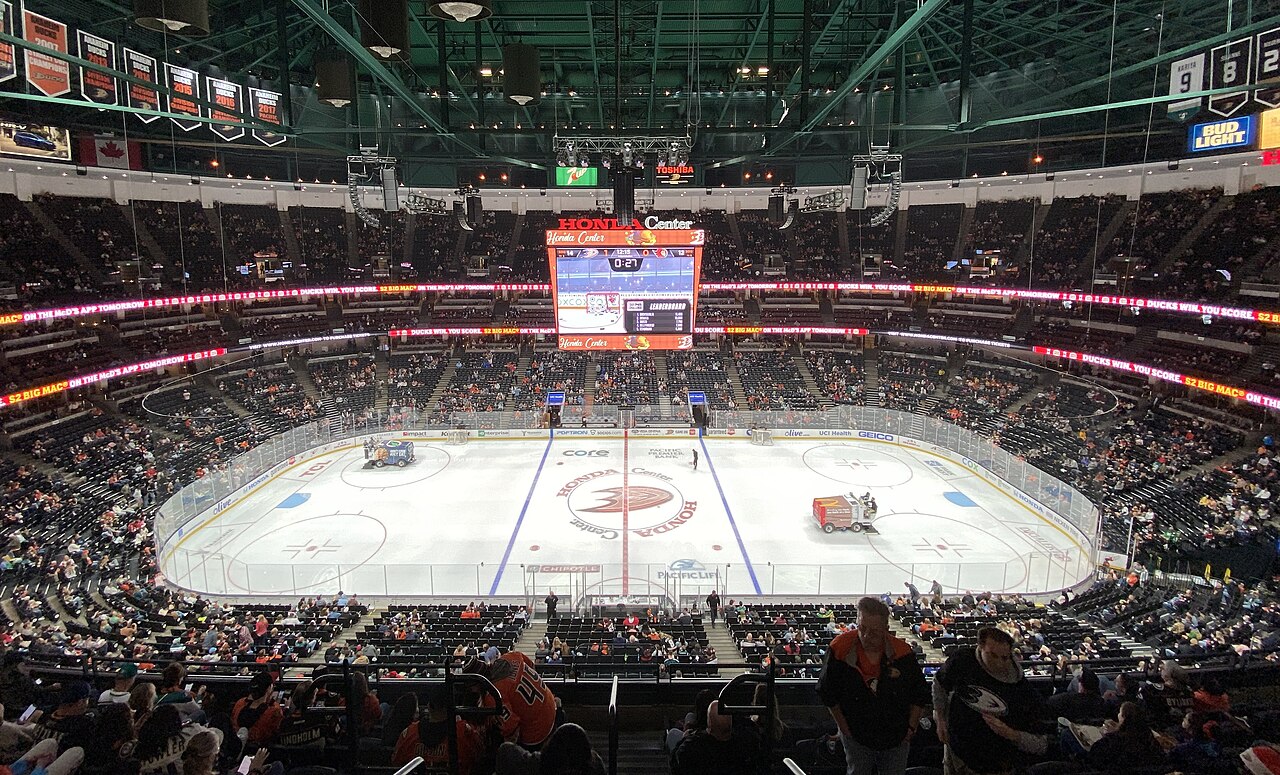
Home of the Anaheim Ducks, opened in 1993.

W.carter · CC0
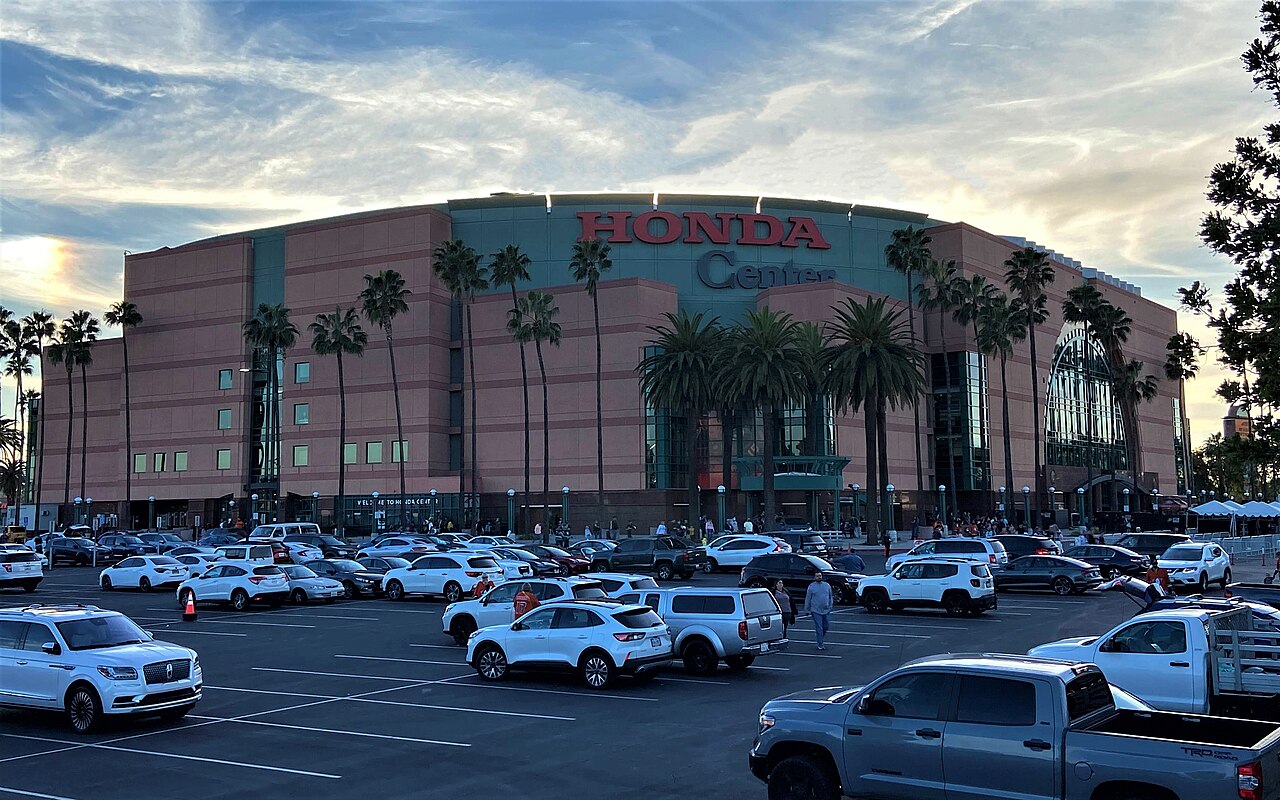
Honda Center (formerly known as the Arrowhead Pond of Anaheim) is a multi-purpose indoor arena in Anaheim, California. It is home to the Anaheim Ducks of the National Hockey League and is referred to as 'The Pond at Honda Center' for ice hockey games. The arena opened on June 19, 1993, at a cost of US$123 million and has hosted numerous major sporting events, including the Stanley Cup Finals and NCAA tournaments.
Quick Facts
- Nickname
- The Pond
- Address
- 2695 East Katella Avenue
- Location
- Anaheim, California, U.S.
- Groundbreaking
- November 8, 1990
- Opened
- June 17, 1993
- Owner
- City of Anaheim
- Operator
- Anaheim Arena Management
- Cost
- US$123 million · ($ in US dollarsUS)
- Architect
- HOK Sport (now Populous)
- Structural Engineer
- Thornton Tomasetti
- Services Engineer
- Syska Hennessy Group, Inc.
- Project Manager
- Turner Construction
Facts from the source article.
Lore & Background
The idea for a large indoor arena in Anaheim emerged from entertainment attorney Neil Papiano, who in 1987 randomly selected two city councilmen from the telephone directory to sell them his idea. After location surveys, a seven-acre parcel at Douglass Road and Katella Avenue was chosen, owned by the German social group Phoenix Club. Financial backing came from Ogden Corporation and Nederlander Organization. Despite a dispute with a Santa Ana project led by Spectacor, and discussions about the feasibility of the arena given the NBA and NHL were unwilling to expand to the area, the city pushed forward. The arena, designed by Hellmuth, Obata & Kassabaum, Inc., broke ground in November 1990. A tenant was found in 1992 when the Walt Disney Company was awarded an NHL franchise for Anaheim. The arena's final cost ended at $121 million, with $18 million added to finance hockey franchise fees and facility improvement. The arena opened on June 19, 1993, with a Barry Manilow concert. Its first NHL game was the Mighty Ducks of Anaheim season opener on October 8, 1993, against the Detroit Red Wings, preceded by a $450,000 pregame show; the Ducks lost 7–2. The arena has hosted the 2003 and 2007 Stanley Cup Finals, with the Ducks clinching their first Stanley Cup championship on home ice on June 6, 2007. It also hosted the 1999 Frozen Four. Outside of hockey, it served as a second home for the NBA's Los Angeles Clippers from 1994 to 1999, and hosted the Anaheim Bullfrogs of Roller Hockey International and the Anaheim Piranhas of the Arena Football League. It has hosted UFC events, the PBR Bud Light Cup annually since 1998, the Wooden Legacy basketball tournament since 1994, and the Big West Conference basketball tournaments starting in 2011. The arena has also hosted the NCAA men's basketball tournament seven times and the 2005 IBF World Championships for badminton.
Reader's Guide
Honda Center's significance lies in its role as the home of the Anaheim Ducks, where the franchise won its first Stanley Cup in 2007. The arena has been a key venue for major NHL events, including the 1999 Frozen Four and multiple Stanley Cup Finals. It has also hosted a wide variety of other sports and entertainment, from NBA games and UFC events to WrestleMania and major concerts. The arena is noted for its versatility, converting from a sporting arena to an 8,400-seat amphitheater in five hours. It was the first U.S. arena to have two full levels of 360° ribbon displays, installed in 2005. The arena's ownership structure, with Broadcom chairman Henry Samueli owning both the operating company and the Ducks, provides scheduling flexibility. During the COVID-19 pandemic in 2020, the arena lost all scheduled events but hosted charity events, blood drives, food bank distributions, a collective wedding, and served as a drive-through voting location. In April 2025, a major $1 billion renovation was announced, to be complete by 2027, as part of the OC Vibe project.
Did You Know?
- The arena was originally named the Arrowhead Pond of Anaheim after Arrowhead Water paid $15 million for naming rights in October 1993.
- The arena's first event was a Barry Manilow concert on June 19, 1993.
- The arena hosted the 2005 IBF World Championships for badminton.
From a Telephone Directory to a $123 Million Landmark
The story of Honda Center begins not with a grand corporate pitch but with a stroke of serendipity. In 1987, entertainment attorney Neil Papiano flipped through the Anaheim telephone directory and randomly chose two city councilmen to present his vision for a large indoor arena. To his surprise, they embraced the concept. Within a year, after location surveys, the site was locked in: a seven-acre parcel at the intersection of Douglass Road and Katella Avenue, then in the hands of the Phoenix Club, a German social organization. Papiano secured financial backing from two New York firms, Ogden Corporation and the Nederlander Organization, even as a rival Santa Ana project championed by Spectacor threatened to derail the effort. Complicating matters further, both the NBA and NHL showed no interest in expanding into Orange County at the time. Undeterred, Anaheim pressed ahead. The Hellmuth, Obata & Kassabaum design firm drew up plans, and ground broke in November 1990. By 1992, the Walt Disney Company had been awarded an NHL franchise for the city, and negotiations to lease the arena began. The final tab landed at $121 million after an additional $18 million was folded in to cover hockey franchise fees and facility upgrades.
The Pond: A Hockey Home and a Championship Story
When the arena first opened its doors in June 1993, a Barry Manilow concert marked the inaugural event. But the venue's true identity was forged on October 8 of that year, when the Mighty Ducks of Anaheim took the ice for their season opener against the Detroit Red Wings. The pregame spectacle alone cost a staggering $450,000, yet the Ducks fell 7-2 in front of a crowd that had just learned to call the building "The Pond." In the brief window between the franchise award and the Arrowhead Water naming-rights deal, Disney itself had informally dubbed the space the Pond of Anaheim. That nickname stuck, and even after Honda assumed the naming rights in October 2006 for $60 million over fifteen years, hockey nights still carry the moniker "The Pond at Honda Center." The arena went on to host the Stanley Cup Finals in both 2003 and 2007. On June 6, 2007, the Ducks dispatched the Ottawa Senators 6-2 in Game Five to claim the franchise's first and still only championship, a moment that cemented the venue's place in hockey lore. Honda renewed the naming deal for another decade in 2020.
A Stage for Nearly Everything
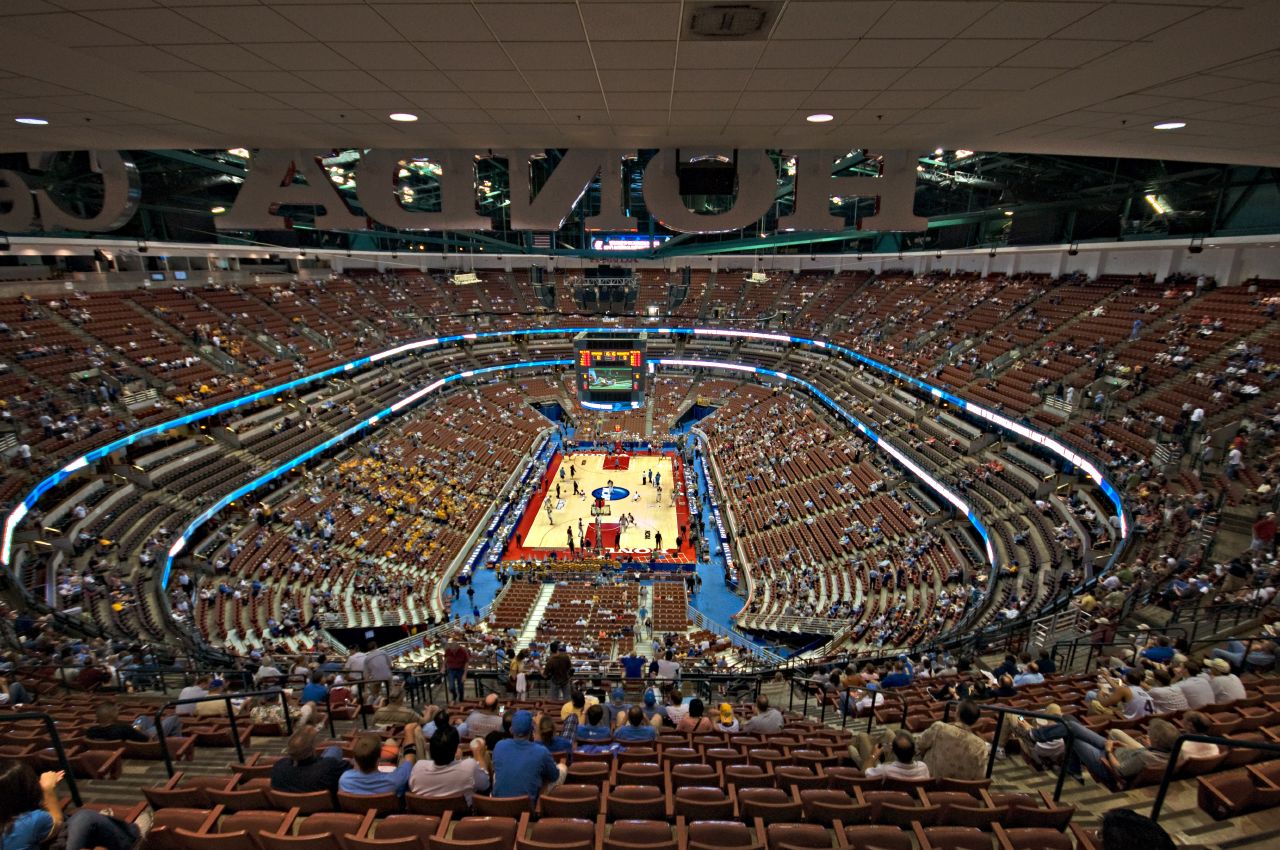
Long before it became synonymous with ice hockey, Honda Center established itself as one of Southern California's most versatile event spaces. From 1994 through 1999, it served as a secondary home for the NBA's Los Angeles Clippers, while also housing the Anaheim Bullfrogs of Roller Hockey International and, for two seasons, the Anaheim Piranhas of the Arena Football League. The venue has been a staple of professional bull riding, hosting a PBR event every year since 1998, and has anchored the Wooden Legacy basketball tournament since 1994. In April 2000, WWE brought its WrestleMania supercard to the arena, and the space has hosted multiple UFC events beginning with UFC 59 in 2006. College athletics found a home here as well: the NCAA men's basketball West Regional has been staged at the venue on numerous occasions, and the 1999 Frozen Four brought the semifinals and final of the NCAA Men's Ice Hockey Championship to Anaheim. Music legends have left their mark, too—Tina Turner played what she believed was her final show in December 2000, only to return for a sellout 50th-anniversary concert in 2008. By 2003, the arena had welcomed 17.5 million visitors.
Behind the Curtains: Ownership, Technology, and Resilience
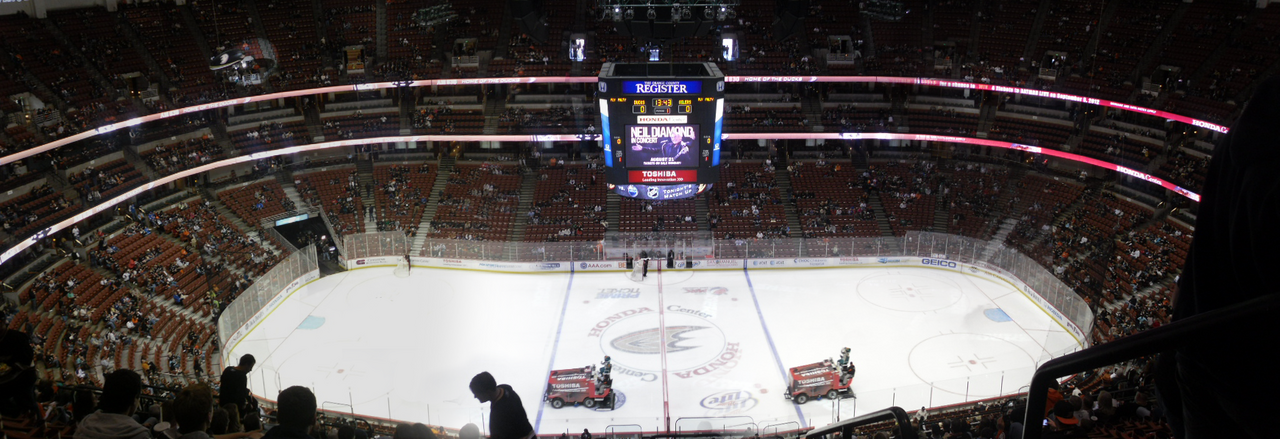
The operational backbone of Honda Center shifted dramatically in 2003 when Anaheim Arena Management, LLC was founded to assume control from the bankrupt Ogden Corporation. Today, Broadcom chairman Henry Samueli owns both AAM and the Ducks, granting unusual flexibility in scheduling and tenant recruitment. Concessions were handled by Aramark from 2000 until 2013, after which the arena brought food and beverage services in-house. Technologically, the venue pushed boundaries: in 2005 it became the first American arena to install two full levels of 360-degree ribbon displays, with Daktronics of Brookings, South Dakota, engineering 1,800 feet of full-color LED. The exterior marquee was later upgraded with two large video screens measuring eight by twenty-one feet. In the 2014-15 season, a brand-new scoreboard replaced the original 1993 unit. The arena's physical flexibility is remarkable—it seats 17,174 for hockey, features 84 luxury suites, and can be converted into an 8,400-seat amphitheater in just five hours. When the pandemic shuttered all scheduled events in March 2020, the venue pivoted to community service, hosting blood drives, food distributions, a collective wedding, and a drive-through voting location for the 2020 presidential election. The Ducks returned to the ice in January 2021 with a 2,000-person attendance cap.
Gallery
Frequently Asked Questions
What is the Honda Center?
The Honda Center is a multi-purpose indoor arena located in Anaheim, California, and it serves as the home rink for the NHL's Anaheim Ducks.
What was the Honda Center called before its current name?
Before the Honda naming-rights agreement, the venue was known as the Arrowhead Pond of Anaheim, a name that still echoes in local fan culture.
When did the Honda Center open?
The arena first opened its doors on June 19, 1993, after a construction project that cost approximately $123 million.
What do Ducks fans call the arena during hockey games?
Ice-hockey supporters refer to the venue as 'The Pond at Honda Center,' a nod to the old Arrowhead Pond branding that stuck with the fanbase.
Has the Honda Center hosted events beyond regular-season NHL games?
Yes, the arena has served as a host site for the Stanley Cup Finals and NCAA tournament games, among other major sporting events.
More in NHL Arenas 1-24
Spotted an error? Know more?
Reader corrections go straight into our review queue. Suggest an edit · How this site is sourced