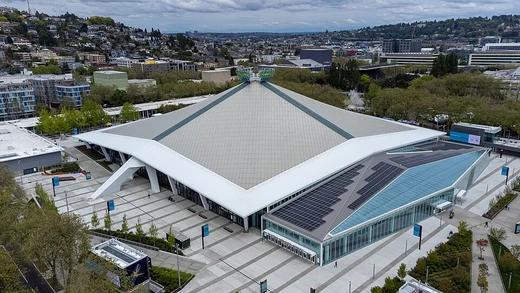
Delta Center
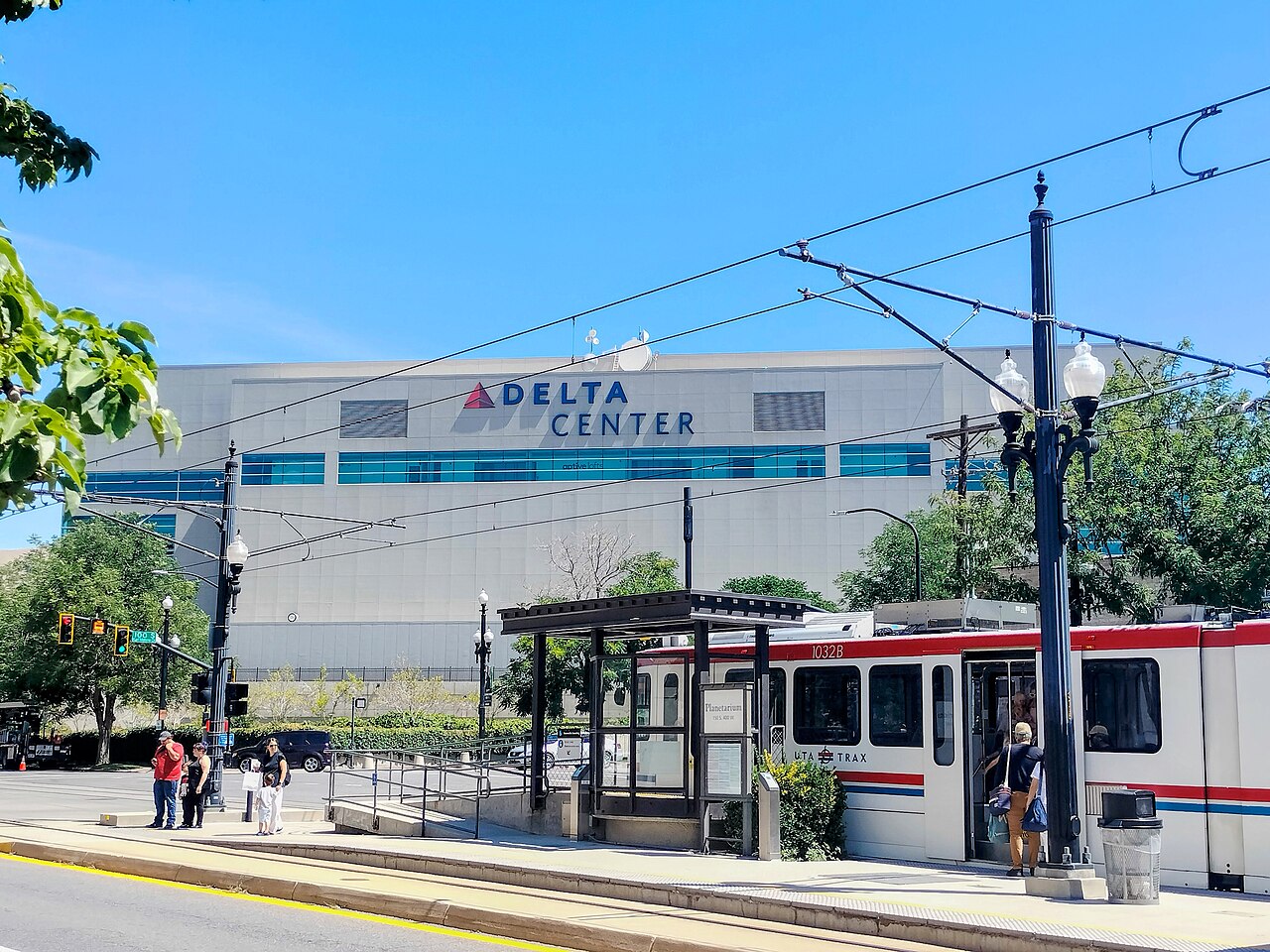
Home of the Utah Jazz and Utah Mammoth since 1991.

Lomrjyo · CC BY-SA 4.0
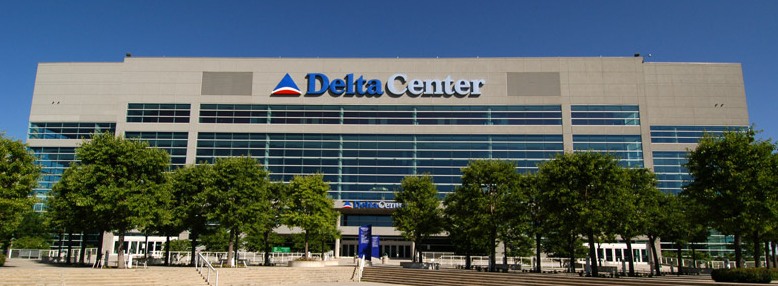
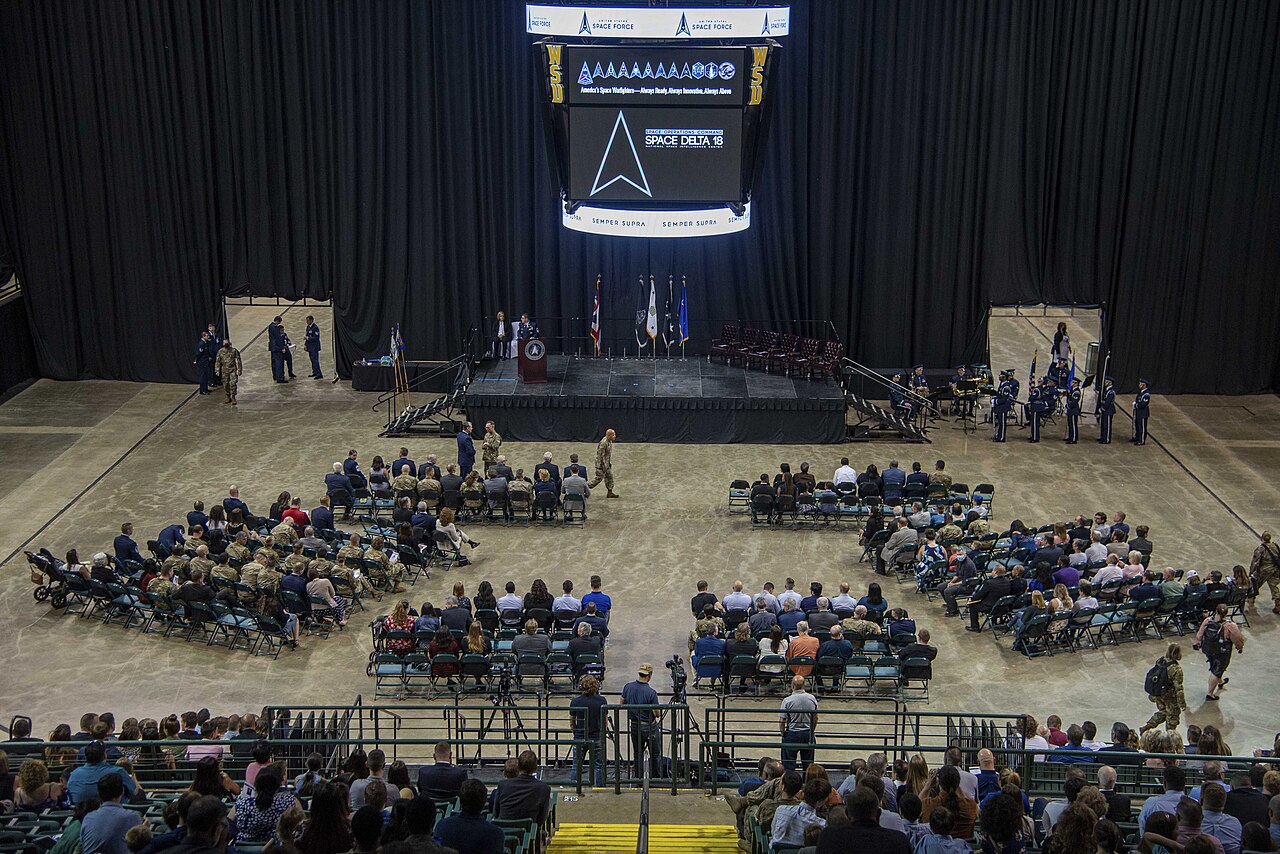
Delta Center is an indoor arena located in Salt Lake City that opened in 1991. It serves as the home venue for the Utah Jazz of the NBA and the Utah Mammoth of the NHL. Among NBA arenas, it ranks as the third oldest, behind Madison Square Garden and Target Center; in the NHL, it is the fourth oldest, after Climate Pledge Arena, Madison Square Garden, and Scotiabank Saddledome.
The arena seats 18,186 for basketball, up to 16,020 for hockey and indoor football, and 20,000 for concerts. It contains 56 luxury suites and 668 club seats. Over its history, it has also hosted the Utah Blaze of the Arena Football League and the Utah Starzz of the WNBA. During the 2002 Winter Olympics, it was called Salt Lake Ice Center and hosted figure skating and short-track speed skating. It is scheduled to host ice hockey during the 2034 Winter Olympics.
Originally conceived as a 20,000-seat replacement for the 12,616-seat Salt Palace, the arena was privately financed by businessman Larry H. Miller. Ground broke on May 22, 1990, and construction finished on October 4, 1991, at a cost of US$93 million. Delta Air Lines secured naming rights, calling it Delta Center. The first event was a Golden Eagles hockey game on October 16, 1991, a 4–2 loss to the Peoria Rivermen. The first concert, on October 24, 1991, featured Oingo Boingo. The first Jazz basketball game was a preseason loss to the New York Knicks (101–95), and the first regular-season game was a 103–95 loss to the Seattle SuperSonics on November 7, 1991.
The arena was home to the WNBA's Utah Starzz (1997–2002), the Salt Lake Golden Eagles (1991–1994), and the Utah Grizzlies (1995–1997) of the International Hockey League. On June 8, 1996, it drew 17,381 fans for game four of the Turner Cup Finals, then a record for American minor league hockey. On August 11, 1999, severe winds from a tornado damaged the roof, costing US$3.757 million to repair. Dan Roberts served as the Jazz's public address announcer from before the arena opened until his retirement in April 2025.
In 2006, amid bankruptcy, Delta declined to renew naming rights. A new deal with EnergySolutions renamed the venue EnergySolutions Arena, unveiled November 20, 2006, before a Jazz game against the Toronto Raptors. Temporary court stickers covered the old name, replaced by official logos in December. Fan reactions were largely negative, spawning nicknames like "
Quick Facts
- Address
- 301 W. South Temple
- Location
- Salt Lake City, Utah, U.S.
- Groundbreaking
- May 22, 1990
- Opened
- October 9, 1991
- Renovated
- May–Sept. 2017 (fan experience upgrades) / May–Sept. 2024 (Utah Mammoth arrival) / April 2025–present (full renovation)
- Owner
- Ryan Smith
- Operator
- Smith Entertainment Group
- Architect
- FFKR Architecture
- Structural Engineer
- Ralph L. Wadsworth Engineering
- Services Engineer
- Olsen & Peterson Consulting Engineers, Inc.
- General Contractor
- Ohbayashi/Sahara
- Public Transit
- uta · trax uta · Blue uta · Green (at Arena)
Facts from the source article.
Lore & Background
The arena was originally imagined as a 20,000-seat home for the Utah Jazz and Salt Lake Golden Eagles, replacing the Salt Palace. Ground was broken on May 22, 1990, and it was completed on October 4, 1991, under the leadership and private financing of Utah businessman Larry H. Miller. The first game played was a Golden Eagles loss to the Peoria Rivermen on October 16, 1991. The first concert was headlined by Oingo Boingo on October 24, 1991. The first regular season Jazz game was a loss to the Seattle SuperSonics on November 7, 1991.
Naming rights have changed multiple times. Delta Air Lines originally named it Delta Center. In 2006, amid Delta's bankruptcy, EnergySolutions acquired naming rights, renaming it EnergySolutions Arena. Fan reactions were predominantly negative, with nicknames like 'the Chernobowl' and 'the Fallout Shelter.' In 2015, Vivint acquired naming rights under a ten-year contract. In January 2023, Delta returned as naming rights sponsor under a ten-year deal. The arena's roof was damaged by the Salt Lake City Tornado of August 11, 1999, costing US$3.757 million to repair.
Reader's Guide
Delta Center is notable for its longevity and adaptability. It is the third oldest arena in the NBA and the fourth oldest in the NHL. It hosted figure skating and short-track speed skating during the 2002 Winter Olympics under the name 'Salt Lake Ice Center' and is expected to host ice hockey during the 2034 Winter Olympics. The arena is well known for being one of the hardest places to play for visiting NBA teams and one of the loudest arenas in the NHL. In a 2008 NBA Players Poll, it was considered 'the most intimidating arena in the NBA.' During Game 5 of the 1997 NBA Finals, a decibel meter recorded over 110 decibels. The arena underwent a US$125 million renovation completed in fall 2017. Following the arrival of the Utah Mammoth in 2024, further renovations began in April 2025, expected to continue until October 2027, including reconstruction of the lower bowl, new dehumidifiers, and premium areas. The first regular season Utah Hockey Club game was on October 8, 2024, a 5–2 win over the Chicago Blackhawks in front of 16,020.
Did You Know?
- During the 2002 Winter Olympics, the arena was renamed 'Salt Lake Ice Center' and hosted figure skating and short-track speed skating.
- On June 8, 1996, the Delta Center hosted the largest crowd in American minor league hockey history: 17,381 fans.
From Salt Palace to a New Era
The Delta Center was conceived as a modern replacement for the aging Salt Palace, a 12,616-seat venue that had served Salt Lake City's professional sports teams since the late 1960s. Utah businessman Larry H. Miller spearheaded the project with private financing, and construction broke ground on May 22, 1990. The new arena was completed on October 4, 1991, just in time for late-October games, at a cost of $93 million—roughly $220 million in today's dollars. The Salt Lake Golden Eagles played the first game inside the building on October 16, 1991, falling 4–2 to the Peoria Rivermen; fittingly, the Eagles had also contested the inaugural contest in the old Salt Palace back in 1969. The venue's first concert drew a crowd for Oingo Boingo on October 24, 1991, while the Utah Jazz's first regular-season game came on November 7, a 103–95 loss to the Seattle SuperSonics.
A Stage for Every Sport
Beyond its NBA and NHL tenants, the Delta Center has served as a home base for a remarkable roster of professional and minor-league teams. The Salt Lake Golden Eagles called it home from 1991 to 1994, followed by the Utah Grizzlies of the International Hockey League from 1995 to 1997. The WNBA's Utah Starzz played here from 1997 through 2002, and the Arena Football League's Utah Blaze also called the building home. One of the arena's most memorable moments came on June 8, 1996, when 17,381 fans packed in for Game Four of the Turner Cup Finals—the largest crowd ever recorded in American minor-league hockey at that time. The building's Olympic credentials are equally impressive. During the 2002 Winter Games, it operated as the Salt Lake Ice Center, hosting figure skating and short-track speed skating events. It is also slated to host ice hockey competition during the 2034 Winter Olympics, cementing its role as a recurring Olympic venue.
A Name in Flux
The arena's identity has shifted more than most. Delta Air Lines originally secured the naming rights, but in 2006, amid corporate bankruptcy, the airline chose not to renew. Salt Lake City–based radioactive waste disposal firm EnergySolutions stepped in, and the new name was unveiled on November 20, 2006, before a Jazz game against the Toronto Raptors. The transition was so abrupt that two large stickers were temporarily slapped onto the court to cover the old branding. Fan reaction was overwhelmingly hostile; the building quickly earned mocking nicknames such as the Chernobowl, the Fallout Shelter, Half-Life Arena, JazzMat, and the Tox Box. Team owner Larry H. Miller publicly defended the deal as a winner. After Miller's death, the court itself was named in his honor on April 15, 2010. Vivint, a Lehi-based home-security company, then held the rights from October 2015 for a decade. On January 14, 2023, Delta announced its return under a new ten-year agreement, restoring the familiar Delta Center name effective July 1.
The Mammoth Era and What Comes Next
In April 2024, Ryan Smith—who had acquired the Jazz and the arena from the Miller family in December 2020—announced he had purchased the hockey operations of the Arizona Coyotes to launch a new NHL expansion franchise, the Utah Mammoth, for the 2024–25 season. The team's first regular-season game on October 8, 2024, saw them defeat the Chicago Blackhawks 5–2 before 16,020 fans. NHL Commissioner Gary Bettman confirmed that the arena would undergo significant upgrades to expand unobstructed hockey seating from 12,000 to 17,000. Smith has secured $900 million in total funding, of which $525 million is earmarked for arena renovations and the construction of a surrounding sports-and-entertainment district. Construction began in April 2025 and is expected to run through October 2027. The lower bowl is being fully reconstructed with new risers to eliminate partial-view seats, the bowl extended by 12 feet at each end, and the playing surface raised by two feet. Additional work includes a new parking structure for premium season-ticket holders and four new dehumidifiers.
Gallery


Frequently Asked Questions
What is Delta Center and where is it located?
Delta Center is an indoor multi-purpose arena in Salt Lake City, Utah, that first opened to the public on October 4, 1991.
Which professional teams play at Delta Center?
The arena has been the home of the Utah Jazz (NBA) and the Utah Mammoth (NHL) since its 1991 opening, making it a shared venue for both leagues.
How old is Delta Center among active NHL arenas?
It ranks as the fourth-oldest active NHL venue, coming after Climate Pledge Arena, Madison Square Garden, and Scotiabank Saddledome.
What is Delta Center's hockey seating capacity?
For NHL games the arena holds up to 16,020 fans, while basketball configurations expand that to 18,186 and concert setups can reach roughly 20,000.
How much did it cost to build Delta Center?
The project was completed at a price tag of about $93 million, which is equivalent to roughly $220 million in 2025 dollars.
More in NHL Arenas 1-24
Spotted an error? Know more?
Reader corrections go straight into our review queue. Suggest an edit · How this site is sourced