NGC 681
An edge-on intermediate spiral galaxy with a Seyfert II nucleus.

NGC 681 lies about 66.5 million light-years away in the constellation Cetus, classified as an intermediate spiral galaxy. It belongs to a small group of four galaxies called MCG -02-05-053 (or LGG 33), which also includes NGC 701. Structurally, it resembles the Sombrero Galaxy (M104), but is dimmer, less massive, and smaller in size. Its thin, dusty disk is seen nearly edge-on, with a bright, compact nucleus at the center of a prominent bulge. Unlike M104, however, NGC 681’s disk contains numerous H II regions, suggesting active star formation. The galaxy’s spiral pattern is asymmetrical, and it has a mass-to-light ratio of 3.6. SIMBAD classifies it as a Seyfert II galaxy, meaning its nucleus is quasar-like—very bright, with strong high-ionization emission lines—but the host galaxy remains clearly visible. One supernova has been observed here: SN2024abup, a Type Ic-BL event discovered by ATLAS on 22 November 2024, reaching magnitude 17.018.
Quick Facts
- Appmag V
- 12
- Constellation Name
- Cetus
- Dec
- -10 · 25 · 35.13
- Ra
- 01 · 49 · 10.829
- Dist Ly
- ~66.5 million ly (20.39 ± 1.45 Mpc)
- Group Cluster
- MCG -02-05-053 Group (LGG 33)
- Epoch
- J2000
- H Radial V
- 1760.4 ± 6.6 km/s
- Z
- 0.00587 ± 0.00002
- Mass Light Ratio
- 3.6
Facts from the source article.
Lore & Background
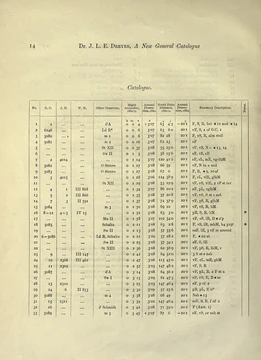
NGC 681 was discovered by the German-born British astronomer William Herschel on 28 November 1785 and was later also observed by his son, John Herschel. John Louis Emil Dreyer, compiler of the first New General Catalogue of Nebulae and Clusters of Stars, described NGC 681 as being a 'pretty faint, considerably large, round, small (faint) star 90 arcsec to [the] west' that becomes 'gradually a little brighter [in the] middle'.
Physically, NGC 681 has a thin, dusty disc seen almost perfectly edge-on, with a small, very bright nucleus at the center of a very pronounced bulge. Unlike the Sombrero Galaxy, its disc contains many H II regions where star formation is likely occurring. The galaxy has a mass of M☉, a mass-to-light ratio of 3.6, and an asymmetrical spiral pattern. The SIMBAD database lists NGC 681 as a Seyfert II Galaxy, indicating a quasar-like nucleus with very high surface brightnesses and strong, high-ionisation emission lines, but with a clearly detectable host galaxy.
One supernova has been observed in NGC 681: SN2024abup (Type Ic-BL, magnitude 17.018), discovered by ATLAS on 22 November 2024.
Reader's Guide
NGC 681 is notable for its structural resemblance to the Sombrero Galaxy (M104), yet it is smaller, less luminous, and less massive. Its edge-on orientation and pronounced bulge make it a valuable object for studying the morphology of intermediate spiral galaxies. The presence of numerous H II regions in its disc, unlike M104, indicates ongoing star formation, offering a contrast to the more quiescent Sombrero. Its classification as a Seyfert II Galaxy adds to its significance, as it hosts an active galactic nucleus that is bright in high-ionisation emission lines while still allowing the host galaxy to be clearly observed. The galaxy is part of a small group (MCG -02-05-053) containing four galaxies, including NGC 701, placing it in a local environment that may influence its evolution. The discovery of a Type Ic-BL supernova in 2024 further highlights its dynamic nature and provides opportunities for studying stellar explosions in a Seyfert host. NGC 681 thus serves as a comparative benchmark for understanding both normal and active spiral galaxies.
Did You Know?
- NGC 681 was discovered by William Herschel on 28 November 1785.
- It is a member of the MCG -02-05-053 group, which contains four galaxies including NGC 701.
- The galaxy is classified as a Seyfert II Galaxy, with a quasar-like nucleus but a clearly detectable host galaxy.
- One supernova, SN2024abup (Type Ic-BL), was observed in NGC 681 on 22 November 2024.
More in NGC Objects 1-24
Spotted an error? Know more?
Reader corrections go straight into our review queue. Suggest an edit · How this site is sourced