NGC 17
A merged spiral galaxy with a starburst nucleus in Cetus.

NGC 17, also called NGC 34, is a spiral galaxy located in the constellation Cetus, about 250 million light-years from Earth. It formed from the collision of two disk galaxies, a merger that sparked a recent burst of star formation in its core and continues to fuel new stars. The galaxy still contains plenty of gas and has a single nucleus at its center.
Unlike the Milky Way, NGC 17 lacks well-defined spiral arms because of the merger. Its central bar and nucleus are also distorted. The merger likely destroyed any galactic habitable zone that might have existed before the collision—the Milky Way’s own habitable zone is thought to be a ring between roughly 10 kiloparsecs and the galactic center, though these boundaries are not sharp.
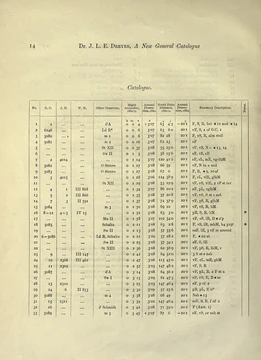
Frank Muller discovered NGC 17 in 1886, and later that year Lewis Swift independently observed it, cataloging it as NGC 34. When John Dreyer compiled the New General Catalogue, he listed them as separate objects because their recorded positions differed by half a degree. In 1900, Herbert Howe noticed the mistake, and Dreyer corrected it in the second edition of the NGC in 1910.
Quick Facts
- Epoch
- J2000
- Ra
- 00 · 11 · 06.5
- Dec
- -12 · 06 · 26
- Z
- 0.019617
- H Radial V
- 5,881 ± 2 km/s
- Appmag V
- 15.3
- Constellation Name
- Cetus
- Names
- NGC 34, Mrk 938, VV 850, PGC 781
Facts from the source article.
Lore & Background
NGC 17 was discovered in 1886 by Frank Muller and observed again later that year by Lewis Swift. A difference of half a degree in positioning between the two men's observations led John Dreyer to list them as separate objects in the New General Catalogue, under the designations NGC 17 and NGC 34. In 1900 Herbert Howe noticed the discrepancy, and Dreyer included the update in the second edition of the NGC in 1910.
The galaxy is the product of a major merger between two disk galaxies. This event destroyed any defined spiral arms like those of the Milky Way, and the central bar nucleus is also distorted. The merger eliminated any galactic habitable zone that may have existed before. The central regions exhibit a spiral structure, and the galaxy continues to host star-forming activity.
Unlike the Milky Way, which has a galactic habitable zone commonly believed to be an annulus with an outer radius of about 10 kiloparsecs and an inner radius close to the Galactic Center (both lacking hard boundaries), NGC 17 has no such zone due to the merger.
Reader's Guide
NGC 17's significance lies in its status as a clear example of a major galaxy merger in progress, captured at a stage where the remnant is still gas-rich and actively forming stars. The fact that it was independently catalogued twice in the same year—by Frank Muller and Lewis Swift—and later recognized as a single object highlights the observational challenges of the late 19th century. The discrepancy of half a degree in their reported positions, resolved by Herbert Howe and corrected by John Dreyer, illustrates the evolving nature of astronomical cataloguing. The galaxy's single nucleus and ongoing starburst provide a laboratory for studying the aftermath of disk-galaxy collisions, contrasting with the more orderly structure of spiral galaxies like the Milky Way. Its lack of defined spiral arms and a distorted bar nucleus underscore the disruptive effects of such mergers, while the absence of a galactic habitable zone offers a cautionary note about the potential for life in merged systems. NGC 17 remains a key object for understanding galaxy evolution and the fate of gas-rich mergers.
Did You Know?
- NGC 17 is also catalogued as NGC 34 due to a half-degree positional discrepancy between its discoverers.
- The galaxy is the result of a merger between two disk galaxies and has a single galactic nucleus.
- It lies 250 million light years away in the constellation Cetus.
Frequently Asked Questions
What is NGC 17?
NGC 17 (also cataloged as NGC 34) is a spiral galaxy sitting in the constellation Cetus, roughly 250 million light-years from Earth. It is the remnant of a collision between two disk galaxies, and that merger is still driving a burst of new star formation in its core.
Why doesn't NGC 17 have clean spiral arms like the Milky Way?
The major merger that created NGC 17 scrambled the structure of both parent galaxies, leaving behind a distorted central bar and nucleus rather than well-defined spiral arms. The violent collision essentially tore apart whatever orderly arm pattern might have existed before the impact.
How far away is NGC 17 and where do I look for it?
At about 250 million light-years, NGC 17 sits in the southern constellation Cetus, making it a challenging target for amateur observers. The light reaching your telescope today left the galaxy a quarter of a billion years ago.
Who first spotted NGC 17?
The galaxy was independently recorded in 1886 by both Frank Muller and Lewis Swift, who each noted it during their respective surveys. It carries the dual designations NGC 17 and NGC 34 as a result of early cataloging.
Is NGC 17 still forming stars?
Yes—the merger that forged the galaxy triggered an ongoing starburst in its nucleus, and the system still holds plenty of gas to keep fueling new stars. This makes it one of the more active merger remnants visible in the nearby universe.
More in NGC Objects 1-24
Spotted an error? Know more?
Reader corrections go straight into our review queue. Suggest an edit · How this site is sourced