NGC 612
A rare lenticular galaxy hosting a powerful FR-II radio source.

NGC 612 is a lenticular galaxy in the constellation Sculptor, roughly 388 million light-years away. Spanning 440,000 light-years across, it is a type II Seyfert galaxy with an active galactic nucleus. It stands out as an extremely uncommon non-elliptical radio galaxy, containing one of the closest powerful FR-II radio sources.
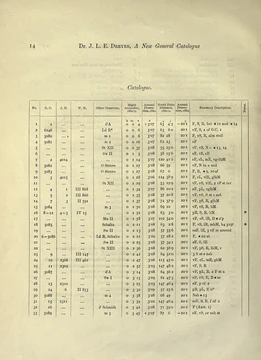
British astronomer John Herschel first spotted the object on 29 November 1837. John Louis Emil Dreyer, who compiled the first New General Catalogue, described it as "faint, very small, round, 12th magnitude star to the west."
Seen nearly edge-on, NGC 612 has a well-developed luminous disc and a prominent dust ring. Its disc contains an unusually young stellar population, with ages between roughly 0.04 and 0.1 billion years. A vast disc of cool neutral hydrogen gas surrounds the galaxy, with a mass distributed across a 140-kiloparsec-wide structure aligned with the galactic disc and dust lane. Most of this gas rotates in a regular pattern at about 850 kilometers per second.
As of 2020, NGC 612 is one of only five known lenticular galaxies with large-scale radio emissions. Both spiral and lenticular galaxies rarely host such emissions, and the reason remains unclear. The supermassive black hole at the galaxy’s center, which powers the radio emission, has a lower mass limit that has not been specified.
A faint bridge of material, 400 kiloparsecs long, connects NGC 612 to the gas-rich barred spiral galaxy NGC 619. This suggests the two galaxies interacted at some point. A current or past interaction, such as a merger, is considered the most likely trigger for NGC 612’s radio source.
Quick Facts
- Constellation Name
- Sculptor
- Dec
- -36 · 29 · 35.7
- Epoch
- J2000
- Z
- 0.02977 ± 0.00010
- Ra
- 01 · 33 · 57.74
- H Radial V
- 8925 ± 29 km/s
- Appmag V
- 13
- Notes
- Rare example of a non-elliptical radio galaxy
Facts from the source article.
Lore & Background
NGC 612 was discovered by British astronomer John Herschel on 29 November 1837. John Louis Emil Dreyer, compiler of the first New General Catalogue of Nebulae and Clusters of Stars, described NGC 612 as 'faint, very small, round, 12th magnitude star to the west.' The galaxy has a fairly well-developed luminous disc seen almost edge-on and features a strong dust ring. Its disk contains an unusually young star population with ages in the range ~0.04–0.1 Gyr. Surrounding NGC 612 is an enormous disc of cool neutral hydrogen gas with a mass distributed in a 140 kpc wide structure along the galactic disc and dust lane. The majority of the gas is relatively settled in regular rotation with a velocity of 850 km/s. A faint bridge spanning 400 kpc exists between NGC 612 and the gas-rich barred spiral galaxy NGC 619, indicating that an interaction between both galaxies occurred at some point.
Reader's Guide
NGC 612 is one of only five known lenticular galaxies (as of 2020) that show large-scale radio emissions. Both spiral and lenticular galaxies rarely host such emissions, and the reason these types of galaxies are so rare is not understood. The supermassive black hole at the center of NGC 612 powers the radio emission, though its mass has only a lower limit established. Current or past interaction, such as a merger event, is currently the most likely trigger of NGC 612's radio source. Its status as a non-elliptical radio galaxy makes it an extremely rare object, providing a unique laboratory for studying the conditions that can produce powerful radio jets outside of elliptical galaxies. The galaxy's young stellar population and extensive neutral hydrogen disc further add to its significance as a system where galaxy interactions may have recently triggered both star formation and nuclear activity.
Did You Know?
- The galaxy hosts one of the nearest powerful FR-II radio sources.
- A faint bridge of 400 kpc connects NGC 612 to the barred spiral galaxy NGC 619.
- The disc of NGC 612 contains an unusually young star population aged about 0.04–0.1 billion years.
More in NGC Objects 1-24
Spotted an error? Know more?
Reader corrections go straight into our review queue. Suggest an edit · How this site is sourced