NGC 602
Young open cluster in the Small Magellanic Cloud with star formation.

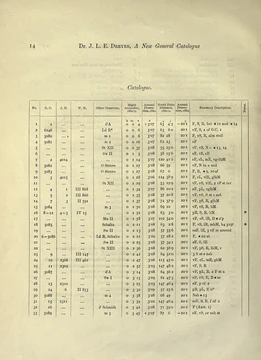
NGC 602 is a bright, young open star cluster in the Small Magellanic Cloud, a small galaxy that orbits the Milky Way. Scottish astronomer James Dunlop first spotted it on 1 August 1826. The cluster sits inside a nebula called N90.
The intense radiation and shock waves from NGC 602’s stars have blown away much of the lighter gas and dust of N90. This process has triggered fresh star formation along the nebula’s ridges, known as elephant trunks. These even younger stars, still wrapped in dust, are not yet on the main sequence but can be seen by the Spitzer Space Telescope in infrared light.
Because NGC 602 lies in the wing of the Small Magellanic Cloud, near the Magellanic Bridge, it is relatively isolated. This makes it easier to study, even though its chemical makeup should be similar to the rest of the galaxy.
The cluster has three main groupings. The central core is NGC 602a. About 100 arc-seconds to the north-northwest lies the compact NGC 602b. Farther off, 11 arc-minutes to the northeast, is NGC 602c, a looser assembly that includes the WO star AB8.
NGC 602 contains many young O and B stars and young stellar objects, but few evolved stars. The nebula’s ionization is dominated by Sk 183, an extremely hot O3 main-sequence star that appears as a bright, isolated star at the center of Hubble images.
In 2024, astronomers found a population of candidate brown dwarfs in NGC 602—the first detection of such objects beyond the Milky Way. Several more distant galaxies also appear in the background of Hubble’s images of NGC 602, creating a striking view.
Quick Facts
- Epoch
- J2000
- Ra
- 01 · 29 · 32.133
- Dec
- -73 · 33 · 38.13
- Constellation
- Hydrus
- Dist Ly
- 196 kly
- Dist Pc
- 61 kpc
- Appmag V
- 15.44 (pg)
- Radius Ly
- 90 ly
- Age
- 5 My
- Names
- N90
Facts from the source article.
Lore & Background
NGC 602 contains three main condensations of stars: the central core NGC 602a, the compact NGC 602b 100 arc-seconds to the NNW, and the looser grouping NGC 602c 11 arc-minutes to the NE, which includes the WO star AB8. The cluster includes many young O and B stars and young stellar objects, with few evolved stars. Ionisation in the nebula N90 is dominated by Sk 183, an extremely hot O3 main sequence star visible as the bright isolated star at the centre of Hubble images.
Radiation and shock waves from the stars of NGC 602 have pushed away much of the lighter surrounding gas and dust of N90, triggering new star formation in the ridges (or 'elephant trunks') of the nebula. These even younger, pre–main sequence stars remain enshrouded in dust but are visible to the Spitzer Space Telescope at infrared wavelengths. A population of candidate brown dwarfs was found in NGC 602 in 2024, marking the first detection of brown dwarfs outside the Milky Way.
Reader's Guide
NGC 602 is significant as a laboratory for studying star formation in a low-metallicity environment, since its chemical properties should be similar to those of the rest of the Small Magellanic Cloud but it is relatively isolated and thus easier to study. The cluster's young stellar population—dominated by O and B stars and young stellar objects—provides insight into the early stages of stellar evolution and the process of triggered star formation via radiation and shock waves. The 2024 discovery of candidate brown dwarfs in NGC 602 represents the first detection of such objects outside the Milky Way, extending the study of substellar objects to extragalactic contexts. Additionally, the Hubble Space Telescope images of NGC 602 reveal a number of more distant galaxies in the background, offering a visually striking view that underscores the cluster's place in the broader cosmos. Its legacy includes advancing understanding of how massive stars shape their surroundings and how new generations of stars form in the ridges of interstellar material.
Did You Know?
- NGC 602 was discovered on 1 August 1826 by Scottish astronomer James Dunlop.
- It is embedded in the nebula N90 and contains three main stellar condensations: NGC 602a, NGC 602b, and NGC 602c.
- In 2024, candidate brown dwarfs were detected in NGC 602, the first such detection outside the Milky Way.
More in NGC Objects 1-24
Spotted an error? Know more?
Reader corrections go straight into our review queue. Suggest an edit · How this site is sourced