NGC 281
Emission nebula in Cassiopeia, known as the Pacman Nebula.

NGC 281, also known as IC 11 or Sh2-184, is a bright emission nebula and H II region located in the northern constellation Cassiopeia, lying within the Perseus Spiral Arm of the Milky Way. This nebulosity, spanning 20 by 30 arcminutes, is linked to the open cluster IC 1590, several Bok globules, and the multiple star system B 1. Together, these features form the larger Sh2-184 region, which covers about 40 arcminutes. A 2014 study using radio parallaxes of water masers at 22 GHz placed the nebula at a distance of roughly 9,200 light-years. It is popularly called the Pacman Nebula because its shape resembles the video game character.
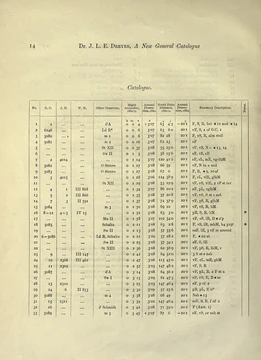
Edward Emerson Barnard first spotted the nebula in August 1883, describing it as "a large faint nebula, very diffuse." The multiple star B 1 (or β 1) was later discovered by S. W. Burnham; its brightest component is HD 5005 (HIP 4121), a highly luminous O6-class star. This quintuple system consists of an 8th-magnitude primary star with four companions located between 1.4 and 15.7 arcseconds away. No notable changes have been observed in the system since its first measurements in 1875.
From dark-sky locations, the nebula is visible through amateur telescopes. In his book *Deep Sky Wonders*, Walter Scott Houston described its appearance in small telescopes: "There was a faint glow in the immediate vicinity of the multiple star, with an occasional impression of a much larger nebulosity...Its surface brightness was much less than that of M33 in Triangulum or NGC 205, the distant companion of the Andromeda galaxy."
Quick Facts
- Constellation
- Cassiopeia
- Epoch
- J2000.0
- Ra
- 00 · 52 · 59.3
- Dec
- +56 · 37 · 19
- Dist Ly
- 9500
- Dist Pc
- 2900
- Appmag V
- 7.4
- Radius Ly
- 48
- Notes
- open cluster IC 1590, the multiple star B 1, and several Bok globules
- Names
- IC 11, Sh2-184, Sharpless 184, LBN 616, LBN 123.17-06.28, Pacman Nebula
Facts from the source article.
Lore & Background
Edward Emerson Barnard discovered the nebula in August 1883, describing it as 'a large faint nebula, very diffuse'. The multiple star B 1 (β 1) was later discovered by S. W. Burnham; its bright component is the highly luminous O6 spectral class star HD 5005 (HIP 4121). This quintuple system consists of an 8th-magnitude primary with four companions at separations between 1.4 and 15.7 arcseconds, and no appreciable change has been observed since the first measures in 1875.
The nebula region is visible in amateur telescopes from dark sky locations. In his book Deep Sky Wonders, Walter Scott Houston described its appearance in small telescopes: 'There was a faint glow in the immediate vicinity of the multiple star, with an occasional impression of a much larger nebulosity...Its surface brightness was much less than that of M33 in Triangulum or NGC 205, the distant companion of the Andromeda galaxy.'
Reader's Guide
NGC 281 holds significance as a bright emission nebula within the Perseus Spiral Arm of the Milky Way, notable for its association with the open cluster IC 1590, Bok globules, and the multiple star B 1. Its colloquial name, the Pacman Nebula, derives from its resemblance to the video game character, adding to its recognition among amateur astronomers. The nebula's distance, estimated at 9200 light-years from 2014 radio parallax measurements of water masers, provides a modern anchor for studies of this H II region. Discovered by Edward Emerson Barnard in 1883, the nebula was described as faint and diffuse, while the multiple star system B 1, discovered by S. W. Burnham, has shown no change since 1875, offering a stable reference point. Walter Scott Houston's observations in Deep Sky Wonders note its low surface brightness compared to M33 and NGC 205, guiding observers on what to expect in small telescopes. The nebula's visibility from dark sky locations makes it accessible to amateur astronomers, and its inclusion in astronomical catalogs (NGC, IC, Sh2) underscores its enduring interest.
Did You Know?
- NGC 281 is colloquially called the Pacman Nebula for its resemblance to the video game character.
- The nebula was discovered by Edward Emerson Barnard in August 1883, who described it as 'a large faint nebula, very diffuse'.
- A 2014 distance estimate using radio parallaxes of water masers at 22 GHz places NGC 281 at 9200 light-years.
More in NGC Objects 1-24
Spotted an error? Know more?
Reader corrections go straight into our review queue. Suggest an edit · How this site is sourced