Cane River Creole National Historical Park
Preserving two intact French Creole cotton plantations.
Last updated
Where it is
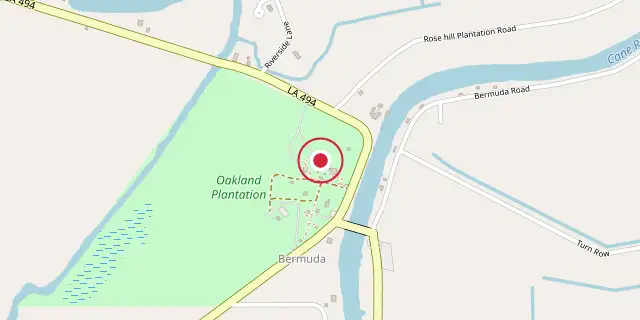
Coordinates: 31°39′58″N 93°00′11″W (31.6660, -93.0030) · Open in OpenStreetMap
Coordinates and connected clubs: the infobox of Wikipedia: Cane River Creole National Historical Park (CC BY-SA 4.0). Map: drawn by Codexery from OpenStreetMap tiles.
Cane River Creole National Historical Park, established in 1994, preserves two of the most intact French Creole cotton plantations in the United States: Oakland and Magnolia. Located along Cane River Lake in Natchitoches Parish, Louisiana, the park encompasses 63 acres and over 65 historic structures, interpreting the evolution of plantation agriculture through the perspectives of landowners, enslaved workers, and tenant farmers across two centuries. It is a site on the Louisiana African American Heritage Trail and focuses on the conservation of Creole culture, which historically referred to people, architecture, or livestock of Old World stock born in colonial Louisiana.
Magnolia
The origins of Magnolia Plantation date to the mid-18th century, when Jean Baptiste LeComte received a French land grant in Natchitoches Parish in 1753. He established Shallow Lake plantation, focusing on tobacco and subsistence farming. The LeComte family became one of the most successful landowning families in the parish, and by the early 19th century they were producing cotton and expanding their holdings. In the 1830s, Ambrose LeComte II acquired the land that would become Magnolia Plantation, and most of the structures still on the site were built during this prosperous period.
By 1852, management passed to Ambrose's son-in-law, Matthew Hertzog, whose name became closely tied to the plantation. The Civil War brought destruction: Union troops burned the main house during the Red River Campaign, and both armies destroyed crops and structures. After the war, the LeComte-Hertzog family rebuilt the main house and converted much of the land to sharecropping by freedmen, also leasing acreage to tenant farmers, mostly Creoles of color.
Sharecroppers farmed sections of land in exchange for part of the crop or its proceeds, often supplied with seed and equipment by the owner. A plantation store sold goods to sharecroppers, but many fell into a cycle of debt and poverty.
Oakland
Oakland Plantation began with a land grant to the French Creole Prud'homme family. In 1789, Emanuel Prud'homme received a grant from the Spanish government, which then ruled Louisiana. He was among the first planters in the area to grow cotton and began purchasing enslaved workers to labor in the fields and construct plantation buildings. Construction of the plantation home started in 1818.
By the late 1820s, Emanuel's son, Pierre Phanor Prud'homme, took over management. The plantation operated as a self-sufficient community, growing cotton as its commodity crop while also producing food for people and animals. Structures included housing for the overseer and enslaved people, work sites such as a wash house and carpenter shop, livestock buildings for mules, chickens, horses, and turkeys, and a pigeonnière for raising pigeons as a food delicacy.
Phanor became owner in 1845 upon his father's death and managed the plantation successfully until the Civil War. During the Red River Campaign, both Union and Confederate armies destroyed buildings, crops, and livestock; the cotton gin was burned. Family legend holds that Phanor was arrested by Union soldiers, became ill while being moved to Natchitoches, and died in a cousin's home. After the war, Phanor's two sons divided the plantation: Jacques Alphonse Prud'homme kept the land west of the Cane River including the main house, while Pierre Emmanuel Prud'homme took the east side and established Atahoe plantation.
Legacy
Modernization arrived gradually at Cane River. Phanor Prud'homme II bought the family's first car in 1910, while most people still traveled by mule-drawn wagon. By the 1960s, mechanization replaced many tasks done by mules and human workers. During and after World War II, many black workers left the plantations in the Great Migration for war-industry jobs.
Lyle Saxon published a short story titled "Cane River" in 1926 and featured the area in his 1937 novel Children of Strangers. John Isiah Walton created an artwork called "Cane River" depicting a girl looking at her reflection. Oakland Plantation is listed as a National Historic Landmark and Bicentennial Farm. Open to the public as a unit of the national historical park, its outbuildings, sheds, store houses, and tenant cabins illustrate daily life on a working cotton plantation and offer a window into Creole colonial culture.
More in National Historical Parks of the United States
Sources
Compiled from Wikipedia and the sources listed below. Text from Wikipedia is available under CC BY-SA 4.0; this entry is adapted from it.
- Wikipedia: Cane River Creole National Historical Park (CC BY-SA 4.0).
Spotted an error? Know more?
Reader corrections go straight into our review queue. Suggest an edit · How this site is sourced