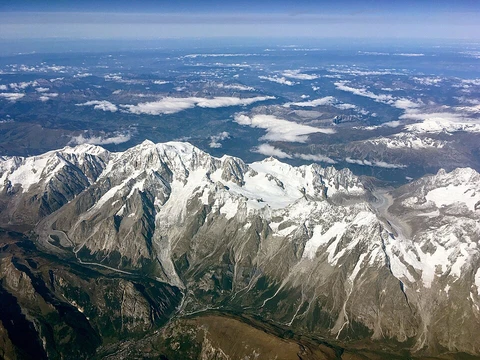
Binalud Mountains
Mountain range in northeastern Iran, source of Nishabur turquoise.

The Binalud Mountains are a range in northeastern Iran, situated within Razavi Khorasan Province and running in a northwest-southeast direction between the cities of Nishapur and Mashhad. Mashhad lies on the northeastern side of the range, while Nishapur is located on its southwestern section. Although geographically separate from the Aladagh Mountains to the northwest in North Khorasan Province, both ranges follow a similar arc curving from northwest to southeast. The highest point of the Binalud Mountains, and of the entire province, is Mount Binalud, which reaches an elevation of 3,211 meters and is situated somewhat west of the main range. The mountains were primarily formed during the Miocene and Pliocene epochs as part of the Alpine orogeny, a period of mountain building driven by the collision of the Arabian Plate with the Eurasian Plate. This tectonic activity continues today, with the range accommodating the motion of Central Iran relative to the Arabian plate. Geologically, the range is composed mainly of Triassic and Jurassic rocks, with Jurassic rocks dominating the northwestern part and a smaller area of Paleozoic rocks in the western section. A strip of Eocene rocks runs along the southern margin, and on its northwestern side, there is a section of volcanic Eocene rocks. It is from these weathered and broken volcanic trachytes and andesites that the famous Nishabur turquoise is sourced. The principal turquoise mines are located about 50 kilometers northwest of Nishapur, near a village called Madan.
- location
- Razavi Khorasan Province, northeastern Iran
- geological_era
- Formed mainly in the Miocene and Pliocene
- rock_types
- Triassic, Jurassic, Paleozoic, and Eocene rocks
- known_for
- Source of Nishabur turquoise
- tectonic_rate
- 4.0 ± 1.3 mm per year
Lore & Background
The Binalud Mountains were formed primarily during the Miocene and Pliocene epochs as part of the Alpine orogeny. The range is composed mainly of Triassic and Jurassic rocks, with Jurassic rocks dominating the northwestern part and a smaller portion of Paleozoic rocks in the western section. On the southern margin, a strip of Eocene rocks runs parallel to the range, and on the northwestern side of this strip lies another section of Eocene volcanic rocks. The weathered and broken trachytes and andesites of these volcanic rocks yield the famous Nishabur turquoise, with the main mines located about 50 kilometres northwest of Nishapur near a village called Madan. The city of Mashhad lies in the northeastern part of the range, while Nishapur (or Neyshabur) is situated on the southwestern section.
Reader's Guide
The Binalud Mountains hold significance as a geological and cultural landmark in northeastern Iran. Geologically, they exemplify the Alpine orogeny's effects in the region, with a complex mix of Triassic, Jurassic, Paleozoic, and Eocene rocks. The range's volcanic Eocene rocks are the source of Nishabur turquoise, a historically valued gemstone mined near the village of Madan, about 50 kilometres northwest of Nishapur. The mountains also play a role in active tectonics, accommodating the collision between the Arabian and Eurasian plates at a measurable rate. Their highest peak, Mount Binalud, serves as a prominent landmark for the province.
Did You Know?
- The Binalud Mountains run northwest-southeast between the cities of Nishapur and Mashhad.
- The main turquoise mines are located about 50 kilometres northwest of Nishapur near a village called Madan.
- The range accommodates the motion of Central Iran on the Arabian plate at a rate of 4.0 ± 1.3 mm per year.
- The weathered and broken trachytes and andesites of Eocene volcanic rocks yield the famous Nishabur turquoise.
Frequently Asked Questions
What are the Binalud Mountains?
They are a mountain range stretching northwest to southeast through northeastern Iran, situated between the cities of Nishapur and Mashhad within Razavi Khorasan Province. Their highest peak, Mount Binalud, reaches 3,211 metres above sea level.
Where exactly are the Binalud Mountains located?
The range runs through Razavi Khorasan Province in northeastern Iran, positioned between Nishapur and Mashhad. It sits in a tectonically active zone, shifting at roughly 4 millimetres per year.
What are the Binalud Mountains famous for?
They are best known as the geological source of the prized Nishabur turquoise that has been mined there for centuries. The range also contains a diverse mix of rock formations spanning from the Paleozoic era through the Jurassic and Triassic periods.
How were the Binalud Mountains formed?
The range took shape primarily during the Alpine orogeny, with most of its structure developing in the Miocene and Pliocene epochs. This tectonic activity compressed and uplifted older rock layers to create the peaks seen today.
Why are the Binalud Mountains significant?
Beyond their geological age and ongoing tectonic movement, they hold cultural and economic importance as the origin point of one of the world's most recognized turquoise deposits. Their layered rock record also preserves a natural archive of Earth's deep geological history across multiple eras.
More in Mountain Ranges And Massifs 1-24
Spotted an error? Know more?
This is a living reference — every entry is fact-audited, and reader corrections feed straight into our audit queue. Suggest an edit · See this site's audit record