
Rambo Amadeus
Montenegrin−Serb satirist and musician known for ironic wit.

Carsten Stiller · CC BY-SA 4.0
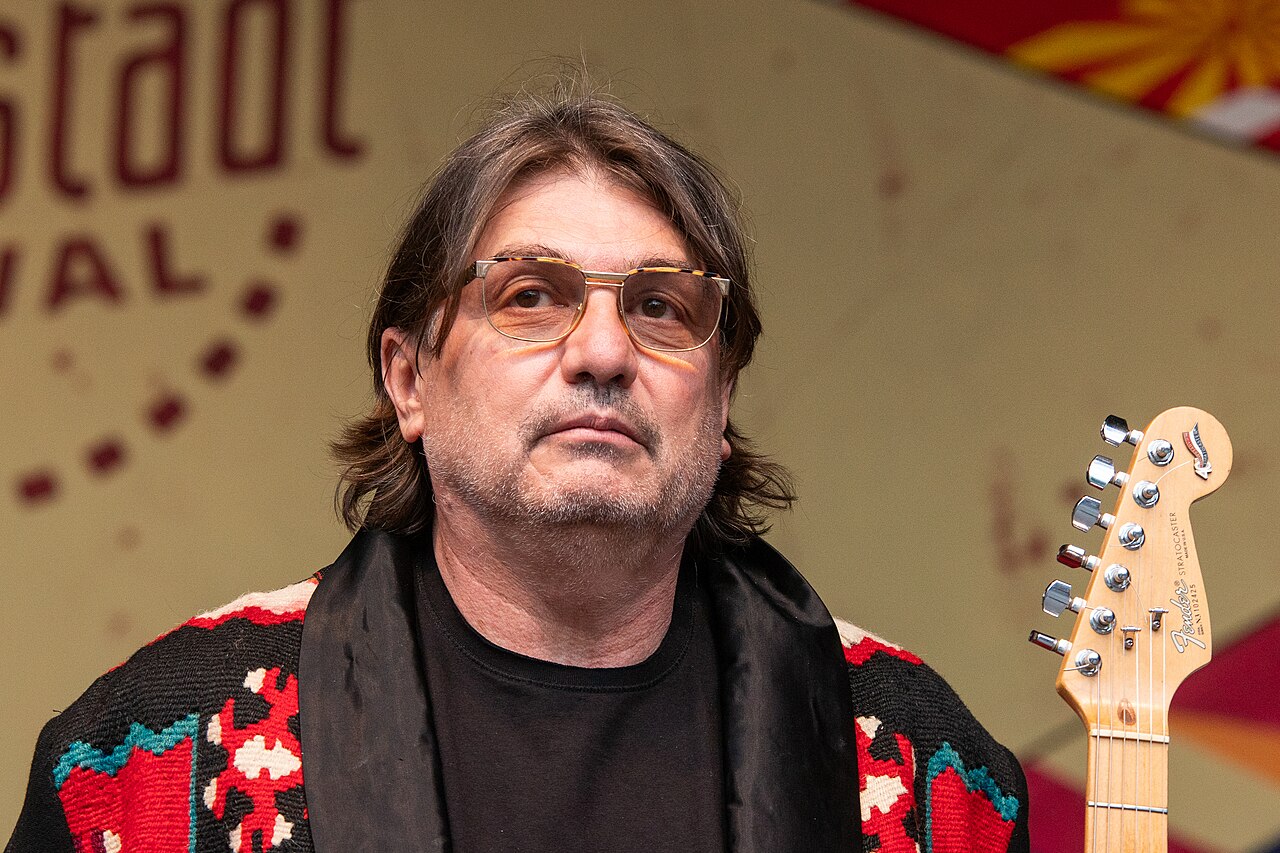
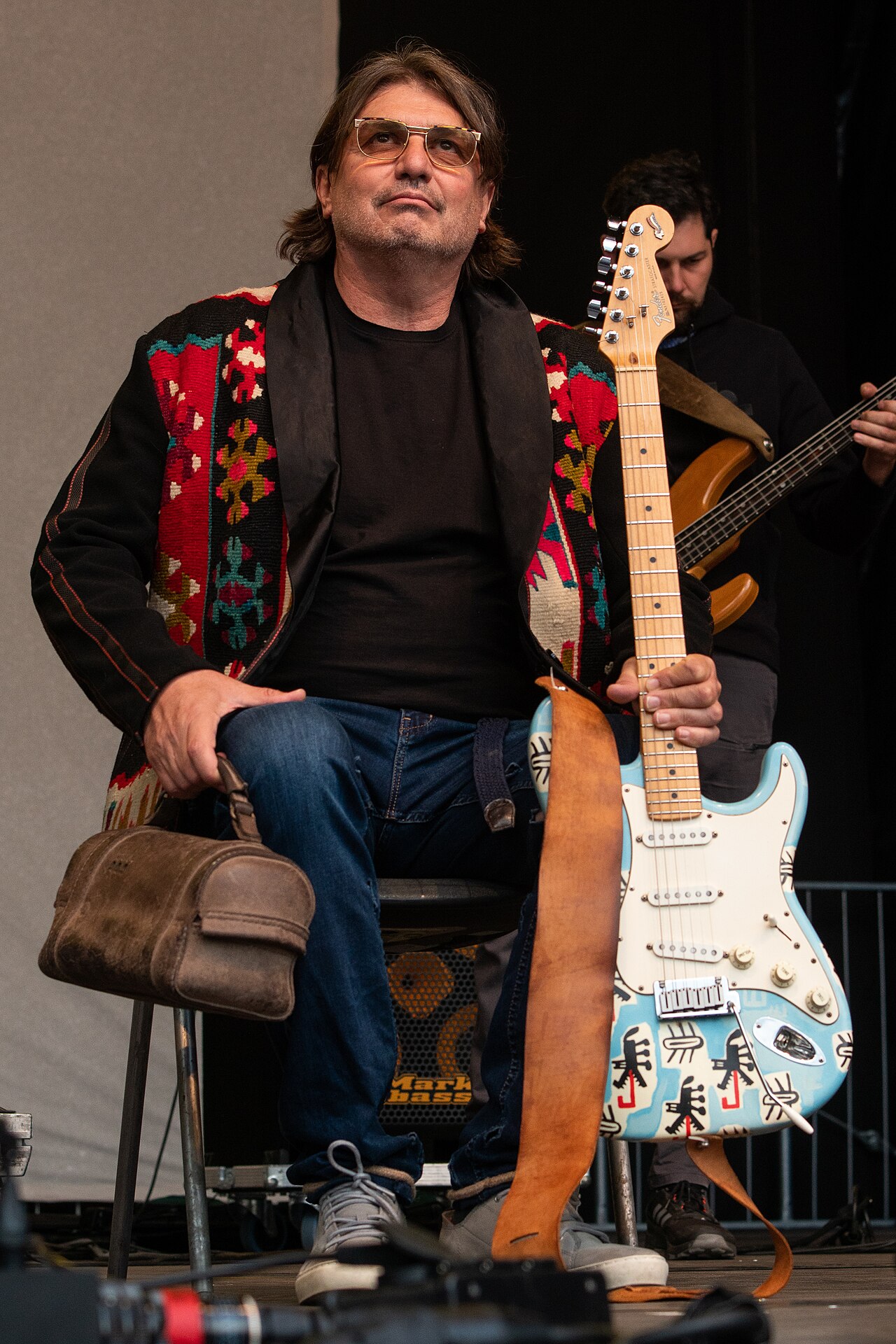
Antonije Pušić (born 14 June 1963), known professionally as Rambo Amadeus, is a Montenegrin−Serb author and performer. A self-titled 'musician, poet, and media manipulator', he is a noted artist across the countries of former Yugoslavia. His songs combine satirical lyrics on human nature and local politics with a mixture of musical styles including jazz, rock, hip-hop and drum and bass, and self-conscious ironic wit.
- Born
- 14 June 1963
- Field
- Music, performance, satire
- Nationality
- Montenegrin−Serb
- Known for
- Satirical songs, stage name combining John Rambo and Wolfgang Amadeus Mozart, representing Montenegro at Eurovision 2012
Lore & Background
Antonije Pušić was born in Herceg Novi, SR Montenegro, SFR Yugoslavia, and raised in Herceg Novi. His mother Bosiljka was a literature professor and writer, his father Ilija an archaeologist. He graduated in tourism studies from the University of Belgrade's Faculty of Natural Sciences and Mathematics (Prirodno-matematički fakultet), and completed six grades of elementary music school for piano before dropping out. Before music, he was an accomplished competitive sailor, representing Yugoslavia in international regattas from 1972 to 1984, winning multiple championships. He began singing and composing in his first year of high school, playing with local bands in Herceg Novi and Titograd. In 1985, he moved to Belgrade for higher education while playing with amateur bands.
His debut album 'O tugo jesenja' (1988) introduced a blend of folkish ululations, opera, humorous lyrics, and guitar riffs. He created confusion by introducing himself as Nagib Fazlić Nagon, a mine shaft operator. He jokingly called his style 'turbo folk' before the term became associated with Balkan cultural decline. His second album 'Hoćemo gusle' (1989) featured overt political satire, including a track originally titled 'Kataklizma komunizma' that authorities blocked. The album title mocked a protest where chants of 'Hoćemo Ruse' were misreported as 'Hoćemo gusle'. In 1992, during a live TV broadcast, he interrupted a concert by Bebi Dol, stating bombs were falling on Dubrovnik and Sarajevo, and left the stage. He represented Montenegro in the Eurovision Song Contest 2012 in Baku, Azerbaijan, with the song 'Euro Neuro'.
Reader's Guide
Rambo Amadeus holds significance as a satirical commentator on human nature and Balkan politics, using a hybrid musical style that defies easy categorization. His work from the late 1980s onward captured the absurdities of the Yugoslav breakup and post-Yugoslav society, often through crude humor and free improvisation. His concerts are noted for never repeating recorded songs, mixing improvisation and satire. He is compared by some fans to Frank Zappa and Captain Beefheart. His stage name itself—combining John Rambo and Wolfgang Amadeus Mozart—reflects his ironic self-presentation. His alias 'Rambo Amadeus Svjetski Kilo Car' (changed from 'Mega Car' in 2012) underscores his belief in modesty in an environmentally conscious society. His legacy includes influencing the alternative music scene in former Yugoslavia and maintaining a cult following for his unflinching, often profane, political and social critique.
Did You Know?
- His stage name is made from John Rambo and Wolfgang Amadeus Mozart.
- He represented Montenegro in the Eurovision Song Contest 2012 with the song 'Euro Neuro'.
- Before music, he was an accomplished competitive sailor, winning the International Đerdap Cup in 1980.
- He interrupted a live TV broadcast in 1992 to protest bombs falling on Dubrovnik and Sarajevo.
The Persona and Artistic Philosophy
Rambo Amadeus built his identity as a deliberate collision of pop culture and classical grandeur, stitching together the name of a fictional action hero with that of Mozart. He has described himself as a "musician, poet, and media manipulator," a self-aware framing that underscores how much of his work is performance of performance. His most well-known alter ego, "Rambo Amadeus Svjetski Kilo Car," was rebranded in 2012 from "Svjetski Mega Car" because, as he put it, modesty matters in an environmentally conscious society. His musical palette refuses to sit still, weaving jazz, rock, hip-hop, and drum and bass beneath lyrics that skewer human folly and local political absurdity. Audiences in the former Yugoslav space have drawn parallels to Frank Zappa and Captain Beefheart, and his live shows are never simple re-creations of studio recordings but sprawling improvisations laced with crude, satirical humor. The result is an artist who treats irony as both weapon and medium, making self-mockery as central to his craft as any musical technique.
Roots in Kotor Bay and the Sailor's Discipline
Antonije Pušić came into the world on 14 June 1963 in Kotor, in what was then the Socialist Republic of Montenegro within Yugoslavia, though his childhood unfolded in the neighboring town of Herceg Novi. His mother Bosiljka taught literature and wrote books; his father Ilija worked in archaeology and scientific research. Growing up alongside his brother Andrija, young Antonije completed his schooling locally before heading to Belgrade to study tourism at the Faculty of Mathematics and Natural Sciences. He also spent six years in elementary piano instruction before abandoning formal music training. What surprised many later was that, before ever considering a stage career, he was a serious competitive sailor. From 1972 to 1984 he represented Yugoslavia at international regattas, collecting multiple Montenegrin titles, eight South-Adriatic championships, a junior national crown, and the International Đerdap Cup in 1980. Even today he still slips into recreational sailing events around the Gulf of Kotor, a quiet thread connecting his disciplined athletic past to the restless creative present.
Breaking Through and Satirizing a Fracturing Region
Rambo Amadeus detonated onto the music scene in 1988 with the debut album O tugo jesenja, arriving with no prior public profile. To deepen the mystique, he introduced himself to audiences as "Nagib Fazlić Nagon," a fictional mine-shaft operator who had saved enough cash to record a record. He also cheekily labeled his own sound "turbo folk" years before that phrase acquired its heavy social baggage in the Balkans. Producer Saša Habić secured him a deal with PGP RTB, the state television label, and the track "Vanzemaljac" became a lasting favorite. The 1989 follow-up Hoćemo gusle sharpened his political edge, mocking the 1989 Montenegro protests where demonstrators' chants were scrambled by state media. By 1991, with Yugoslavia tearing itself apart, his third album Psihološko propagandni komplet M-91 carried a dark, militaristic tone and unapologetic profanity, a direct reflection of the chaos surrounding it.
Eurovision and the Enduring Stage Presence
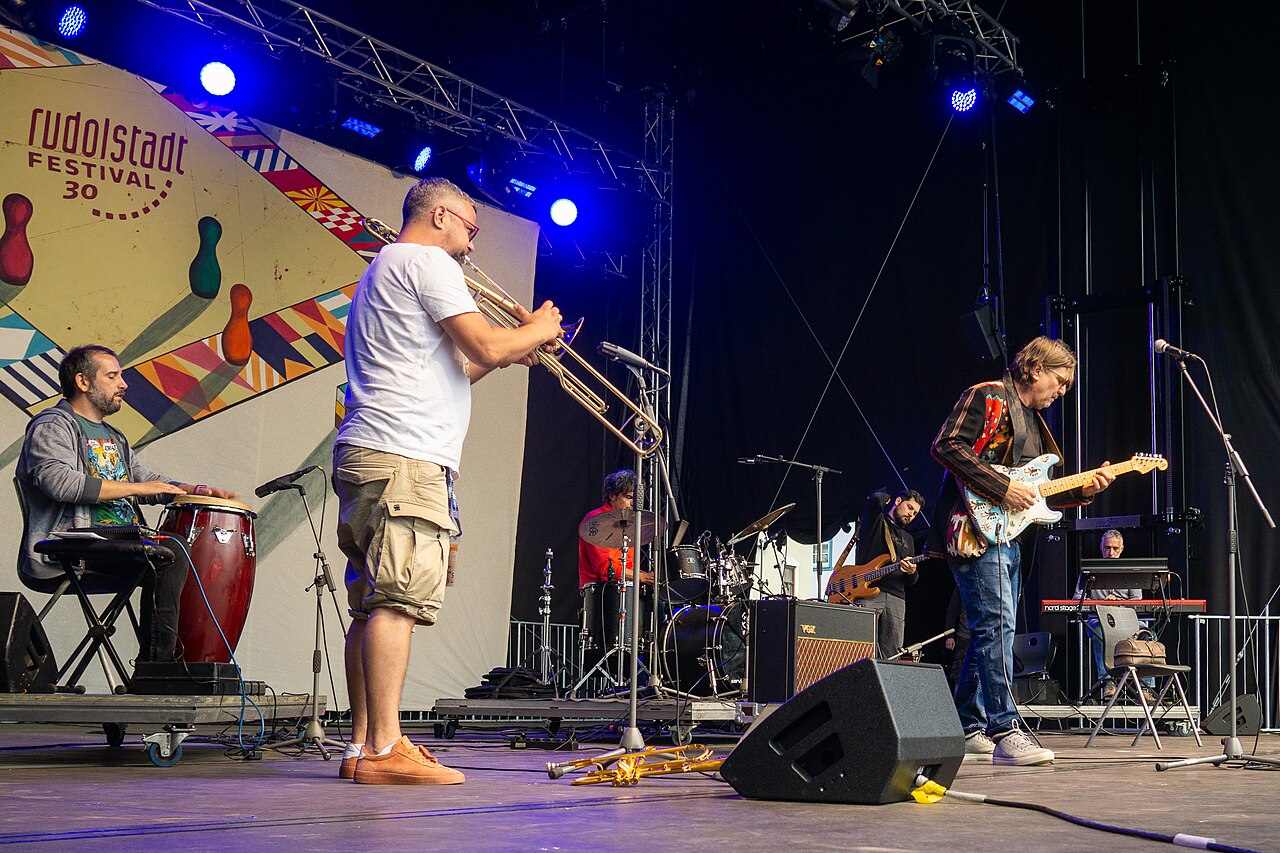
In 2012, Rambo Amadeus represented Montenegro at the Eurovision Song Contest in Baku, Azerbaijan, performing the track "Euro Neuro." The appearance was emblematic of his career-long habit of inserting himself into high-profile cultural moments with an air of irreverent self-importance. That same year he rebranded his most famous alias from "Svjetski Mega Car" to "Svjetski Kilo Car," explaining the shift as a nod to modesty in an environmentally aware world. His concerts, whether in Baku or in a small Montenegrin venue, remain fundamentally different from a standard pop set: they are open-ended improvisations that mine every facet of human nature with crude, satirical humor rather than simply replaying studio tracks. Across the countries of the former Yugoslavia he has maintained a distinctive niche, blending jazz, rock, hip-hop, and drum and bass with pointed political and social commentary, ensuring that his name remains a touchstone for anyone who values wit as much as melody in popular music.
Gallery
Frequently Asked Questions
Who is Rambo Amadeus?
Rambo Amadeus is the stage name of Antonije Pušić, a Montenegrin-Serb performer and satirist born on 14 June 1963. He describes himself as a musician, poet, and media manipulator, and has become a widely recognized figure across the former Yugoslav region.
What genres does Rambo Amadeus blend in his music?
His performances weave together jazz, rock, hip-hop, and drum and bass into a single eclectic sound. This genre-hopping approach is paired with sharp, self-aware irony that sets his work apart from straight-ahead fusion acts.
Where does the name 'Rambo Amadeus' come from?
The moniker fuses the action-hero figure of John Rambo with the classical composer Wolfgang Amadeus Mozart. The combination signals his mix of raw, confrontational stage energy with a playful, almost operatic sense of musical showmanship.
What themes dominate Rambo Amadeus's lyrics?
His songs are built around biting satire of human nature and local politics, delivered with a deliberately ironic, tongue-in-cheek tone. Rather than straightforward protest, he uses wit and self-deprecation to poke fun at both his audience and himself.
Did Rambo Amadeus ever compete at Eurovision?
Yes, he represented Montenegro at the 2012 Eurovision Song Contest. The appearance brought his satirical, genre-blending style to a much larger European audience beyond the former Yugoslav space.
More in Jazz fusion musicians 1-24
Spotted an error? Know more?
Reader corrections go straight into our review queue. Suggest an edit · How this site is sourced