
David Axelrod (musician)
American composer, arranger, and producer of jazz fusion.

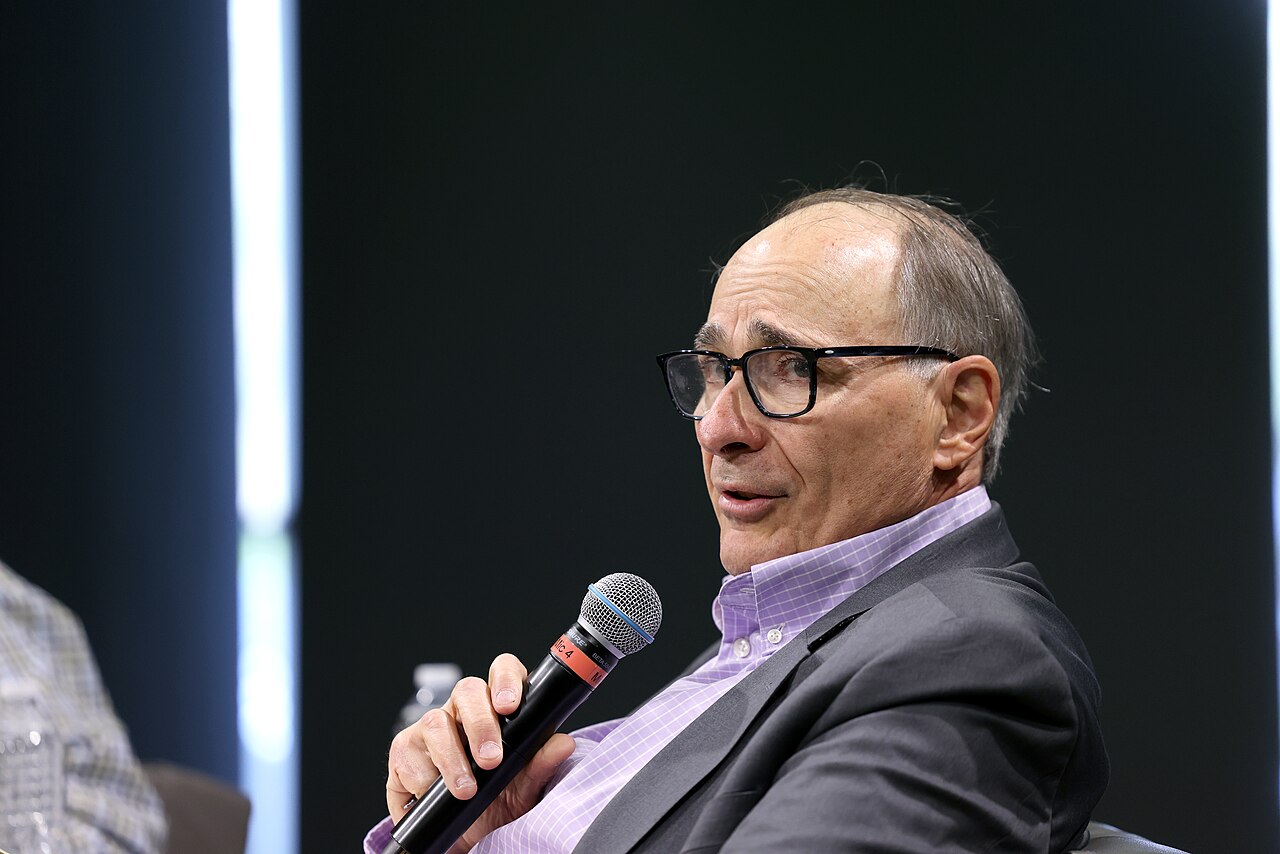
Gage Skidmore from Surprise, AZ, United States of America · CC BY-SA 2.0
David Axelrod (April 17, 1931 – February 5, 2017) was an American composer, arranger, and producer. He began as a staff producer for jazz-focused record labels and gained recognition in soul and jazz circles by the mid-1960s for his recording abilities. Launching a solo career in 1968, he put out several albums through the 1970s that featured his signature style: heavily miked drums, baroque orchestration, and avant-garde subjects like environmentalism and expanded consciousness. His early solo work made him one of the first artists to blend jazz, rock, and R&B.
Born and raised in Los Angeles’ South Central neighborhood, Axelrod grew up listening to R&B and jazz. He graduated from Dorsey High School. His father was involved in radical labor union politics.
After a brief boxing career, Axelrod found work in film and television studios, quickly becoming a sought-after drummer, producer, and arranger. He produced his first album in 1959: saxophonist Harold Land’s *The Fox*. In late 1963, he joined Capitol Records as a producer and A&R man, pushing the label to develop its Black musicians. He worked with Lou Rawls, producing his successful *Live* album and a string of gold records and hit singles, including “Love Is a Hurtin’ Thing,” “Your Good Thing (Is About to End),” and “Dead End Street,” which Axelrod wrote and produced. He also partnered with Julian “Cannonball” Adderley, producing the 1967 album *Mercy, Mercy, Mercy! Live at 'The Club'*, which featured the jazz hit “Mercy, Mercy, Mercy” (written by pianist Joe Zawinul) that reached No. 11 on the US pop charts.
Around this time, Axelrod regularly worked with a core group of session musicians, including guitarist Howard Roberts, bassist Carol Kaye, and drummer Earl Palmer. In 1968, he wrote *Mass in F Minor* and *Release of an Oath* in a contemporary rock style for the Electric Prunes; these were released under the band’s name but, due to their complexity, were recorded by other musicians. The Electric Prunes disbanded during the sessions, and Axelrod’s team finished the albums. His success convinced Capitol to let him make solo records. His first two, *Song of Innocence* (1968) and *Songs of Experience* (1969), were tributes to William Blake’s mystical poetry and paintings, using sweeping strings, booming sound, and heavy beats in a way that was then unique and later highly influential.
- Born
- April 17, 1931, Los Angeles, California
- Died
- February 5, 2017, age 85
- Field
- Composer, arranger, producer
- Nationality
- American
- Known for
- Fusing jazz, rock, and R&B; pioneering jazz fusion; heavily sampled by hip hop producers
Lore & Background
David Axelrod was born in Los Angeles, California, and raised in its South Central neighborhood, where he grew up listening to R&B and jazz. He graduated from Dorsey High School. His father was active in radical labour union politics. After a stint as a boxer, Axelrod found studio work in the film and television industry, and was soon in demand as a drummer, producer and arranger. He produced his first album in 1959, saxophonist Harold Land’s The Fox.
In late 1963, Axelrod joined Capitol Records as a producer and A&R man. He encouraged the label to develop their black musicians. He worked with Lou Rawls, producing his successful Live album and a succession of gold albums and hit singles including 'Love Is a Hurtin' Thing', 'Your Good Thing (Is About to End)' and 'Dead End Street', which
Reader's Guide
David Axelrod's significance lies in his pioneering fusion of jazz, rock, and R&B, which helped define the sound of jazz fusion in the late 1960s. His album Song of Innocence (1968) featured instrumental interpretations of William Blake's poetry in a contemporary musical vein, leading one critic at the time to coin the term 'jazz fusion'. The album's music was later heavily sampled by numerous hip hop producers, including Dr. Dre, DJ Shadow, and Lauryn Hill. His work as arranger and composer began to be rediscovered in the early 1990s, and his characteristic sound—combining heavily microphoned drums, baroque orchestration, and avant garde themes—became highly influential. Axelrod's approach fell out of fashion for a while, and three solo albums he recorded in the 1980s went unreleased. However, his legacy was cemented by the sampling of his work in hip hop, and he appeared at the Royal Festival Hall in London in 2004 as part of the Ether festival, where he conducted a performance of his solo work. He signed with Blue Note Records in 2005. Axelrod died of lung cancer on February 5, 2017, at the age of 85.
Did You Know?
- Axelrod was one of the first recording artists to fuse elements of jazz, rock, and R&B.
- His album Song of Innocence (1968) led a critic to coin the term 'jazz fusion'.
- He co-wrote songs for the television show Sesame Street between 1974 and 1978, including the Emmy Award-winning special Christmas Eve on Sesame Street (1978).
- Dr. Dre used a David McCallum cut ('The Edge') for 'The Next Episode' from 1999's 2001, which Axelrod had arranged.
From the Ring to the Recording Booth
David Axelrod's path into music was anything but linear. After growing up in Los Angeles's South Central neighborhood and graduating from Dorsey High School, he spent a period as a boxer before finding his way into the film and television industry. There, his natural ear and technical skill quickly made him in demand as a drummer, arranger, and producer. His first produced album, saxophonist Harold Land's The Fox, came out in 1959, but it was his 1963 move to Capitol Records as both producer and A&R man that truly shaped his career. At Capitol, Axelrod championed the label's Black artists, most notably Lou Rawls, for whom he crafted a string of gold records and hit singles including "Dead End Street," which he wrote himself. He also produced Cannonball Adderley's legendary 1967 live album, which yielded the pop-charting jazz hit "Mercy, Mercy, Mercy." By the late 1960s, he had assembled a trusted circle of session players—guitarist Howard Roberts, bassist Carol Kaye, and drummer Earl Palmer—who became the backbone of his increasingly ambitious productions.
Blake, Baroque, and the Birth of Fusion
When Axelrod launched his solo career in 1968, he arrived with a sound unlike anything else in the studio. His debut, Song of Innocence, offered instrumental readings of William Blake's 18th-century poetry collection, rendered through sweeping string arrangements, thunderous heavily microphoned drums, and a baroque orchestral palette that felt simultaneously ancient and futuristic. Its follow-up, Songs of Experience (1969), extended the same mystical vision, while 1970's Earth Rot turned the lens toward environmental destruction and ecological warning. A contemporary critic, struck by the album's genre-blending approach, is credited with coining the phrase "jazz fusion" to describe what Axelrod was doing—melding jazz, rock, and R&B into a single, cohesive sonic world. His avant-garde thematic concerns, ranging from heightened mental awareness to the fragility of the natural world, gave his work a philosophical depth that set it apart from the pop and soul productions of his peers. By the time he left Capitol in 1970 to issue a rock reimagining of Handel's Messiah, he had already established himself as one of the first artists to treat those three genres as interchangeable building blocks.
The Sampling Renaissance and a Reluctant Immortal
Axelrod's most enduring legacy arrived not from the critics of the 1960s and 70s but from a generation of hip-hop producers who heard in his recordings a treasure trove of rhythmic and melodic fragments. After a period in which his approach had fallen out of commercial favor—three solo albums he recorded in the 1980s were never released—his catalog was rediscovered in the early 1990s. Dr. Dre lifted a David McCallum cut titled "The Edge" for "The Next Episode" on 2001, while DJ Shadow, Lauryn Hill, Masta Ace, and the Emperor Penguin all drew from his Capitol-era sessions. Axelrod himself acknowledged the irony with characteristic candor during a 2004 concert at London's Royal Festival Hall, where he conducted a performance of his own work and was joined onstage by Richard Ashcroft singing "Holy Are You." Addressing the audience about sampling, he quipped that he hated it because it cost musicians jobs, yet called it "screw-you money" and thanked Dre by name. That same night he disclosed to the crowd that his health was failing. He signed with Blue Note in 2005, and a live recording of the London show was released in 2006.
Roots, Family, and the Quiet Years
Axelrod's personal world was shaped as much by politics and family as by music. Raised in South Central Los Angeles, he absorbed R&B and jazz from an early age, and his father's involvement in radical labor-union politics likely fed the social consciousness that would later surface in albums like Earth Rot. Before his studio career took hold, he boxed. His creative life was also deeply familial: in 1970 he co-wrote the album Pride with his son Michael, and his collaboration with bandleader Sam Pottle produced songs for Sesame Street between 1974 and 1978, culminating in the Emmy-winning special Christmas Eve on Sesame Street. Beyond his headline names, Axelrod's producer's credits stretch across a wide and sometimes obscure roster—South African vocalist Letta Mbulu, arranger David Rose, and the short-lived psychedelic groups The Common People and Hardwater. After leaving Capitol, he continued working with Cannonball Adderley until the saxophonist's death in 1975, but by the 1980s his distinctive style had lost its commercial footing. Three albums recorded during that decade were shelved and never saw release. He died of lung cancer on February 5, 2017, at the age of 85.
Gallery

Frequently Asked Questions
Who is David Axelrod?
David Axelrod (1931–2017) was a Los Angeles–born American composer, arranger, and record producer who became a defining figure in the jazz fusion movement. He started out as a staff producer for jazz-oriented labels before launching a solo career in 1968.
What made David Axelrod's sound so distinctive?
His recordings are instantly recognizable for their heavily close-miked drum sounds, lush baroque-style orchestration, and unconventional lyrical themes ranging from environmentalism to expanded consciousness. That combination of pop accessibility with avant-garde ambition set him apart from peers in both the jazz and soul worlds.
Why is David Axelrod considered important to jazz fusion?
In the late 1960s and early 1970s he was among the first artists to deliberately weave together jazz harmony, rock energy, and R&B grooves into a single album-length statement. That pioneering cross-genre approach helped lay the groundwork for the broader fusion movement that followed.
What solo albums did David Axelrod release?
After stepping out from behind the mixing console in 1968, he issued a steady stream of solo records throughout the 1970s, each showcasing his trademark orchestral arrangements and genre-blending compositions. These albums remain core listening for anyone interested in the early fusion era.
How did David Axelrod influence hip hop?
His dense, rhythmically rich production became a go-to source for hip hop producers who sampled his drum patterns and orchestral stabs across the 1980s and beyond. That legacy of being heavily sampled cemented his place in a genre he never directly worked in.
More in Jazz fusion musicians 1-24
Spotted an error? Know more?
Reader corrections go straight into our review queue. Suggest an edit · How this site is sourced