
Majid Bekkas
Moroccan musician blending Gnawa traditions with jazz and blues.

Octagon · CC BY 3.0
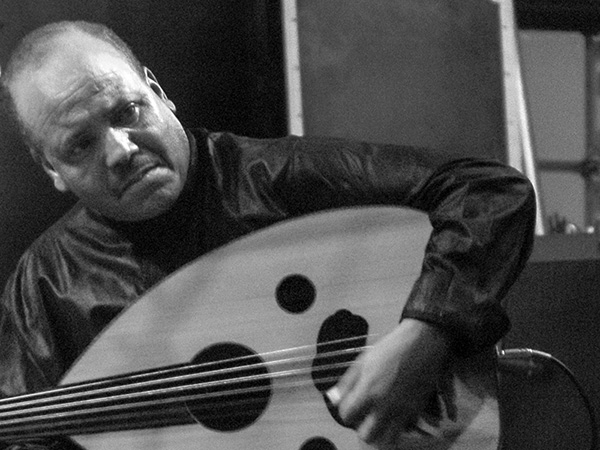
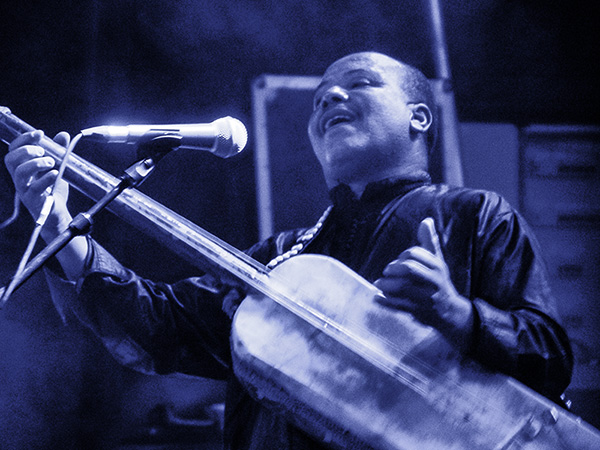
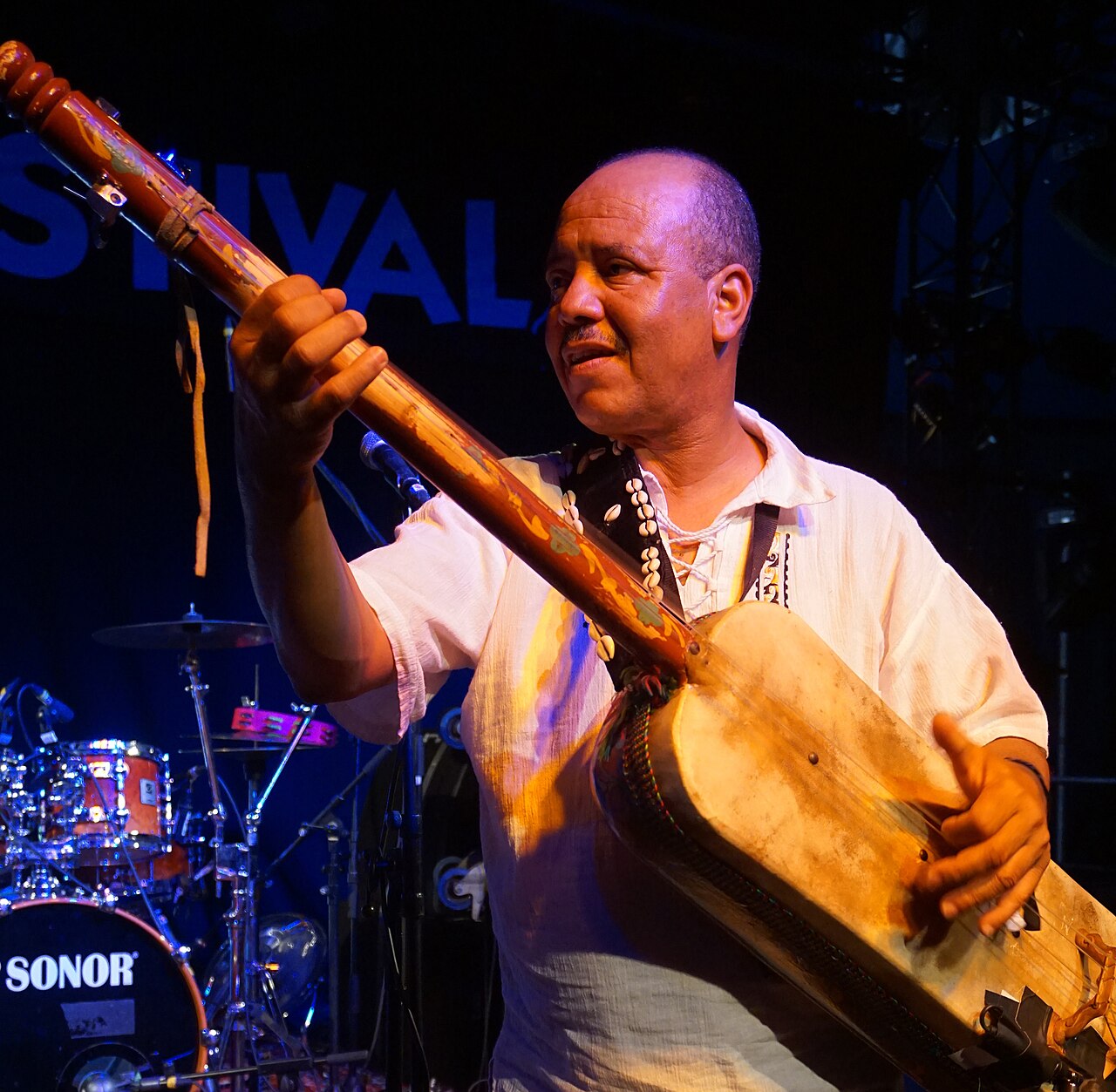
Majid Bekkas (Arabic: مجيد بقاس, born 1957), also known as Abdelmajid Bekkas, is a Moroccan musician on guembri, oud, guitar and vocals. He is internationally known for his contributions to World music and Ethno jazz with North African roots.
- Born
- 1957
- Field
- Musician
- Nationality
- Moroccan
- Known for
- Guembri, oud, guitar, vocals; World music and Ethno jazz with North African roots
Lore & Background
In his youth, Bekkas played banjo in Moroccan groups in the style of Nass El Ghiwane. From 1975, he studied classical guitar at the Conservatory for Music and Dance in Rabat. Later, he was initiated into the tradition of Gnawa music by maâlem Ba Houmane, and the guembri became his main instrument. In 1990, he founded the Gnaoua Blues Band, playing a fusion of Afro-American blues and Gnawa music. He later incorporated elements of jazz fusion and played with numerous international jazz musicians, including Louis Sclavis, Archie Shepp, Randy Weston, Klaus Doldinger, Joachim Kühn, Peter Brötzmann, and Hamid Drake. Since 1996, Bekkas has been artistic co-director of the festival Jazz au Chellah in Rabat. Outside Morocco, he performed at festivals such as WOMEX Seville 2003, Africa Festival Würzburg 2015, and the Berlin Jazz Festival.
Reader's Guide
Majid Bekkas is significant as a bridge between traditional Gnawa music and contemporary jazz and world music. His album Magic Spirit Quartet, produced by ACT Music in 2020, received international acclaim, including being selected as DownBeat magazine's Editor's Choice in February 2020. His collaborations with European and American jazz musicians have brought North African musical traditions to global audiences. His work has been recognized with awards including the Django d'Or in 2004 for his album Mogador, the Al Farabi Prize in 2010, and the award of the Académie Charles-Cros in 2015 for his album Al Qantara. His music is described as 'expertly crafted, drawing you in with its low key yet infectious grooves.' His legacy lies in his fusion of Gnawa blues and jazz, and his role as a cultural ambassador through performances and festival direction.
Did You Know?
- Bekkas was initiated into Gnawa music by maâlem Ba Houmane.
- He founded the Gnaoua Blues Band in 1990.
From Banjo to Guembri: A Musical Awakening
Majid Bekkas, born in 1957 in Morocco and also credited as Abdelmajid Bekkas, did not arrive at his signature sound overnight. In his younger years he played banjo with local Moroccan ensembles working in the style associated with Nass El Ghiwane. That early folk grounding was sharpened by formal training: from 1975 he studied classical guitar at the Conservatory for Music and Dance in Rabat. The pivotal turn came when maâlem Ba Houmane, a master musician of the Gnawa tradition, took him as a student and initiated him into that spiritual, trance-driven musical lineage. Under that mentorship Bekkas discovered the guembri, the deep-toned bass lute that anchors Gnawa ensembles, and it became his primary instrument for life. From that point forward, every project carried the low, hypnotic pulse of the guembri woven through it, whether the surrounding context was blues, jazz, or something entirely new. The combination of classical technique, Gnawa spirituality, and restless curiosity would define his artistic identity and set the stage for decades of cross-cultural collaboration.
The Fusion Architect: Blues, Jazz, and Beyond
In 1990 Bekkas founded the Gnaoua Blues Band, a project that married Afro-American blues with the rhythmic and melodic vocabulary of Gnawa music. That fusion impulse never stopped evolving. Over the following years he began weaving in elements of jazz fusion, and his name started appearing alongside some of the most adventurous figures in international jazz. He shared stages and recording sessions with Louis Sclavis, Archie Shepp, Randy Weston, Klaus Doldinger, Joachim Kühn, Peter Brötzmann, and Hamid Drake, among others. In 2002, Spanish percussionist Ramón López invited him to contribute to a tribute album honoring Roland Kirk. Two years later, in 2006, Bekkas joined forces with Kühn and López to form a jazz fusion trio that would go on to release five albums, the fifth arriving on the ACT Music label in August 2013. His relationship with Doldinger's band Passport also deepened: they first performed together in Morocco in 2006, and he was subsequently invited to join them for concerts in Germany. By 2020, he was working with a quartet of young Scandinavian musicians on Magic Spirit Quartet, proving that his fusion sensibility had no ceiling.
Awards and Critical Acclaim
Bekkas's body of work has drawn consistent recognition from both national and international music institutions. In 2002, his composition Daymallah appeared as the opening track on the compilation Desert Blues 2, which was voted Best Compilation of the year by leading music journalists and producers writing for fRoots magazine. Two years later, in 2004, he was awarded the European jazz prize Django d'Or for his album Mogador. His guest work on Klaus Doldinger's Passport to Morocco earned that project a German Jazz Award in 2009. Back in Morocco, the Comité National de la Musique honored him with the Al Farabi Prize in 2010, citing his sustained contribution to the country's musical landscape. France's Académie Charles-Cros recognized his 2013 album Al Qantara with a prize in 2015. Perhaps the most recent and widely noted accolade came in February 2020, when DownBeat magazine selected Magic Spirit Quartet as its Editor's Choice. The same album drew praise in BBC Music Magazine and Jazz Journal, with one reviewer describing the music as expertly crafted, drawing you in with its low key yet infectious grooves.
Festival Steward and Global Performer
Beyond recording and touring, Bekkas has played a central role in shaping Morocco's jazz and world-music scene. Since 1996 he has served as artistic co-director of Jazz au Chellah, a festival held in Rabat that has become a key venue for cross-cultural musical exchange. His own performing career has taken him to major international stages: he appeared at WOMEX in Seville in 2003, at the Africa Festival in Würzburg in 2015, and at the Berlin Jazz Festival, where he has performed as a soloist, in trio settings, and within larger world-music ensembles. In October 2022, he and his band embarked on a U.S. tour that included concerts in Los Angeles, New Orleans, and other cities, bringing the guembri's voice to American audiences. His work has also been captured on film: in 2013, German filmmaker Christoph Hübner documented the trio of Kühn, Bekkas, and López during the preparation and recording of one of their albums in Morocco, offering a behind-the-scenes look at how a Moroccan guembri player, a German pianist, and a Spanish percussionist build a shared musical language.
Gallery
Frequently Asked Questions
Who is Majid Bekkas?
Majid Bekkas (also credited as Abdelmajid Bekkas) is a Moroccan musician born in 1957 who performs on guembri, oud, and guitar while also handling vocals. He has built an international reputation for merging North African musical heritage with jazz and blues sensibilities.
What instruments does Majid Bekkas play?
He is primarily known for the guembri, the oud, and the guitar, and he also sings. The guembri in particular ties his sound directly to the Gnawa tradition of southern Morocco.
What genre or style is Majid Bekkas most associated with?
He is widely categorized under World music and Ethno jazz, specifically the branch rooted in North African traditions. His work weaves Gnawa rhythmic and melodic elements together with jazz harmony and blues phrasing.
Where is Majid Bekkas from and what cultural background shapes his music?
Bekkas is Moroccan, and his playing draws heavily on the Gnawa musical tradition that has been passed down through communities in southern Morocco for centuries. That foundation gives his fusion work a distinctly North African character even when he incorporates Western jazz and blues vocabulary.
Why is Majid Bekkas considered important in the jazz fusion and world music scene?
He is one of the most recognizable voices bringing the guembri and Gnawa aesthetics into a global jazz-fusion context, helping audiences outside North Africa encounter those traditions in a contemporary setting. His career illustrates how a deeply local instrument and style can sit comfortably alongside improvisational jazz without losing its identity.
More in Jazz fusion musicians 1-24
Spotted an error? Know more?
Reader corrections go straight into our review queue. Suggest an edit · How this site is sourced