
Alain Caron (bassist)
Canadian jazz bassist known for fretless and 6-string electric bass.

Skimel · CC BY-SA 4.0
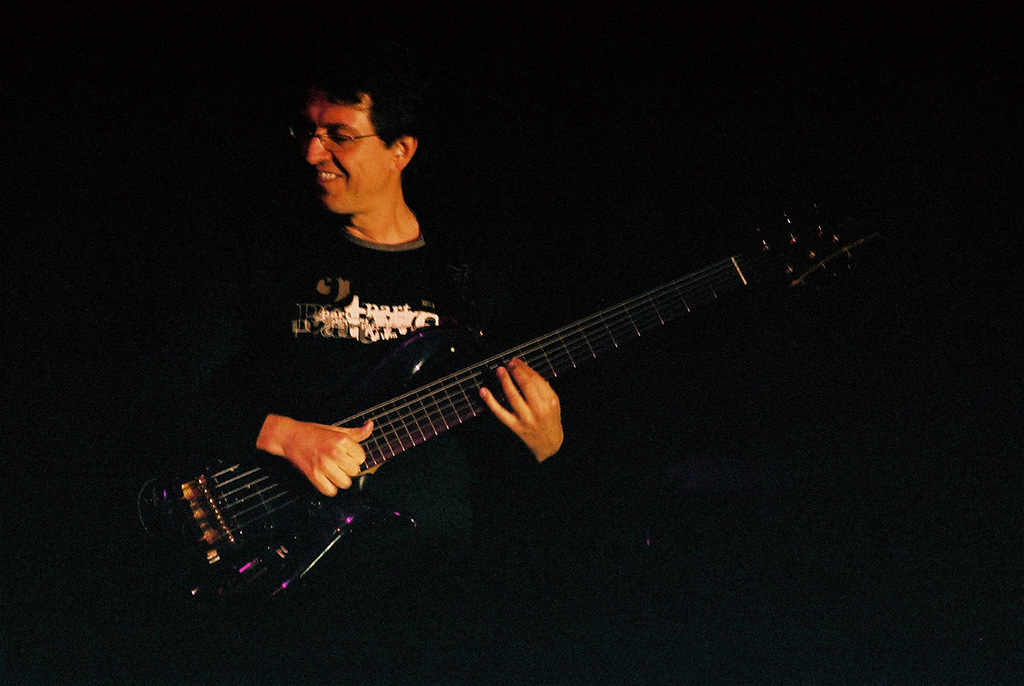
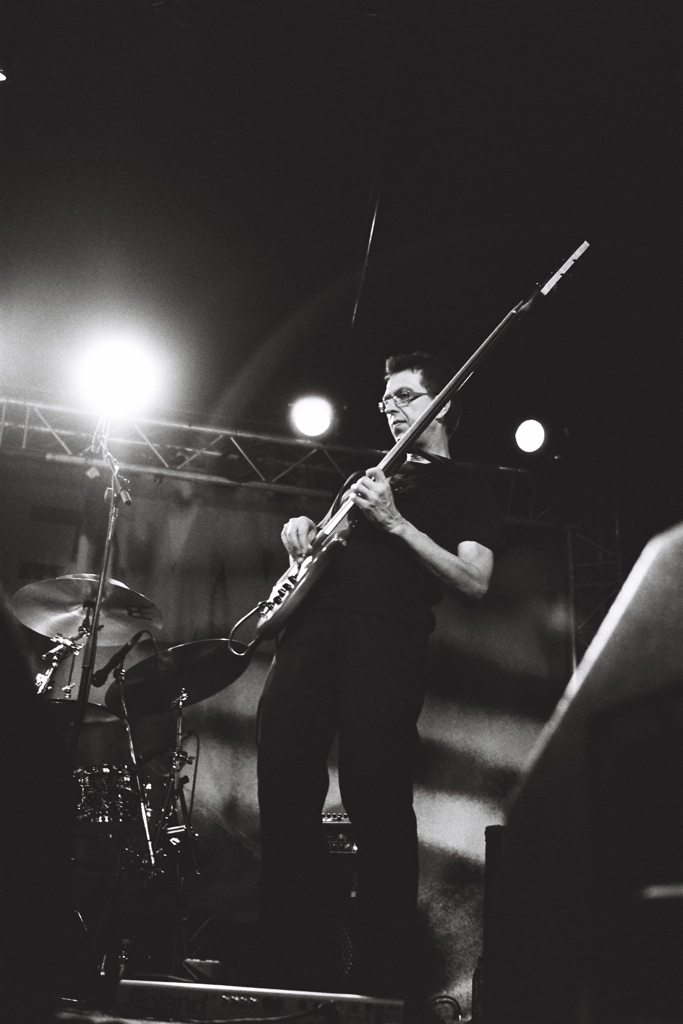
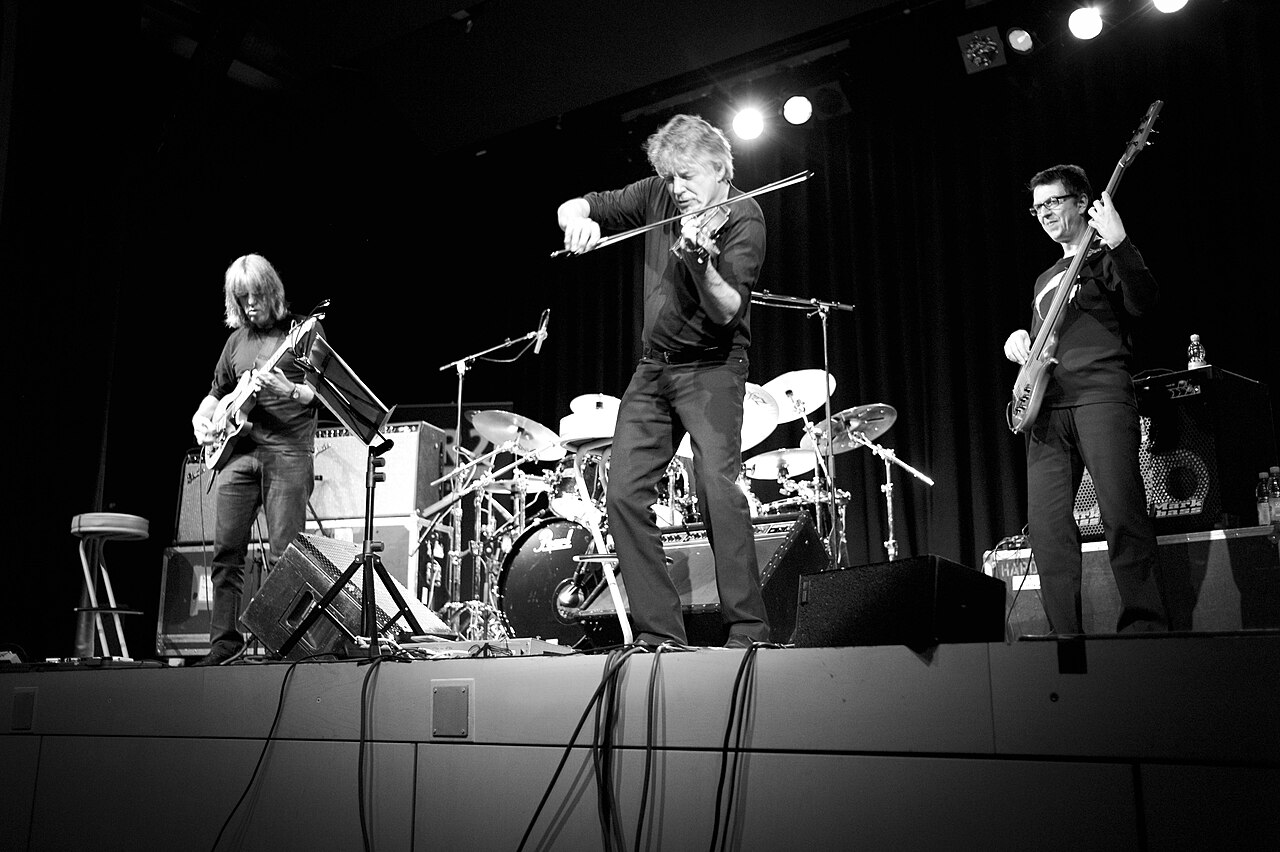
Alain Caron (born May 5, 1955) is a Canadian jazz bassist known for his virtuosic talent on fretless and 6-string electric bass. He co-founded the jazz fusion band UZEB in 1976 and later pursued a solo career, becoming one of the most highly-regarded jazz bassists of his generation.
- Born
- May 5, 1955
- Field
- Jazz bassist
- Nationality
- Canadian
- Known for
- Fretless and 6-string electric bass; co-founder of UZEB
Lore & Background
Alain Caron, the youngest of 11 children, began playing bass at age 11 and started pursuing jazz at age 15. He formalized his musical skills through correspondence lessons with jazz improvisation teacher Charlie Banacos and by attending a summer session at Berklee College of Music. In 1976, he co-founded the jazz fusion band UZEB, playing with the group until its breakup in 1992; the band sold over 400,000 albums, an unprecedented number for a Canadian jazz fusion group. After UZEB, Caron embarked on a solo career in 1993, releasing albums as Le Band and performing with musicians such as Billy Cobham, Mike Stern, Dennis Chambers, and Tom Harrell, as well as recording with Leni Stern, Celine Dion, and Gino Vannelli.
Reader's Guide
Alain Caron's significance lies in his virtuosic command of the fretless and 6-string electric bass, which placed him among the most highly-regarded jazz bassists of his generation. His co-founding of UZEB in 1976 led to unprecedented commercial success for a Canadian jazz fusion group, with over 400,000 albums sold. Caron's solo career further cemented his legacy, as he collaborated with prominent jazz and pop artists and released a series of albums under Le Band. His contributions were recognized with an honorary doctorate from the University of Quebec in 2007 and the Oscar Peterson Lifetime Achievement Award from the Montreal International Jazz Festival in 1991. Caron also influenced bass design through his work with luthier George Furlanetto, resulting in the F Bass Alain Caron model (AC6), which blends solid body fretless tone with acoustic-like dynamics. His instructional books, such as 'Rhythm 'n Jazz – Ultimate Play-Along for Bass,' have also served as educational resources for bassists.
Did You Know?
- Alain Caron started playing bass at age 11 and began pursuing jazz at age 15.
- He co-founded the jazz fusion band UZEB in 1976, which sold over 400,000 albums.
- Caron received the Oscar Peterson Lifetime Achievement Award in 2018.
- Luthier George Furlanetto built basses for Caron since the eighties, developing the F Bass Alain Caron model (AC6).
Roots and Musical Awakening
Born on May 5, 1955, Alain Caron grew up as the youngest of eleven children, a position that likely sharpened his need to find his own voice. At just eleven years old, he picked up the bass, and by fifteen he had set his sights squarely on jazz. Lacking access to a formal conservatory in his youth, Caron turned to correspondence lessons with Charlie Banacos, a respected jazz improvisation instructor, which gave him a structured foundation in the language of improvisation. He also attended a summer session at Berklee College of Music, an experience that broadened his technical vocabulary and connected him to the wider jazz world. These formative years established the groundwork for a career defined by virtuosic command of the instrument. Caron became particularly renowned for his work on the fretless electric bass and the six-string electric bass, instruments that allowed him to blend the warmth of an acoustic tone with the dynamic range of an electric setup. His early training in improvisation and his distinctive instrumental choices would go on to define his sound across decades of performance and recording.
Uzeb and the Jazz Fusion Breakthrough
In 1976, Caron co-founded the jazz fusion ensemble UZEB, a group that would occupy a remarkable place in Canadian music history. Over the sixteen years the band remained active, until its dissolution in 1992, Caron served as a central musical force, bringing his fretless and six-string expertise to a fusion context that blended jazz harmony with rock energy. The group's commercial success was extraordinary: they moved more than 400,000 albums, a figure that was virtually unheard of for a Canadian jazz fusion act at the time. Their achievements were recognized with Félix Awards in both the 'Group of the Year' and 'Jazz Album of the Year' categories. Perhaps most significantly, in 1991 the Montreal International Jazz Festival presented Uzeb with the Oscar Peterson Lifetime Achievement Award, a distinction that cemented the band's legacy within the broader jazz community. For Caron, Uzeb represented not merely a band but a creative laboratory where his improvisational instincts, honed through years of study, could be applied to a collective sound that resonated far beyond the typical jazz audience.
Solo Voice and Wide-Ranging Collaborations
Following Uzeb's 1992 breakup, Caron launched a solo career in 1993 under the banner Le Band, a project that gave him full creative control. His solo discography spans from the 1993 self-titled debut through Multiple Faces in 2013, encompassing nine studio albums that trace his evolving musical vocabulary. Beyond his own recordings, Caron has been a sought-after sideman and collaborator, performing alongside luminaries such as Billy Cobham, Mike Stern, Dennis Chambers, and Tom Harrell. His studio work extends into adjacent genres as well, with credits on recordings by Leni Stern, Celine Dion, and Gino Vannelli. Caron also extended his educational reach by co-authoring two play-along books for bassists in 1998 and 1999, tied to his Rhythm 'n Jazz and Play albums. His 1992 album with Ecay and Lockwood served as a bridge between the Uzeb era and his solo work. Throughout all of this, his signature sound, rooted in the fretless and six-string electric bass, remained a constant thread, distinguishing his contributions whether he was leading or supporting.
Honors, Legacy, and the F Bass AC6
Caron's standing among his peers as one of the most highly regarded jazz bassists of his generation has been affirmed through a series of major honors. In 2007, the University of Quebec at Rimouski conferred upon him an honorary doctorate, a recognition of his lasting contribution to Canadian music. His membership in the Order of Canada further underscores the national significance of his artistic achievements. On the instrument front, a long-standing partnership with luthier George Furlanetto of F Bass in Hamilton, Ontario, has shaped his sound since the 1980s. Together they developed the F Bass Alain Caron model, the AC6, an instrument engineered to deliver the tonal warmth of a solid-body fretless while retaining the dynamic expressiveness of an acoustic guitar. This collaboration between player and builder reflects Caron's deep commitment to sonic nuance. Combined with his Félix Awards, the Oscar Peterson Lifetime Achievement Award, and decades of critically respected recordings, these distinctions paint a portrait of an artist whose influence extends well beyond the stage and into the very tools of the craft.
Gallery
Frequently Asked Questions
Who is Alain Caron (bassist)?
Alain Caron is a Canadian jazz bassist born on May 5, 1955, who earned a reputation as one of the most technically gifted players of his generation. He is especially recognized for his work on the fretless and six-string electric bass within the jazz fusion world.
What is UZEB and what was Alain Caron's role in it?
UZEB is a jazz fusion band that Caron co-founded in 1976, with him serving as the bassist and a central creative voice in the group. The project became a major outlet for his playing before he transitioned into a solo career.
What makes Alain Caron's bass playing distinctive?
He is best known for his virtuosic command of the fretless and six-string electric bass, giving his lines a singing, melodic quality that sets them apart from more conventional fretted bass work. That approach allowed him to take on harmonic and solo roles typically reserved for other instruments in a fusion setting.
Why is Alain Caron considered important in jazz fusion?
He is widely regarded as one of the most highly respected jazz bassists of his generation, a standing built on both his technical mastery and his expressive fretless and six-string style. His co-founding of UZEB and his subsequent solo recordings cemented his place in the fusion canon.
Where is Alain Caron from and when was he born?
Caron is Canadian by nationality and was born on May 5, 1955. He has spent his professional life as a bassist working primarily in the jazz and fusion genres.
More in Jazz fusion musicians 1-24
Spotted an error? Know more?
Reader corrections go straight into our review queue. Suggest an edit · How this site is sourced