
Arooj Aftab
First Pakistani Grammy winner; blends jazz, neo-Sufi, and Hindustani classical.

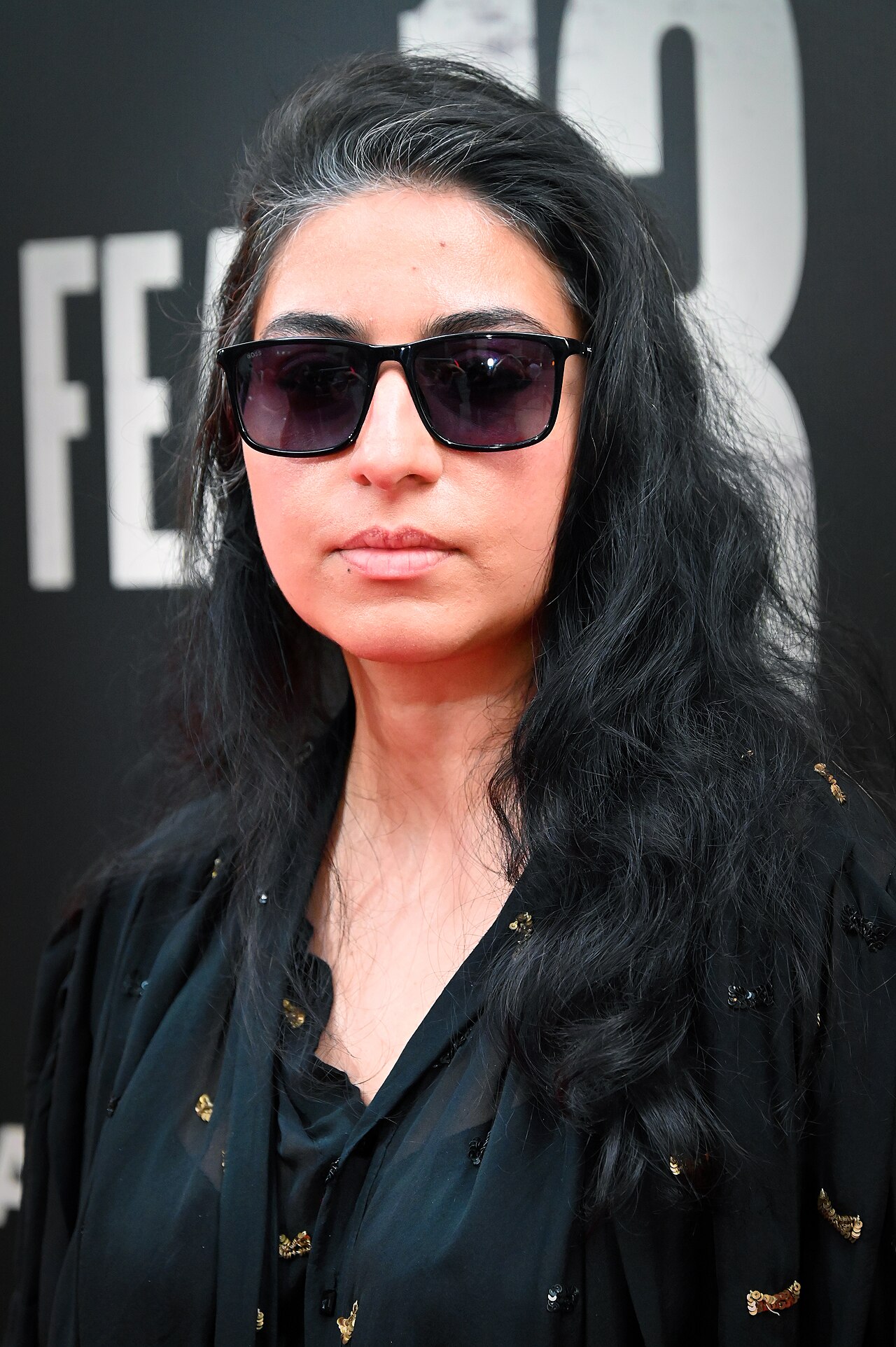
PhilipRomanoPhoto · CC BY-SA 4.0
Arooj Aftab (Urdu: عروج آفتاب) is a Pakistani American singer, composer, and producer. She became the first Pakistani artist to win a Grammy Award, taking the Best Global Music Performance award for her song "Mohabbat" at the 65th Annual Grammy Awards on February 5, 2023, and was also nominated for Best New Artist. In recognition of her contributions to art and music, then President Arif Alvi awarded her the Pride of Performance Award, Pakistan's most prestigious award, on Pakistan Day, March 23, 2022.
- Awards
- Grammy Award (Best Global Music Performance, 2023); Pride of Performance Award (Pakistan, 2022)
Lore & Background
Arooj Aftab was born in Riyadh, Saudi Arabia, to expatriate Pakistani parents and moved to Lahore, Pakistan, around age 10. She taught herself guitar and developed her singing style listening to Billie Holiday, Hariprasad Chaurasia, Mariah Carey, and Begum Akhtar. In a country with limited access to Western online platforms and independent music infrastructure, she promoted her music online in the early 2000s; her renditions of "Mera Pyaar" and "Hallelujah" went viral and helped launch the Pakistani indie scene. She moved to the United States at 19 in 2005, earned a degree from Berklee College of Music, and settled in New York in 2010, working as a composer and sound designer while joining the city's jazz and new music scene.
Her debut album Bird Under Water (2014) received critical acclaim from the Financial Times. Her second album Siren Islands (2018) was released on New Amsterdam Records and was included in NPR's "Favorite Electronic and Dance Music of 2018" list; its song "Island No. 2" appeared on The New York Times' "25 Best Classical Music Tracks of 2018" list. Her third album Vulture Prince (2021) was dedicated to her younger brother Maher and received widespread praise from Pitchfork, NPR, and Al Jazeera. Barack Obama selected the song "Mohabbat" for his summer playlist, and the album was named best of 2021 by de Volkskrant and ranked on year-end lists by Rolling Stone and The Guardian. In 2023 she won a Grammy for "Mohabbat" and performed at the Grammys ceremony, following Nusrat Fateh Ali Khan who performed at the Grammys in 1997.
Reader's Guide
Arooj Aftab's significance lies in her role as a pioneering Pakistani American artist who broke barriers in global music. She was one of the first musicians in Pakistan to use the internet to promote independent music in the early 2000s, catalyzing the country's indie scene. Her Grammy win for "Mohabbat" marked a historic first for a Pakistani artist, bringing international attention to Urdu ghazal and neo-Sufi music. Her work, described as a blend of jazz fusion, electronica, Hindustani classical, and minimalism, has been performed at major venues and festivals worldwide, including Coachella, Glastonbury, and the Metropolitan Museum of Art. Beyond music, she has engaged in humanitarian efforts, signing the Artists4Ceasefire letter in 2023 and raising funds for animal rescue in Karachi. Her legacy includes expanding the visibility of South Asian and Muslim artists in Western music industries and demonstrating the power of cross-cultural fusion.
Grammy Recognition and Critical Acclaim
Arooj Aftab's path from independent releases to global recognition is marked by a string of critical and institutional milestones. Her debut, Bird Under Water, arrived in 2014 on her own label and earned a four-star review from the Financial Times. Siren Islands followed in 2018 on New Amsterdam Records, drawing praise from NPR and The New York Times. The breakthrough came with Vulture Prince in April 2021, a record dedicated to the memory of her younger brother Maher, which earned year-end list placements from de Volkskrant, Rolling Stone, The Guardian, and Pitchfork. Barack Obama named "Mohabbat" a summer playlist favorite, and both Time and The New York Times called it one of the best songs of 2021. In April 2022, Aftab became the first Pakistani artist ever to win a Grammy, taking Best Global Music Performance for "Mohabbat" at the 64th ceremony, where she was also nominated for Best New Artist. The following year she made history again as the first Pakistani performer on the Grammy stage. Her accolades extend beyond music: she won a 2018 Emmy for editing the documentary Armed With Faith, and in late 2021 she signed with Verve Records.
From Riyadh to Berklee: Shaping a Sound
Arooj Aftab was born to Pakistani expatriate parents in Riyadh, Saudi Arabia, before the family returned to Lahore when she was around ten. In a country where access to Western online platforms was difficult and infrastructure for independent music was lacking, she taught herself guitar and absorbed the styles of Billie Holiday, Hariprasad Chaurasia, Mariah Carey, and the legendary Begum Akhtar. In the early 2000s, she became one of the first Pakistani musicians to promote her work online; her renditions of "Mera Pyaar" and "Hallelujah" spread widely and helped launch the country's indie music scene. At nineteen, in 2005, she moved to the United States to study music production and engineering at Boston's Berklee College of Music. After graduating in 2010, she settled in New York, where she worked as a film editor and composer while immersing herself in the city's jazz and new-music communities. That New York environment, layered over her South Asian musical roots, became the fertile ground from which her genre-defying artistry would grow.
A Sound Without Borders
Critics and listeners alike struggle to pin Arooj Aftab's music into a single genre. Her work weaves together jazz fusion, electronica, neo-Sufi vocal traditions, Hindustani classical, indie pop, minimalism, and acoustic textures into something that feels simultaneously ancient and futuristic. She has spoken about aspiring for her album Vulture Prince to "transcend boundaries," a goal reflected in its themes of grief, longing, and human connection. Her vocal delivery has been described as meditative, drawing on the Urdu Ghazal form and the poetry of Rumi, Mirza Ghalib, and Hafeez Hoshiarpuri. Her stated musical influences span continents and eras: Abbey Lincoln, Abida Parveen, Anoushka Shankar, Esperanza Spalding, Jeff Buckley, Julius Eastman, Meshell Ndegeocello, Morton Feldman, Terry Riley, and even Billie Eilish. This eclectic palette allows her to move fluidly between a lullaby and a classical-adjacent composition, between a Sufi devotional tone and a minimalist electronic drone, creating a sonic world that resists easy categorization.
Stage, Screen, and Solidarity
Beyond studio recordings, Arooj Aftab has built a presence across prestigious performance venues and humanitarian causes. She has taken the stage at the Barbican, Lincoln Center, the Museum of Modern Art, and the Metropolitan Museum's Temple of Dendur, and has appeared at festivals including Coachella, Glastonbury, Primavera Sound, Roskilde, and the Newport Folk Festival. In May 2024 she was named a curator for the Dutch festival Le Guess Who?, assembling a lineup that included Meshell Ndegeocello, Aja Monet, and her own father. On the national stage, Pakistan's then-President Arif Alvi honored her with the Pride of Performance Award, the country's most prestigious distinction for art and music, on its 75th independence day. Her activism is equally visible: in October 2023 she signed the Artists4Ceasefire letter urging the U.S. president to call for a ceasefire in Gaza, and in 2026 she contributed a track to the War Child compilation Help (2), whose proceeds support humanitarian and medical aid in war-torn territories. These commitments show an artist who sees her platform as inseparable from responsibility.
Gallery
Frequently Asked Questions
Who is Arooj Aftab?
Arooj Aftab is a Pakistani American singer, composer, and producer whose music braids together jazz, neo-Sufi, and Hindustani classical traditions. She rose to global prominence after becoming the first Pakistani artist to win a Grammy Award.
What musical styles does Arooj Aftab blend in her work?
Her sound sits at the crossroads of jazz harmony, neo-Sufi vocal aesthetics, and Hindustani classical phrasing, creating a texture that feels both deeply rooted in South Asian devotional music and open to improvisation. This is what places her squarely in the jazz fusion conversation alongside more Western-centric artists.
What Grammy did Arooj Aftab win and when?
She took home Best Global Music Performance for the track "Mohabbat" at the 65th Annual Grammy Awards on February 5, 2023, becoming the first Pakistani artist to receive the honor. She was also on the ballot for Best New Artist at that same ceremony.
Has Arooj Aftab received any national honors from Pakistan?
Yes. On Pakistan Day, March 23, 2022, then-President Arif Alvi presented her with the Pride of Performance Award, the country's most prestigious civilian recognition for contributions to art and music.
Why is Arooj Aftab significant to the jazz fusion world?
She shows that the fusion genre is not limited to Western jazz lineages, proving that South Asian devotional and classical sensibilities can sit naturally inside a jazz harmonic and improvisatory framework. Her Grammy win also helped open the door for other global and South Asian artists to be seen in that space.
More in Jazz fusion musicians 1-24
Spotted an error? Know more?
Reader corrections go straight into our review queue. Suggest an edit · How this site is sourced