
Supreme Court of India
Highest appellate court and constitutional guardian of India.

MildGovernor · CC BY-SA 4.0
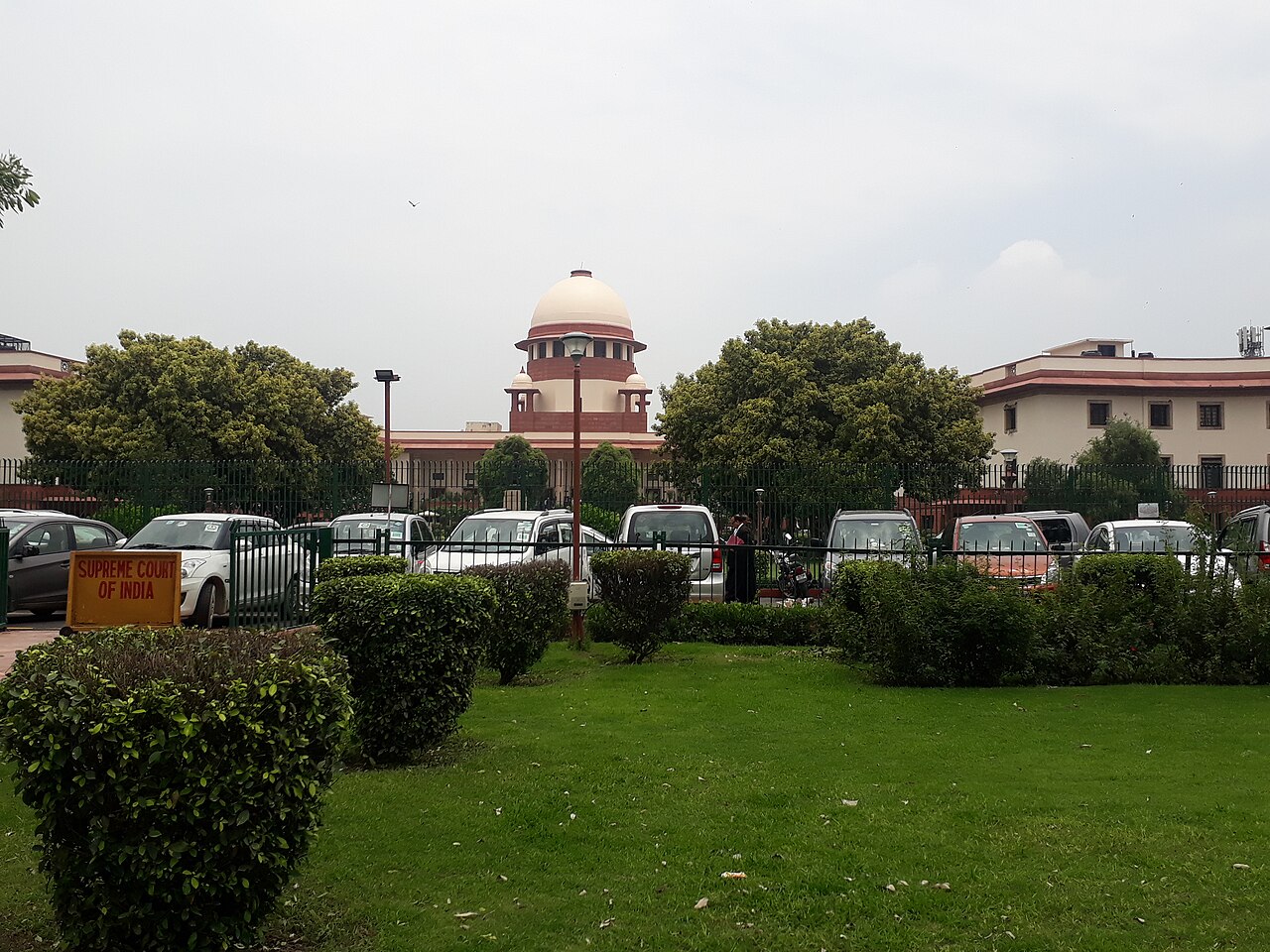
The Supreme Court of India stands as the nation’s highest judicial body and final court of appeal for all civil and criminal matters. It came into being on 26 January 1950, the day India declared itself a republic, taking over from the Judicial Committee of the Privy Council as the country’s top appellate court. The Chief Justice of India heads the court, which currently has a sanctioned strength of 34 judges (including the Chief Justice), meaning up to 33 additional judges. Since 1958, its proceedings have been held in the Supreme Court building in New Delhi. Because it can launch its own actions, hear appeals from every lower court, and even strike down constitutional amendments, it is often considered one of the most powerful supreme courts anywhere. The court was created under the Constitution of India and exercises original, appellate, and advisory jurisdiction. As the highest constitutional court, it mainly hears appeals against decisions from state High Courts and various tribunals. When the president of India refers a matter, the court offers advisory opinions. It also wields the power of judicial review, allowing it to invalidate ordinary laws and constitutional amendments—a power rooted in the “basic structure” doctrine it developed during the 1960s and 1970s. The Constitution tasks the Supreme Court with protecting citizens’ fundamental rights and resolving legal disputes between the central government and state governments. Its rulings are binding on all other Indian courts, as well as on the union and state governments. Under Article 142, the court holds inherent authority to issue any order it deems necessary to deliver complete justice, and such orders are binding on the president for enforcement. In 1861, the British Parliament passed the Indian High Courts Act and the Indian Councils Act, which abolished the earlier Supreme Courts in Calcutta, Madras, and Bombay, along with the Sadr Diwani Adalats. This allowed the English crown to set up High Courts in India. On 26 June 1862, letters patent established three charter High Courts in those same cities. These High Courts served as the highest judicial authority in their regions until the Federal Court of India was created under the Government of India Act 1935.
Quick Facts
- Established
- 1 October 1937
- Jurisdiction
- India
- Location
- Tilak Marg, New Delhi
- Appealsfrom
- High courts of India
- Terms
- Mandatory retirement at 65 years of age
- Positions
- 38 (incl. chief justice)
- Language
- English, Hindi
- Motto
- sa-Deva, यतो धर्मस्ततो जयः
- sa-Latn, Yatō Dharmastatō Jayaḥ
- "Where there is Dharma, there will be victory"
Facts from the source article.
Lore & Background
The Supreme Court of India came into existence on 26 January 1950 after the adoption of the Constitution of India. Its first proceedings and inauguration took place at 9:45 am on 28 January 1950, when the judges took their seats. Initially, the court had its seat at the Chamber of Princes in the Parliament House, where the Federal Court had sat from 1937 to 1950. In 1958, the Supreme Court moved to its present premises. Originally, the Constitution envisaged a Supreme Court with a chief justice and seven judges, and granted the power to increase the capacity to the Parliament of India. In its formative years, the court met from 10 am to 12 pm and then from 2 pm to 4 pm for 28 days per month.
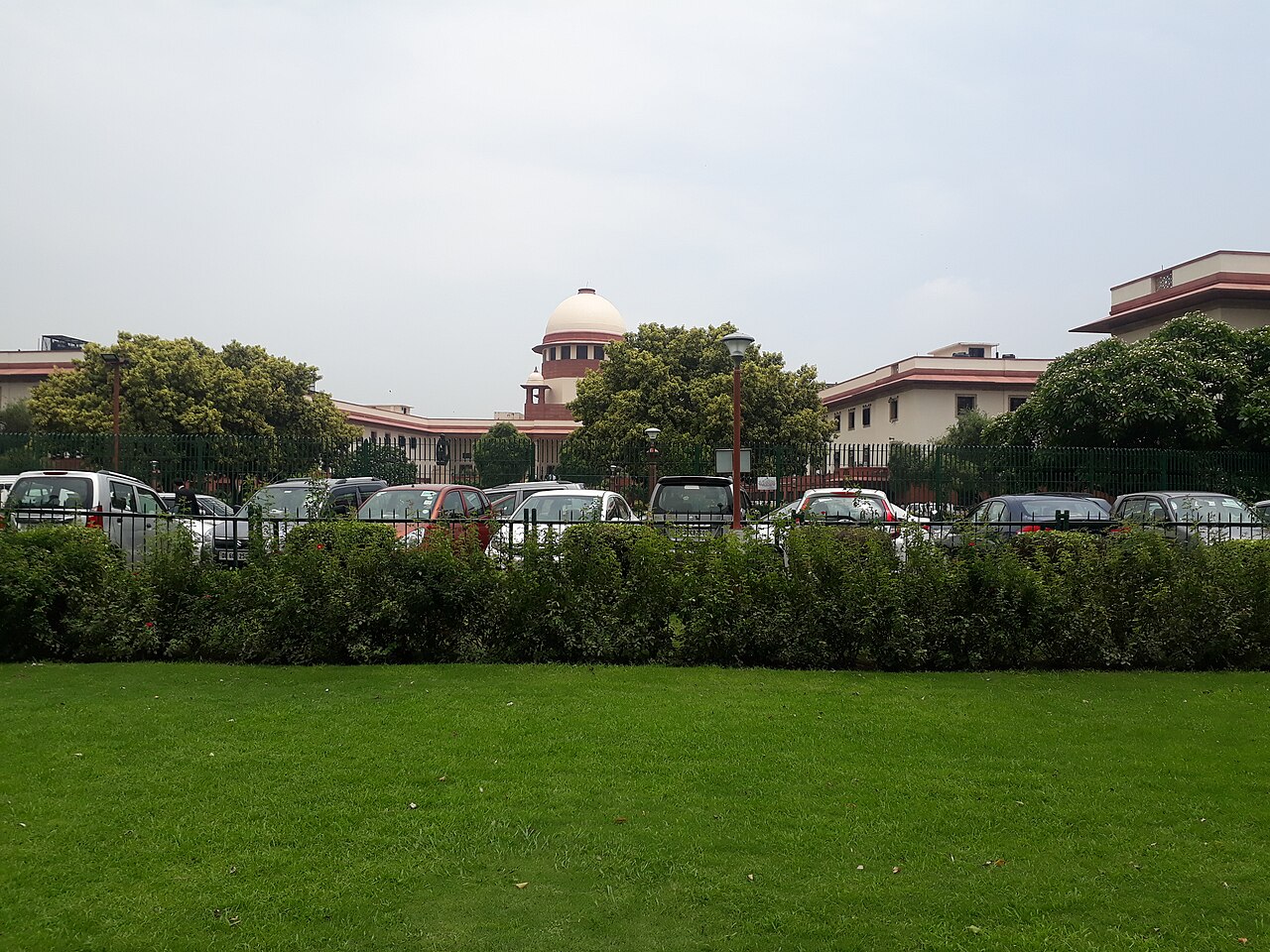
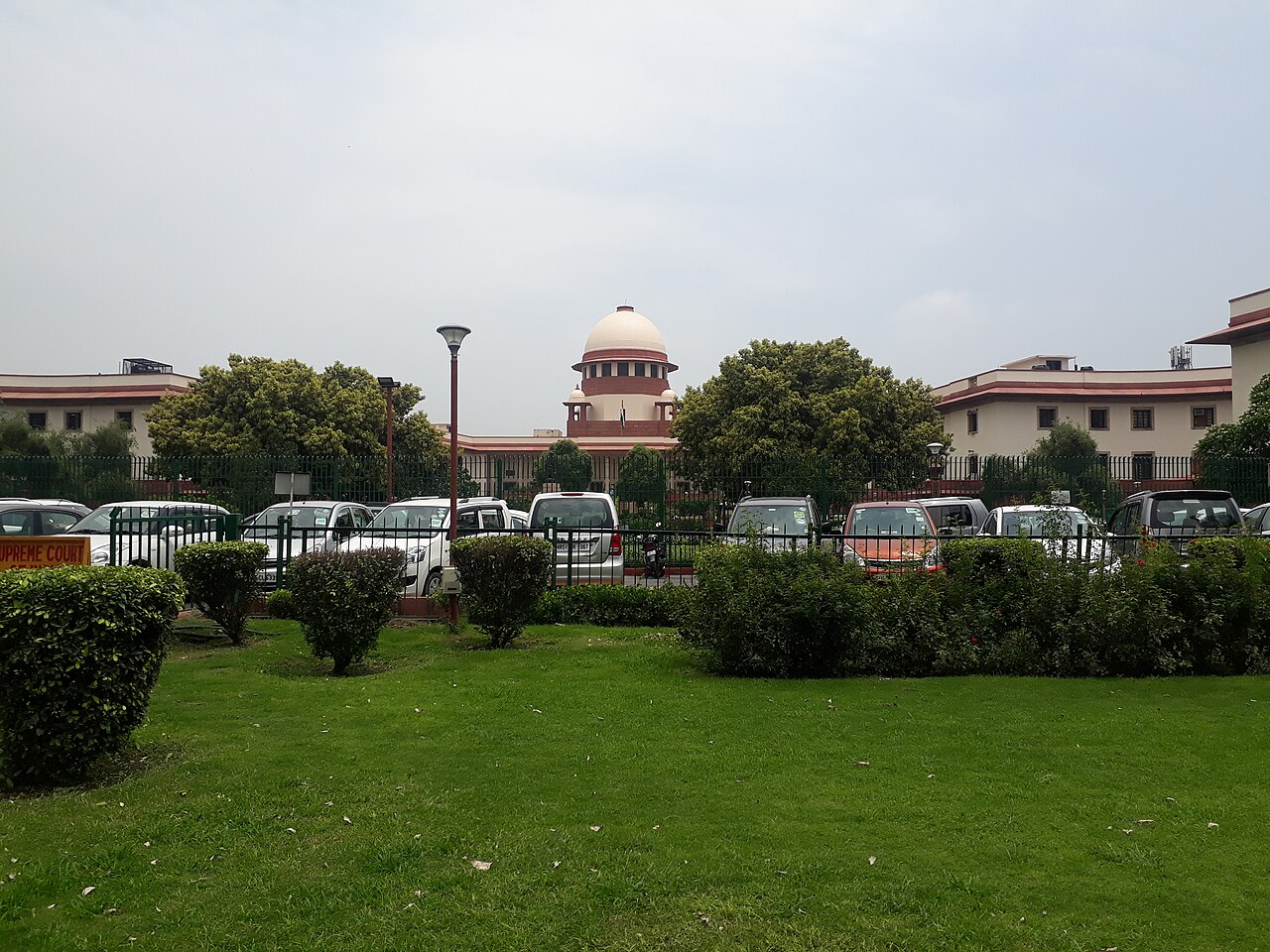
The court building is shaped to symbolise the scales of justice with a central wing flanked by a wing on either side. The foundation stone was laid on 29 October 1954 by Rajendra Prasad, the first President of India. The main block was built on a triangular plot of land measuring 17 acres (6.9 ha), designed in the Indo-British architectural style by Ganesh Bhikaji Deolalikar. In 1979, two wings were added to the complex, and they were further extended in 1994. On 20 February 1978, a bronze sculpture of 'Mother and Child' was installed in the lawn, designed by Chintamoni Kar. When installed, there were protests by a section of advocates who claimed the mother's resemblance to Indira Gandhi; after it was clarified that the model was made in 1969, the advocates withdrew their protests.
Did You Know?
- The first chief justice of India was H. J. Kania.
- The court building, shaped to symbolise the scales of justice, was designed by Ganesh Bhikaji Deolalikar, the first Indian to head the Central Public Works Department.
- In October 2024, a new statue of Nyay Devi (Lady Justice) was unveiled in the court premises.
Gallery
Frequently Asked Questions
What is the Supreme Court of India?
It is India's apex judicial body, functioning as the final court of appeal for all civil and criminal disputes in the country. It also serves as the ultimate interpreter and guardian of the Indian Constitution.
When was the Supreme Court of India established and what did it replace?
It began operating on 26 January 1950, coinciding with India's declaration as a republic. It succeeded the Judicial Committee of the Privy Council as the nation's highest appellate authority.
How many judges serve on the Supreme Court of India?
The court's sanctioned strength is 34 judges in total, consisting of the Chief Justice of India plus up to 33 additional judges. The Chief Justice presides over all sittings and allocates cases to benches.
What original jurisdiction does the Supreme Court of India hold?
It has the authority to adjudicate disputes between the central government and one or more states, as well as disputes among states themselves. It may also initiate suo motu proceedings to safeguard fundamental rights and uphold constitutional principles without waiting for a petition.
More in International Law & Diplomacy
Spotted an error? Know more?
Reader corrections go straight into our review queue. Suggest an edit · How this site is sourced