
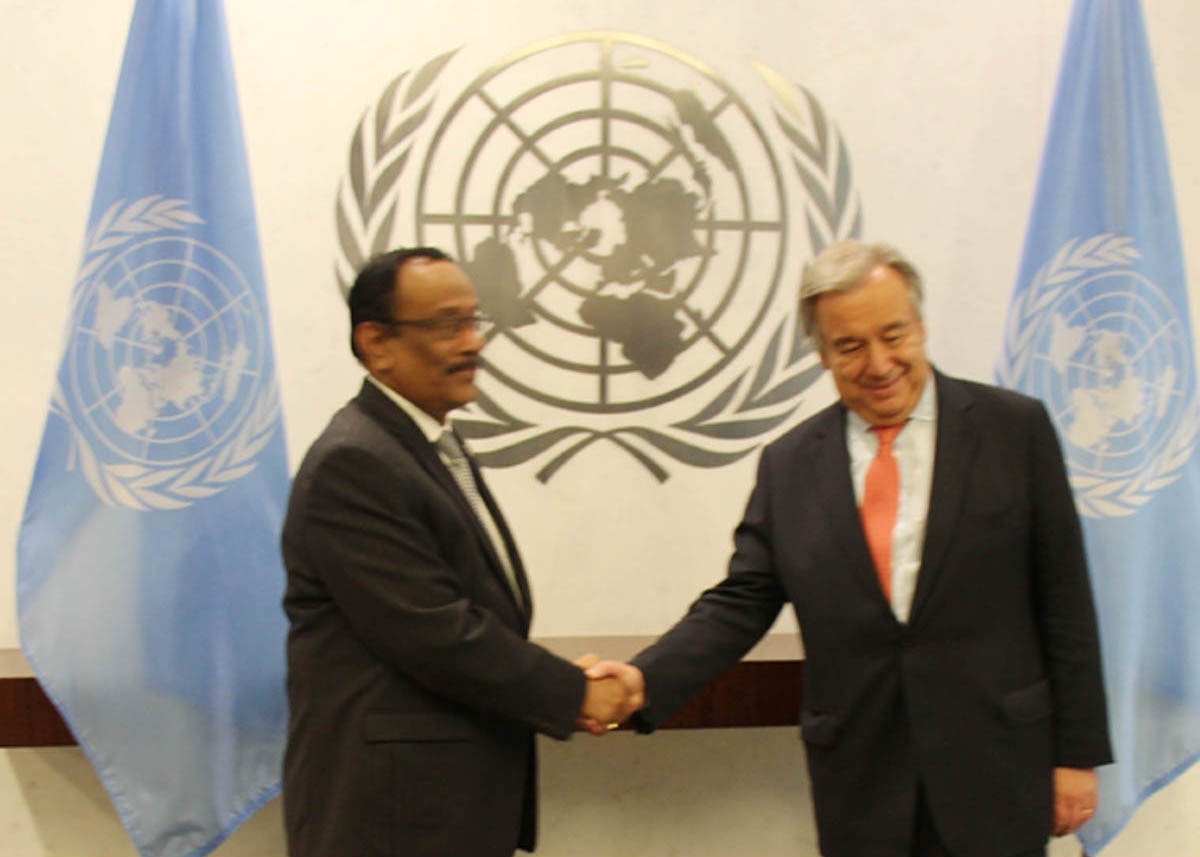
Secretary-General of the United Nations
The de facto head of the United Nations, overseeing the Secretariat and acting as the Security Council's executive.

DFID - UK Department for International Development · CC BY 2.0
The secretary-general of the United Nations (UNSG or UNSECGEN) serves as the organization’s de facto leader, heading the United Nations Secretariat—one of the UN’s six main bodies—and representing all 193 member nations internationally. While the Security Council’s president runs its meetings, the secretary-general acts as the council’s executive, ensuring its decisions and mandates are carried out. The role and the Secretariat are defined by Chapter XV (Articles 97 to 101) of the UN Charter. However, the qualifications, selection process, and term length for the office are not spelled out in the Charter; they have been shaped by tradition. The General Assembly appoints the secretary-general on the recommendation of the Security Council. Because the recommendation must come from the Security Council, any of its five permanent members can veto a nomination. Most secretaries-general have been compromise candidates from middle powers, with little prior fame. Unofficial qualifications have emerged through precedent. The appointee cannot be a citizen of any permanent Security Council member. A 1997 General Assembly resolution (51/241) stated that, in choosing “the best candidate,” regional rotation and gender equality should be considered—though no woman has ever held the post. All secretaries-general so far have been career diplomats. The term length is not fixed, but since 1971 every appointee has served five-year terms. Every secretary-general since 1961 has been reappointed for a second term, except Boutros Boutros-Ghali, whom the United States vetoed in 1996. The position has no formal term limit, but incumbents have avoided seeking a third term since 1981, when China cast a record 16 vetoes against Kurt Waldheim’s third term. The selection process is secretive, often compared to a papal conclave. Since 1981, the Security Council has held secret straw polls, then submits the winning candidate to the General Assembly for ratification. No candidate has ever been rejected by the Assembly, and only once—in 1950—has a candidate been voted on despite a Security Council veto. In 2016, the General Assembly and Security Council sought nominations and held public debates for the first time. However, the Security Council still voted in private and followed the same process as before, leading the General Assembly president to say it “does not live up to the expectations of the membership and the new standard of openness and transparency.” The UN Charter calls the secretary-general the “chief administrative officer” of the UN, giving them authority over Secretariat staff. The Charter also allows the secretary-general to alert the Security Council to “any matter which in his opinion may threaten the maintenance of international peace and security,” and to perform “such other functions as are entrusted” by other UN bodies. These provisions have been interpreted broadly, letting officeholders shape the role to their preferences, skills, or circumstances. The UN itself describes the job as combining the duties of an advocate, diplomat, civil servant, and chief executive. Routine duties include overseeing Secretariat activities; attending UN body sessions; consulting with world leaders, officials, and stakeholders; and traveling to engage with global audiences on key issues. The secretary-general publishes an annual report on the UN’s work, assessing its activities and outlining future priorities. They also chair the United Nations System Chief Executives Board for Coordination (CEB), which includes heads of all UN funds, programs, and specialized agencies, meeting twice a year to discuss substantive and management matters. Many of the secretary-general’s powers are informal and open to interpretation. Some appointees have taken activist roles; others have been more technocratic or administrative. The secretary-general often relies on their “good offices”—described as steps taken publicly and privately, drawing on their independence, impartiality, and integrity, to prevent international disputes from arising or spreading. Observers have called the office the “world’s most visible bully pulpit” or the “world’s moderator.” Examples include Dag Hammarskjöld promoting an armistice in the Arab-Israeli conflict, Javier Pérez de Cuéllar negotiating a ceasefire in the Iran-Iraq War, and U Thant helping de-escalate the Cuban Missile Crisis. The secretary-general’s official residence is a townhouse at 3 Sutton Place, Manhattan, New York City. Built for Anne Morgan in 1921, it was donated to the UN in 1972. Youth 2030 is a UN system-wide youth strategy launched by the secretary-general on 24 September 2018. It aims to strengthen commitments at global, regional, and national levels to meet young people’s needs and help them realize their potential.
Last updated 2026-09-28 from the source article.
Quick Facts
- Post
- Secretary-General
- Insigniacaption
- Emblem of the United Nations
- Incumbent
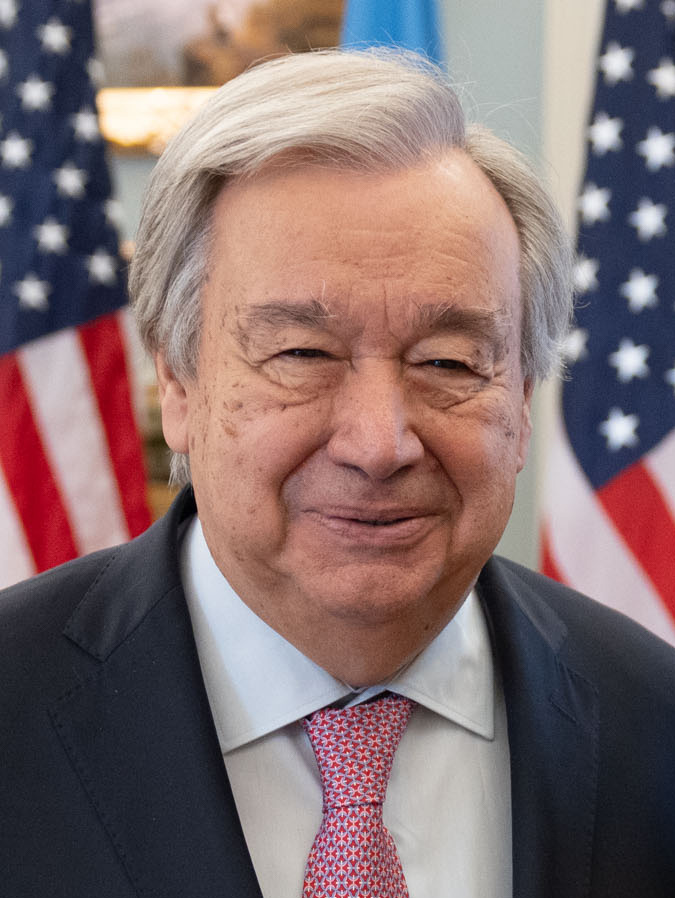
- António Guterres
- Incumbentsince
- 1 January 2017
- Department
- United Nations Secretariat
- Style
- His Excellency
- Abbreviation
- UNSECGEN
- Member of
- Secretariat; General Assembly
Facts from the source article.
Lore & Background
The role of the secretary-general and of the secretariat is laid out by Chapter XV (Articles 97 to 101) of the United Nations Charter. However, the office's qualifications, selection process and tenure are open to interpretation; they have been established by custom. The secretary-general is appointed by the General Assembly upon the recommendation of the Security Council. As the recommendation must come from the Security Council, any of the five permanent members of the council can veto a nomination. Most secretaries-general are compromise candidates from middle powers and have little prior fame. Unofficial qualifications for the job have been set by precedent in previous selections. The appointee may not be a citizen of any of the Security Council's five permanent members. The General Assembly resolution 51/241 in 1997 stated that, in the appointment of 'the best candidate', due regard should be given to regional (continental) rotation of the appointee's national origin and to gender equality, although no woman has yet served as secretary-general. All appointees to date have been career diplomats. The length of the term is discretionary, but all secretaries-general since 1971 have been appointed to five-year terms. Every secretary-general since 1961 has been re-selected for a second term, with the exception of Boutros Boutros-Ghali, who was vetoed by the United States in the 1996 selection. While the position does not have a formal term limit, incumbent secretaries-general have avoided seeking a third term since the 1981 selection, when China cast a record 16 vetoes against a third term for Kurt Waldheim. The selection process is opaque and is often compared to a papal conclave. Since 1981, the Security Council has voted in secret in a series of straw polls; it then submits the winning candidate to the General Assembly for ratification. No candidate has ever been rejected by the General Assembly, and only once, in 1950, has a candidate been voted upon despite a UNSC veto. In 2016, the General Assembly and the Security Council sought nominations and conducted public debates for the first time.
Did You Know?
- Youth 2030 is a UN system-wide Youth Strategy, launched on 24 September 2018 by the Secretary-General. Denmark was the first member country to make a financial commitment to the strategy.
- Our Common Agenda is 'the Secretary-General's vision for the future of global cooperation'. It calls for cooperation and multilateralism to promote action that achieves the Sustainable Development Goals.
- The Secretary-General's Youth Advisory Group on Climate Change was launched on 27 July 2020, in the midst of the COVID-19 pandemic.
Gallery

More in International Law & Diplomacy
Spotted an error? Know more?
Reader corrections go straight into our review queue. Suggest an edit · How this site is sourced