
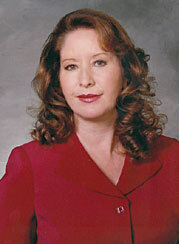
Gloria Romero
American-born Filipino actress, Queen of Philippine Cinema.

Eduardo Acevedo · Public domain
Gloria Romero was born Gloria Anne Borrego Galla on December 16, 1933, in Denver, Colorado, and died on January 25, 2025. An American-born Filipino actress, she is remembered as the "Queen of Philippine Cinema." Over a career spanning seven decades, she appeared in more than 300 films and television shows, and during the Golden Age of Philippine cinema, she was the country's highest-paid and biggest box-office star.
Her father, Pedro Galla, was a Filipino who went to the United States for his education, where he met Mary Borrego, an American of Spanish descent. In 1937, the family traveled to the Philippines to visit Pedro's parents in Mabini, Pangasinan. What was meant to be a vacation kept getting extended, and when World War II broke out, they were trapped. During the war, the family learned to farm. In 1943, Japanese soldiers arrested and interrogated Romero's mother, who died in 1945 from illness. Her father then decided the family would stay in the Philippines permanently. Romero had three siblings: Louise, who became a nurse; Tito Galla (1935–1979), a popular actor; and Gilbert, a doctor based in the U.S. She attended Mabini Elementary School and Riverview High School in Mabini but did not finish high school.
Romero began wanting to be an actress at age 11. After leaving school, her family moved to Manila, and with her father's permission, she tried show business. She first appeared as an extra in the 1949 film *Ang Bahay sa Lumang Gulod*, and later in *Prinsipe Don Juan* (1951) and *Bahay na Tisa* (1951) under Premiere Productions. After being let go from that studio, she moved to Sampaguita Pictures with help from her distant uncle, Nario Rosales, the studio's chief editor. She continued as an extra in films like *Kasintahan sa Pangarap* (1951), *Bernardo Carpio* (1951), *Barbaro* (1952), *Dugong Bughaw* (1951), and *Prinsesa at Pulubi* (1950). Her first supporting role came in *Madame X* (1952), and she landed her first lead role in *Palasig* opposite Cesar Ramirez. After her breakthrough in *Monghita* (1952) with Oscar Moreno, she gained a large following. In 1953, she starred in the blockbuster *Cofradia* with Ramon Revilla. Her films also launched the careers of actors like Lolita Rodriguez, Ric Rodrigo, and Luis Gonzales in *Pilya* (1954) and *Despachadora* (1955).
- Born
- December 16, 1933, Denver, Colorado, USA
- Died
- January 25, 2025
- Field
- Actress, model
- Nationality
- American-born Filipino
- Known for
- Queen of Philippine Cinema; over 300 film and TV roles; highest paid star of the Golden Age
Lore & Background
Gloria Romero was born in Denver, Colorado, to Pedro Galla, a Filipino, and Mary Borrego, an American of Spanish descent. In 1937, the family visited the Philippines and were trapped there by World War II. During the war, her mother died in 1945 from illness. Romero attended Mabini Elementary School and Riverview High School but did not finish high school. She began her film career at age 16 in 1950 as an extra, eventually landing her first major role in Madame X (1952). Her breakthrough came with Dalagang Ilocana (1954), for which she won a FAMAS Best Actress award, the first time a comedy film actress won that honor.
From the mid-1950s to the 1960s, Romero was a major box-office draw across Asia.
Reader's Guide
Gloria Romero's significance lies in her seven-decade career that defined Philippine cinema's Golden Age. As the highest-paid and biggest box-office star of that era, she bridged the gap between the film industry and high society, shifting the social standing of actors. Her work spanned romantic comedies, musicals, adaptations, and later complex, morally ambiguous roles. She was also a pioneering model, representing Philippine couture internationally as one of the original Karilagan models and endorsing major brands like Coca-Cola. Her legacy includes numerous honorary accolades: the Pama-As Gintong Bai Award from the National Commission for Culture and the Arts (2005), Lifetime Achievement Awards from the Movie and Television Review and Classification Board (2009) and the Film Development Council of the Philippines (2024), a commemorative stamp issued by the Philippine Post Office (2022), and a posthumous Presidential Medal of Merit (2025). Her ability to sustain popularity across decades, from the 1950s to the 2010s, and her critical resurgence in the late 1980s, underscore her enduring impact on Filipino entertainment.
Did You Know?
- Romero was born in Denver, Colorado, and was originally named Gloria Anne Borrego Galla.
- She was the second personality after Douglas MacArthur to endorse Coca-Cola in the Philippines after World War II.
- Her mother died after falling down the stairs inside their residence days before World War II ended.
- She won a Gawad Urian for her role in the 2003 film Magnifico.
Wartime Roots and a Family Upended
Gloria Anne Borrego Galla entered the world on December 16, 1933, in Denver, Colorado, the daughter of Pedro Galla, a Filipino student who had traveled to the United States for his education, and Mary Borrego, an American woman of Spanish heritage. In 1937 the young family traveled to Mabini, Pangasinan, to visit Pedro's parents, with plans to return to Denver. Those plans never materialized. When World War II engulfed the Philippines, the Gallas were stranded. They learned to farm to survive. In 1943 Japanese soldiers arrested and interrogated Mary, and just days before the conflict ended, she died after a fall down the stairs in their home. Pedro made the decision that the family would remain in the Philippines permanently. Gloria grew up in Mabini, attending the local elementary school and Riverview High School, though she never completed her secondary education. Her three siblings each found their own paths: Louise became a nurse, her brother Tito Galla went on to a popular acting career, and the youngest, Gilbert, practiced medicine in the United States.
From Background Extra to Box-Office Empress
After leaving school, the family relocated to Manila, and with her father's blessing, a teenager Gloria began auditioning for work in the film industry. Her early years were spent in the background, playing uncredited extras in productions for Premiere Productions and later Sampaguita Pictures, a studio she reached through the intervention of her distant uncle Nario Rosales, the company's chief editor. Her first named supporting part came in Madame X (1952), and her breakthrough arrived with Monghita (1952) alongside Oscar Moreno, which ignited a massive following. By 1954 her performance as a spirited tobacco-smoking maiden in Dalagang Ilocana earned her the FAMAS Best Actress award, a first for a comedy film. The momentum was extraordinary: by 1957 she had already headlined more than twenty-four blockbusters, and three of her pictures—Sino Ang May Sala, Hongkong Holiday, and Paru-Parong Bukid—occupied the top three spots at the national box office. Across a career spanning seven decades, she accumulated more than three hundred film and television credits, cementing her reputation as the highest-paid and most bankable star of Philippine cinema's Golden Age.
Bridging the Silver Screen and High Society
Beyond her acting, Romero reshaped how Filipino audiences perceived entertainers. In the mid-to-late 1950s and through the 1960s she became a major box-office draw not only in the Philippines but across Asia, and she expanded her public presence into the world of fashion. She worked closely with designer Ramon Valera, serving as one of his muses, and joined the original Karilagan models who showcased Philippine couture on domestic and international runways. She was also among the pioneering celebrity endorsers of Coca-Cola in the country, the second postwar personality after General Douglas MacArthur to represent the brand. Her influence extended to the social fabric: she is widely credited with narrowing the divide between the film industry and Manila's high society, elevating the status of actors as a profession. Her September 1960 wedding to Juancho Gutierrez at the Santuario de San Antonio in Forbes Park was dubbed the "Wedding of the Year," broadcast across radio and splashed across every major newspaper and magazine. On stage her involvement was deliberately limited, confined to portraying the Blessed Virgin Mary in the annual Lenten play Martir sa Golgota from 1954 to 1956.
A Second Act and a National Legacy
After parting ways with Sampaguita Pictures, Romero turned toward more complex, morally ambiguous characters, and in the late 1980s she made a deliberate move into television. That shift brought a critical renaissance: her roles in Saan Nagtatago ang Pag-ibig? (1987) and Nagbabagang Luha (1988) earned her major competitive acting awards for the first time in more than three decades. The new millennium delivered another wave of popular triumph, with Tanging Yaman (2000) and Bahay ni Lola (2001) each becoming the top-grossing entries at their respective Metro Manila Film Festivals. She collected a Gawad Urian for Magnifico (2003) and appeared in her final film, Rainbow's Sunset, in 2018. Her contributions were recognized at the highest institutional levels: the National Commission for Culture and the Arts bestowed its Pama-As Gintong Bai Award in 2005, the MTRCB honored her with a Lifetime Achievement Award in 2009, and the Film Development Council of the Philippines followed suit in 2024. The Philippine Post Office issued a commemorative stamp in her name in 2022, and after her death on January 25, 2025, she was posthumously conferred the Presidential Medal of Merit.
Gallery

Frequently Asked Questions
Who is Gloria Romero?
Gloria Romero was an American-born Filipino actress and model widely celebrated as the 'Queen of Philippine Cinema.' Born Gloria Anne Borrego Galla on December 16, 1933, in Denver, Colorado, she passed away on January 25, 2025.
What is Gloria Romero most famous for?
She holds the title 'Queen of Philippine Cinema,' a designation that reflects her status as the highest-paid and most bankable star during the Golden Age of Philippine film. Her box-office dominance made her the defining screen icon of that era.
How many films and TV shows did Gloria Romero appear in?
Across a career spanning roughly seven decades, she accumulated more than 300 roles in both film and television. That sheer volume of work cemented her place as one of the most prolific performers in Southeast Asian entertainment.
Where was Gloria Romero born and what is her heritage?
She was born in Denver, Colorado, to a Filipino father, Pedro Galla, and an American mother of Spanish descent, Mary Borrego. This mixed background made her an American-born Filipino actress who went on to dominate the local film industry.
Why is Gloria Romero considered important in international cinema?
As the top box-office draw and highest-paid star of the Philippine Golden Age, she proved that a single performer could anchor an entire national film industry. Her seven-decade career and 300-plus credits made her a landmark figure in Asian and global cinema history.
More in International Cinema Stars 1-24
Spotted an error? Know more?
Reader corrections go straight into our review queue. Suggest an edit · How this site is sourced