
Geneviève Bujold
Canadian actress nominated for an Academy Award for Best Actress.

Unknown author · Public domain
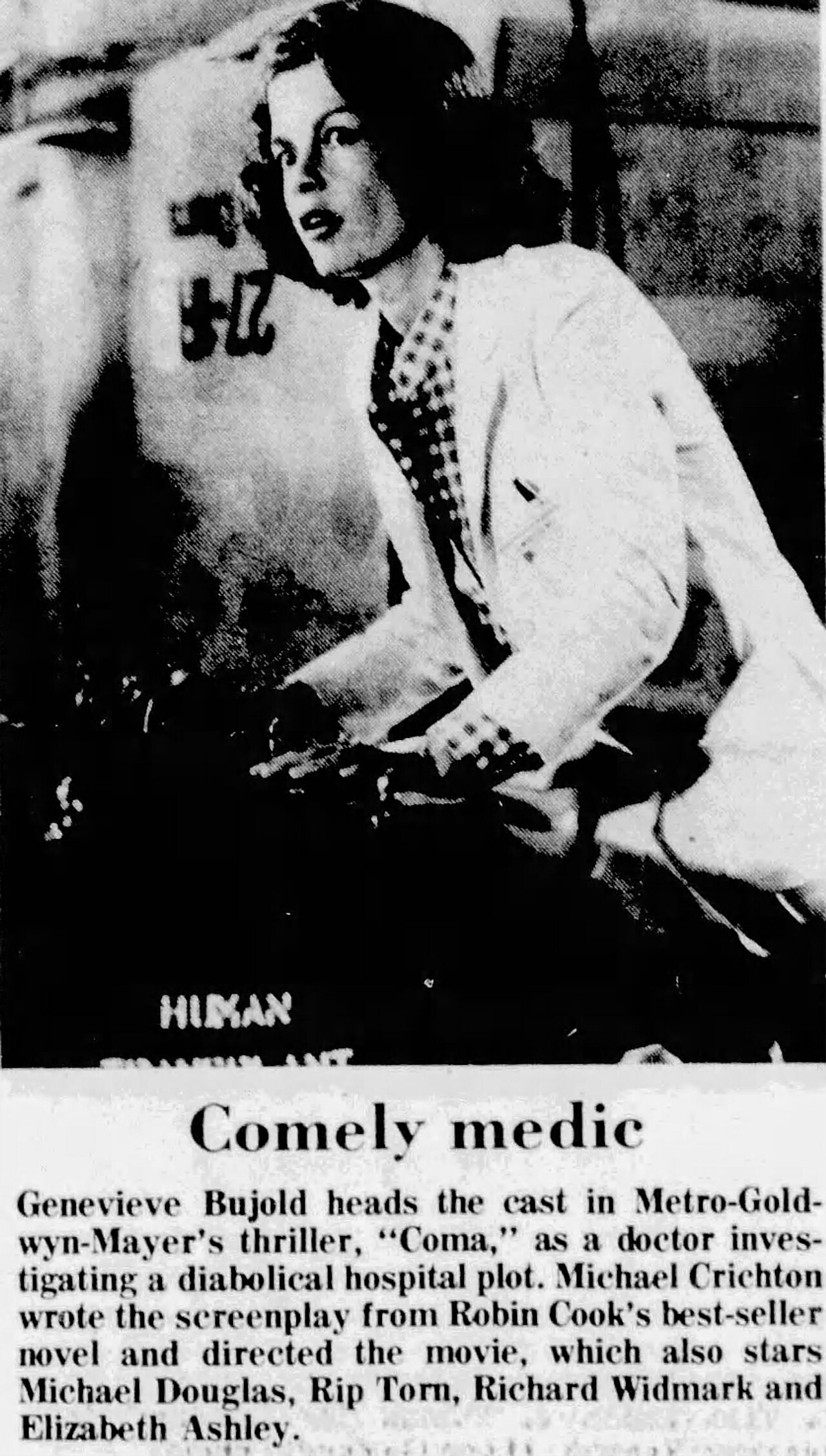
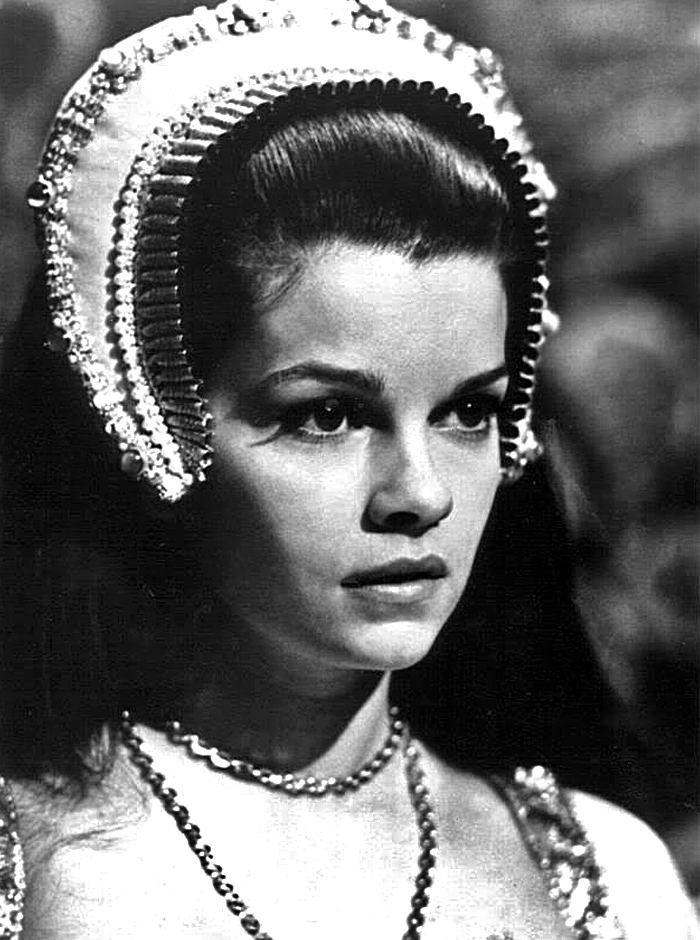
Geneviève Bujold (born July 1, 1942) is a Canadian actress known for her portrayal of Anne Boleyn in the period drama film *Anne of the Thousand Days* (1969), for which she received a nomination for the Academy Award for Best Actress. Her career spans Canadian, French, and American cinema, with notable roles in films such as *The Trojan Women* (1971), *Earthquake* (1974), *Obsession* (1976), *Coma* (1978), *Murder by Decree* (1979), *Tightrope* (1984), *Choose Me* (1984), *Dead Ringers* (1988), *The House of Yes* (1997), and *Still Mine* (2012).
- Born
- July 1, 1942
- Field
- Actress
- Nationality
- Canadian
- Known for
- Portrayal of Anne Boleyn in *Anne of the Thousand Days* (1969)
Lore & Background
Geneviève Bujold was born in Montreal, Quebec, the daughter of Laurette (née Cavanagh), a maid, and Joseph Firmin Bujold, a bus driver. She is of French Canadian descent, with distant Irish ancestry. She received a strict convent education for twelve years, which she disliked, and was expelled for reportedly reading *Fanny* by Marcel Pagnol. She then entered the Montreal Conservatory of Dramatic Art, where she was trained in the classics of French theatre. Two months before graduation, she made her stage debut as Rosine in *Le Barbier de Séville* in 1961 with Théâtre de Gesù, quit school, and was rarely out of work, being in demand for radio, stage, TV, and film. Her Canadian feature film debut was in *Amanita Pestilens* (1963).
Reader's Guide
Geneviève Bujold's significance lies in her international breakthrough as Anne Boleyn in *Anne of the Thousand Days* (1969), which earned her a Golden Globe Award for Best Actress in a Motion Picture – Drama and an Academy Award nomination. She was signed to a three-picture contract with Universal after the film's release. Her refusal to star in *Mary, Queen of Scots* (1971) led to a lawsuit from producer Hal B. Wallis and Universal, which she later settled by agreeing to a three-picture contract starting with *Earthquake* (1974). Bujold won multiple Canadian Film Awards for Best Actress for *The Act of the Heart* (1970), *Journey* (1972), and *Kamouraska* (1973), and a Best Supporting Actress Award for *Murder by Decree* (1979). She was briefly cast as Captain Elizabeth Janeway in *Star Trek: Voyager* (1994) but left after two days of filming, with the role recast as Captain Kathryn Janeway. Her legacy includes work with directors such as Alain Resnais, Brian De Palma, David Cronenberg, and Alan Rudolph, with whom she made three films.
Did You Know?
- She was expelled from convent school for reportedly reading *Fanny* by Marcel Pagnol.
- She was cast as Captain Elizabeth Janeway in *Star Trek: Voyager* but left after two days of filming.
- She won the Golden Globe Award for Best Actress in a Motion Picture – Drama for *Anne of the Thousand Days* (1969).
- She refused to star in *Mary, Queen of Scots* (1971) and was sued for $450,000 by Hal B. Wallis and Universal.
The Role of Irene Morrison
In the 2012 Canadian romantic drama Still Mine, Geneviève Bujold embodies Irene Morrison, a wife in rural St. Martins, New Brunswick whose declining health renders the couple's existing home inadequate. Her husband Craig, a farmer portrayed by James Cromwell, must wage a weary battle against a government bureaucrat to obtain permission to construct a new dwelling. Bujold brings a distinctive physicality and temperament to Irene—critics noted a quick, birdlike watchfulness—and infuses the character with a rigid, unyielding stubbornness paired with a keen, cutting wit. The role demands a performer who can convey both vulnerability and fierce determination, as Irene is not merely a passive patient but an active participant in the fight for her own well-being. The film, written and directed by Michael McGowan and drawn from a true story, gives Bujold a grounded, emotionally complex part that sits at the intersection of personal sacrifice and bureaucratic absurdity, allowing her to showcase range within an intimate, character-driven narrative.
Critical Acclaim and the Power of the Performance
Still Mine earned overwhelmingly positive critical response, and Bujold's work was singled out as a central pillar of the film's success. On Rotten Tomatoes, the picture holds a 94 percent score drawn from 62 critics' reviews, with the consensus specifically praising both Cromwell and Bujold as exceptional in what reviewers called a gentle, emotionally resonant portrait of a long marriage. At Metacritic, the film scored 72 out of 100, signaling generally favorable reception. Stephen Holden of The New York Times described Bujold as possessing a quick, birdlike watchfulness, crediting her with giving Irene a rigid stubbornness and a keen, cutting wit that prevented the character from becoming merely sympathetic. Michael O'Sullivan in The Washington Post called the pair of performances delivered by Cromwell and Bujold first-rate, noting that their chemistry anchored an understated yet deeply moving dramatic experience. The critical consensus positioned Bujold not as a supporting presence but as an equal driving force in the film's emotional architecture.
Awards Nominations and Industry Recognition
Still Mine collected seven nominations at the inaugural Canadian Screen Awards, a testament to the film's broad creative strength. Among those nominations was Best Actress for Geneviève Bujold, recognizing her portrayal of Irene Morrison alongside James Cromwell's Best Actor nod. While Cromwell ultimately took home the award for Best Performance by an Actor in a Leading Role, Bujold's nomination placed her among the top performers in Canadian cinema for that year. The remaining nominations spanned Best Picture, Best Original Screenplay for Michael McGowan, Best Cinematography for Brendan Steacy, Best Editing for Roderick Deogrades, and Best Original Score for Hugh Marsh, Don Rooke, and Michelle Willis. The production team also included co-producer Tamara Deverell, who would later go on to win an Academy Award for production design, underscoring the caliber of talent assembled around Bujold's central performance. The seven-nomination haul cemented Still Mine as one of the most recognized Canadian films of its release cycle.
Production Context and the Film's Journey to Audiences
Still Mine followed a distinctive release trajectory that reflected its independent Canadian origins. The film first screened under its original title, Still, at the 2012 Toronto International Film Festival, where it received a limited showcase before finding its wider audience. Its general theatrical release arrived on May 3, 2013, giving the project a full year between festival debut and public availability. The picture was written and directed by Michael McGowan, who based the story on a true account of a rural New Brunswick family's struggle with government regulations. International distribution rights were licensed by Cinema Management Group, extending the film's reach beyond the North American market. Bujold's involvement in a project of this scale—a character-driven drama set in a small farming community rather than a high-budget production—highlighted her willingness to engage with intimate, regionally specific storytelling. The film's journey from a true story to a festival premiere to a general release and international distribution illustrated the path many substantive Canadian dramas take to find their audiences.
Gallery
Frequently Asked Questions
Who is Geneviève Bujold?
Geneviève Bujold is a Canadian actress born on July 1, 1942, whose career spans nearly six decades across multiple film industries. She is best recognized internationally for her dramatic performances in both European and Hollywood productions.
What is Geneviève Bujold most famous for?
She is widely regarded as having delivered one of the finest screen portrayals of Anne Boleyn, the second wife of Henry VIII, in the 1969 period drama *Anne of the Thousand Days*. That role remains her signature performance and the one most closely tied to her name in film history.
Did Geneviève Bujold win an Academy Award?
No, she did not take home the statuette, but she earned a Best Actress nomination from the Academy for her work in *Anne of the Thousand Days* (1969). That nod solidified her reputation as a major figure in international cinema.
In which countries and languages has Geneviève Bujold worked?
Her career has taken her across Canadian, French, and American film industries, meaning she has performed in both English and French productions. This multilingual, cross-border body of work sets her apart from many actors of her generation.
What other notable films did Geneviève Bujold appear in?
Beyond her Boleyn role, she starred in a wide range of genres, including the disaster film *Earthquake* (1974), the thriller *Obsession* (1976), the medical drama *Coma* (1978), and David Cronenberg's *Dead Ringers* (1988). Her later career also includes the 2012 drama *Still Mine*.
More in International Cinema Stars 1-24
Spotted an error? Know more?
Reader corrections go straight into our review queue. Suggest an edit · How this site is sourced