
Faina Ranevskaya
Soviet actress famed for tragedy, comedy, and aphorisms.

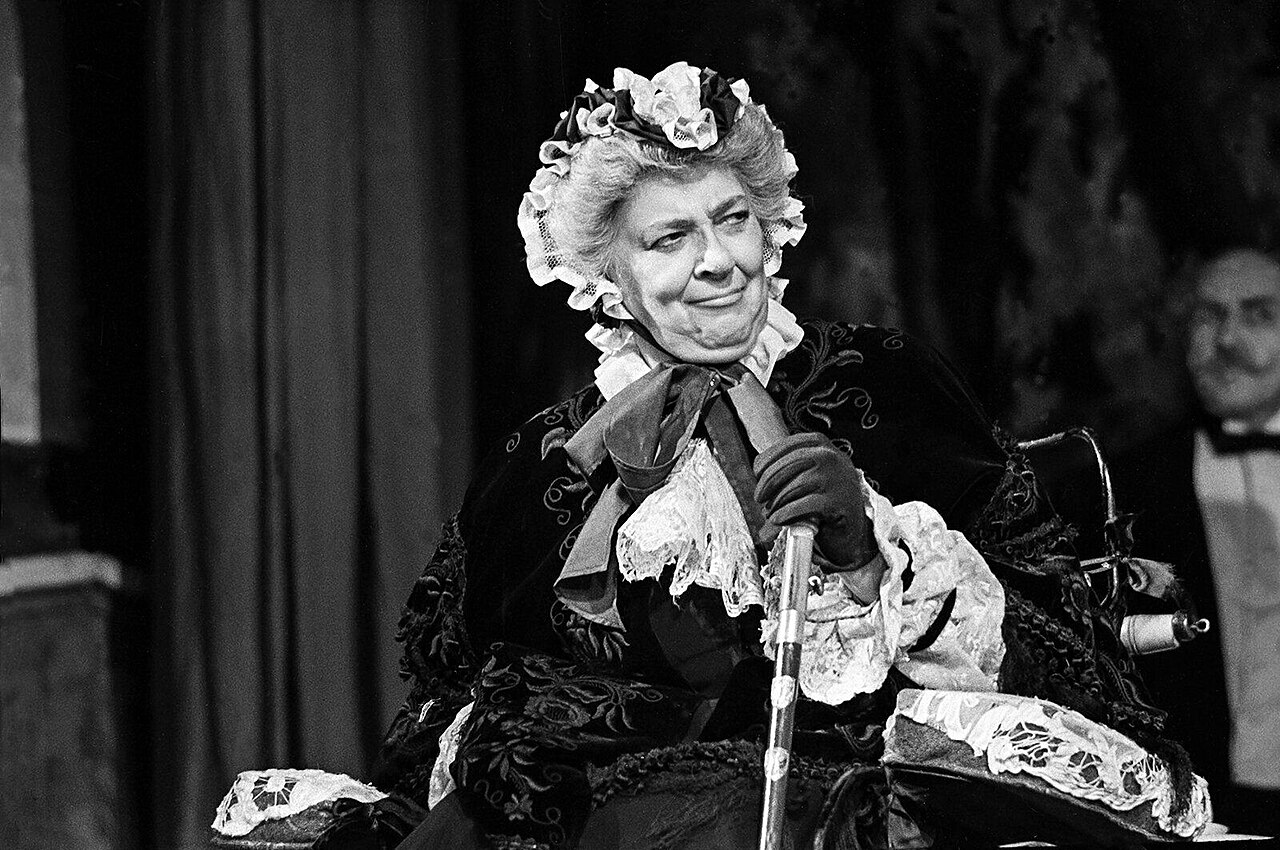
Главархив Москвы · CC BY 4.0
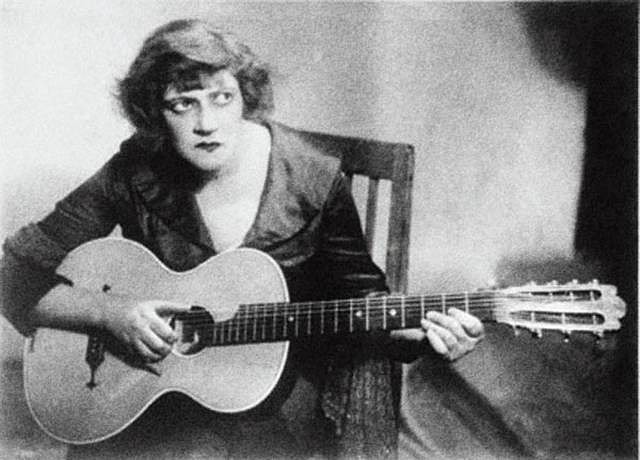
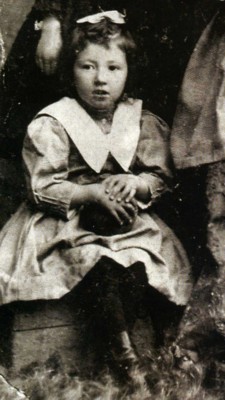
Faina Georgiyevna Ranevskaya, born Faina Girschevna Feldman on 27 August 1896 in Taganrog, was a Soviet stage and screen actress celebrated for her work in both tragic and comic roles, as well as for her sharp, memorable sayings. She came from a wealthy Jewish family; her father, Girsch Haimovich Feldman, owned a dry-ink factory, several buildings, a shop, and a steamboat, and served as head of the local synagogue and founder of a Jewish old-age home. Her mother, Milka Rafailovna Zagovaylova, loved literature and art, and her passion for Chekhov helped spark Faina’s own interest in poetry, music, and theater. Faina had one brother, Yakov, and an older sister, Bella.
She attended elementary classes at the Mariinskaya Gymnasium for Girls and later received home schooling in music, singing, and foreign languages. Her love of theater began at age fourteen, when a performance of Chekhov’s *The Cherry Orchard* at the Moscow Art Theatre made a deep impression. The pseudonym “Ranevskaya,” which eventually became her legal surname, came from that same play. In 1915, she left Taganrog for Moscow to pursue acting, becoming estranged from her family, who disapproved of her career choice. She started as an extra at the Summer Theater in Malakhovka near Moscow, where she also had a dacha. Her family emigrated in 1917, but she stayed, working in theaters in Kerch, Rostov-on-Don, Crimea, Baku, Arkhangelsk, Smolensk, and other cities. In 1931, she performed at the Chamber Theater.
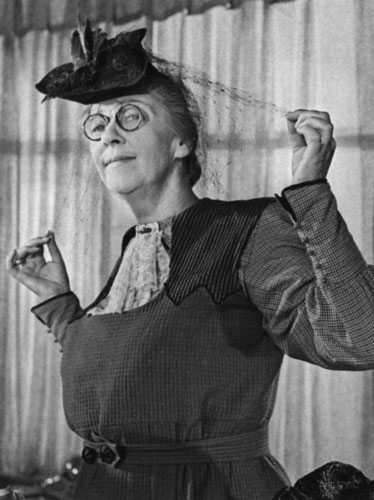
Her film debut came in 1934 with *Pyshka* (known as *Boule de Suif* in the U.S.), a silent black-and-white film directed by Mikhail Romm, based on Guy de Maupassant’s story. She played Madame Loiseau and, though the film had no dialogue, learned several of the character’s lines in French from the original novel. French writer Romain Rolland, visiting the Soviet Union in the 1930s, admired the film and especially Ranevskaya’s performance; at his request, *Pyshka* was shown in French cinemas and became a box-office success. On stage, she performed at the Central Academic Theatre of the Russian Army (1935–1939), the Drama Theater (later Mayakovsky Theatre, 1943–1949), the Moscow Pushkin Drama Theatre (1955–1963), and the Mossovet Theatre (1949–1955 and 1963–1983), where she worked with director Yuri Zavadsky.
- Born
- 27 August [O.S. 15 August] 1896, Taganrog, Russian Empire
- Died
- 19 July 1984, Moscow, Soviet Union
- Field
- Actress
- Nationality
- Soviet
- Known for
- Stage and film acting, aphorisms
Lore & Background
Faina Feldman was born to a wealthy Jewish family in Taganrog. Her father owned a dry-ink factory, buildings, a shop, and a steamboat, and was head of the synagogue. Her mother admired literature and art, influencing Faina's love of the arts. She attended elementary classes at the Mariinskaya Gymnasium and received home education in music, singing, and foreign languages. Her passion for theater began at age 14 after seeing Chekhov's The Cherry Orchard at the Moscow Art Theatre; she adopted the pseudonym 'Ranevskaya' from that visit. In 1915 she left for Moscow to pursue acting, becoming estranged from her family. She started as an extra at the Summer Theater in Malakhovka. The Feldman family emigrated in 1917, but Faina stayed, working in theaters in Kerch, Rostov-on-Don, Crimea, Baku, Arkhangelsk, Smolensk, and others.
Reader's Guide
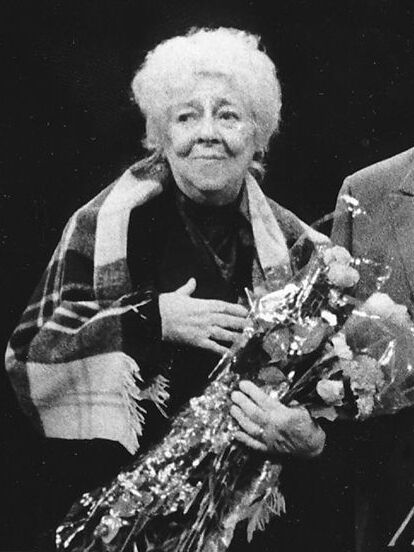
Ranevskaya's film debut came in 1934 with the silent black-and-white film Pyshka (Boule de Suif), directed by Mikhail Romm, based on Guy de Maupassant's story. French writer Romain Rolland loved the film and requested it be shown in French cinemas, where it became a box-office success. She performed on stage at the Central Academic Theatre of the Russian Army (1935-1939), Drama Theater (now Mayakovsky Theatre, 1943-1949), Moscow Pushkin Drama Theatre (1955-1963), and Mossovet Theatre (1949-1955, 1963-1983), working with Yuri Zavadsky. She received Stalin Prizes in 1949 and 1951, and was named People's Artist of the USSR in 1961. Despite never playing a major film role—only supporting parts—the 1992 British Who's Who listed her among the world's Top Ten Actors of the 20th century. A Soviet movie industry apparatchik attributed her lack of main roles to her 'typical Semitic' facial features. She died in Moscow in 1984 and was buried at Donskoye Cemetery. A memorial plate was placed on her birth house in 1986, a monument was inaugurated in 2008, and in 2017 the house was announced to become a museum.
Did You Know?
- Her pseudonym 'Ranevskaya' came from Chekhov's The Cherry Orchard, which she saw at age 14.
- She learned several sayings of her character in French from Maupassant's original novel for the silent film Pyshka.
- She was listed among the world's Top Ten Actors of the 20th century by the 1992 British Who's Who, despite never playing a major film role.
- A Soviet movie industry apparatchik explained her lack of main roles as due to her 'typical Semitic' facial features.
Gallery

Frequently Asked Questions
Who is Faina Ranevskaya?
Faina Ranevskaya was a Soviet actress who performed on both the stage and in films throughout the 20th century. She was born in 1896 in Taganrog under the name Faina Feldman and later became one of the most recognizable performers in Soviet theater and cinema.
What is Faina Ranevskaya most famous for?
She is best remembered for her versatility in both dramatic and comedic roles, as well as for her collection of witty, quotable one-liners that entered popular Soviet culture. These sharp aphorisms made her a household name well beyond her acting work.
Where was Faina Ranevskaya born and what was her family background?
She was born in Taganrog, Russian Empire, in 1896 into a prosperous Jewish family. Her father ran a dry-ink factory and other businesses while also serving as a community religious leader, and her mother's love of literature and Chekhov's plays helped ignite Faina's early passion for the performing arts.
What types of roles did Faina Ranevskaya specialize in?
She was equally at home in heavy tragedy and in lighthearted comedy, switching between the two with ease throughout her career. This range across genres is one of the main reasons she remains a beloved figure in Soviet acting history.
When and where did Faina Ranevskaya die?
She passed away on 19 July 1984 in Moscow, the Soviet Union. Her career spanned nearly the entire 20th century, from the early Soviet era through the later decades of the USSR.
More in International Cinema Stars 1-24
Spotted an error? Know more?
Reader corrections go straight into our review queue. Suggest an edit · How this site is sourced