
Emmanuelle Riva
French actress known for Hiroshima mon amour and Amour.

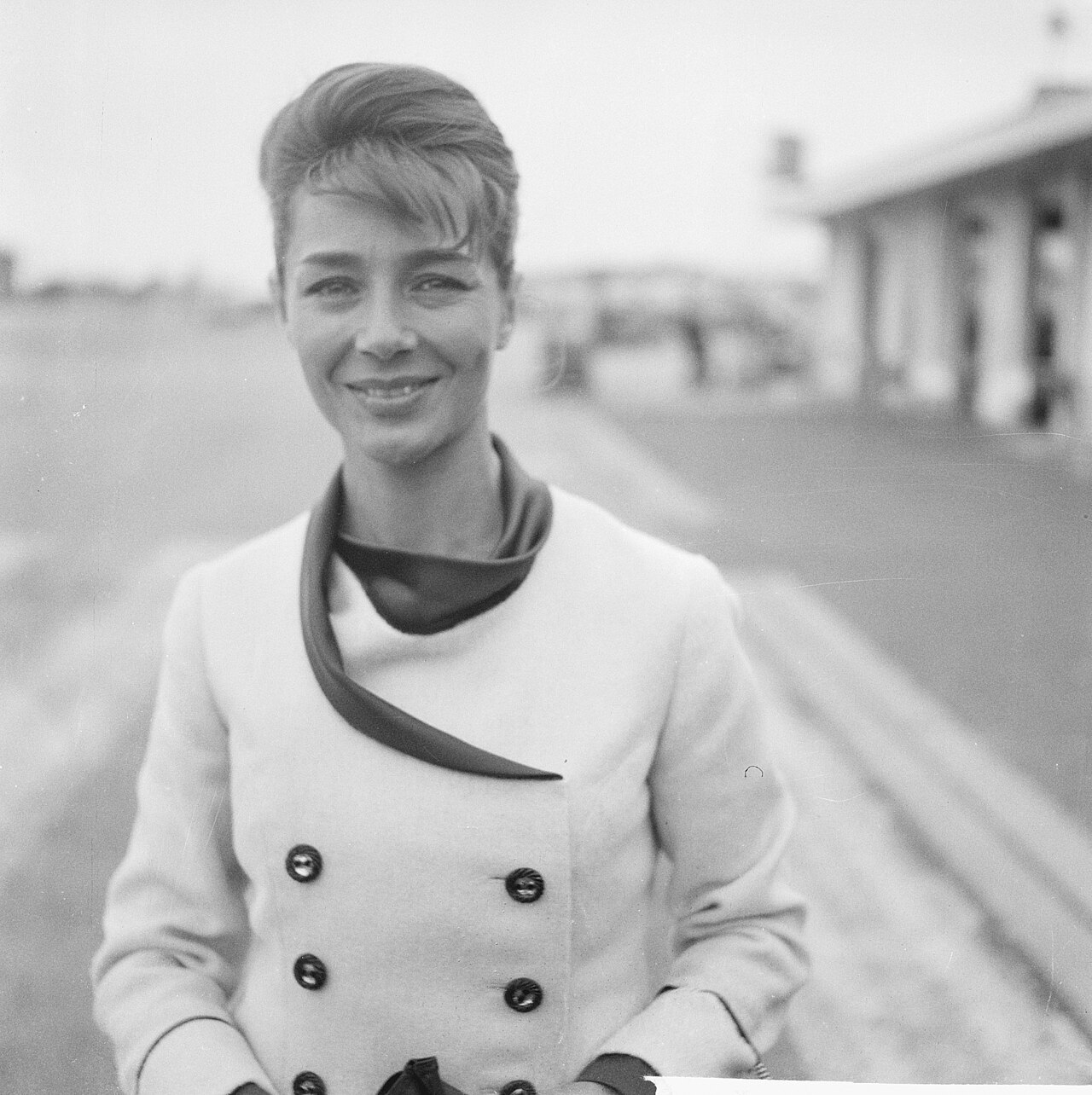
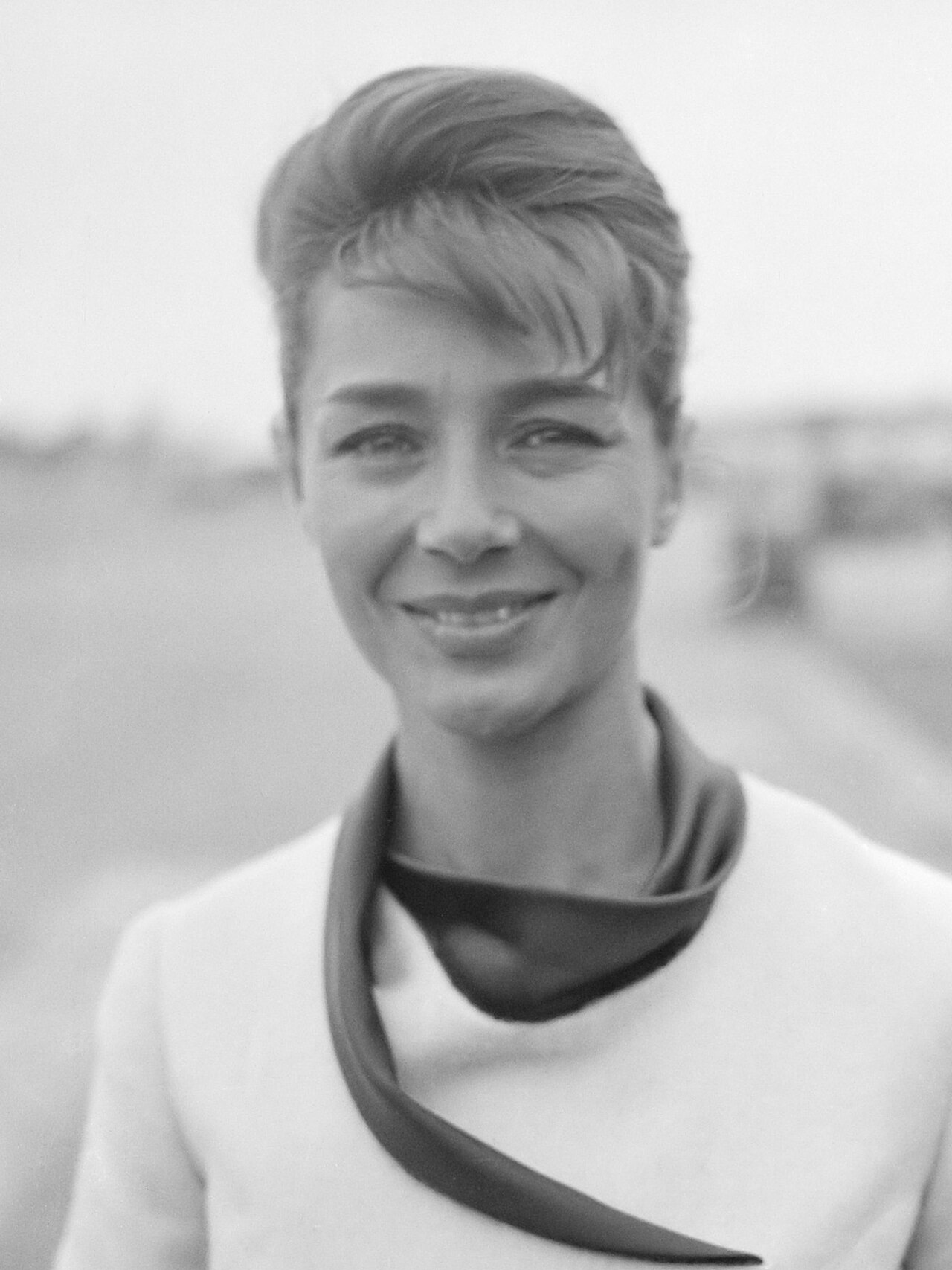
Jack de Nijs for Anefo · CC0
Emmanuelle Riva, a French actress born Paulette Germaine Riva, is remembered primarily for her performances in *Hiroshima mon amour* (1959) and *Amour* (2012). Her work in *Hiroshima mon amour* earned her a BAFTA Award nomination in 1961 (for the newly created Best Foreign Actress category), and she took home the Volpi Cup for Best Actress at the Venice Film Festival for *Thérèse Desqueyroux* (1962). For her leading role in Michael Haneke’s *Amour*, she won both a BAFTA and a César Award, and received an Academy Award nomination.
Riva came into the world on 24 February 1927 in Cheniménil, France, to a seamstress mother, Jeanne Fernande (née Nourdin), and a sign-painter father, René Alfred Riva. She grew up in Remiremont, where her early love for acting led her to perform in local theatre productions, but she spent several years working as a seamstress. A newspaper advertisement prompted her to apply to a Paris acting school. At 26, she moved to the capital to chase her acting dreams, despite her family’s disapproval. Her first stage role came in 1954, in a Paris production of George Bernard Shaw’s *Arms and the Man*, and she made her onscreen debut in the 1957 TV series *Énigmes de l’histoire*.
In 1959, Riva was cast as a lead in Alain Resnais’ *Hiroshima mon amour*, written by Marguerite Duras, playing a French actress involved with a Japanese architect (Eiji Okada) in Hiroshima. That performance led to a BAFTA nomination for Best Foreign Actress in 1961 (the award ceremony was held that year for films released in 1960). She followed up with roles in Gillo Pontecorvo’s *Kapò* (1960), Jean-Pierre Melville’s *Léon Morin, Priest* (1961), and Georges Franju’s *Thérèse Desqueyroux* (1962), the last winning her the Volpi Cup at the 23rd Venice International Film Festival. Later film credits include Krzysztof Kieślowski’s *Three Colors: Blue* (1993), Tonie Marshall’s *Venus Beauty Institute* (1999), Julie Delpy’s *Skylab* (2011), and Fiona Gordon and Dominique Abel’s *Lost in Paris* (2016).
Her final major role was in Michael Haneke’s *Amour* (2012), opposite Jean-Louis Trintignant, as an elderly music teacher whose husband cares for her after a series of strokes. For this, she won the BAFTA Award for Best Actress in a Leading Role in 2013 and was nominated for the Academy Award for Best Actress.
- Born
- 24 February 1927 in Cheniménil, France
- Died
- 27 January 2017 in Paris, France
- Field
- Actress
- Nationality
- French
- Known for
- Hiroshima mon amour (1959) and Amour (2012)
Lore & Background
Riva was born Paulette Germaine Riva on 24 February 1927 in Cheniménil, France, the daughter of a seamstress and a sign painter. Growing up in Remiremont, she showed an early passion for acting, performing in plays at her local theatre, but worked for several years as a seamstress. After seeing an advertisement on a local newspaper, Riva applied to an acting school in Paris. At 26, she moved to Paris to pursue acting despite her family's objections. In 1954, she performed her first role on stage in a Paris production of George Bernard Shaw's Arms and the Man. In 1957, Riva made her onscreen acting debut in the TV series Énigmes de l'histoire.
Riva was cast as one of the leads in Hiroshima mon amour (1959), a film directed by Alain Resnais and written by Marguerite Duras, in which she played a French actress having an affair with a Japanese architect in Hiroshima. Her performance was nominated for a BAFTA Award for Best Foreign Actress in 1960. She next appeared in Gillo Pontecorvo's Kapò (1960), Jean-Pierre Melville's Léon Morin, Priest (1961) and Georges Franju's Thérèse Desqueyroux (1962), for which she won the Volpi Cup for Best Actress at the 23rd Venice International Film Festival. Riva also appeared in Krzysztof Kieślowski's Three Colors: Blue (1993), Tonie Marshall's Venus Beauty Institute (1999), Julie Delpy's Skylab (2011) and Fiona Gordon & Dominique Abel's Lost in Paris (2016).
Riva starred in Michael Haneke's film Amour (2012) with Jean-Louis Trintignant, playing an elderly music teacher being cared for by her husband after a series of debilitating strokes. She won the BAFTA Award for Best Actress in a Leading Role in 2013 for her performance, and was nominated for the Academy Award for Best Actress. Riva traveled to the 85th Academy Awards ceremony, which was held on her 86th birthday, but Jennifer Lawrence won for Silver Linings Playbook instead. At 85, when she was nominated, Riva was the oldest ever Best Actress nominee and the second-oldest acting nominee after Gloria Stuart.
Reader's Guide
Emmanuelle Riva's significance lies in her enduring career spanning over six decades, marked by two landmark film roles that bookend her legacy. Her debut in Hiroshima mon amour (1959) established her as a leading figure of the French New Wave, earning her a BAFTA nomination and international recognition. Decades later, her performance in Amour (2012) brought her renewed acclaim, including a BAFTA win, a César Award, and an Academy Award nomination, making her the oldest Best Actress nominee in Oscar history at age 85. Riva's work extended beyond film to a substantial theatre career in Paris, including a 2001 performance in Medea at the Festival d'Avignon and a 2014 return to the stage in Savannah Bay. She was also a published poet and photographer, with her photographs from Hiroshima exhibited and published in book form. Her private life, never marrying and living for over half a century in a Paris walk-up apartment, contrasted with her public artistic achievements. Riva's legacy is that of a versatile and dedicated actress whose work bridges the classic and modern eras of French cinema.
Did You Know?
- She worked as a seamstress before moving to Paris at age 26 to pursue acting.
- At 85, she was the oldest ever Best Actress nominee at the Academy Awards.
The Role That Defined a Career: Anne Laurent
Emmanuelle Riva's portrayal of Anne Laurent in Michael Haneke's 2012 drama stands as one of the most searing character studies in modern cinema. Anne is a retired piano teacher in her eighties, living a quiet Parisian life with her husband Georges. The film's inciting moment arrives with devastating simplicity: during an ordinary breakfast, Anne suffers a stroke, sitting catatonic and unresponsive before briefly coming to herself with no memory of what happened. From that point, Riva inhabits a body and mind in progressive collapse—first paralyzed on one side and confined to a wheelchair, then, after a second stroke, demented and stripped of coherent speech. Yet between these extremes, Riva delivers a luminous moment of lucidity when she dresses up for a visit from her former pupil Alexandre, carrying on a lively conversation that briefly restores hope. The character's arc is rooted in Haneke's own family history, specifically the final years of his ninety-year-old aunt, who suffered from severe rheumatism and refused institutional care. Riva's Anne embodies that same fierce insistence on dignity and autonomy, promising her husband she will not be sent to a nursing home.
Acclaim and Recognition
Riva's performance in Amour was met with near-universal critical praise, with reviewers singling out her work alongside Jean-Louis Trintignant's as the emotional core of a film that would come to be widely regarded as one of the greatest achievements of the twenty-first century. At the 2012 Cannes Film Festival, where the picture premiered, the jury awarded it the Palme d'Or—a triumph that made Haneke only the second director in festival history to claim the top prize for two consecutive entries. The film's international recognition extended far beyond the French Riviera. At the 85th Academy Awards, Amour collected four nominations, including Best Picture and Best Director, and Riva herself was put forward for Best Actress. The film ultimately took home the Oscar for Best Foreign Language Film, submitted on behalf of Austria, reflecting its status as a multinational co-production involving French, German, and Austrian studios. Critics consistently highlighted the direction, the screenplay, and the two lead performances as inseparable elements of the film's power, with Riva's ability to convey profound interiority through increasingly limited physical expression cited as a masterclass in restrained screen acting.
Behind the Camera: The Making of Amour
The production of Amour was a carefully orchestrated international effort, financed at approximately seven million two hundred and ninety thousand euros through a partnership among France's Les Films du Losange, Germany's X Filme Creative Pool, and Austria's Wega Film, with additional support from France 3 Cinéma and regional and national funding bodies. Principal photography ran from early February through early April 2011. The project's origins stretch back much further: Haneke had been wrestling with the subject since 1992, inspired by the final years and eventual suicide of his ninety-year-old aunt, who endured severe rheumatism and insisted on remaining in her own apartment rather than entering a care facility. The director experienced a prolonged writer's block, unable to determine how the story should end, and described tormenting himself over the script for years. The casting of Trintignant—who had not appeared on screen for fourteen years—was a pivotal decision; Haneke wrote the role specifically for him, and Trintignant confirmed he selects projects based on the director's command of the medium. Riva's Anne was conceived as the counterpart to this deeply personal narrative.
A Legacy Etched in Cinema History
Amour occupies a singular position in the canon of twenty-first-century filmmaking, and Riva's Anne Laurent is inseparable from that legacy. The film's narrative architecture—framed by the discovery of an elderly woman's body in a Paris apartment, surrounded by cut flowers—gives the story a funereal gravity that Riva's performance only deepens. Her Anne moves through a landscape of diminishing agency: from the quiet domesticity of attending a former student's recital, through the terror of a failed break-in, the silent catastrophe of a stroke, the indignity of paralysis, and finally the fog of dementia. Yet the film's most haunting image is not one of suffering but of imagined peace: in the closing sequence, Georges envisions Anne washing dishes in their kitchen, calling out for a coat before walking out the door. Riva's face, her voice, her presence linger in that imagined space long after the credits roll. The film's four Academy Award nominations, its Palme d'Or, and its Best Foreign Language Film Oscar cemented it as a landmark, and Riva's work within it remains a benchmark for what a single performance can accomplish in the service of a director's vision.
Gallery
Frequently Asked Questions
Who is Emmanuelle Riva?
Emmanuelle Riva (born Paulette Germaine Riva, 24 February 1927 – 27 January 2017) was a French actress whose career bookended two eras of European art-house cinema. She is most widely recognized for her leading roles in Hiroshima mon amour (1959) and Amour (2012).
What films is Emmanuelle Riva most famous for?
Her two signature performances are in Alain Resnais's Hiroshima mon amour, in which she played a French actress who becomes entangled with a Japanese architect in postwar Hiroshima, and Michael Haneke's Amour, where she portrayed an elderly woman tending to her husband after a debilitating stroke.
What major awards did Emmanuelle Riva win?
For Amour she took home both a BAFTA and a César Award for Best Actress and earned an Academy Award nomination. Earlier, she won the Volpi Cup for Best Actress at the Venice Film Festival for Thérèse Desqueyroux (1962) and received a BAFTA nomination for Hiroshima mon amour.
When and where was Emmanuelle Riva born?
She was born on 24 February 1927 in Cheniménil, a small town in the Meurthe-et-Moselle department of northeastern France. Her birth name was Paulette Germaine Riva.
Why is Emmanuelle Riva considered important in world cinema?
Her career connected the French New Wave of the late 1950s to the modern auteur tradition of the 2010s, showing that one performer could anchor two of the most celebrated French-language films across five decades. She remains a touchstone for how a quiet, interior acting style can carry a film's emotional weight.
More in International Cinema Stars 1-24
Spotted an error? Know more?
Reader corrections go straight into our review queue. Suggest an edit · How this site is sourced