Organisation of African Unity
African intergovernmental body promoting unity and ending colonialism.

Nobelium · CC BY-SA 3.0
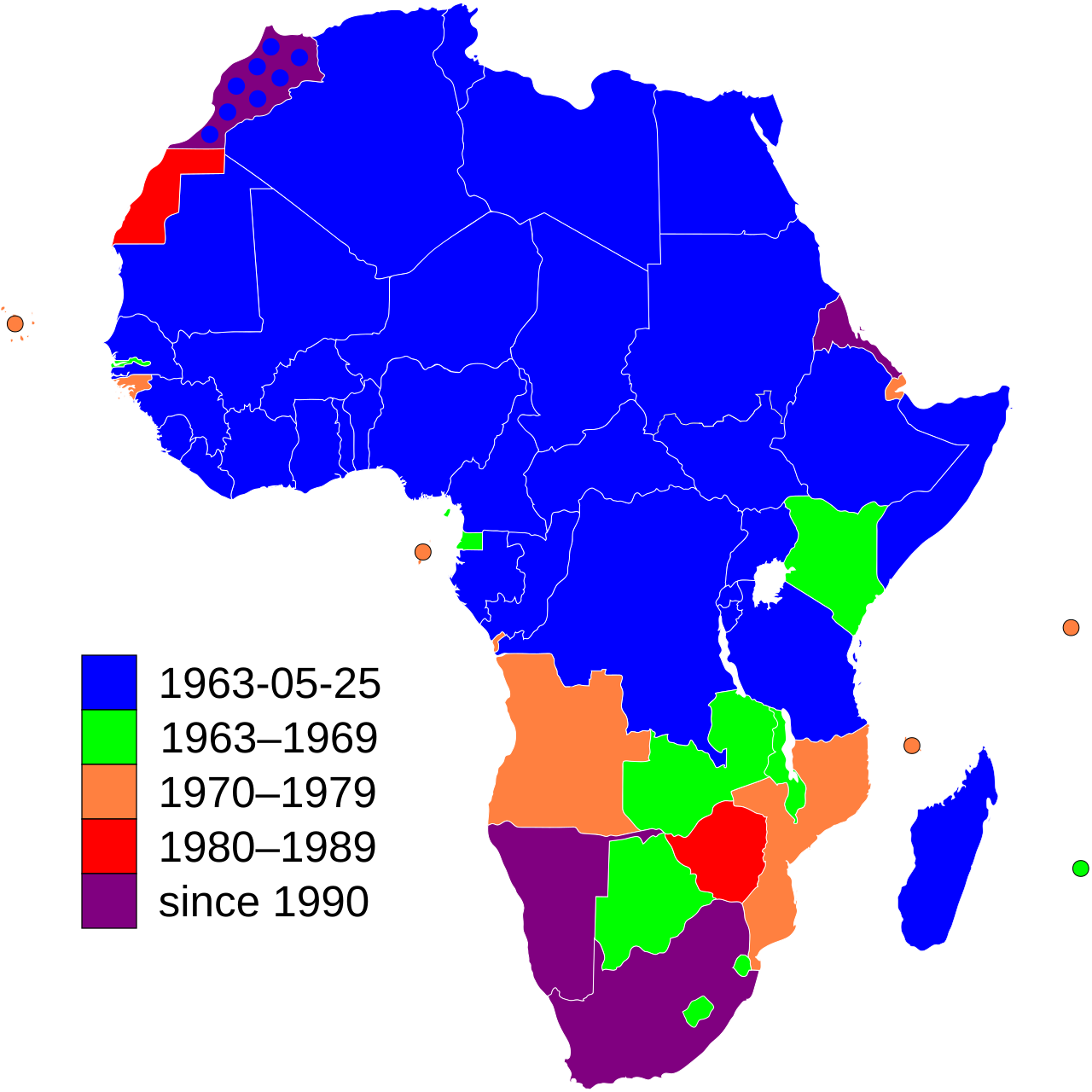
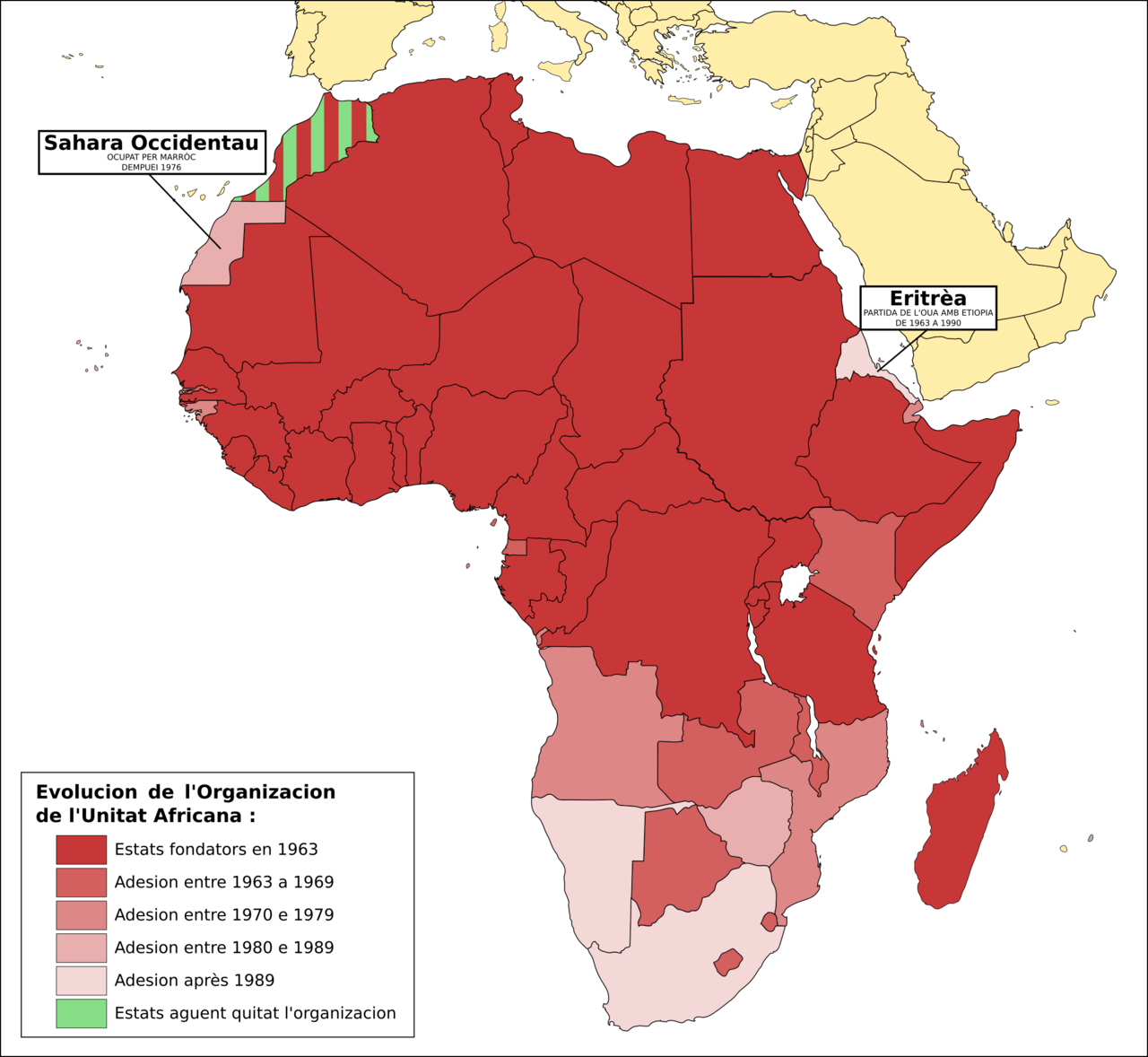
The Organisation of African Unity (OAU) was a continental intergovernmental body founded on 25 May 1963 in Addis Ababa, Ethiopia, by 32 signatory governments. Its main goals were to foster political and economic cooperation among member states and to eliminate colonialism and neo-colonialism across Africa. Without a standing armed force, like United Nations peacekeepers, the OAU had no way to enforce its decisions. It also refused to intervene in the internal affairs of member nations, leading critics to view it as ineffective at taking decisive action. In response to these shortcomings, the OAU issued the Sirte Declaration in September 1999, calling for a new organization to replace it. On 9 July 2002, Zambian president Levy Mwanawasa, then the OAU’s chairman, formally dissolved the body and replaced it with the African Union (AU), which inherited many of the OAU’s founding principles.
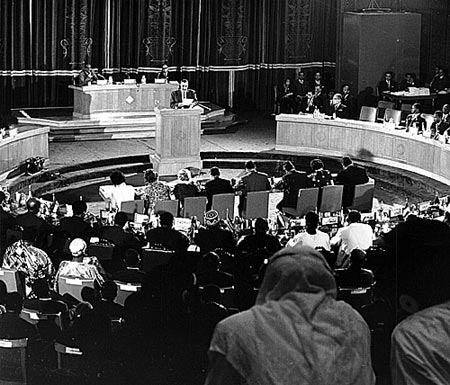
The idea for the OAU began with the Sanniquellie Pledge, made at the First West African Summit Conference in Sanniquellie, Liberia, from 15–19 July 1959. President Tubman of Liberia, President Touré of Guinea, and Prime Minister Nkrumah of Ghana pledged to work toward a "Community of Independent African States." The OAU was formally founded in May 1963 in Addis Ababa by 32 African states, with the aim of uniting the continent and resolving its problems. Its first conference was held from 22 to 25 May 1963 in Addis Ababa. At that meeting, various leaders addressed the member states, warning that European powers had carved up Africa just 75 years earlier, and urging the leaders to agree, save Africa from neo-colonialism, and restore African dignity and stability.
The OAU’s primary aims were to coordinate and intensify cooperation among African states for a better life for their people, and to defend the sovereignty, territorial integrity, and independence of member states. It was also dedicated to eradicating all forms of colonialism and white minority rule, as several states—such as South Africa and Angola—remained under colonial or minority rule at the time. The OAU pursued two strategies: defending the interests of independent countries and aiding the independence of colonized ones, while remaining neutral in world affairs to prevent outside control, especially during the Cold War.
Quick Facts
- Conventional Long Name
- Organisation of African Unity
- Native Name
- Organisation de l'unité africaine
- Common Name
- Organisation for African Unity (OAU)
- Flag Alt
- Flag of the Organisation for African Unity
- Coat Alt
- Emblem of the Organisation for African Unity
- Symbol Type
- Emblem
- National Anthem
- "Let Us All Unite and Celebrate Together"
- Event Start
- Charter
- Year Start
- 1963
- Event End
- Disbanded
- Date End
- 9 July
- Year End
- 2002
Facts from the source article.
Lore & Background
The OAU was founded in May 1963 in Addis Ababa, Ethiopia, by 32 African states, with the main aim of bringing African nations together and resolving issues within the continent. Its inception was preceded by the Sanniquellie Pledge at the First West African Summit Conference in July 1959, where leaders of Liberia, Guinea, and Ghana pledged to work toward a 'Community of Independent African States'. At the first OAU conference, held from 22 to 25 May 1963, various leaders delivered speeches urging member states to ignore outside suggestions and resurrect African dignity.
The OAU had primary aims including coordinating cooperation among African states, defending sovereignty and territorial integrity, and eradicating colonialism and white minority rule.
Reader's Guide
The Organisation of African Unity played a pivotal role in eradicating colonialism and white minority rule in Africa, providing weapons, training, and military bases to rebel groups fighting such rule, including the ANC, PAC, ZANU, and ZAPU. It also worked with the UN to ease refugee problems and set up the African Development Bank for economic projects. However, the OAU was widely criticised as a bureaucratic 'talking shop' with little power, lacking an armed force to enforce decisions and unwilling to intervene in internal affairs of member states. This led to ineffectiveness in stopping civil wars in Nigeria and Angola and human rights abuses under leaders like Idi Amin. Critics dubbed it a 'Dictators' Club' or 'Dictators' Trade Union'. The OAU was also divided by Cold War allegiances and continued dependence on former colonial powers for economic aid. Despite these shortcomings, it successfully brought African states together in the UN to safeguard African interests, and its pursuit of unity was in some ways successful. Recognising its limitations, the OAU issued the Sirte Declaration in September 1999, calling for a new body, and was formally dissolved on 9 July 2002, replaced by the African Union.
Did You Know?
- The OAU was established on 25 May 1963 in Addis Ababa, Ethiopia, with 33 signatory governments.
- At the time of its disbanding, 53 out of 54 African states were members; Morocco left in 1984 after the admission of the Sahrawi Arab Democratic Republic.
- The OAU provided weapons, training, and military bases to rebel groups fighting white minority rule, such as the ANC and ZANU.
- The OAU was replaced by the African Union on 9 July 2002, following the Sirte Declaration of September 1999.
Gallery
Frequently Asked Questions
What was the Organisation of African Unity?
The OAU was a continental intergovernmental organization established on 25 May 1963 in Addis Ababa, Ethiopia, by 32 newly independent African governments. It served as Africa's primary collective forum for political and economic cooperation during the post-colonial era.
What were the OAU's key aims and powers?
The OAU focused on promoting political and economic integration among member states while working to eradicate colonialism and neo-colonialism across the continent. However, it possessed no standing military force and lacked any mechanism to enforce its resolutions, which sharply limited its practical authority.
Why is the OAU important in international and comparative law?
As one of the first major post-colonial regional organizations, the OAU shaped how African states approached sovereignty, non-intervention, and collective security within international legal frameworks. Its principles, particularly the strict non-interference doctrine, remain a standard point of comparison with other regional bodies such as the EU or ASEAN.
What was the main criticism of the OAU's approach to internal affairs?
The OAU's charter enshrined a rigid non-intervention principle, meaning it refused to act on human rights abuses or internal conflicts within member states. Critics argued this rendered the organization largely ineffective at responding to crises, a shortcoming that directly motivated the creation of the more interventionist African Union.
More in International And Comparative Law 1-20
Spotted an error? Know more?
Reader corrections go straight into our review queue. Suggest an edit · How this site is sourced