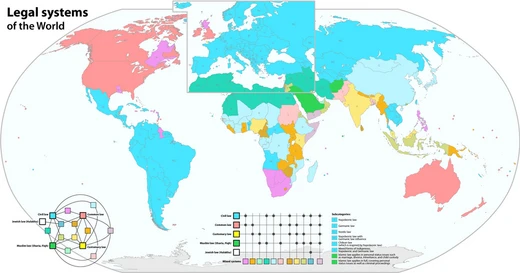
Maastricht Treaty
Foundation treaty establishing the European Union.

Kleon3 · CC BY-SA 4.0
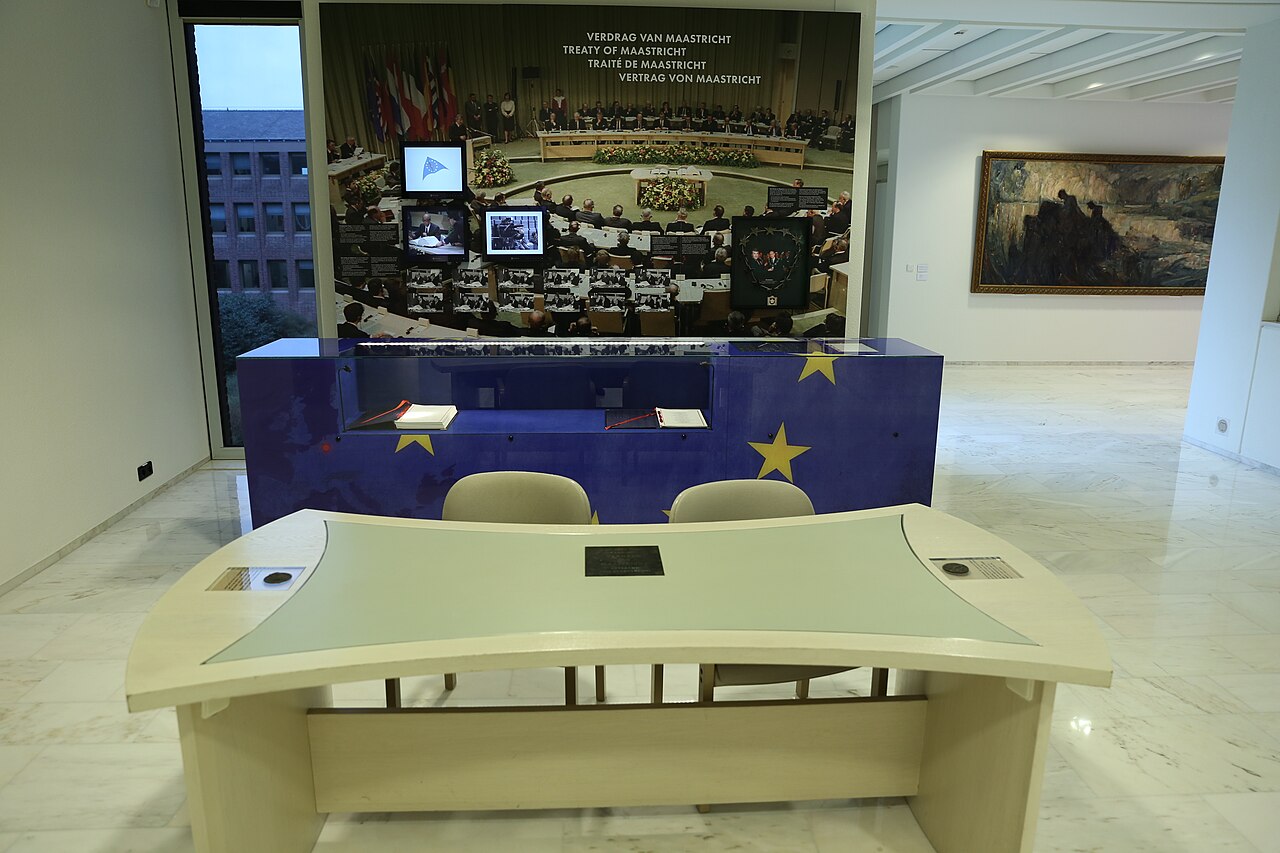
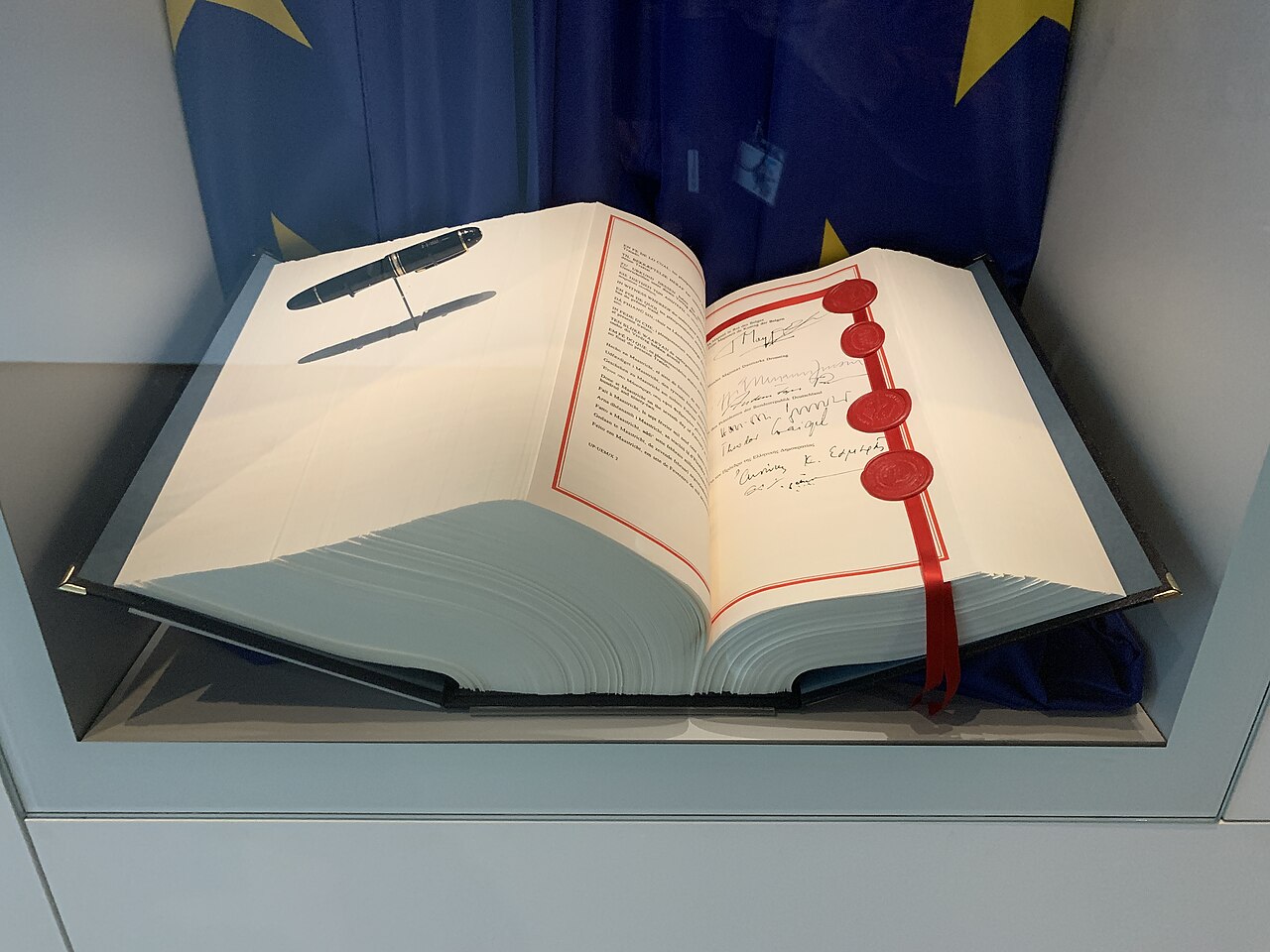
The Maastricht Treaty, formally the Treaty on European Union, is the foundational treaty of the European Union (EU). Concluded in 1992 between the twelve member states of the European Communities, it announced a new stage in European integration, notably through provisions for a shared European citizenship, the eventual introduction of a single currency, and common foreign and security policies. It also strengthened the powers of the European Parliament and introduced more majority voting in the Council of Ministers, though key areas remained inter-governmental.
Quick Facts
- Date Signed
- 1992-02-07
- Location Signed
- Maastricht, Netherlands
- Date Effective
- 1 November 1993
- Amendment
- Edinburgh Agreement (1992) · Treaty of Amsterdam (1999) · Treaty of Nice (2003) · Treaty of Lisbon (2009)
- Signatories
- EU member states
- Depositor
- Government of Italy
- Wikisource
- Consolidated version of the Treaty on European Union
Facts from the source article.
Lore & Background
The Maastricht Treaty was negotiated against the backdrop of the end of the Cold War, German reunification, and anticipated globalisation. It balanced tensions between member states seeking deeper integration and those wanting greater national control, resulting in a compromise that faced the first of several EU treaty ratification crises. The treaty was signed by twelve nations: Belgium, Denmark, France, Germany, Greece, Ireland, Italy, Luxembourg, Portugal, Spain, the Netherlands, and the United Kingdom.
Reader's Guide
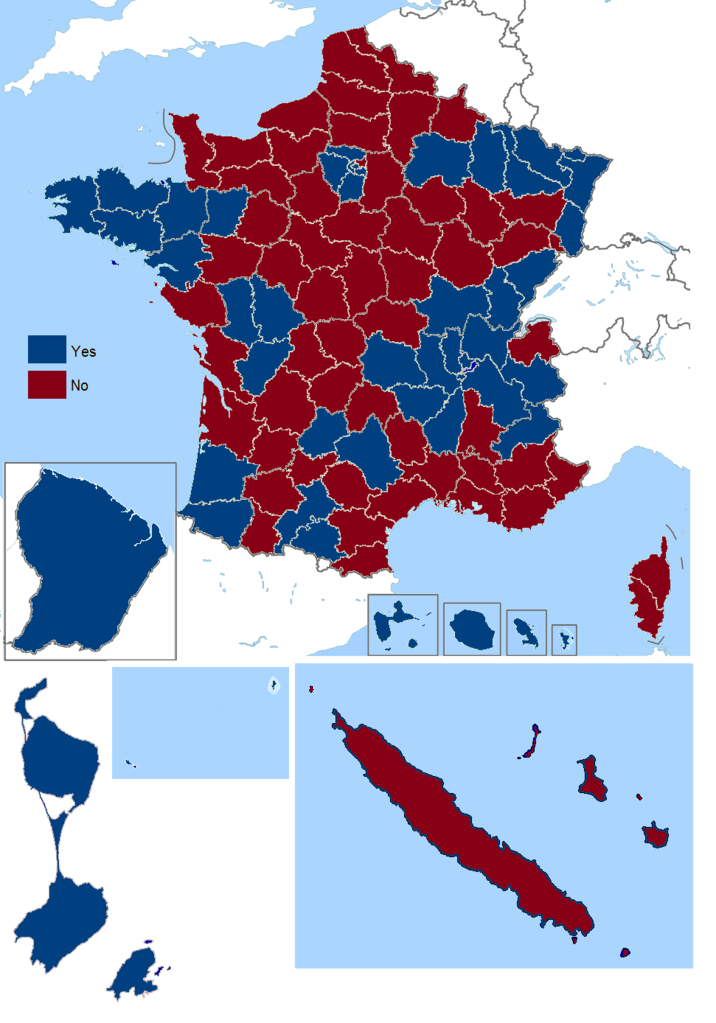
The Maastricht Treaty is significant as the founding document of the European Union, transforming the European Communities into a political and monetary union. Its most enduring legacy, especially after the Eurozone debt crisis from 2009, has been the Maastricht criteria—rules for compliance with the currency union. The treaty introduced European citizenship, set a staged progression toward a single currency, and expanded EU competencies into areas like education, culture, and environment. It also enhanced the European Parliament's powers, including co-decision on legislation and the ability to confirm the European Commission. However, the treaty preserved inter-governmental decision-making in foreign policy and justice, and its ratification was contentious: Denmark initially rejected it, France approved it narrowly, and the UK faced parliamentary turmoil. The treaty's compromises and opt-outs (notably for the UK and Denmark on the single currency) shaped subsequent EU debates, culminating in the 2007 Treaty of Lisbon.
Did You Know?
- The Maastricht Treaty was signed in the Netherlands, in the city of Maastricht, due to the Dutch Presidency of the Council of the European Communities.
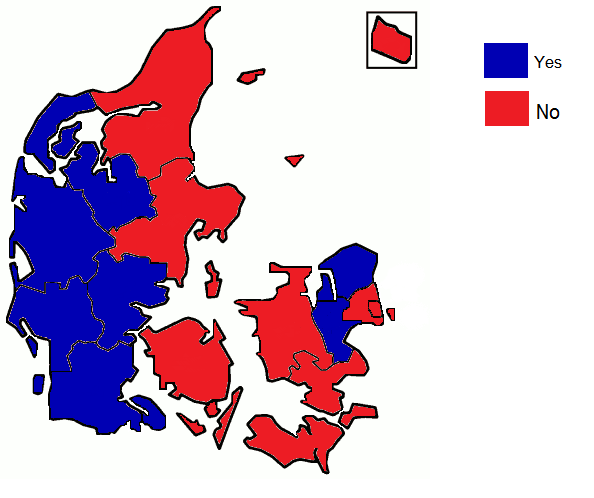
- In the first Danish referendum on 2 June 1992, the treaty was rejected by 50.7% to 49.3%.
- The United Kingdom secured an opt-out from both the Social Policy agreement and the obligation to enter the single currency stage.
- The treaty's ratification in Germany required amending the Grundgesetz and faced a challenge at the Federal Constitutional Court, which ruled it compatible in October 1993.
The Constitutional Crisis That Spawned a New Path
After ten new countries joined the Union in 2004, the existing treaty framework was widely seen as inadequate. The Treaty of Nice had already reformed voting rules to accommodate further enlargement, and the Laeken declaration of late 2001 formally committed EU leaders to boosting democracy, transparency, and efficiency. A European Convention, chaired by former French president Valéry Giscard d'Estaing, was tasked with drafting a comprehensive constitutional text after extensive consultation across the continent. The final draft was approved at a summit in June 2004 under Ireland's rotating presidency and ceremonially signed in Rome in October of that year. However, the Constitution required ratification in every member state, and the process unraveled in 2005. French voters turned it down by a 55 percent margin in late May, followed by a 61 percent rejection in the Netherlands just a week later. Because EU treaty amendments demanded unanimous approval, the entire project was politically dead. A so-called period of reflection followed, during which member states concluded that rather than replacing the existing treaties wholesale, they would instead amend them to incorporate many of the reforms the abandoned constitution had envisioned.
Reshaping the Union's Institutional Architecture
The reform treaty introduced sweeping changes to how the Union governs itself. In at least forty-five policy areas within the Council of Ministers, decisions that previously required every member state's consent could now be taken by qualified majority voting, with the threshold recalculated using a new double-majority formula. The European Parliament was significantly empowered, forming what is effectively a bicameral legislature alongside the Council under a streamlined ordinary legislative procedure. The Union itself gained a single, consolidated legal personality, ending the patchwork of separate legal identities. Two new senior posts were created: a long-term president of the European Council to provide continuity in leadership, and a High Representative for Foreign Affairs and Security Policy to unify the Union's external voice. The Charter of Fundamental Rights, previously a political commitment, was elevated to legally binding status. Perhaps most strikingly, for the first time the treaties explicitly granted member states the legal right to withdraw from the Union and established a formal procedure for doing so.
A Turbulent Path to Ratification
When Germany assumed the rotating Council presidency in early 2007, it declared the post-rejection period of reflection officially over. By the 50th anniversary of the Treaty of Rome in March, all member states had adopted the Berlin Declaration, committing to a new treaty before the 2009 parliamentary elections. Behind the scenes, the Amato Group—formally the Action Committee for European Democracy—had already condensed the 63,000-word, 448-article constitutional draft into a leaner 12,800-word, 70-article reform text. A tight timeline was set: an intergovernmental conference in Lisbon in July, final agreement in October, and signing on 13 December 2007, with entry into force targeted for 1 January 2009. The signing took place as planned, but the ratification schedule quickly collapsed. In June 2008, Irish voters rejected the treaty in a referendum, and because unanimity was required, the entire instrument was blocked. Ireland held a second referendum in October 2009, this time approving the treaty after securing specific concessions. The reform treaty finally entered into force on 1 December 2009, more than a year behind its original target.
The Democracy Debate: Centralization or Checks and Balances?
The treaty's stated purpose was to complete the reform trajectory begun by the Treaty of Amsterdam in 1997 and the Treaty of Nice in 2001, with the explicit goals of enhancing the Union's efficiency, strengthening its democratic legitimacy, and improving the coherence of its collective action. Yet the measure drew sharply divided reactions. Critics, including former Danish MEP Jens-Peter Bonde, warned that the reforms would push the Union further toward centralization and erode democratic accountability by shifting decision-making power away from national electorates and their parliaments. They saw the expanded role of supranational institutions as a threat to the sovereignty that citizens had entrusted to their own governments. Supporters, by contrast, framed the changes as a strengthening of democratic safeguards rather than a dilution of them. They pointed to the enhanced legislative powers of the directly elected European Parliament, the new formal role given to national parliaments in the legislative process, and the broader checks-and-balances architecture as evidence that the treaty made the Union more, not less, accountable to its citizens.
Gallery
Frequently Asked Questions
What is the Maastricht Treaty?
It is the founding treaty that formally created the European Union as a distinct entity, signed on 7 February 1992 in the Dutch city of Maastricht by the twelve member states of the European Communities. It pushed European integration well beyond the earlier Community framework by introducing shared European citizenship, a roadmap toward a single currency, and a coordinated foreign-and-security policy.
What key powers and structures did the Maastricht Treaty introduce?
The treaty expanded the European Parliament's legislative role and shifted more Council of Ministers decisions from unanimity to majority voting. It also established a common foreign and security policy and set the stage for a single European currency, while deliberately leaving certain sensitive policy areas firmly in the hands of individual national governments.
Why did ratification of the Maastricht Treaty cause so much trouble?
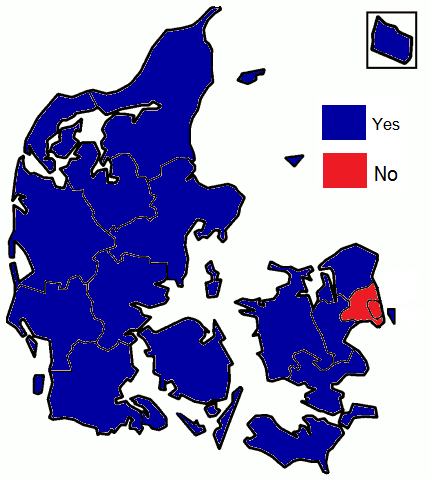
Denmark rejected the treaty in its first referendum, forcing a second vote after Brussels negotiated opt-outs, and France approved it by a razor-thin margin. The United Kingdom also secured special dispensations, opting out of both the social-policy chapter and the single-currency commitment.
Who signed the Maastricht Treaty and when did it take effect?
All twelve member states of the European Communities signed the treaty on 7 February 1992 in Maastricht, the Netherlands. After the sometimes contentious national ratification processes, it entered into force on 1 November 1993.
Why does the Maastricht Treaty still matter in comparative law today?
It remains the constitutional backbone of the EU, so its provisions on citizenship, institutional powers, and the split between community-level and intergovernmental methods still shape how the bloc legislates and how courts interpret its legal order. Comparative-law students routinely study it as a landmark example of a multi-layered supranational system built by treaty rather than by a single national constitution.
More in International And Comparative Law 1-20
Spotted an error? Know more?
Reader corrections go straight into our review queue. Suggest an edit · How this site is sourced