Mercosur
South American trade bloc promoting free movement and regional integration.

User:Kimdime · Public domain
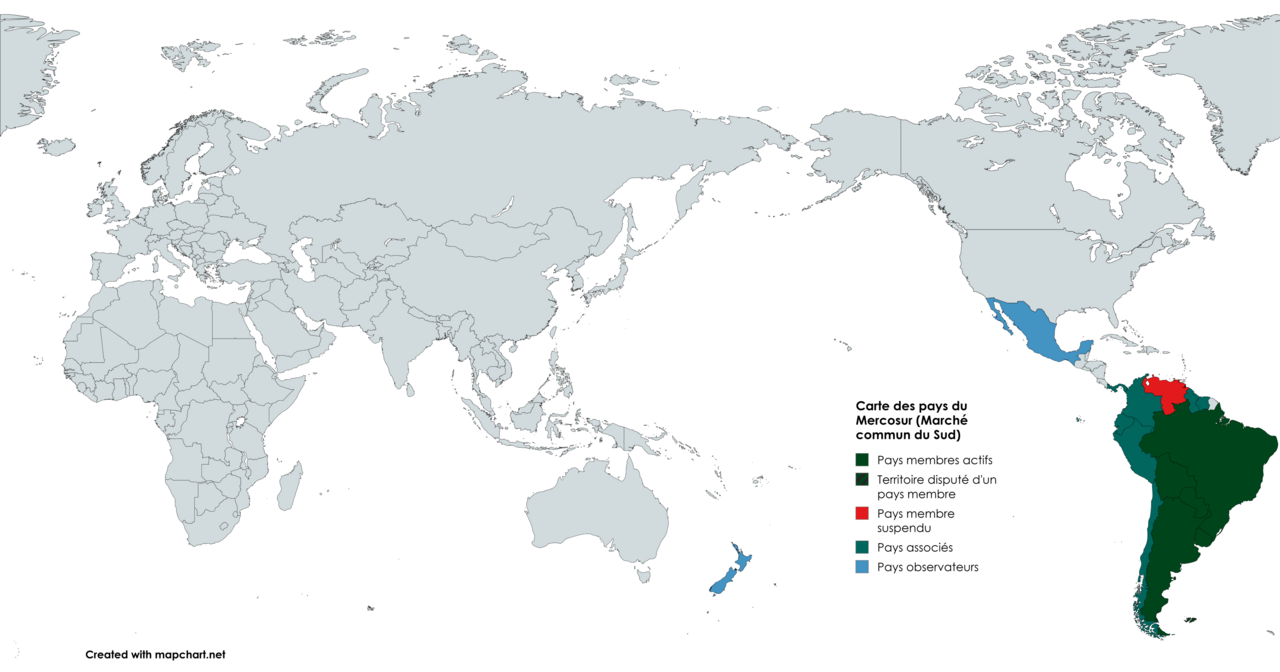
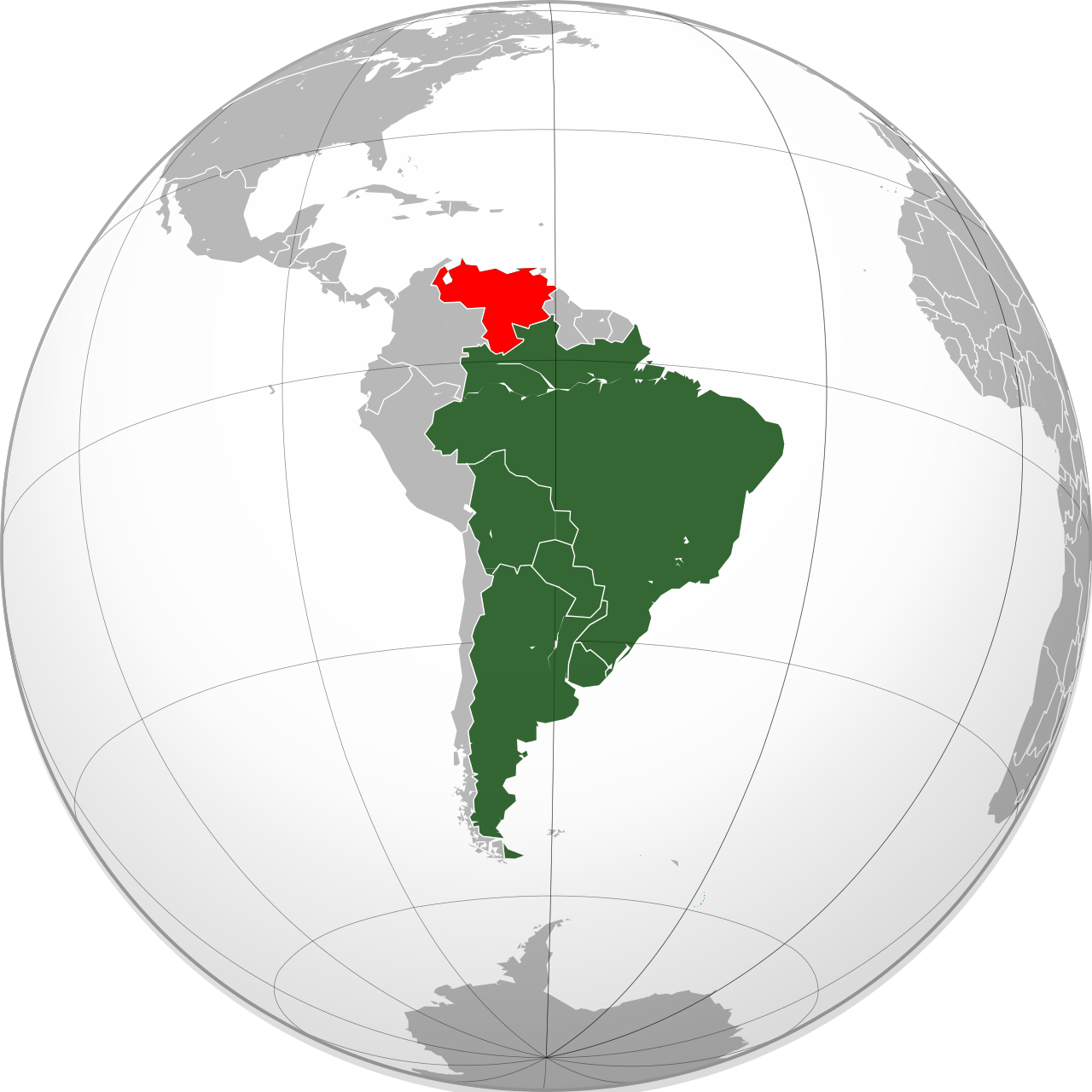
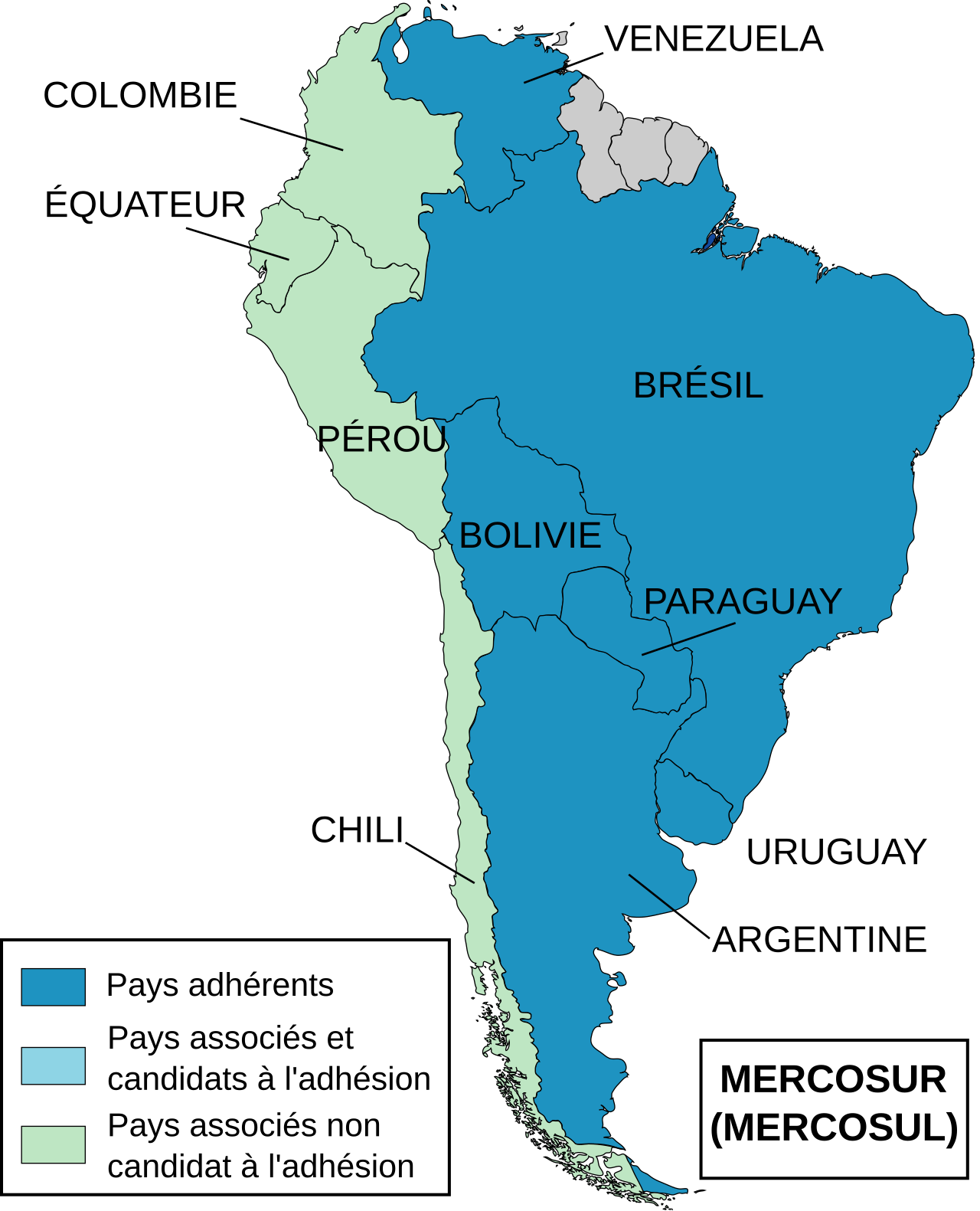
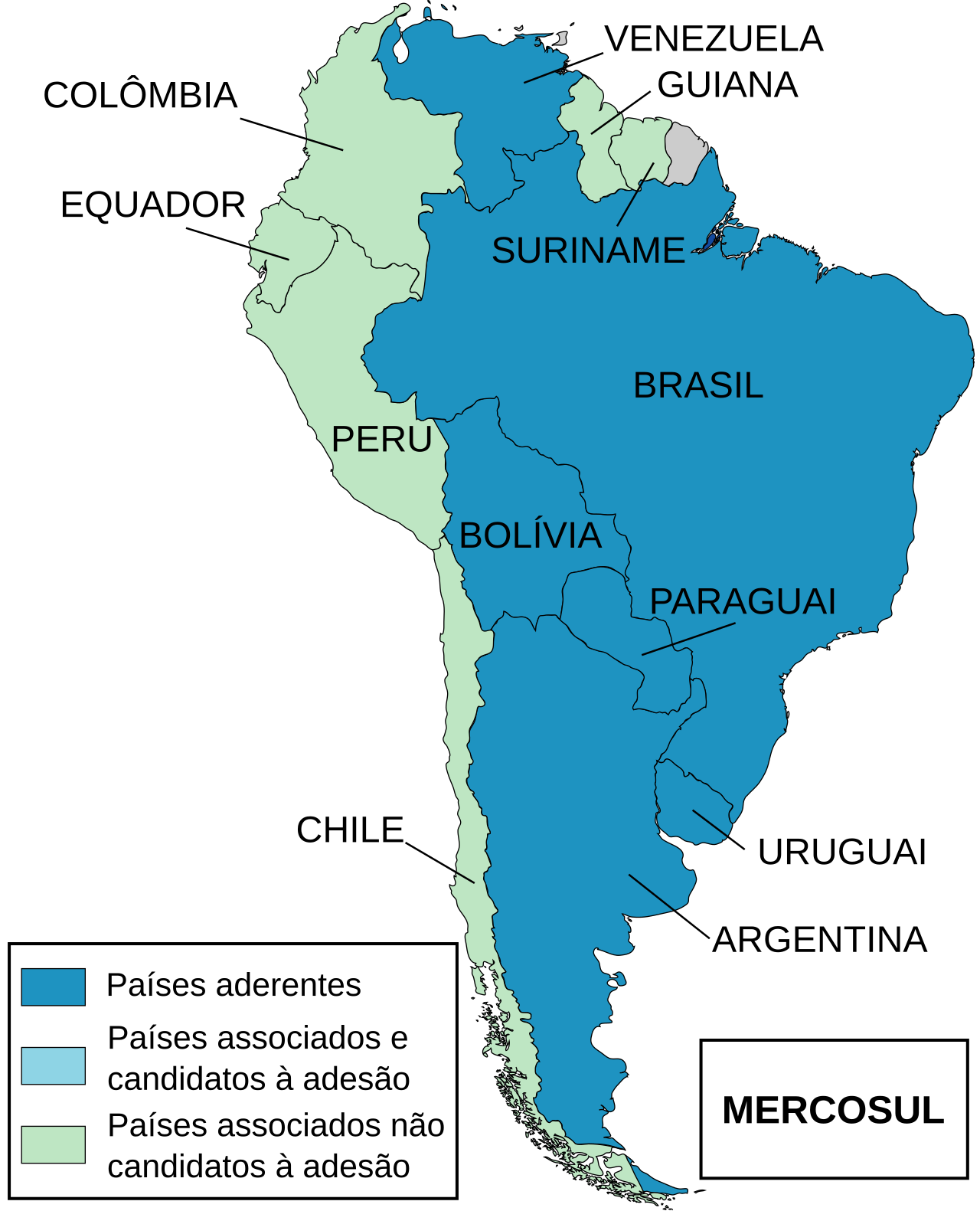
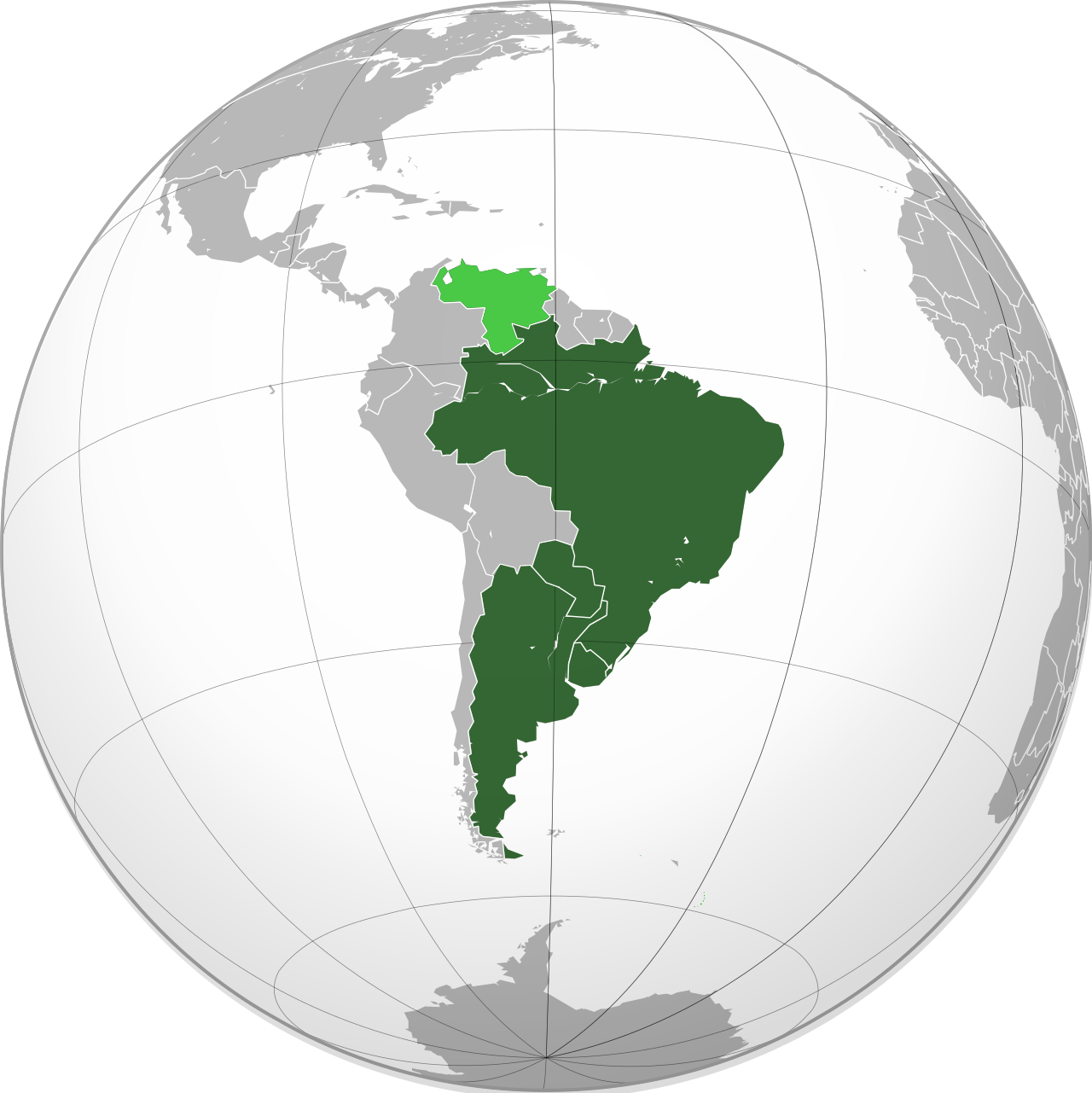
The Southern Common Market, known as Mercosur in Spanish and Mercosul in Portuguese, is a South American trade bloc established by the Treaty of Asunción in 1991 and the Protocol of Ouro Preto in 1994. Its full members are Argentina, Brazil, Paraguay, and Uruguay, with Bolivia having joined as a full member in 2023; Venezuela has been suspended since 2 December 2016. Associate members include Chile, Colombia, Ecuador, Peru, and historically Bolivia before its full membership. Mercosur's origins trace back to earlier Latin American integration efforts, including the 1960 Latin American Free Trade Association and the 1985 Iguaçu Declaration between Argentina and Brazil, leading to a customs union that began on 1 January 1995.
Quick Facts
- Conventional Long Name
- Southern Commmon Market
- Linking Name
- Mercosul
- Flag Type
- Spanish (left) and Portuguese (right) flag of Mercosur
- Recognized Languages
- Portuguese · Spanish · Guarani
- Flag Width
- 250
- Admin Center Type
- Headquarters and capital city
- Admin Center
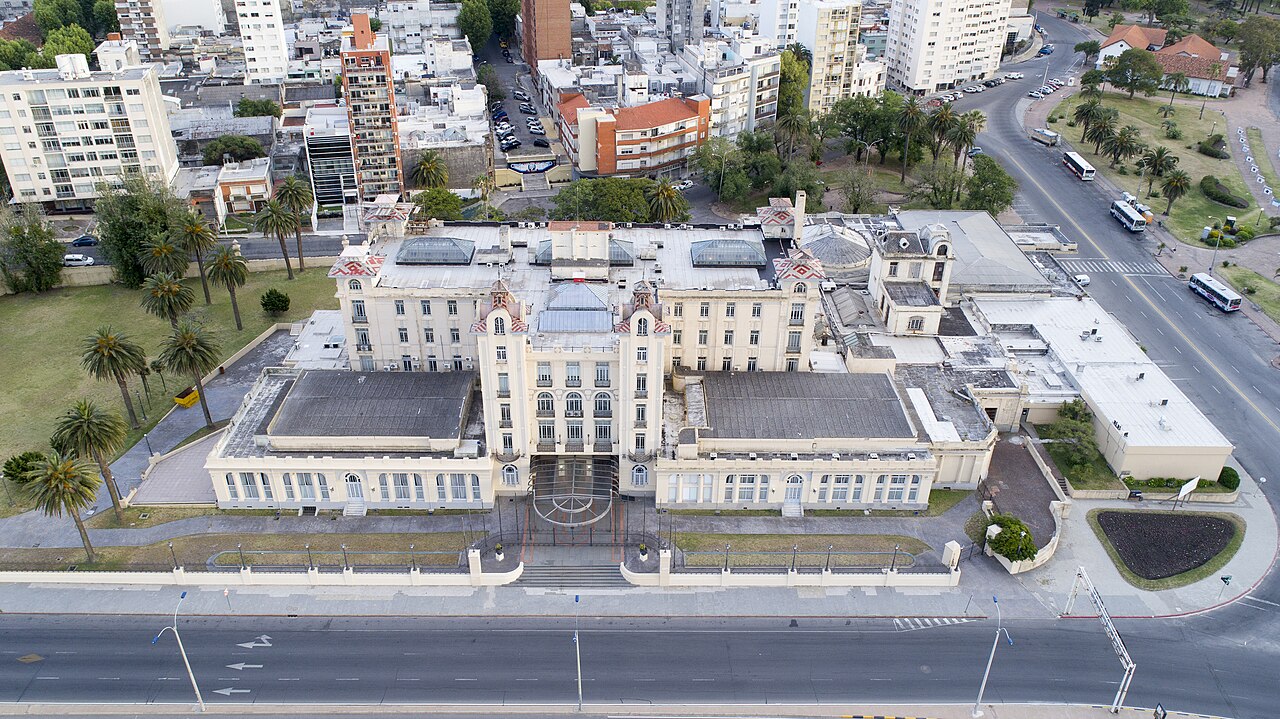
- Montevideo
- Largest Settlement Type
- city
- Largest Settlement
- São Paulo
- Org Type
- Intergovernmental organization and customs union
Facts from the source article.
Lore & Background
Mercosur's origins are linked to discussions for a regional economic market in Latin America, going back to the 1960 Latin American Free Trade Association, succeeded by the Latin American Integration Association in the 1980s. Argentina and Brazil made progress with the 1985 Iguaçu Declaration, establishing a bilateral commission, followed by trade agreements and the 1988 Integration, Cooperation and Development Treaty, which set the goal of a common market. Paraguay and Uruguay joined, and the four countries signed the Treaty of Asunción in 1991, creating a free trade zone that became a customs union on 1 January 1995, with a common external tariff.
Reader's Guide
Mercosur's significance lies in its role as a major economic bloc in South America, generating a nominal GDP of around 5.7 trillion US dollars in 2023, ranking as the 5th largest economy in the world. It functions as a customs union with free intra-zone trade and a common trade policy, and it prioritizes deeper regional integration, including free movement of people, supported by a 2014 agreement with the International Organization for Migration. The bloc's legacy includes its evolution from earlier integration attempts, such as the 1960 Latin American Free Trade Association, and its ongoing influence on regional trade and cooperation, despite challenges like Venezuela's suspension.
Did You Know?
- Venezuela has been a full member but suspended since 2 December 2016.
- The bloc's nominal GDP in 2023 was approximately 3.5–4 trillion US dollars.
- Mercosur's origins include the 1985 Iguaçu Declaration between Brazil and Argentina.
From Rivalry to Partnership: The Road to Asunción
South America's southern cone spent much of the nineteenth century locked in conflict — the Cisplatine War, the Paraguayan War, Argentine internal disputes, and the Uruguayan Great War all underscored how divided the region's nations remained. Even in 1941, Brazil and Argentina attempted a customs union, but diplomatic tensions over Axis policies derailed the effort. After the war, economic blocs proliferated globally, yet Latin America still lacked one that delivered results. The breakthrough arrived in December 1985, when Brazilian president José Sarney and Argentine president Raúl Alfonsín signed the Iguaçu Declaration. Both nations had just emerged from military dictatorships, burdened by enormous external debt and shut out of foreign credit. Their shared desperation made cooperation feel less like abstraction and more like survival. Private meetings in Don Torcuato and Itaipava produced the Argentina-Brazil Integration and Economic Cooperation Program. The 1988 Integration, Cooperation, and Development Treaty set the goal of a common market open to other Latin American states. By July 1990, presidents Collor and Menem signed the Buenos Aires Act, committing to customs integration by 1994. Paraguay and Uruguay, sensing momentum, joined the process, and in 1991 the four nations formalized the bloc through the Treaty of Asunción.
Architecture of the Bloc: Membership and Structure
Mercosur rests on two foundational legal instruments: the Treaty of Asunción of 1991 and the Protocol of Ouro Preto of 1994, which together define the rules, conditions, and institutional framework of the Southern Common Market. Today the bloc counts five full members — Argentina, Bolivia, Brazil, Paraguay, and Uruguay — while Venezuela, though technically a full member, has been suspended since 1 December 2016. A broader circle of associate countries includes Chile, Colombia, Ecuador, Guyana, Panama, Peru, and Suriname, giving the organization reach well beyond its core. The economic architecture evolved in stages. At inception, the signatories created a free trade zone in which no member could tax or restrict imports from another. On 1 January 1995 that arrangement matured into a customs union: all members now apply an identical common external tariff to goods entering from outside the bloc. Bolivia and Chile entered the structure that same year, the former as a full member and the latter as an associate. Other Latin American nations have since expressed interest in joining, a testament to the bloc's gravitational pull.
Economic Weight and the Promise of Integration
By 2023, Mercosur generated a nominal annual gross domestic product of roughly 5.7 trillion US dollars at purchasing-power parity, a figure that places the bloc as the fifth-largest economy on the planet. It also scores very high on the human development index, suggesting that its economic scale is matched by meaningful gains in living standards across member states. The organization's core mandate is to promote free trade within the zone and ensure the fluid movement of goods, people, and currency among members. In practice, Mercosur currently confines itself to functioning as a customs union, guaranteeing free intra-zone trade and a unified external trade policy. Beyond pure commerce, the bloc has prioritized deeper regional integration. A landmark December 2014 agreement with the International Organization for Migration underpins the free movement of people across borders, reinforcing the idea that economic partnership and human mobility are intertwined pillars of the Southern Common Market's identity.
A Long Arc of Latin American Integration
Mercosur did not emerge from a vacuum. Its intellectual roots stretch back to the 1960 treaty that created the Latin American Free Trade Association, which was later succeeded by the Latin American Integration Association in the 1980s. Before the independence of South American nations, commercial and political ties were largely mediated by the Spanish Empire, which actively prohibited significant trade with Brazil. The nineteenth century of wars and competing nationalisms left deep scars, and even the post-World War II wave of economic blocs failed to produce a satisfactory Latin American union. For many observers, the idea of regional integration in South America long resembled an abstraction, given the string of unsuccessful predecessors. Yet the Iguaçu Declaration and the steps that followed were perceived as genuinely different — driven not by idealism alone but by the concrete, shared pain of external debt and credit exclusion. Functions and rules have been updated and amended many times since 1991, reflecting a bloc that continues to evolve rather than a static institution frozen at its founding.
Gallery
Frequently Asked Questions
What is Mercosur?
Mercosur (Mercosul in Portuguese) is a South American trade bloc designed to promote the free movement of goods, services, and people among its member states. It was formally created by the 1991 Treaty of Asunción and later restructured through the 1994 Protocol of Ouro Preto.
Which countries are full members of Mercosur?
The core full members are Argentina, Brazil, Paraguay, and Uruguay, with Bolivia completing its accession as a full member in 2023. Venezuela has been suspended from the bloc since 2 December 2016.
What powers or functions does Mercosur actually exercise?
Mercosur operates as a customs union that coordinates trade policy, sets a common external tariff, and works toward broader economic and political integration across the region. It is not a supranational government; rather, it provides an institutional framework for member states to harmonize commercial and regulatory approaches.
Why does Mercosur matter in international and comparative law?
It stands as one of the most ambitious regional integration projects in the Global South, blending trade liberalization with multilateral institutional cooperation. With a combined nominal GDP estimated around 3.5 to 4 trillion USD, the bloc wields substantial influence in global trade negotiations.
How does full membership differ from associate membership in Mercosur?
Full members take part in all decision-making bodies and must apply the bloc's common external tariff, whereas associate countries such as Chile, Colombia, Ecuador, and Peru enjoy preferential trade access without full voting rights or tariff obligations. Bolivia held associate status before transitioning to full membership in 2023.
More in International And Comparative Law 1-20
Spotted an error? Know more?
Reader corrections go straight into our review queue. Suggest an edit · How this site is sourced