Indianapolis Motor Speedway
The Racing Capital of the World

via Wikipedia: Indianapolis Motor Speedway · see source
The Indianapolis Motor Speedway is a motor racing circuit located in Speedway, Indiana, United States, an enclave suburb of Indianapolis, Indiana. It is the home of the Indianapolis 500 and the Brickyard 400, and formerly the home of the United States Grand Prix and the Indianapolis motorcycle Grand Prix. It is located west of Downtown Indianapolis. Constructed in 1909, it is the second purpose-built, banked oval racing circuit after Brooklands and the first to be called a 'speedway'. It was the brainchild of entrepreneur Carl G. Fisher, who envisioned a proving ground for the budding automobile industry. It is the third-oldest permanent automobile race track in the world, behind Brooklands and the Milwaukee Mile. With a permanent seating capacity of 257,325, it is the highest-capacity sports venue in the world.
Quick Facts
- Nicknames
- The "Brickyard"; IMS
- Address
- 4790 West 16th Street
- Location
- Speedway, Indiana
- Capacity
- 257,325 (permanent seats) – 400,000 grand total
- Operator
- IMS, LLC (subsidiary of Penske Entertainment Group)
- Broke ground
- March 15, 1909
- Opened
- August 14, 1909
- Construction cost
- US$3 million ($86 million 2021 dollars)
Lore & Background
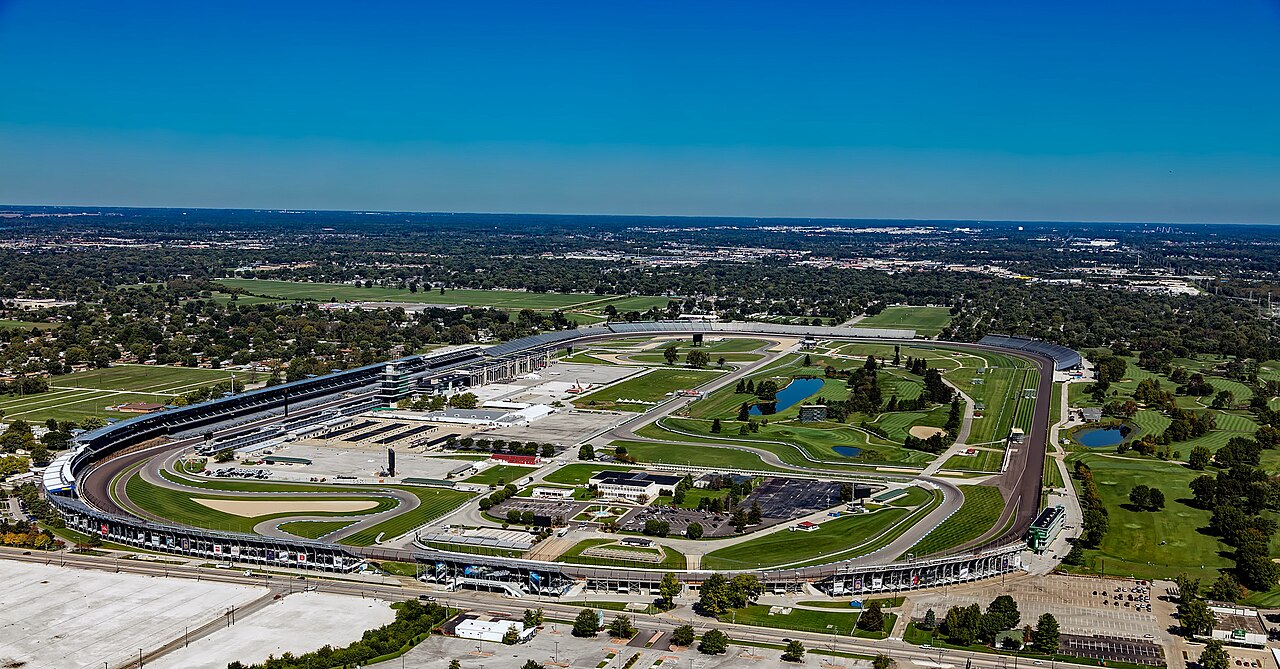
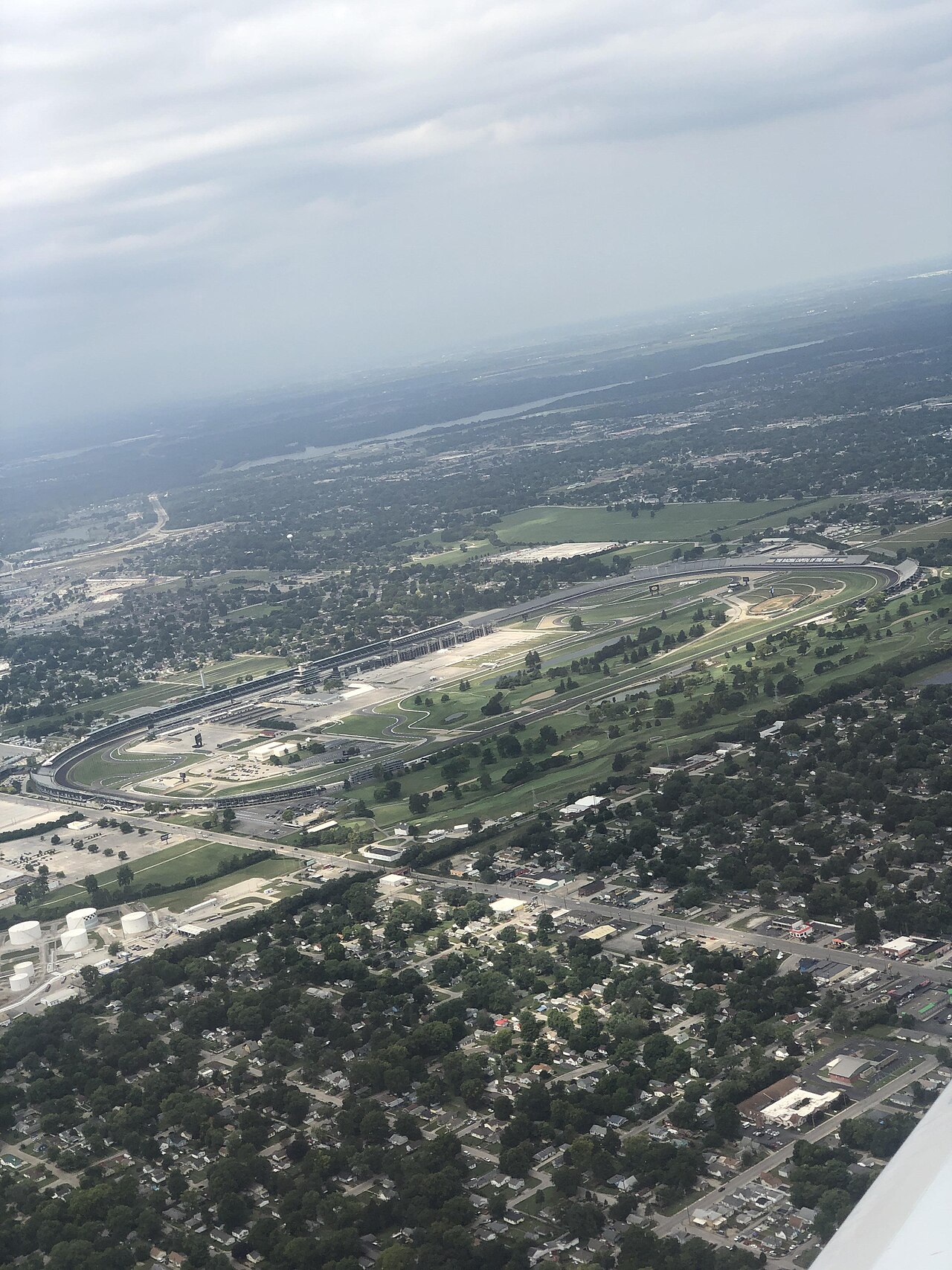
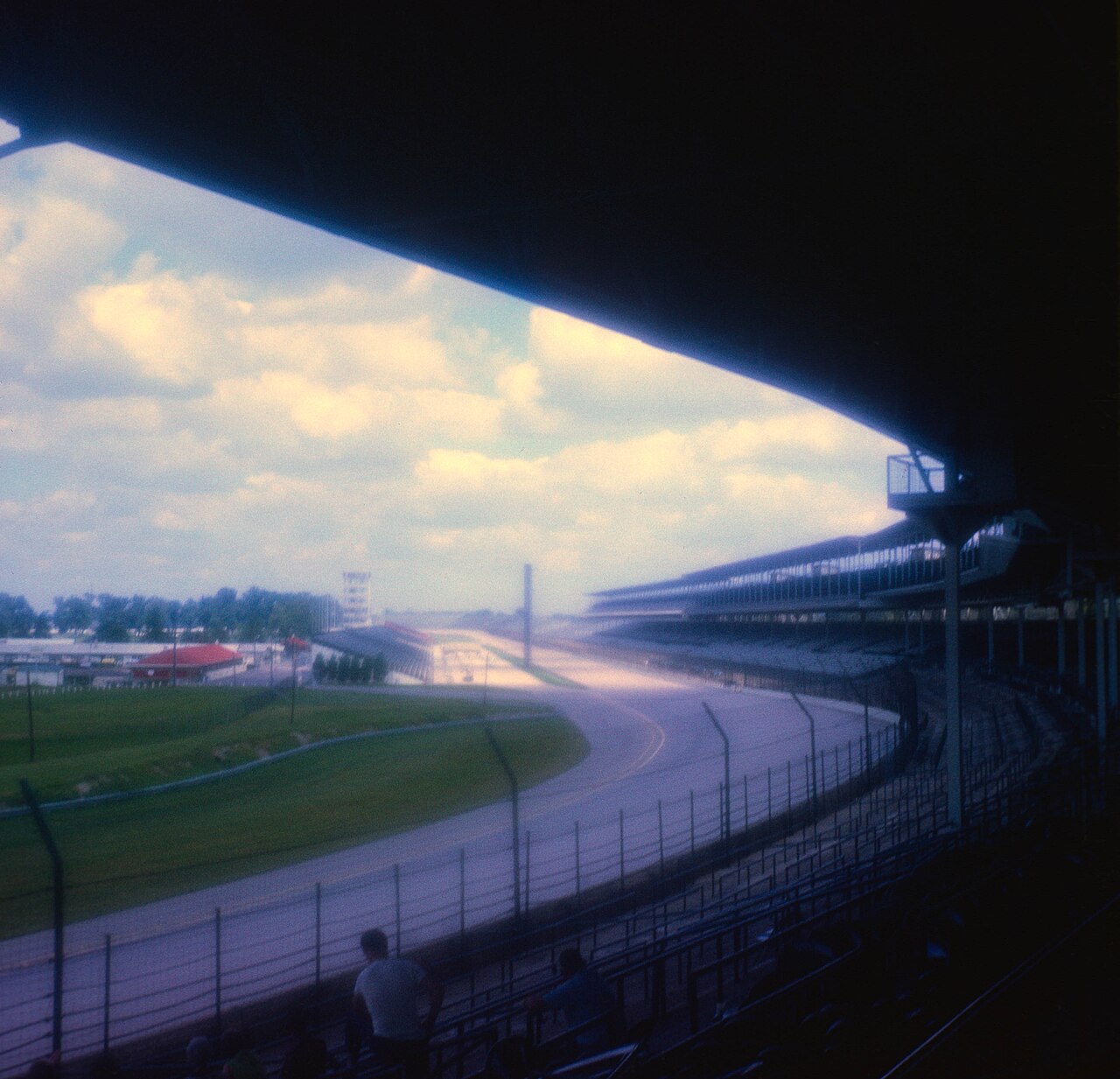
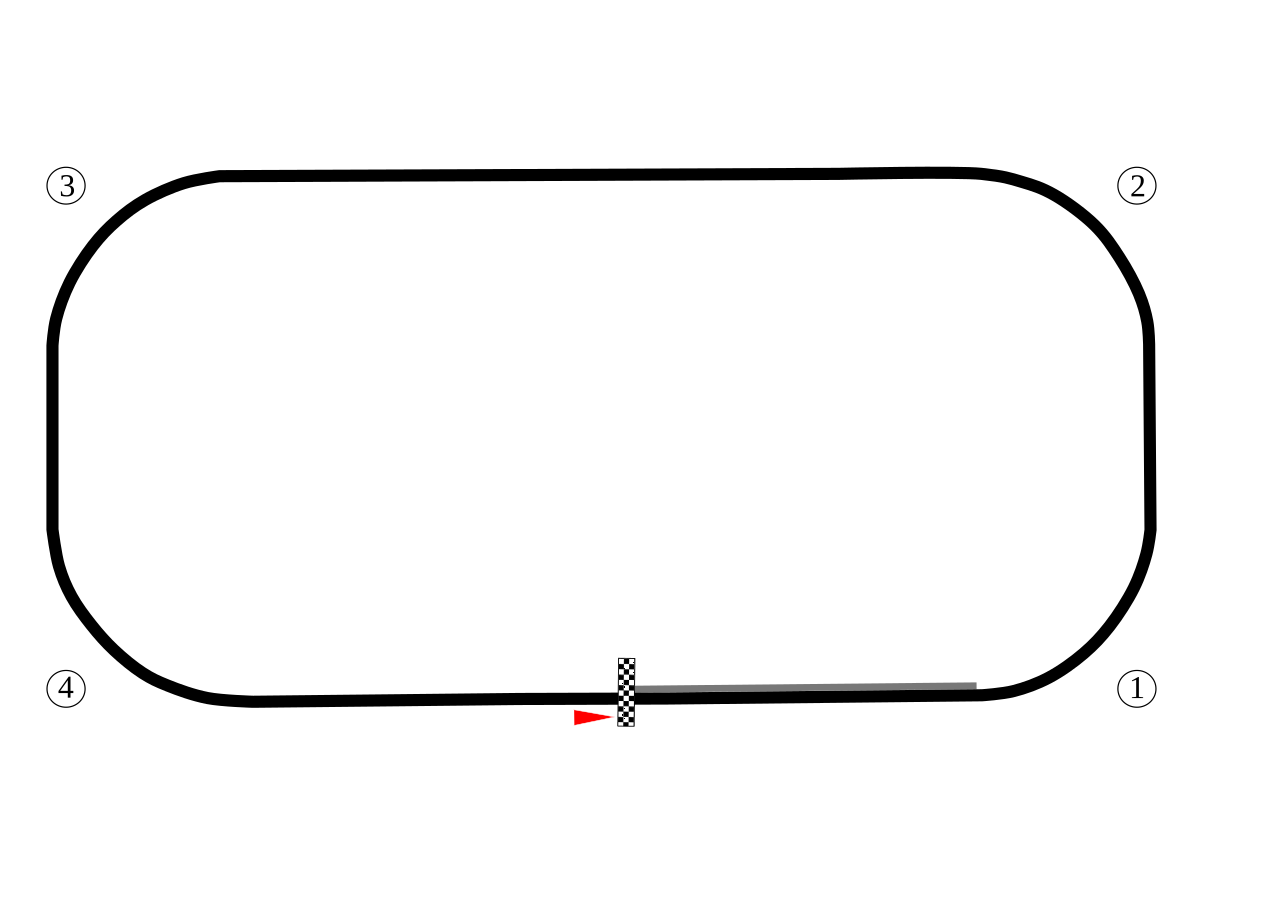
The track is a rectangular oval with dimensions that have remained essentially unchanged since its construction. It has two straightaways, four geometrically identical turns, connected by two short straightaways, termed 'short chutes', between turns 1 and 2, and between turns 3 and 4. The turns have 9°12' banking, considered relatively flat by American standards. A modern, FIA Grade One infield road course was completed in 2000, incorporating part of the oval, including the main stretch and the southwest turn.
In 2008, and again in 2014, the road course layout was modified to accommodate motorcycle racing, as well as to improve competition. Altogether, the current grounds have expanded from an original on which the speedway was first built to cover an area of over. Placed on the National Register of Historic Places in 1975 and designated a National Historic Landmark in 1987, it is the only such site to be affiliated with automotive racing history. In addition to the Indianapolis 500, the speedway also hosts NASCAR's Brickyard 400 and Pennzoil 250.
From 2000 to 2007, the speedway hosted the Formula One United States Grand Prix, and from 2008 to 2015 the Moto GP. The speedway served as the venue for the opening ceremonies for the 1987 Pan American Games. On the grounds of the speedway is the Indianapolis Motor Speedway Museum, which opened in 1956, and houses the Hall of Fame. The museum moved into its current building located in the infield in 1976.
Also on the grounds is the Brickyard Crossing Golf Resort, which originally opened as the Speedway Golf Course in 1929. The golf course has 14 holes outside the track, along the backstretch, and four holes in the infield. The site is among the most visited attractions in the Indianapolis metropolitan area, with 1 million guests annually. The track is nicknamed 'The Brickyard', and the venue self-describes as the 'Racing Capital of the World'.
The garage area is known as Gasoline Alley, though Indy 500 racecars have used methanol and currently ethanol. The Speedway is owned by Penske Entertainment group which is 67% controlled by Roger Penske's company Penske Corporation, with Fox Corporation owing a 33% stake in the company since July 2025, following its 2019 purchase of Hulman & Company and its assets, which included the Speedway, the IndyCar Series, and associated enterprises. Carl G.
Reader's Guide
The first event ever held at the speedway was a helium gas-filled balloon competition on Saturday, June 5, 1909, more than two months before the oval was completed. The event drew a reported 40,000 people. Nine balloons lifted off 'racing' for trophies; a balloon by the name of Universal City won the race, landing away in Alabama after spending more than a day aloft. The first motorsport event at the track consisted of seven motorcycle races, sanctioned by the Federation of American Motorcyclists (FAM), on August 14, 1909.
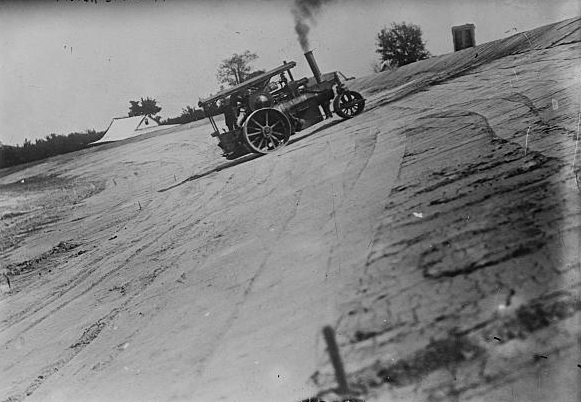
This was originally planned as a two-day, 15-race program, but ended before the first day was completed due to concerns over suitability of the track surface for motorcycle use. On August 19, 1909, fifteen carmakers' teams arrived at the track for practice. The track surface again became a concern with drivers being covered in dirt, oil, and tar and with ruts and chuckholes beginning to form in the turns. Speedway workers oiled and rolled the track prior to the gates opening to the public.
Fifteen to twenty thousand spectators showed up, paying at the most $1 for a ticket. Louis Schwitzer won the first race held, a 5-mile, two lap event. Halfway through the first event, race leader Louis Chevrolet was temporarily blinded when a stone smashed his goggles. William Bourque, driving in a Knox, suffered a suspected rear-axle failure resulting in his car flipping end over end on the front stretch before crashing into a fence post.
Both he and his mechanic, Harry Halcomb, died at the scene. The first day of car racing resulted in four finishes and two land speed records, but concerns over safety led AAA officials to consider canceling the remaining events. Fisher promised the track would be repaired by the next day and convinced officials that the show should go on. The second day saw 20,000 spectators, no major incidents, and additional speed records broken.
On the third day of racing, 35,000 spectators showed up to watch the grand finale race. At into the race, the right front tire blew on Charlie Merz's car.
Gallery
Frequently Asked Questions
What is the Indianapolis Motor Speedway?
Located in Speedway, Indiana, this 2.5-mile oval is the home of the Indianapolis 500. Originally constructed in 1909 to test early automobiles, it has hosted the legendary Indianapolis 500 every year since 1911.
What is unique about the track surface at Indianapolis?
While most of the circuit is paved with asphalt, the start/finish line retains a historic strip of original brick known as the 'Yard of Bricks.'
When did the Indianapolis Motor Speedway first open?
The facility officially opened its gates in 1909, initially functioning as a proving ground for the burgeoning automobile industry before becoming a permanent race track. The inaugural running of the Indianapolis 500 took place two years later in 1911.
What is the total length of the Indianapolis Motor Speedway oval?
The track measures exactly 2.5 miles, or approximately 4.023 kilometers, forming a rectangular shape that has remained unchanged for over a century. This specific distance defines the grueling challenge drivers face during the 500-mile race.
More in Tracks & Culture
Elsewhere in IndyCar
Spotted an error? Know more?
Reader corrections go straight into our review queue. Suggest an edit · How this site is sourced