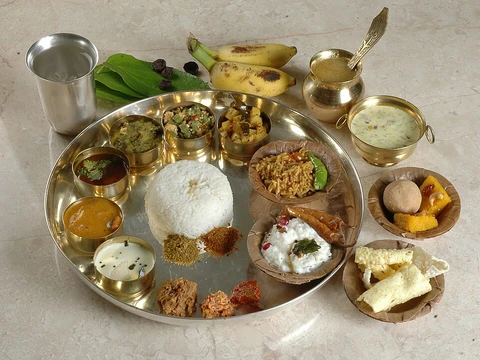
Sikkimese cuisine
Rice, millet, and fermented foods define Sikkimese cuisine.
Last updated
Sikkimese cuisine comprises dishes representative of the Indigenous peoples of Sikkim, with rice as the staple food. Millet and fermented foods have traditionally formed a significant portion of the diet. The cuisine is notable for its Nepalese influence, as Sikkim is the only Indian state with an ethnic Nepali majority, and for its Tibetan influences.
Quick Facts
- Cardamom production
- about 4200 tons annually
Facts from the source article.
Influences
The Lepchas and Limbus, likely arriving in the 13th century CE, are the earliest known inhabitants of Sikkim. The Bhutia people from Tibet later arrived and established the Kingdom of Sikkim. The British also encouraged Marwaris and Biharis to settle for trade and labour. The cuisines of these communities, adapted to local realities and availability, constitute Sikkimese cuisine.
Sikkim lies within the Eastern Himalayas Biodiversity hotspot, and traditional cuisines of the Lepcha, Limbu, Magar, and Bhutia peoples incorporate the region's rich biodiversity. The Buddhist saint Padmasambhava, also known as Guru Rinpoche, who passed through ancient Sikkim in the eighth century, noted the rich produce, including about 155 varieties of fruits, a walnut that tastes like butter, a fruit called wallay, a grape with the taste of wine, fruits called tingding with the taste of meat, and sedey, which can be eaten as an entire meal.
Sikkim is also part of the Kangchenjunga Landscape spanning Nepal, India, and Bhutan. The state lay on the ancient Silk Road connecting China via Tibet, and centuries of trade, migration, and political annexation along this road have influenced its cuisine, as have British colonial and Indian post-colonial culture.
Agriculture
Sikkim's economy is largely agrarian, but its mountainous terrain makes much land unsuitable for farming, so terrace farming, particularly of rice, is common. Other cereal crops include wheat, maize, barley, and millet. Potatoes, ginger, oranges, tea, and cardamom are also cultivated; Sikkim produces the most cardamom of any Indian state, about 4200 tons annually.
Vegetables commonly grown include tomatoes, broccoli, and iskus. Livestock, including cattle, sheep, goats, pigs, and yaks, plays a subsidiary role in agriculture, though dairy and meat and egg products are common in the diet. In 2016, Sikkim became India's first organic state after fully converting its agricultural land to sustainable farming practices.
Fermented foods and common dishes
In Sikkim, fermented foods make up about 12.6 percent of what people eat, and most households—67.7 percent—prepare these foods themselves instead of buying them. The main exceptions are chhurpi and marchaa, a starter culture, which are typically purchased at markets.
To make alcoholic drinks, marchaa is added to grains like millet, rice, or maize, then the mixture undergoes saccharification and fermentation in a sealed pot. Common fermented foods include kinema, gundruk, sinki, maseura, and khalpi, while popular beverages are chyang, tongba, raksi, and kodo ko jaanr. A typical Sikkimese meal follows the bhat-dal-tharkari-achar pattern of rice, pulses, curry, and pickle.
More in Indian Cuisine by State Or Union Territory
Sources
Compiled from Wikipedia and the sources listed below. Text from Wikipedia is available under CC BY-SA 4.0; this entry is adapted from it.
- Wikipedia: Sikkimese cuisine (CC BY-SA 4.0).
Spotted an error? Know more?
Reader corrections go straight into our review queue. Suggest an edit · How this site is sourced