TEA1002
PAL video encoder chip used in home computers and teletext decoders.

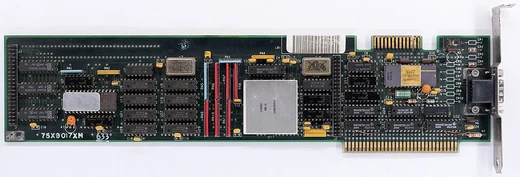
The TEA1002 is a PAL video encoder chip produced by Mullard in 1982. It was used in the Mattel Aquarius computer, the AlphaTantel Prestel adapter, and the Microvector 256 color graphics display interface for Nascom and Gemini computers, as well as in teletext decoders and color bar generators for video test equipment. It generates 16 colors based on Luminance, Chrominance, and Saturation, with the 8 basic colors being similar to the EBU 75% color bars.
- Producer
- Mullard
- Year
- 1982
- Colors generated
- 16
- Color model
- Luminance, Chroma phase (hue angle), Chroma amplitude (saturation)
- Internal storage
- 4-bit RGBI arrangement
- Basic colors
- 8 primary colors at full saturation but 75% luminance, similar to EBU colour bars
- Alternate configuration
- 95% luminance color bars, similar to BBC colour bars
Lore & Background
The TEA1002 was produced by Mullard in 1982 and found use in several computing and video devices, including the Mattel Aquarius computer, the AlphaTantel Prestel adapter, and the Microvector 256 color graphics display interface for Nascom and Gemini computers. It also appeared in teletext decoders and color bar generators associated with video test equipment. According to its datasheet, colors are formed by the combination of three signals roughly equivalent to the HSL colorspace: Luminance, Chroma phase (hue angle), and Chroma amplitude (saturation). Internally, colors are stored in a 4-bit RGBI arrangement, with three bits for RGB components generating 8 primary colors at full saturation but 75% luminance, similar to EBU colour bars, and an inverter logic input bit that controls a variation of the base color—a 25% luminance decrease for white and a 50% chroma saturation decrease for all colors. An alternate configuration of the chip allows it to output 95% luminance color bars, similar to BBC colour bars, more suited for usage in teletext decoders.
Reader's Guide
The TEA1002's significance lies in its role as a dedicated PAL video encoder that brought color generation to a variety of 1980s computing and video equipment. Its use in the Mattel Aquarius computer, the AlphaTantel Prestel adapter, and the Microvector 256 color graphics display interface for Nascom and Gemini computers demonstrates its integration into both consumer and hobbyist systems. The chip's color generation method, based on Luminance, Chroma phase, and Chroma amplitude, and its internal 4-bit RGBI arrangement, allowed for 16 colors with a specific mapping to EBU and BBC color bar standards. The alternate configuration for 95% luminance color bars highlights its adaptability for teletext decoder applications. The chip's legacy is tied to these specific implementations, as it provided a standardized way to generate PAL video signals in an era before more integrated solutions became common.
More in Graphics Hardware, Part 2 1-24
Spotted an error? Know more?
Reader corrections go straight into our review queue. Suggest an edit · How this site is sourced