AMD FirePro
AMD's professional workstation and server graphics brand, succeeded by Radeon Pro.

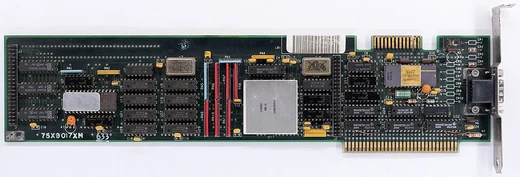
AMD FirePro was the name AMD used for graphics cards aimed at workstations and servers running professional software, such as CAD, CGI, digital content creation, and high-performance computing or GPGPU tasks. The actual GPU chips inside FirePro cards were the same ones found in AMD’s Radeon line; what set them apart were the specialized graphics drivers and professional software support. The lineup had two main branches: the “W” series for workstations, focused on graphics and display, and the “S” series for servers, built for virtualization and GPGPU or high-performance computing. The FireGL line originally came from the German company Spea Software AG, which was bought by Diamond Multimedia in 1995. The first FireGL board used a 3Dlabs GLINT 3D processor. Over time, AMD also used the names ATI FireGL, ATI FirePro 3D, and AMD FireStream, though these were eventually dropped. In July 2016, AMD announced that the FirePro brand would be replaced by Radeon Pro for workstations, and the server brand became Radeon Instinct. FirePro cards supported multi-monitor setups through AMD Eyefinity, with a single card driving up to six monitors depending on the model and number of DisplayPort connections. The driver allowed users to configure different display group modes. Compared to the Radeon line, FirePro cards were built for compute-heavy tasks like video editing and mechanical engineering software, while Radeon cards targeted gaming and consumer use. Because they use the same drivers (Catalyst) and are based on the same architectures and chipsets, the major differences are essentially limited to price and double-precision performance. Some FirePro models also had extra features like ECC RAM or different physical display outputs. Since the 2007 series, high-end and ultra-end FireGL/FirePro products (based on the R600 architecture) have officially implemented stream processing. The Radeon line of video cards, although present in hardware, did not offer any support for stream processing until the HD 4000 series (beta OpenCL 1.0) and full support from the HD 5000 series onward. Heterogeneous System Architecture (HSA) was designed to make programming for stream processing and GPGPU easier when combined with CPUs and DSPs. All models using the Graphics Core Next microarchitecture supported HSA hardware features, and AMD provided the corresponding software.
Quick Facts
- Designfirm
- Advanced Micro Devices
Facts from the source article.
Lore & Background
The FireGL line was originally developed by the German company Spea Software AG until it was acquired by Diamond Multimedia in November 1995. The first FireGL board used the 3Dlabs GLINT 3D processor chip. Deprecated brand names include ATI FireGL, ATI FirePro 3D, and AMD FireStream. In July 2016, AMD announced it would be replacing the FirePro brand with Radeon Pro for workstations, and the new brand for servers is Radeon Instinct. The FirePro line is designed for compute intensive, multimedia content creation (such as video editors), and mechanical engineering design software (such as CAD programs). Their Radeon counterparts are suited towards video games and other consumer applications. Because they use the same drivers (Catalyst) and are based on the same architectures and chipsets, the major differences are essentially limited to price and double-precision performance. However, some FirePro cards may have major feature differences to the equivalent Radeon card, such as ECC RAM and differing physical display outputs. Since the 2007 series, high-end and ultra-end FireGL/FirePro products (based on the R600 architecture) have officially implemented stream processing. AMD Eyefinity can support multi-monitor set-ups, with one graphics card driving up to a maximum of six monitors; the supported number depends on the distinct product and the number of DisplayPort displays. The device driver facilitates the configuration of diverse display group modes. Because of the similarities between FireGL and Radeon cards, some users soft-mod their Radeon cards by using third-party software or automated scripts accompanied by a modified FireGL driver patch, to allow FireGL capabilities for their hardware.
Reader's Guide
The AMD FirePro brand was notable for providing professional-grade graphics solutions for workstations and servers, using GPU chips identical to those in consumer Radeon cards but differentiated by specialized drivers and professional support. The product line was split into 'W' workstation series and 'S' server series, targeting CAD, CGI, DCC, and GPGPU applications. Its competitors included Nvidia's Quadro and Tesla series, as well as Intel's Xeon Phi. The brand's legacy includes the introduction of stream processing in high-end models from the 2007 series onward, and support for multi-monitor setups via AMD Eyefinity. The FirePro line was succeeded in July 2016 by Radeon Pro for workstations and Radeon Instinct for servers, marking the end of the FirePro name. The practice of soft-modding Radeon cards to emulate FirePro capabilities highlighted the hardware similarities between the lines, though such modifications often resulted in half the video memory.
Did You Know?
- AMD FirePro cards can drive up to six monitors via AMD Eyefinity.
- Some users soft-mod their Radeon cards to enable FireGL capabilities, often resulting in half the video memory.
Frequently Asked Questions
What is AMD FirePro?
AMD FirePro is the brand AMD applied to its professional graphics cards built for workstations and servers running demanding software such as CAD, CGI, and high-performance computing. It served as the professional-grade counterpart to AMD's consumer Radeon line.
How does a FirePro card actually differ from a regular Radeon?
The GPU silicon inside a FirePro card is the same chip found in AMD's consumer Radeon products. What truly sets it apart is the dedicated professional driver stack and certified support for workstation and server applications.
What are the two main branches of the FirePro lineup?
The 'W' series targets workstations, prioritizing graphics rendering and supporting up to six simultaneous displays, while the 'S' series targets servers, tuned for virtualization, GPGPU, and high-performance computing workloads.
What replaced the AMD FirePro brand?
AMD retired the FirePro name in July 2016, splitting its professional offerings into Radeon Pro for workstation cards and Radeon Instinct for server and HPC cards. Earlier professional brands like ATI FireGL and AMD FireStream were also folded into this rebranding.
Who were AMD FirePro's main competitors?
FirePro's primary rivals were Nvidia Quadro for professional workstation graphics and Nvidia Tesla for server-side computing, with Intel Xeon Phi also competing in the high-performance computing segment.
More in Graphics Hardware, Part 2 1-24
Spotted an error? Know more?
Reader corrections go straight into our review queue. Suggest an edit · How this site is sourced