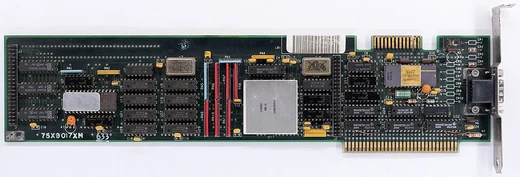
RCA CDP1861
A monochrome video display controller for the RCA 1802 microprocessor.

The RCA CDP1861, a video display controller chip, debuted in the mid-1970s to complement the RCA 1802 microprocessor. By 1977, it cost under US$20. Built in low-power CMOS, it came in a 24-pin DIP package and needed few external parts. In 1802-based systems, the chip (the CDP1861 for NTSC, the CDP1864 variant for PAL) used the 1802’s built-in direct memory access controller to show monochrome bitmapped graphics on ordinary TV sets. It was also called the Pixie graphics system, display, chip, or video generator, especially with the COSMAC Elf. Early engineering samples bore markings TA10171, TA10171V1, or TA10171X—preliminary part numbers—though these have turned up in production RCA Studio II consoles and Netronics Elf computers. The chip also appeared in the Telmac 1800 and Oscom Nano.
The CDP1861 could display 64 horizontal by 128 vertical pixels. By reloading the 1802’s R0 DMA register via a software controller and interrupt routine, resolution could drop to 64×64 or 64×32, using less memory than the 1024 bytes needed for the highest resolution (one bit per pixel) or to get square pixels. The 64×32 mode, which gave square pixels, used 256 bytes (2K bits) and was standard for the CHIP-8 game system. Because the video frame buffer often matched the system’s memory size, programs or data could appear on screen, letting users watch the computer “think.” Runaway programs that overwrote themselves could produce spectacular results. The companion CDP1862 Color Generator IC could add limited color. After the 1861 was discontinued and became rare, the Spare Time Gizmos STG1861—a functional analog—was released in 2004 for the new ELF 2000 (Elf2K) computer. It consisted of a small PCB with two programmable logic devices, two simple TTL chips, and a 24-pin DIP connector to replace the original chip.
- Release period
- mid-1970s
- Cost in 1977
- less than US$20
- Package
- 24-pin dual in-line package (DIP)
- Technology
- low-power CMOS
- Maximum resolution
- 64 pixels horizontally × 128 pixels vertically
- Memory required for max resolution
- 1024 bytes
- Companion chip
- CDP1862 Color Generator Circuit IC
Lore & Background
The CDP1861 was manufactured in a low-power CMOS technology, came in a 24-pin DIP, and required a minimum of external components to work. In 1802-based microcomputers, the CDP1861 (for NTSC video format; CDP1864 variant for PAL) used the 1802's built-in direct memory access controller to display black and white bitmapped graphics on standard TV screens. The chip was also known as the Pixie graphics system, display, chip, and video generator, especially when used with the COSMAC Elf microcomputer. Other known chip markings include TA10171, TA10171V1, and TA10171X, which were early designations for pre-qualification engineering samples and preliminary part numbers, although they have been found in production RCA Studio II game consoles and Netronics Elf microcomputers. The CDP1861 was also used in the Telmac 1800 and Oscom Nano microcomputers.
Reader's Guide
The CDP1861's significance lies in its role as a low-cost, minimal-component video solution for the RCA 1802 microprocessor, enabling hobbyist and educational computers like the COSMAC Elf to display graphics on ordinary televisions. Its maximum resolution of 64×128 pixels could be reduced to 64×64 or 64×32 to use less memory or to produce square pixels; the 64×32 resolution, using 256 bytes, became standard for the CHIP-8 game programming system. Because the video frame buffer often occupied memory similar in size to the program memory, it was not unusual to display the computer's own data on screen, allowing users to watch the computer 'think' or observe programs that accidentally overwrote themselves. The CDP1862 companion chip could generate limited color graphics. Due to the discontinuation of the 1861 and its rarity, a fully functional analogue called the Spare Time Gizmos STG1861 was made in 2004 for use with the newly designed ELF 2000 (Elf2K) computer, implemented as a small PCB with programmable logic devices and TTL chips.
Did You Know?
- The CDP1861 was also known as the Pixie graphics system, especially when used with the COSMAC Elf microcomputer.
- The chip could display 64 pixels horizontally and 128 pixels vertically, using 1024 bytes of memory.
- A companion chip, the CDP1862 Color Generator Circuit IC, could generate limited color graphics.
- Due to its rarity, a fully functional analogue called the STG1861 was produced in 2004 for the ELF 2000 computer.
More in Graphics Hardware, Part 2 1-24
Spotted an error? Know more?
Reader corrections go straight into our review queue. Suggest an edit · How this site is sourced