
Dakahlia Governorate
Egyptian governorate northeast of Cairo with ancient and medieval significance.

MrLurkingShadows · CC BY-SA 4.0
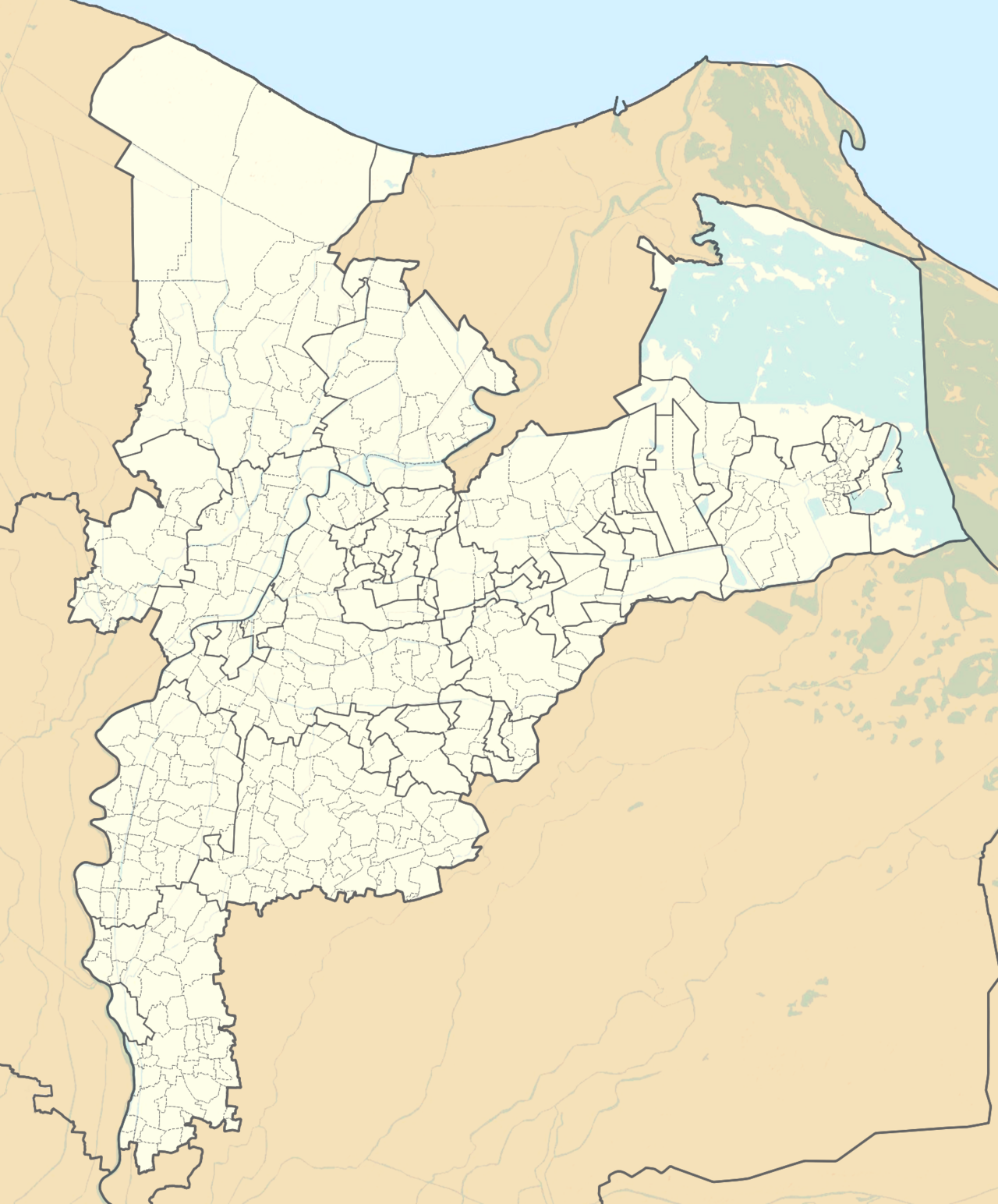
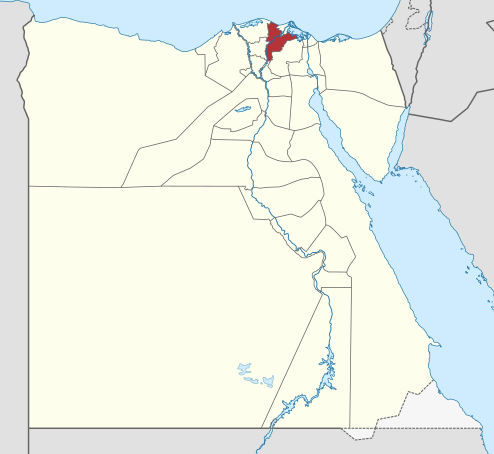
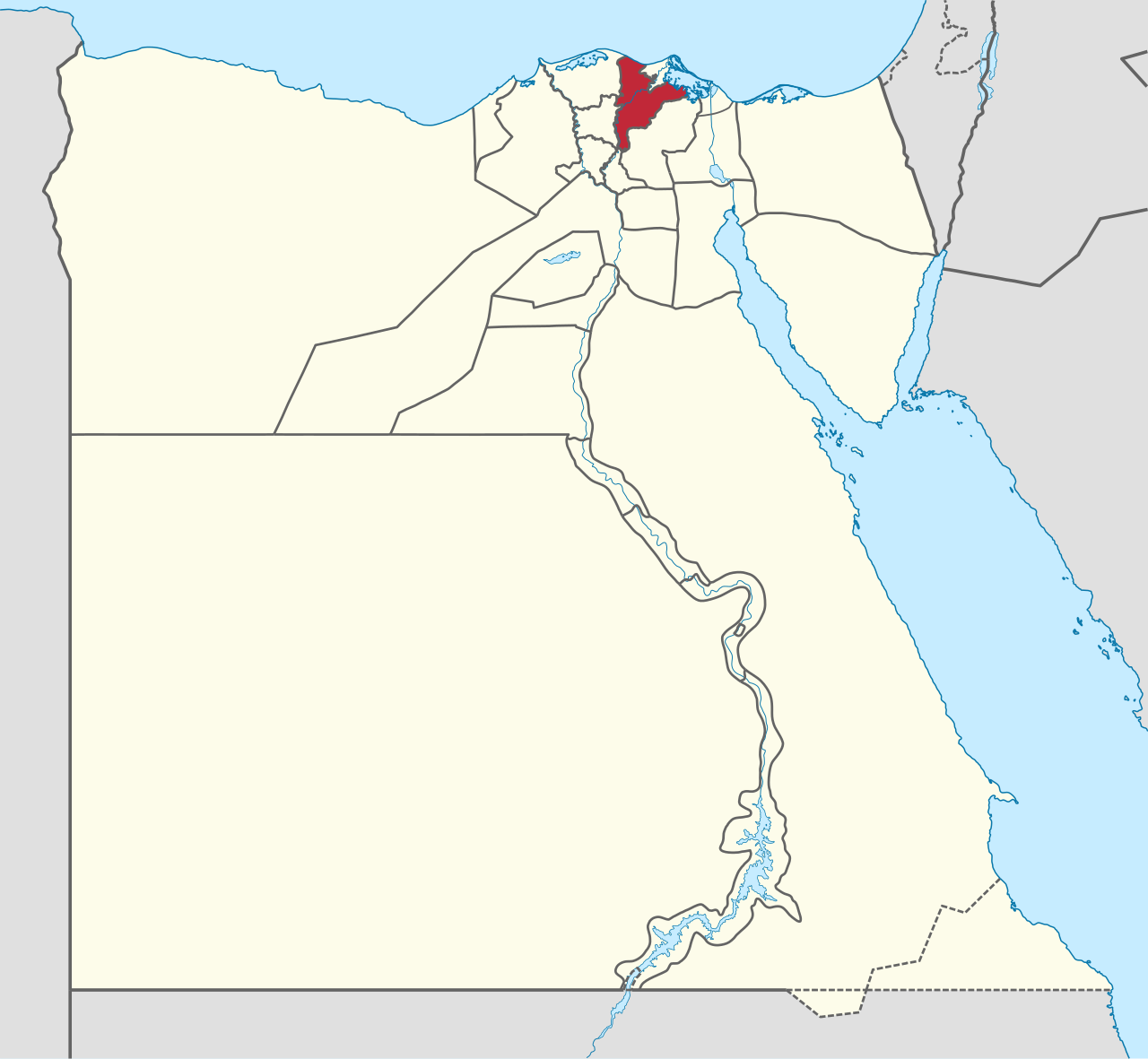
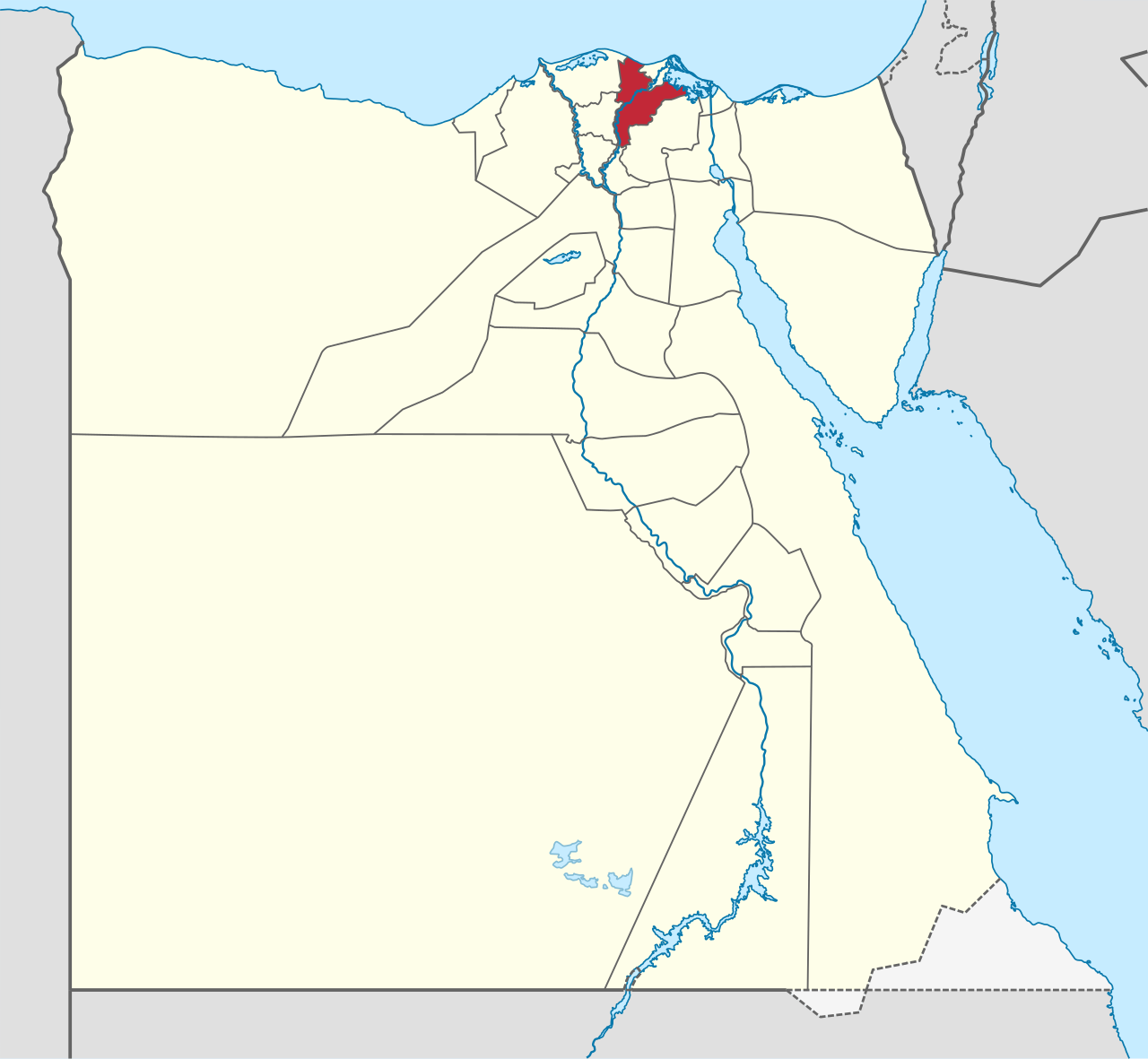
Dakahlia Governorate is an Egyptian governorate located northeast of Cairo, with an area of approximately 3,500 square kilometers. Its capital is Mansoura, though its name derives from the ancient town of Daqahlah, which was located in what is now the Damietta Governorate. The governorate has a rich history spanning from the Predynastic Period through the Pharaonic, medieval, and modern eras, and played a notable role in the Seventh Crusade and the 1919 Egyptian revolution.
Quick Facts
- Settlement Type
- Governorate
- Seat
- Mansoura (capital)
- Leader Title
- Governor
- Leader Name
- Tarek Marzouk
- Population Total
- 7013271
- Population As Of
- January 2023
Facts from the source article.
Lore & Background
Archaeological discoveries in Dakahlia include 83 tombs from the Naqada III period (circa 3200–3000 BC) uncovered in February 2020, containing pottery, sea shells, makeup tools, and jewels. In April 2021, 110 burial tombs were found at Koum el-Khulgan, with 68 oval-shaped tombs from the Predynastic Period, 37 rectangular tombs from the Second Intermediate Period, and others from the Naqada III period, along with remains of adults and a baby buried in a jar, ovens, and funerary equipment. Pharaonic monuments are scattered throughout, including Tell el-Muqaddam, the capital of Leontopolis, and Tell el-Rub', site of the ancient city of Mendes, which served as Egypt's capital during the 29th Dynasty. King Ahmose I built a great temple there, of which only a huge stone sarcophagus remains, and stone remains of temples built by King Ramses II have also been found.
Reader's Guide
Dakahlia Governorate's significance lies in its continuous habitation and role in key historical events. During the Ayyubid era, the Battle of Mansoura in 1250 AD ended the Seventh Crusade, with King Louis IX of France captured and later ransomed. In the modern era, the governorate was a center of resistance against Napoleon's French forces in 1798-1799, with villages like Dandit and Mit Ghamr mounting fierce opposition. During the 1919 Egyptian revolution, Mansoura and Mit Ghamr saw peaceful demonstrations that turned violent when British forces opened fire, and Mit Ghamr briefly declared independence as the 'Sultanate of Mit Ghamr.' The governorate also participated in the 1935 national movement against the 1930 Constitution. Its archaeological finds, from Predynastic tombs to Pharaonic temples, underscore its importance in understanding Egypt's ancient past.
Beneath the Soil: A Four-Millennium Archive
Dakahlia's landscape conceals one of Egypt's richest archaeological layers. In early 2020, a team working under the Ministry of Tourism and Antiquities brought to light eighty-three tombs belonging to the Naqada III horizon, roughly four thousand years old. The burials yielded small pottery vessels of varied shapes, sea shells, cosmetic implements, eyeliner containers, and personal jewels. A year later, at the Koum el-Khulgan site, one hundred and ten tombs were announced: sixty-eight oval pits from the Predynastic era, thirty-seven rectangular ones from the Second Intermediate Period, and the remainder from Naqada III. Among the finds were the remains of adults and an infant sealed in a jar, clusters of ovens and stoves, mud-brick foundation fragments, funerary goods, cylindrical and pear-shaped vessels, and a bowl decorated with geometric patterns. Beyond these recent excavations, the governorate is studded with Pharaonic mounds. Mendes, once the seat of the 29th Dynasty, still holds the remains of a temple raised by Ahmose III, whose massive sarcophagus is regarded as the largest stone sarcophagus in the country, alongside stone fragments from a structure attributed to Ramses II. Tell el-Balamun, part of the seventeenth district during the Ramesside period, has produced two masks cast in pure gold.
The Siege That Broke a Crusade
In the spring of 1250, the narrow streets of Mansoura became the graveyard of the Seventh Crusade. King Louis IX of France had spent three years assembling roughly eighty thousand soldiers and a vast fleet after the fall of Jerusalem to Muslim forces in 1244, aiming to strip Egypt of its strategic role so the holy city could be retaken. His army seized Damietta in 1249, provoking fierce Egyptian opposition. Sultan al-Salih Ayyub died during the campaign, and Shajar al-Durr stepped into the administration while Faris al-Din Aktai reorganized the military. It was Rukn al-Din Baybars who devised the decisive stratagem: drawing the Crusaders into Mansoura, where townspeople and garrison troops attacked from the confined lanes. The result was catastrophic for the invaders—thousands fell and the entire cavalry contingent was annihilated. Louis IX himself was taken prisoner in the house of Ibn Luqman on April 6, 1250, following his rout at Fariskur. He was eventually freed for a ransom of four hundred thousand dinars on the condition that he never return to Egyptian soil. The defeat not only ended the Seventh Crusade but also discouraged further large-scale campaigns against Egypt and set the stage for the ultimate liberation of the Levant.
A Name Lost to the Water
The very name Dakahlia carries the memory of a town that no longer exists. The governorate takes its title from Daqahlah, a settlement whose Coptic root means 'shrine,' situated in what is now the Damietta Governorate. During the Fatimid period, Daqahlah served as the administrative base for the Manzala region, but the slow flooding of Lake Manzala swallowed the town entirely. By 1315, the name had vanished from official records; the Manzala districts were folded into the neighboring units of Al-Abwaniyah and Al-Murtahia, with Ashmun al-Ruman assuming the role of regional headquarters. The governorate's modern administrative center, Mansoura, was not always the seat of power. It was only in 1527 that the Ottoman governor Hadım Suleiman Pasha issued a decree relocating the government office there, a decision that has endured to the present day. The region's ancient identity runs even deeper: the mound now called Tell el-Muqaddam was known in Egyptian as Umm Khent and served as the capital of Leontopolis, the nineteenth province of northern Egypt, each Pharaonic province bearing its own emblem and patron deity.
The Villages That Stood Against Napoleon
When French forces swept into Egypt in 1798, Dakahlia became one of the most stubborn fronts of popular resistance. Residents of Mansoura and its surrounding villages launched attacks on the French garrison, and the uprising quickly spread across neighboring settlements. The village of Dandit, singled out for its role in the Mansoura events, was struck by a punitive expedition under General Murat. Rather than submit, its inhabitants cut bridges, flooded the surrounding land to slow the French advance, and fell back to Mit al-Farmawi, where they mounted two cannons in defense before withdrawing into the hills. The French were forced to retreat toward Mit Ghamr. Napoleon, alarmed by the threat to the vital transportation corridor linking Mansoura, Salihiya, and Bilbeis, dispatched General Lanusse to reinforce Murat. The Little Sea between Mansoura and Lake Manzala became a flashpoint, and the town of Manzala emerged as a major resistance hub, with Sheikh Hassan Tobar named in French dispatches as one of the revolt's leading instigators. A French crossing led by Damas and Westing across the Little Sea stalled and had to call for reinforcements, while defiance also flared in Sharqiya, underscoring that the uprising was a governorate-wide phenomenon rather than a localized skirmish.
Gallery
Frequently Asked Questions
What is Dakahlia Governorate?
Dakahlia is an Egyptian governorate situated to the northeast of Cairo, spanning roughly 3,500 square kilometers across the Nile Delta. It is one of the country's most densely populated agricultural regions and has been continuously inhabited since the Predynastic era.
What is the capital of Dakahlia Governorate?
Mansoura serves as the administrative capital of the governorate. It is a well-known city in the Delta, though the governorate's name actually traces back to a different, much older settlement.
Where does the name 'Dakahlia' come from?
The name derives from the ancient town of Daqahlah, whose root comes from the Coptic word meaning 'shrine.' That original settlement is located in what is now the Damietta Governorate, not within Dakahlia's current borders.
What made Dakahlia Governorate famous in medieval history?
The 1250 Battle of Mansoura during the Seventh Crusade is the governorate's most celebrated historical moment, marking a decisive Mamluk confrontation with Crusader forces. The region also played a notable role in the 1919 Egyptian revolution.
What ancient archaeological sites are found in Dakahlia Governorate?
The governorate contains several significant mounds, including Tell el-Muqaddam, Tell el-Rub', and Tell el-Balamun. These sites preserve evidence of human settlement stretching from the Predynastic Period through the Pharaonic era.
More in Governorates Of Egypt 1-24
Spotted an error? Know more?
Reader corrections go straight into our review queue. Suggest an edit · How this site is sourced