
Aswan Governorate
Southernmost governorate of Egypt, home to Lake Nasser.

youssef_alam · CC BY 3.0
Aswan Governorate is the southernmost governorate of Egypt, located in Upper Egypt. It covers most of the area of Lake Nasser and has served as a strategic frontier and trade gateway since ancient times, when the region was known as Swenett.
Quick Facts
- Settlement Type
- Governorate
- Seat
- Aswan (capital)
- Leader Title
- Governor
- Leader Name
- Amr Helmy Hassan Lashin
- Population Total
- 1,685,743
- Population As Of
- January 2024
Facts from the source article.
Lore & Background
The region of present-day Aswan Governorate has been inhabited for millennia and served as the southern frontier of ancient Egypt. Known in antiquity as Swenett, its location at the First Cataract of the Nile made it a natural boundary and strategic gateway for trade caravans. Aswan was the source of granite used for many ancient Egyptian monuments, and the Unfinished Obelisk in its quarry demonstrates ancient stone working techniques. During the Greco-Roman period, the Temple of Philae was constructed and dedicated to the goddess Isis, and recent archaeological missions have discovered rock-cut tombs from that period near the Aga Khan Mausoleum.
Reader's Guide
Aswan Governorate holds significance as Egypt's southernmost administrative division and a cultural center for the Nubian community. Its geography was permanently altered by 20th-century dam construction: the Aswan Low Dam (completed 1902) and the Aswan High Dam (completed 1970), which created Lake Nasser. This led to the UNESCO-coordinated relocation of monuments including the temples of Abu Simbel and Philae, as well as the resettlement of local Nubian populations. The governorate contains important archaeological sites such as Abu Simbel, Kalabsha, Elkab, the Temple of Kom Ombo, Qasr Ibrim, and Philae Temple. With a population of about 1.69 million and an area of over 62,000 square kilometers, it ranks among Egypt's largest governorates by area but is sparsely populated, with most residents living along the Nile.
Did You Know?
- The governorate's capital is Aswan, and its current governor is Amr Helmy Hassan Lashin, whose appointment date has not been confirmed as of early 2025.
- The Aswan High Dam, completed in 1970, created Lake Nasser, one of the world's largest artificial lakes.
- The region was known as Swenett in antiquity, a name derived from the ancient Egyptian symbol for trade.
- The governorate is a cultural center for Egypt's Nubian community, where Nobiin and Kenzi languages are spoken alongside Arabic.
Ancient Frontier and the Gateway of Stone
The territory that now constitutes Aswan Governorate has served as Egypt's southern threshold for thousands of years. In antiquity the region carried the name Swenett, a term rooted in the ancient Egyptian symbol for trade, which speaks to its role as a commercial crossroads. The First Cataract of the Nile, situated near modern Aswan city, created a natural chokepoint that made the area an indispensable gateway for trade caravans moving between Nubia and the rest of the kingdom. The local quarries supplied the granite that went into countless monuments across ancient Egypt, and the Unfinished Obelisk still embedded in its rock face offers a rare window into the stone-working methods of that era. Elephantine Island functioned as a major administrative hub, its fortress watching over the southern border. During the Greco-Roman era, the Temple of Philae rose on its own island, dedicated to the goddess Isis, and worship there persisted even after Christianity took hold across Egypt. More recently, archaeological teams have uncovered rock-cut tombs from that same period in the vicinity of the Aga Khan Mausoleum, adding new layers to the region's long story.
The Dam That Redrew the Map
In the twentieth century, two successive engineering projects fundamentally transformed the southern geography of this governorate. The Aswan Low Dam, finished in 1902, was the first major intervention, but it was the Aswan High Dam, completed in 1970, that permanently altered the landscape. The High Dam gave birth to Lake Nasser, one of the largest artificial lakes on Earth, which now occupies a vast portion of the governorate's territory. The creation of this reservoir submerged areas that had been inhabited for generations and simultaneously introduced new water resources into an otherwise arid desert environment. The project triggered a UNESCO-coordinated international effort to relocate several irreplaceable monuments, most notably the temples of Abu Simbel and Philae, to higher ground before rising waters reached them. Equally significant, though less visible, was the forced resettlement of the local Nubian population, many of whom were displaced to new locations both within the governorate and in other parts of Egypt. The governorate's modern boundaries, its cities such as New Aswan and New Kalabsha, and its relationship to the Nile all bear the imprint of that mid-century decision to hold back the river.
A World of Scorching Sun and Silent Deserts
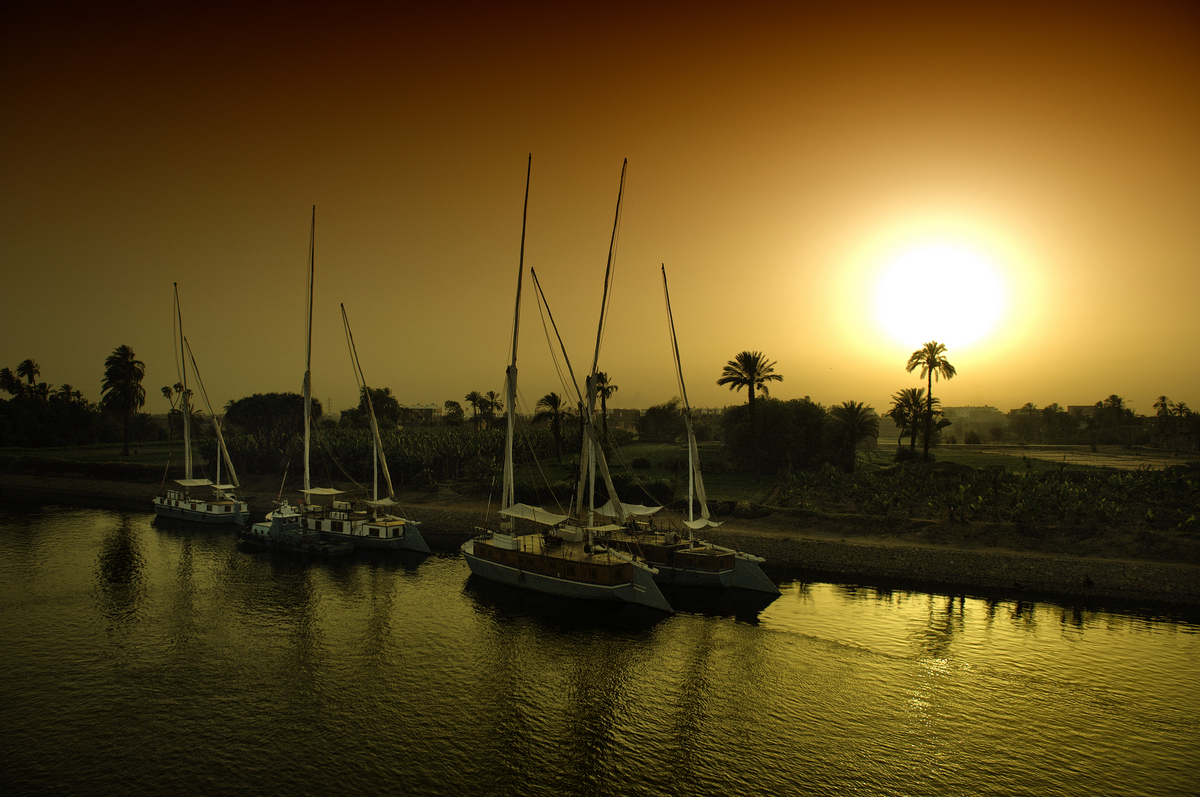
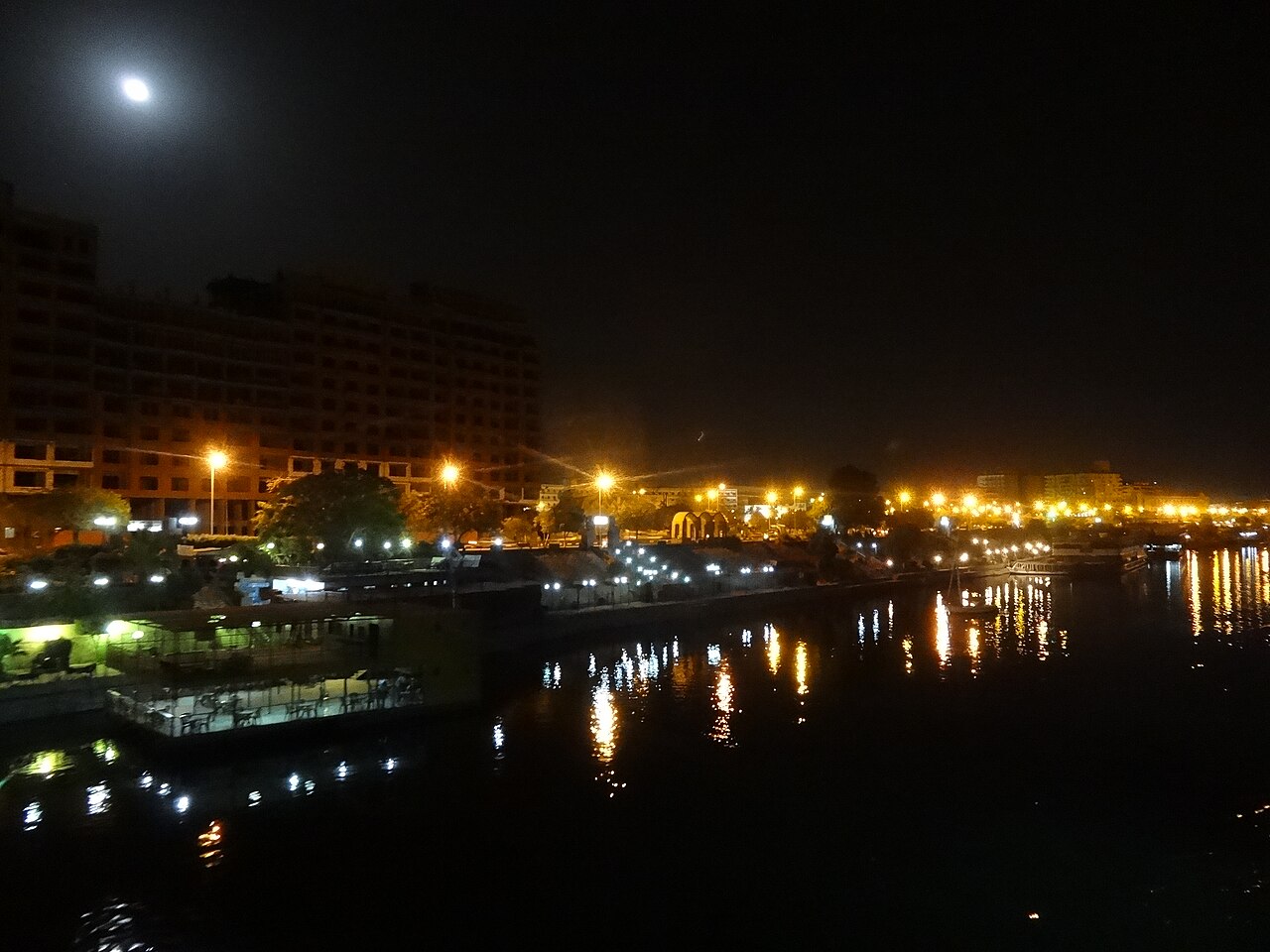
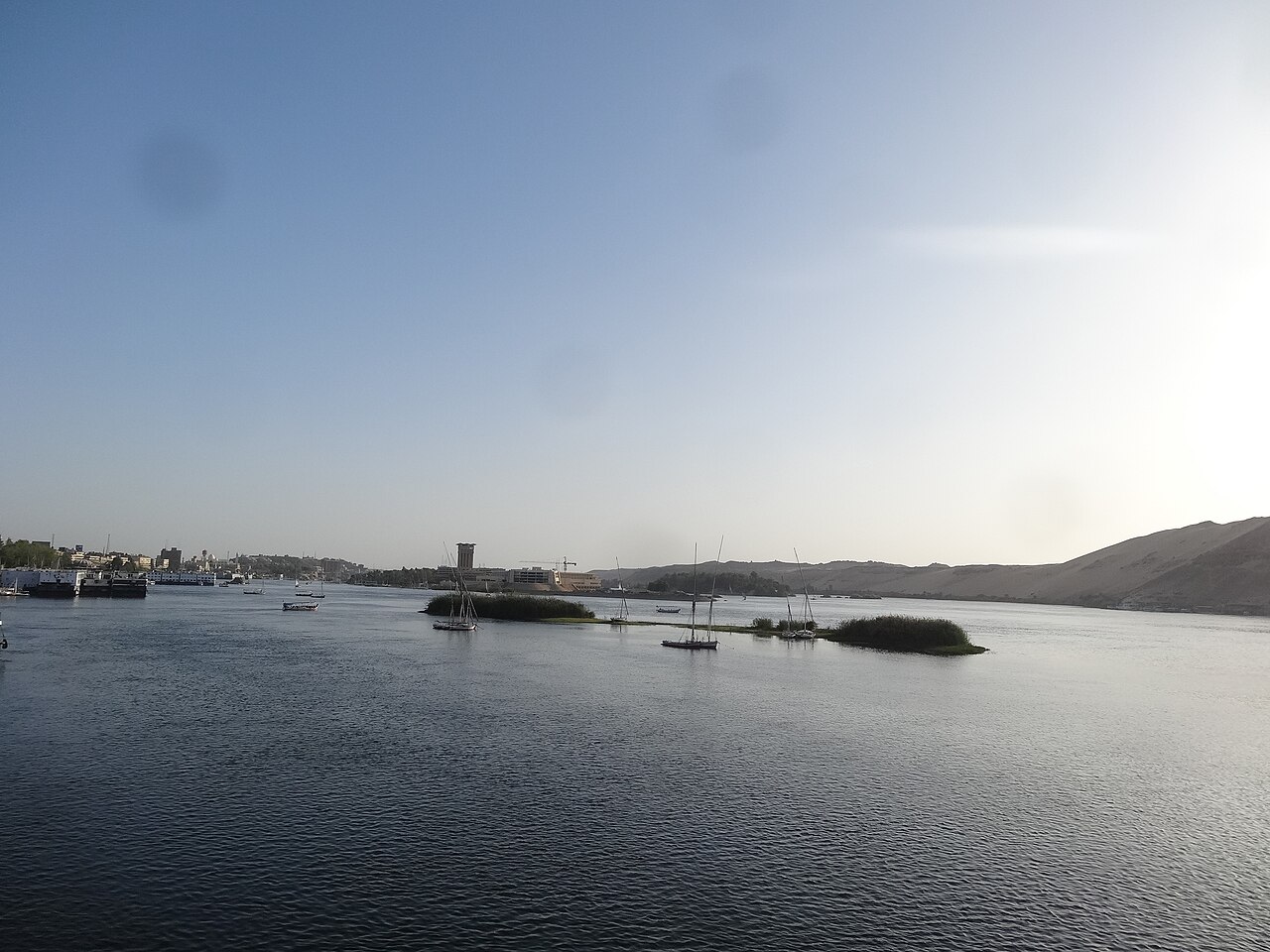
Aswan Governorate sits squarely within a hot desert climate zone, classified as BWh under the Köppen system, and the daily experience of that classification is stark. From May through September, average high temperatures routinely climb to around forty degrees Celsius, while the skies remain almost perpetually clear with very little cloud cover. Winter months from November to February bring a welcome easing, with highs settling into the low-to-mid twenties, yet the aridity never truly lifts. Rainfall is so scarce that in some years no measurable precipitation falls at all. During the spring, the region is periodically hit by khamsin sandstorms that can slash visibility and push temperatures temporarily higher. The terrain reinforces this sense of isolation: the Nile carves a narrow strip of fertile land through an expanse of sandstone desert on both sides. The eastern bank of the river holds the majority of the population, while the western bank stretches into largely uninhabited desert. Islands such as Elephantine, Sehel, and Philae dot the river, and the First Cataract near Aswan city marks the point where the water tumbles over rock.
Nubian Roots and a Sparse but Living Population
With roughly 1.69 million residents as of early 2024 spread across 62,726 square kilometres, Aswan Governorate is one of Egypt's most sparsely populated administrative units, averaging barely twenty-seven people per square kilometre. A large share of those inhabitants live in rural villages strung along the Nile rather than in the larger urban centres of Aswan, Edfu, Kom Ombo, Daraw, Sebaiya, New Aswan, or New Kalabsha. The governorate is widely recognised as the cultural heartland of Egypt's Nubian community, with Nubian villages clustered both north and south of the capital city. In those communities, the indigenous Nubian languages Nobiin and Kenzi continue to be spoken alongside Arabic, preserving linguistic traditions that stretch back centuries. The demographic fabric of the region, however, carries deep scars. The construction of the Aswan High Dam and the subsequent flooding that created Lake Nasser displaced thousands of Nubian families, scattering them to new settlements within the governorate and to other Egyptian governorates. That twentieth-century upheaval reshaped where Nubians live and how their villages are distributed, yet the cultural identity of the community remains a defining thread in the governorate's social landscape.
Gallery
Frequently Asked Questions
What is Aswan Governorate?
Aswan Governorate is the southernmost administrative division of Egypt, situated in the Upper Egypt region. It encompasses the majority of Lake Nasser's area and has long functioned as a strategic frontier and trade corridor since antiquity, when the area was known as Swenett.
Where exactly is Aswan Governorate located?
It sits at the very bottom of Egypt's map, bordered by Qena Governorate to the north, Red Sea Governorate to the east, New Valley Governorate to the west, and Sudan's Northern state to the south. The region experiences a hot desert climate (Köppen BWh).
What is the capital and population of Aswan Governorate?
The city of Aswan serves as the governorate's capital, and the region is home to roughly 1,685,743 residents as of January 2024. Its total land area spans about 62,726 square kilometers (24,219 square miles).
Who is the current governor of Aswan Governorate?
Amr Helmy Hassan Lashin holds the position of governor, having been appointed on February 16, 2026.
Why is Aswan Governorate historically important?
For thousands of years the region has acted as a gateway for trade and a defensive frontier, a role dating back to its ancient name, Swenett. Today it remains a key part of Upper Egypt's identity, anchored by the vast Lake Nasser that fills much of its territory.
More in Governorates Of Egypt 1-24
Spotted an error? Know more?
Reader corrections go straight into our review queue. Suggest an edit · How this site is sourced