Asyut Governorate
Egyptian governorate on the Nile with high poverty and Coptic heritage.

TUBS · CC BY-SA 3.0
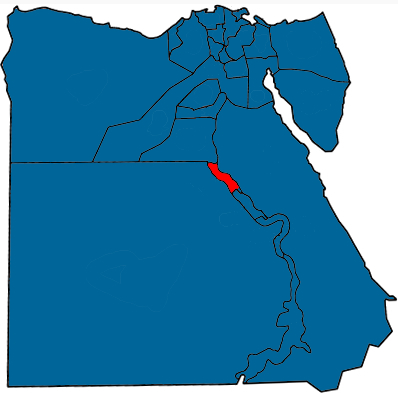
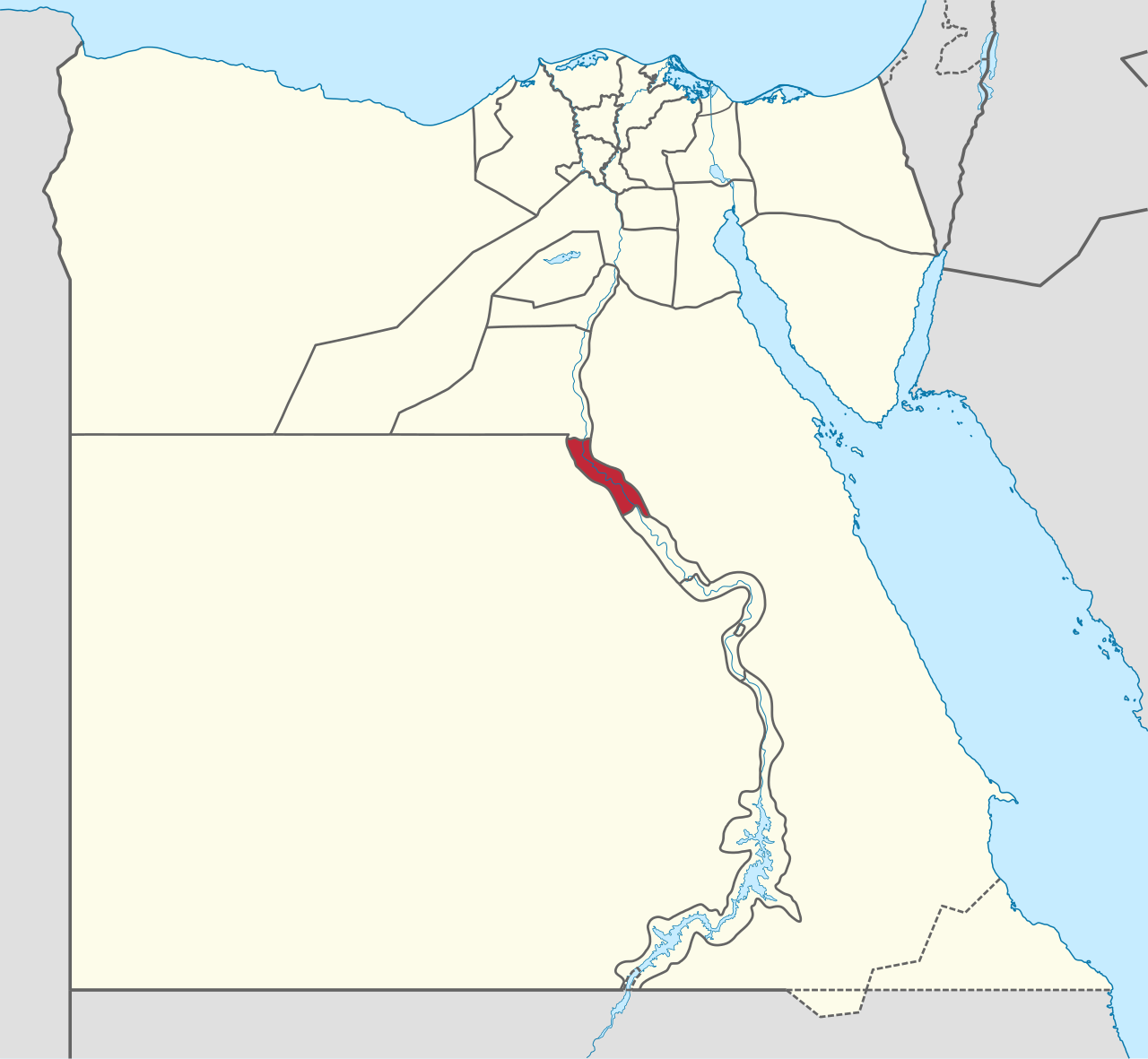
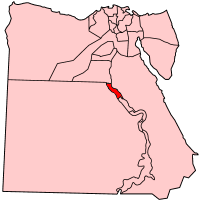
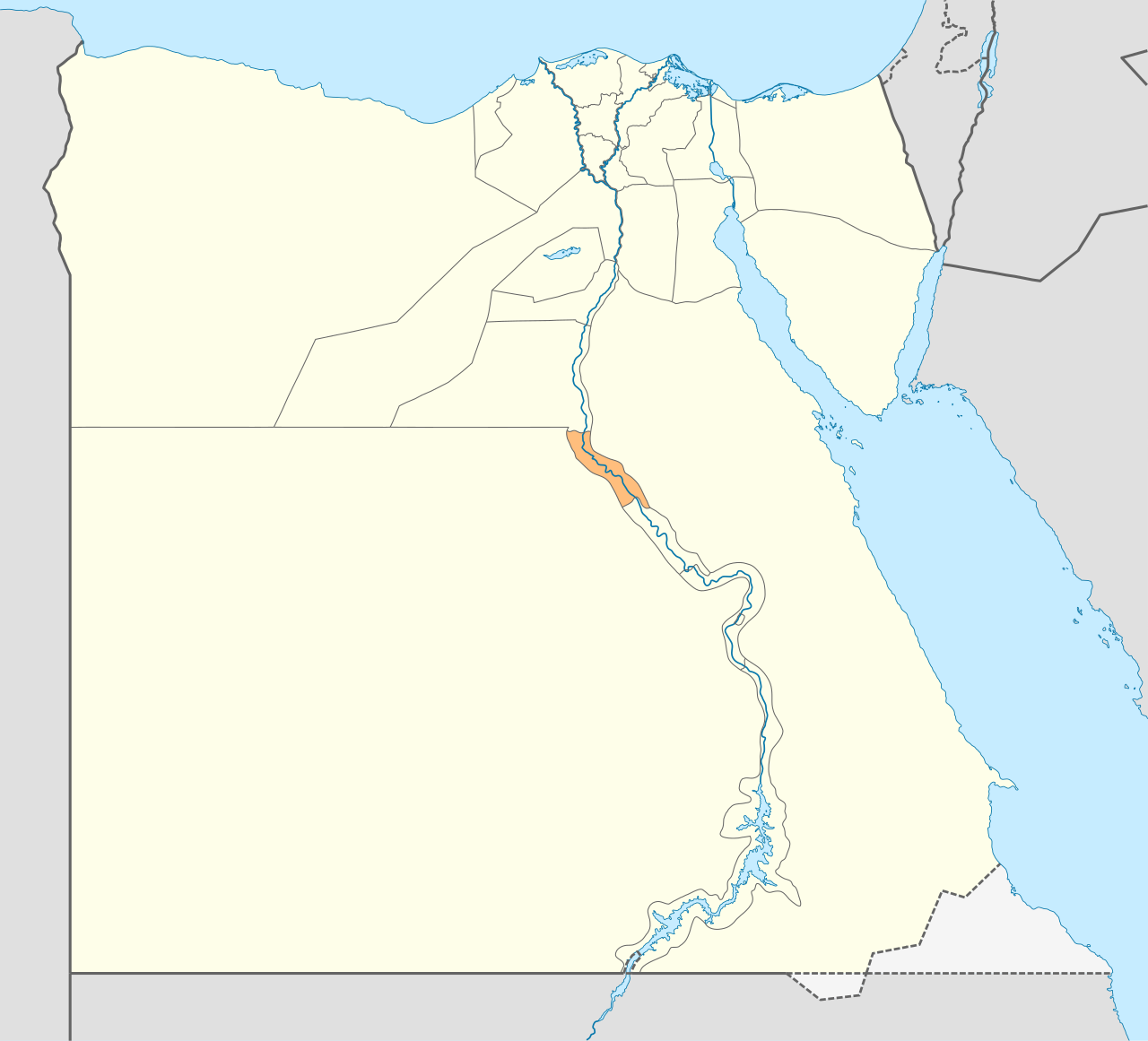
Asyūṭ Governorate is one of the 27 governorates of Egypt, stretching across a section of the Nile River. Its capital is the city of Asyut. The name derives from early Egyptian Zawty, through Coptic Syowt, with an A added to become Asyut. The governorate has an estimated population of 5,169,423 in 2024 (projected to 5,231,820 by April 2025), with a significant Coptic presence, and a poverty rate exceeding 60%.
Quick Facts
- Settlement Type
- Governorate
- Seat
- Asyut (capital)
- Leader Title
- Governor
- Leader Name
- Hisham Ahmed Sharaf
- Population Total
- 5,169,423
- Population As Of
- January 2023
Facts from the source article.
Lore & Background
Asyut Governorate is divided into municipal divisions including one new city, three aqsam, and eleven marakiz. As of April 2025, the total estimated population is 5,231,820. The majority of residents live in rural areas, with an urbanization rate of only 26.5% according to 2024 estimates. The governorate includes several cities such as Abnub, Abu Tig, Asyut, Dairut, El Badari, El Ghanayem, Manfalut, El Quseyya, Sahel Selim, Sanabu, Sodfa, and New Nasser City.
Reader's Guide
Asyut Governorate is significant for its high poverty rate, exceeding 60%, which has prompted social safety networks funded by Egypt's Ministry of Finance with international assistance. The governorate has a notable Coptic Christian presence, and in July 2013, many Christians protested Muslim extremism there. Important sites include ancient quarries with about 500 rock-cut tombs and limestone quarries, the Ancient Egyptian tombs of Meir, and the town of Durunka, a pilgrimage site for Copts visiting a monastery dedicated to the Virgin Mary. Industrial zones are located in Asyut according to the Governing Authority for Investment and Free Zones. A solid waste management program funded by Switzerland from 2016 to 2021 involved infrastructure for waste treatment, landfills, and recycling. Notable people from the governorate include Gamal Abdel Nasser, Second President of Egypt; Pope Shenouda III; poet Hafez Ibrahim; and theologian al-Suyuti.
Did You Know?
- The poverty rate in Asyut Governorate is more than 60%.
- In July 2013, Asyut was one of several governorates where clashes occurred during the broader political unrest following the ousting of President Mohamed Morsi, involving both Islamist and Christian communities.
Ancient Heritage and Archaeological Landscape
The name Asyut carries echoes of deep antiquity. Its roots trace back to the early Egyptian word Zawty, which evolved through late Egyptian Səyáwt and Coptic Syowt before an initial "A" was prefixed to produce the modern form. This linguistic journey mirrors the layered history embedded in the land itself. The governorate is distinguished by roughly five hundred rock-cut tombs and limestone quarries scattered across its territory, making ancient quarrying one of its most defining physical features. Among the most significant archaeological sites are the tombs of Meir, which belong to the ancient Egyptian period, and Deir el-Gabrawi. The town of Durunka holds a special place in the region's living religious heritage, serving as a pilgrimage destination for Coptic Christians who travel to venerate a monastery dedicated to the Virgin Mary. Together, these sites transform Asyut from a mere administrative division into a landscape where pharaonic, Coptic, and contemporary life overlap in a single stretch of the Nile.
A Predominantly Rural Society and Its Communal Tensions
Asyut Governorate is home to more than five million residents, yet the vast majority live outside urban centers. With an urbanization rate of just 26.5 percent, roughly 3.8 million people inhabit rural areas while only about 1.37 million reside in towns and cities. The administrative structure reflects this spread: one new city, three aqsam, and eleven marakiz distribute governance across the territory. Religious diversity is a defining feature of daily life. A significant Coptic Christian community coexists with the Muslim majority, and while the two groups have shared neighborhoods for generations, the relationship has not been without friction. Periodic clashes have marked the social landscape, and in July 2013 a large crowd of Christians took to the streets of Asyut to protest what they perceived as Muslim extremism. These episodes underscore that the governorate's social fabric, though deeply rooted in shared geography and history, remains a site of ongoing negotiation between communities.
Poverty, Public Investment, and Environmental Infrastructure
Economic hardship is the most pressing challenge facing Asyut. The poverty rate in the governorate exceeds sixty percent, a figure that has prompted both domestic and international response. Egypt's Ministry of Finance has coordinated social safety-net programs that deliver direct financial assistance and create job opportunities for vulnerable families, with funding supplemented by international organizations. Beyond human welfare, the governorate has also received investment in environmental infrastructure. In 2016, Switzerland pledged to finance a solid waste management initiative in partnership with the Egyptian Ministry of Environment. The National Solid Waste Management Programme, scheduled to conclude in 2021, called for building new treatment facilities while expanding and upgrading existing landfill and recycling infrastructure. The Governing Authority for Investment and Free Zones also lists designated industrial zones within the governorate, signaling an intent to diversify the local economy. Together, these efforts represent a multi-layered attempt to lift a region where the majority of residents still struggle to meet basic needs.
A Governorate That Shaped Egypt's Leaders and Thinkers
Asyut has produced an extraordinary roster of figures who influenced Egyptian and wider intellectual life across centuries. Among the most prominent is Gamal Abdel Nasser, who rose to become the second President of Egypt. In the religious sphere, the governorate gave the world Pope Shenouda III of Alexandria, the head of the Coptic Orthodox Church, while the early Christian figure Melitius of Lycopolis, founder of the Melitian movement, also traces his origins to this region. The literary and theological traditions are equally rich: Hafez Ibrahim, a celebrated poet, was born in Dairut; al-Suyuti, a major Sunni theologian, died here in 1505; and the fifth-century Greek poet Coluthus is associated with the area. Nationalist and political voices include Ahmed Lutfi el-Sayed and Mustafa Lutfi al-Manfaluti, while more recent activists such as Akhnoukh Fanous and Ester Fanous carried forward the tradition of dissent. Even the entertainment world claims a son in Samir Ghanem, a comedian and singer. The breadth of these contributions testifies to a region whose cultural output has long outstripped its administrative boundaries.
Gallery
Frequently Asked Questions
What is Asyut Governorate?
Asyut Governorate is one of Egypt's 27 administrative governorates, located along a stretch of the Nile in Upper Egypt. Its capital is the city of Asyut, and the territory is split into one new city, three aqsam, and eleven marakiz.
Where does the name 'Asyut' come from?
The name descends from the ancient Egyptian word Zawty, which passed through the Coptic form Syowt. A leading 'A' was later added in Arabic, giving us the modern name Asyut.
How many people live in Asyut Governorate?
The 2024 estimate puts the population at roughly 5.17 million, projected to reach about 5.23 million by April 2025. Only around 26.5% of residents live in urban settings, so the governorate is overwhelmingly rural.
What is the economic and social situation in Asyut Governorate?
Poverty affects well over 60% of the population, making it one of the more economically strained regions in the country. The governorate is also known for its significant Coptic Christian community alongside the Muslim majority.
How is Asyut Governorate divided administratively?
The governorate is organized into one new city, three aqsam (districts), and eleven marakiz (centers). Like other Egyptian governorates, it is headed by a governor who oversees local governance and public services.
More in Governorates Of Egypt 1-24
Spotted an error? Know more?
Reader corrections go straight into our review queue. Suggest an edit · How this site is sourced