Ploidy
Ploidy describes chromosome set number in cells.

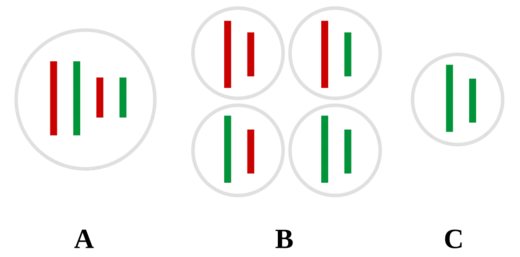
Ploidy is the number of complete sets of chromosomes in a cell, determining the number of possible alleles for autosomal and pseudoautosomal genes. It describes the maternal and paternal chromosome copies in each homologous pair, and organisms are classified by ploidy level—monoploid (1 set), diploid (2 sets), triploid (3 sets), tetraploid (4 sets), and so on. Polyploid refers to cells with three or more sets of chromosomes. Ploidy varies widely among organisms, tissues, and life stages, and is a major driver of speciation in plants and fungi, while in mammals and birds ploidy changes are typically fatal.
- field
- Genetics, Cell Biology
- known_for
- Defining the number of chromosome sets in cells and its role in heredity, speciation, and organismal biology
- key_concept
- Ploidy level (monoploid, diploid, polyploid) and distinction between haploid number (n) and monoploid number (x)
Lore & Background
The term ploidy is a back-formation from haploidy and diploidy. 'Ploid' combines Ancient Greek -πλόος ('-fold') and -ειδής ('form, likeness'). The Greek ᾰ̔πλόος means 'single', and διπλόος means 'two-fold'. Polish-German botanist Eduard Strasburger coined the terms haploid and diploid in 1905, possibly based on August Weismann's conception of the id. The terms entered English via William Henry Lang's 1908 translation of a 1906 textbook by Strasburger and colleagues.
Virtually all sexually reproducing organisms have diploid or greater somatic cells. Half of all known plant genera contain polyploid species, and about two-thirds of grasses are polyploid. Many animals are uniformly diploid, but polyploidy is common in invertebrates, reptiles, and amphibians. In some species, ploidy varies between individuals (e.g., social insects), and in others entire tissues may be polyploid while the rest of the body is diploid (e.g., mammalian liver). Changes in ploidy level between generations are major drivers of speciation in plants and fungi.
Humans are normally diploid, with 23 homologous pairs of chromosomes (46 total). The haploid number (n) equals the monoploid number (x) in diploids, both 23 in humans. Gametes are haploid, and after fertilization the zygote is diploid. Euploid organisms have chromosome numbers that are exact multiples of the gamete number; aneuploid organisms have any other number, such as in Turner syndrome (45,X).
Reader's Guide
Ploidy is fundamental to understanding genetics, evolution, and cell biology. It defines the number of chromosome sets in a cell, influencing gene expression, reproduction, and speciation. The distinction between haploid (n) and monoploid (x) numbers is critical, especially in polyploid organisms where gametes may contain more than one set. Polyploidy is a key evolutionary mechanism, particularly in plants and fungi, driving diversification through successive rounds of polyploidization and rediploidization. In animals, polyploidy is common in some groups but typically fatal in mammals and birds. The concept also explains phenomena like haplodiploidy in social insects and tissue-specific polyploidy in mammals. Understanding ploidy helps clarify chromosome abnormalities (aneuploidy) in humans, such as Turner syndrome, and provides a framework for studying genome evolution, hybridization, and crop improvement. The term's etymology reflects its Greek roots, and its coinage by Strasburger in 1905 marks a milestone in cytogenetics.
Did You Know?
- The term 'ploidy' is a back-formation from haploidy and diploidy, coined by Eduard Strasburger in 1905.
- Half of all known plant genera contain polyploid species, and about two-thirds of all grasses are polyploid.
- In humans, the haploid number and monoploid number are both 23, but in polyploid organisms like common wheat, they differ.
- Polyploidy is common in invertebrates, reptiles, and amphibians, but ploidy changes in mammals and birds are typically fatal.
More in Genetics Fundamentals 1-24
Spotted an error? Know more?
This is a living reference — every entry is fact-audited, and reader corrections feed straight into our audit queue. Suggest an edit · See this site's audit record