Genomics
Study of the complete set of an organism's DNA.

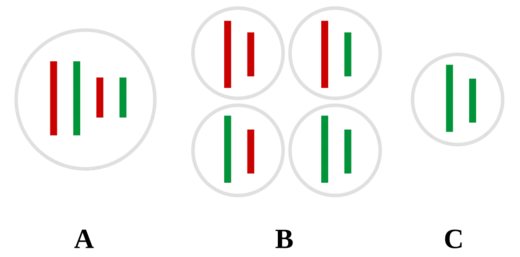
Genomics is a branch of molecular biology that brings together several disciplines to study the structure, function, evolution, mapping, and editing of genomes. A genome is the full collection of an organism’s DNA, which includes every gene and the way that DNA is arranged in a hierarchical, three-dimensional structure. While genetics looks at individual genes and how they are passed down, genomics takes a broader view: it aims to describe and measure all of an organism’s genes together, how they interact with each other, and how those interactions affect the organism. Genes can direct the production of proteins, with help from enzymes and messenger molecules. Proteins, in turn, build body structures like organs and tissues, control chemical reactions, and carry signals between cells. Genomics also involves sequencing and analyzing entire genomes using high-throughput DNA sequencing and bioinformatics to piece together and understand their function and structure. Progress in genomics has sparked a shift toward discovery-based research and systems biology, making it possible to study even very complex biological systems, such as the brain. The field also looks at phenomena that happen within a genome, including epistasis (how one gene influences another), pleiotropy (a single gene affecting multiple traits), heterosis (hybrid vigor), and other interactions between loci and alleles.
**History**
**Etymology** The word comes from the Greek ΓΕΝ *gen*, meaning “become, create, creation, birth,” and has given rise to terms like genealogy, genesis, genetics, genic, genomere, genotype, and genus. The word *genome* (from the German *Genom*, credited to Hans Winkler) had been used in English since 1926, but *genomics* was coined by Tom Roderick, a geneticist at the Jackson Laboratory in Bar Harbor, Maine. He came up with the term over beers with James E. Womack, Tom Shows, and Stephen O’Brien at a 1986 meeting in Maryland about mapping the human genome. It was first used as the name of a new journal and later became the name of an entire scientific discipline.
**Early sequencing efforts** After Rosalind Franklin confirmed the helical structure of DNA, James D. Watson and Francis Crick published the structure of DNA in 1953, and Fred Sanger published the amino acid sequence of insulin in 1955, sequencing nucleic acids became a major goal for early molecular biolo
- field
- Molecular biology
- known_for
- Sequencing and analysis of genomes, including the human genome
- etymology
- Coined by Tom Roderick in 1986
- first_sequenced_genome
- Bacteriophage MS2-RNA (1976)
- first_DNA_genome
- Bacteriophage φX174 (1977)
- first_free_living_organism
- Haemophilus influenzae (1995)
- first_eukaryote
- Saccharomyces cerevisiae (1996)
Lore & Background
The term genomics was coined by Tom Roderick, a geneticist at the Jackson Laboratory, over beers with James E. Womack, Tom Shows and Stephen O'Brien at a meeting on mapping the human genome in 1986. It first served as the name for a new journal and then became a whole new science discipline. Early sequencing efforts followed the elucidation of DNA's structure by James D. Watson and Francis Crick in 1953 and Fred Sanger's amino acid sequence of insulin in 1955. In 1964, Robert W. Holley and colleagues determined the first nucleic acid sequence, the ribonucleotide sequence of alanine transfer RNA. Marshall Nirenberg, Philip Leder, and Har Gobind Khorana then cracked the genetic code, with the full set of 64 codons (including stop codons) fully deciphered by 1966.
Reader's Guide
Frederick Sanger and his colleagues developed the Plus and Minus technique in 1975, which could sequence up to 80 nucleotides at a time. This led to the chain-termination (Sanger) method, which formed the basis of DNA sequencing, genome mapping, data storage, and bioinformatic analysis for the following quarter-century. In 1977, Sanger's group sequenced the first fully sequenced DNA-based genome, bacteriophage φX174. Walter Gilbert and Allan Maxam independently developed the Maxam-Gilbert chemical method that same year. These technologies enabled rapid genome sequencing: the human mitochondrion in 1981, the first eukaryotic chromosome in 1992, the first free-living organism Haemophilus influenzae in 1995, and the first complete eukaryotic genome (Saccharomyces cerevisiae) in 1996. The Human Genome Project produced a rough draft in 2001 and a finished sequence by 2007. The 1000 Genomes Project announced sequencing of 1,092 genomes in 2012. Genomics has triggered a revolution in discovery-based research and systems biology, facilitating understanding of complex biological systems such as the brain.
Did You Know?
- The term genomics was coined by Tom Roderick over beers in 1986.
- The first nucleic acid sequence ever determined was the ribonucleotide sequence of alanine transfer RNA in 1964.
- The first fully sequenced DNA-based genome was bacteriophage φX174 in 1977.
- The first free-living organism to have its genome sequenced was Haemophilus influenzae in 1995.
Frequently Asked Questions
What is Genomics?
Genomics is a branch of molecular biology that studies an organism's entire DNA collection—its structure, function, evolution, mapping, and editing. Rather than focusing on single genes, it examines how all genes interact together and how the DNA is organized in a hierarchical, three-dimensional architecture.
How is Genomics different from Genetics?
Genetics zooms in on individual genes and how they are inherited, while genomics takes a whole-systems view of every gene at once. Genomics also asks how those genes interact with each other and how those interactions shape the organism as a whole.
Who coined the term 'Genomics'?
The word was coined by Tom Roderick in 1986. It blends 'genetics' with the suffix '-omics' to signal the field's broader, whole-genome scope compared to traditional single-gene studies.
What was the first genome ever sequenced?
The first sequenced genome belonged to Bacteriophage MS2-RNA in 1976, followed the next year by the DNA genome of Bacteriophage φX174 in 1977. The first free-living organism to have its genome fully sequenced was Haemophilus influenzae in 1995.
Why is Genomics important in molecular biology?
Genomics lets scientists describe, measure, and analyze an organism's complete gene set simultaneously, revealing how gene interactions drive traits and behavior. It underpins landmark efforts like the human genome project and powers modern advances in medicine, evolutionary biology, and gene editing.
More in Genetics Fundamentals 1-24
Spotted an error? Know more?
This is a living reference — every entry is fact-audited, and reader corrections feed straight into our audit queue. Suggest an edit · See this site's audit record