Heterosis
Hybrid vigor from genetic mixing of parents.

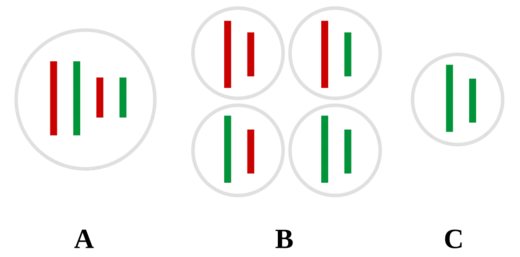
Heterosis, also known as hybrid vigor or outbreeding enhancement, refers to the improved or increased function of any biological quality in a hybrid offspring. An offspring is heterotic if its traits are enhanced as a result of mixing the genetic contributions of its parents, often exhibiting traits that are more than the simple addition of the parents' traits. This phenomenon can be explained by Mendelian or non-Mendelian inheritance and is of significant interest in agriculture for traits such as higher yield, quicker maturity, stability, and drought tolerance.
- field
- Genetics, Agriculture
- known_for
- Improved function in hybrid offspring; opposite of inbreeding depression
- key_concepts
- Dominance hypothesis, Overdominance hypothesis, Epigenetic contribution
Lore & Background
An epigenetic contribution to heterosis has been established in plants and reported in animals. MicroRNAs (miRNAs) in hybrid plants often have non-additive expression, suggesting involvement in growth, vigor, and adaptation. Heterosis effects with a genome dosage-dependent epigenetic basis have been demonstrated in genetically isogenic F1 triploid plants, where paternal genome excess F1 triploids display positive heterosis and maternal genome excess F1s display negative heterosis. In an allopolyploid hybrid of two Arabidopsis species, hybrid vigor was due to epigenetic control in the upstream regions of two genes, involving acetylation or methylation of specific amino acids in histone H3.
Reader's Guide
Heterosis is a central concept in genetics and agriculture, explaining the enhanced performance of hybrid offspring compared to their parents. Its significance lies in its practical applications for crop and livestock improvement, where breeders exploit hybrid vigor to achieve higher yields, faster growth, and greater resilience. The scientific understanding of heterosis has evolved from early Mendelian explanations to include dominance, overdominance, and epigenetic mechanisms, though debate continues over which mechanism predominates. The dominance hypothesis currently holds more experimental support, but the possibility of overdominance or favorable epistatic contributions remains an open question. Heterosis also provides insight into the maintenance of sexual reproduction, as outcrossing masks deleterious recessive alleles. The phenomenon is distinct from outbreeding depression, where hybrid fitness can be reduced due to incompatible traits from parents.
Did You Know?
- The term heterosis was coined by G.H. Shull to replace heterozygosis and avoid limiting the term to Mendelian inheritance effects.
- Inbreeding depression occurs when related parents have children with traits that negatively influence fitness largely due to homozygosity.
- Not all outcrosses result in heterosis; some produce outbreeding depression with effects similar to inbreeding depression.
- Epigenetic contributions to heterosis have been established in plants and reported in animals, involving microRNAs and histone modifications.
Frequently Asked Questions
What is Heterosis?
Heterosis, commonly called hybrid vigor, is the phenomenon where a hybrid offspring displays biological traits that outperform the simple sum of what its two parents individually contribute. In other words, mixing the genetic material of two distinct lineages can produce a child that is stronger, faster-growing, or more resilient than either parent alone.
What mechanisms explain Heterosis?
Geneticists typically invoke three overlapping explanations: the dominance hypothesis (favorable dominant alleles mask harmful recessives), the overdominance hypothesis (heterozygous gene combinations themselves outperform either homozygous state), and epigenetic contributions where gene-expression regulation shifts in the hybrid. These can operate through classical Mendelian pathways as well as non-Mendelian regulatory layers.
Why does Heterosis matter in agriculture?
Crop breeders deliberately cross distinct parent lines to capture hybrid vigor, aiming for traits like higher yield, earlier maturity, greater stability across seasons, and improved drought tolerance. This is why hybrid corn and hybrid rice, for example, routinely outperform their inbred parental lines in the field.
What is the opposite of Heterosis?
The direct counter-concept is inbreeding depression, where repeated mating among close relatives accumulates deleterious recessive alleles and causes a measurable decline in fitness and vigor. Heterosis and inbreeding depression sit at opposite ends of the same genetic-variability spectrum.
Can Heterosis be predicted from the parents' traits?
Not simply by adding up the parents' values; a heterotic offspring often exceeds the midpoint or even the better parent in a given trait. This non-additive boost is precisely what makes the dominance, overdominance, and epigenetic models necessary to explain the observed hybrid performance.
More in Genetics Fundamentals 1-24
Spotted an error? Know more?
This is a living reference — every entry is fact-audited, and reader corrections feed straight into our audit queue. Suggest an edit · See this site's audit record