Inbreeding
Inbreeding increases homozygosity and risk of recessive genetic disorders.

Inbreeding occurs when closely related individuals or organisms produce offspring together. While the term is sometimes used for human reproduction, it most often describes the genetic disorders that can result from incest or other unions between blood relatives, due to the expression of harmful recessive traits. This process increases homozygosity—meaning offspring are more likely to inherit two identical copies of a gene—which raises the chance of recessive traits appearing. In extreme cases, this typically leads to a temporary drop in a population's biological fitness, known as inbreeding depression, or its ability to survive and reproduce.
An individual who inherits such harmful traits is often called inbred. To avoid these effects, many species have developed inbreeding avoidance mechanisms, which is a major evolutionary reason for outcrossing. Crossbreeding between different populations can sometimes boost fitness-related traits, but it can also cause negative effects called outbreeding depression. However, increased homozygosity also raises the probability of fixing beneficial alleles in a population and slightly lowers the chance of fixing harmful ones. Through purifying selection, inbreeding can purge deleterious alleles from a population.
In selective breeding, inbreeding is a deliberate technique. Livestock breeders may use it to establish a new desirable trait or create distinct families within a breed, but they must watch for unwanted characteristics in offspring, which can then be removed through further breeding or culling. Inbreeding also helps reveal how a gene acts and exposes harmful recessive alleles for elimination. In plant breeding, inbred lines are used as stocks to create hybrid lines that benefit from heterosis. In nature, plants also inbreed through self-pollination.
Inbreeding can significantly influence gene expression, which may prevent inbreeding depression.
**Overview**
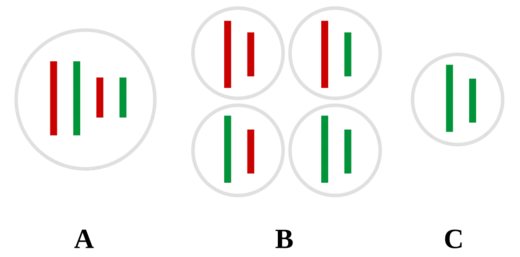
Offspring of biologically related parents face a higher risk of congenital birth defects, especially when the parents are closely related. Such pairings have a 25% chance of producing homozygous recessive zygotes—offspring with two recessive alleles—which can cause disorders if those alleles are harmful. Since most recessive alleles are rare in a population, two unrelated partners are unlikely to both carry the same harmful allele. But close relatives shar
- field
- Genetics, Evolutionary Biology, Selective Breeding
- known_for
- Production of offspring from closely related individuals, increasing homozygosity and risk of recessive disorders
- key_effect
- Inbreeding depression and purging of deleterious alleles through natural selection
Lore & Background
Inbreeding is a technique used in selective breeding. In livestock breeding, breeders may use inbreeding when trying to establish a new and desirable trait in the stock and for producing distinct families within a breed, but will need to watch for undesirable characteristics in offspring, which can then be eliminated through further selective breeding or culling. Inbreeding also helps to ascertain the type of gene action affecting a trait and is used to reveal deleterious recessive alleles. In plant breeding, inbred lines are used as stocks for the creation of hybrid lines to make use of the effects of heterosis. Inbreeding in plants also occurs naturally in the form of self-pollination.
Reader's Guide
Inbreeding is significant because it increases homozygosity, which can expose deleterious recessive alleles to natural selection, leading to inbreeding depression—a temporary decrease in a population's ability to survive and reproduce. However, this process can also purge severely deleterious alleles from a population over time, though slightly deleterious mutations are not as effectively eliminated. Inbreeding does not alter allele frequencies but increases the proportion of homozygotes, which can lead to fixation of beneficial alleles as well. The avoidance of inbreeding via inbreeding avoidance mechanisms is a main selective reason for outcrossing. Crossbreeding between populations sometimes has positive effects on fitness-related traits but can also lead to outbreeding depression. Inbreeding history of a population affects the severity of inbreeding depression, and with persistent inbreeding, depression becomes less severe due to unmasking and elimination of severely deleterious recessive alleles. Despite disadvantages, inbreeding can ensure a higher percentage of parent genetics is passed on, reduce recombination load, and allow expression of recessive advantageous phenotypes, potentially promoting speciation under certain circumstances.
Did You Know?
- Inbreeding results in homozygosity, which can increase the chances of offspring being affected by recessive traits.
- Inbreeding does not in itself alter allele frequencies, but rather increases the relative proportion of homozygotes to heterozygotes.
- Inbreeding is a technique used in selective breeding, such as in livestock to establish new traits or in plant breeding to create hybrid lines.
- Island species are often very inbred, as isolation allows natural selection to work on their population, potentially leading to speciation.
More in Genetics Fundamentals 1-24
Spotted an error? Know more?
This is a living reference — every entry is fact-audited, and reader corrections feed straight into our audit queue. Suggest an edit · See this site's audit record