Denitrifying bacteria
Denitrifying bacteria convert nitrate to nitrogen gas in anoxic conditions.

Denitrifying bacteria are a diverse group of bacteria, encompassing many different phyla, that perform denitrification as part of the nitrogen cycle. They are notable for using oxidized nitrogen compounds such as nitrate and nitrite as terminal electron acceptors in the absence of oxygen, converting them back to nitrogen gas or nitrous oxide.
- Genera identified
- over 50
- Species identified
- over 125
- Estimated percentage of bacteria populat
- 10-15%
- Enzymes involved
- nitrate reductase (NAR), nitrite reductase (NIR), nitric oxide reductase (NOR), nitrous oxide reductase (NOS)
Lore & Background
Denitrifying bacteria have been identified in over 50 genera with over 125 different species and are estimated to represent 10-15% of bacteria population in water, soil and sediment. Examples include several species of Pseudomonas, Alcaligenes, and Bacillus. The majority are facultative aerobic heterotrophs that switch from aerobic respiration to denitrification when oxygen runs out. This group can thrive in a wide range of habitats including extreme environments such as those that are highly saline and high in temperature. Aerobic denitrifiers mainly belong to α-, β- and γ-Proteobacteria.
The denitrification process involves multiple steps: nitrate is converted to nitrite by nitrate reductase, nitrite to nitric oxide by nitrite reductase, nitric oxide to nitrous oxide by nitric oxide reductase, and nitrous oxide to dinitrogen by nitrous oxide reductase. The overall reaction converts two nitrate molecules into one nitrogen molecule and six water molecules. Any of the intermediate products can be exchanged with the soil environment.
Anaerobic oxidation of methane coupled to denitrification was first observed in 2008, with the isolation of a methane-oxidizing bacterial strain. This process uses excess electrons from methane oxidation to reduce nitrates, removing both fixed nitrogen and methane from aquatic systems. Denitrifying bacteria have been found to play a significant role in the oxidation of methane in deep freshwater bodies, such as in Lake Constance where M. oxyfera-like bacteria carry out nitrate/nitrite-dependent anaerobic methane oxidation.
Reader's Guide
Denitrifying bacteria are an essential component in treating wastewater, converting ammonium to nitrate via nitrification and finally to nitrogen gas via denitrification. Since they are heterotrophic, an organic carbon source is supplied in an anoxic basin, where they use the redox of nitrate to oxidize carbon, creating nitrogen gas that bubbles out. The process of denitrification can lower soil fertility as nitrogen is removed and lost to the atmosphere, though this loss can be regained via introduced nutrients or fixation by nitrifying bacteria and cyanobacteria. Denitrification also produces by-products such as nitric oxide (an ozone depleting species) and nitrous oxide (a potent greenhouse gas). Denitrifying bacteria are considered high quality bioremediators due to their adaptability to various environments and lack of toxic leftovers. The anaerobic denitrification coupled to methane oxidation may contribute significantly to global methane and nitrogen cycles, especially given anthropogenic changes, and has been shown capable of removing excess nitrate from fertilizer runoff even in hypoxic conditions.
Metabolic Versatility and Ecological Breadth
Denitrifying bacteria represent one of the most metabolically flexible groups in the microbial world. Spanning more than fifty genera and over one hundred twenty-five described species, they are estimated to constitute ten to fifteen percent of all bacterial populations found in water, soil, and sediment environments. Their taxonomic reach extends across numerous phyla, with aerobic denitrifiers clustering primarily within the alpha, beta, and gamma classes of Proteobacteria. Well-known examples include species of Pseudomonas, Alcaligenes, and Bacillus. What makes this group remarkable is their metabolic adaptability. Most are facultative aerobic heterotrophs that rely on oxygen for respiration under normal conditions but seamlessly switch to using nitrate or nitrite as a terminal electron acceptor once oxygen is depleted. The reducing power they harvest can come from organic carbon compounds in heterotrophic denitrification, from inorganic substances like hydrogen, reduced iron, or sulfur species in autotrophic denitrification, or from a combination of both in organisms called mixotrophs. This flexibility allows them to colonize an extraordinary range of habitats, including extreme environments characterized by very high salinity or elevated temperatures.
The Enzymatic Cascade of Denitrification
At the heart of denitrification lies a precisely sequenced enzymatic pathway that converts oxidized nitrogen compounds back into gaseous nitrogen, effectively returning nitrogen to the atmosphere as part of the global nitrogen cycle. The process generates ATP for the bacterium and proceeds through four distinct reduction steps, each catalyzed by a dedicated enzyme. Nitrate reductase (Nar) initiates the cascade by converting nitrate to nitrite. Nitrite reductase (Nir) then transforms nitrite into nitric oxide. Nitric oxide reductase (Nor) follows, reducing nitric oxide to nitrous oxide. Finally, nitrous oxide reductase (Nos) completes the pathway by converting nitrous oxide into dinitrogen gas. The overall stoichiometry of the process can be summarized as two molecules of nitrate accepting ten electrons and twelve protons to yield one molecule of nitrogen gas and six molecules of water. Importantly, the intermediate products generated at each step are not locked inside the cell; they can be exchanged with the surrounding soil or water environment, meaning that incomplete denitrification can release nitrous oxide or other nitrogen oxides into the ecosystem.
Methane Oxidation Coupled to Denitrification
A particularly significant discovery, first reported in 2008 with the isolation of a methane-oxidizing bacterial strain, revealed that certain denitrifying bacteria can couple the anaerobic oxidation of methane to the reduction of nitrate. In this coupled process, the excess electrons generated during methane oxidation are channeled into reducing nitrates, simultaneously removing both fixed nitrogen and methane from aquatic systems. This metabolism operates across diverse habitats, including sediments, peat bogs, and stratified water columns. The climate relevance of this mechanism is substantial. Methane ranks as the second most significant anthropogenic greenhouse gas, carrying a global warming potential roughly twenty-five times that of carbon dioxide, and freshwater bodies are a major source of global methane emissions. Research conducted on Europe's Lake Constance demonstrated that nitrate- and nitrite-dependent anaerobic methane oxidation, often abbreviated as n-damo, functions as a dominant methane sink in deep lakes. This finding challenged the long-held assumption that only aerobic methanotrophic bacteria could mitigate methane emissions, revealing that M. oxyfera-like organisms, closely related to Candidatus Methylomirabilis oxyfera, carry out this process in oxygen-depleted zones. Given the recent anthropogenic surge in both methane and nitrogen inputs, this coupled pathway may play a critical role in the global carbon and nitrogen cycles.
Bioremediation and Environmental Applications
Beyond their fundamental role in the nitrogen cycle, denitrifying bacteria have emerged as powerful tools for environmental cleanup. Their capacity to remove excess nitrate caused by agricultural fertilizer runoff is especially valuable, and this function persists even under hypoxic conditions where oxygen is scarce. Their broad environmental adaptability, combined with the fact that their metabolic end products leave no toxic or undesirable residues, unlike many other microbial metabolisms, makes them exceptionally high-quality bioremediation agents. Practical applications have been demonstrated in diverse and challenging settings. A 2006 study documented their use in addressing hydrocarbon contamination in the Antarctic, while a 2016 investigation showed that simply altering the environmental conditions surrounding the bacterial community could significantly increase denitrification rates. These findings underscore the practical potential of harnessing denitrifying bacteria in engineered systems. Because these organisms thrive across a wide spectrum of habitats and can draw reducing power from both organic and inorganic sources, they offer a versatile and environmentally clean solution for remediating nitrogen pollution and, in some cases, co-removing methane from water systems.
Frequently Asked Questions
Who is Denitrifying bacteria?
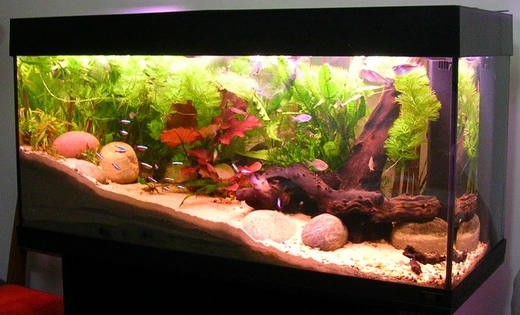
Denitrifying bacteria are a diverse group of microorganisms spanning over 50 identified genera and more than 125 species, making up roughly 10–15% of the bacterial population in a fish tank. They are the unsung final-act characters of the nitrogen cycle, working in oxygen-poor zones like deep substrate layers.
What are Denitrifying bacteria's powers/role?
Their signature power is using nitrate and nitrite as terminal electron acceptors when oxygen isn't available, breaking those compounds down step by step through a chain of four key enzymes. They run the full sequence—nitrate reductase, nitrite reductase, nitric oxide reductase, and nitrous oxide reductase—until the nitrogen is fully released.
Why is Denitrifying bacteria important?
Without them, nitrate would accumulate indefinitely in a closed aquarium, eventually poisoning fish and stalling plant growth. They are the only biological mechanism that actually removes nitrogen from the system rather than just shuffling it between chemical forms.
Where do Denitrifying bacteria live in the tank?
They thrive in anoxic microenvironments—deep in the substrate, inside filter media, or behind decorations where oxygen can't penetrate. That's why maintaining a thick planted bed or ample bio-media is a fan-favorite way to give them a proper home base.
More in Fishkeeping, Part 2 1-24
Spotted an error? Know more?
Reader corrections go straight into our review queue. Suggest an edit · How this site is sourced