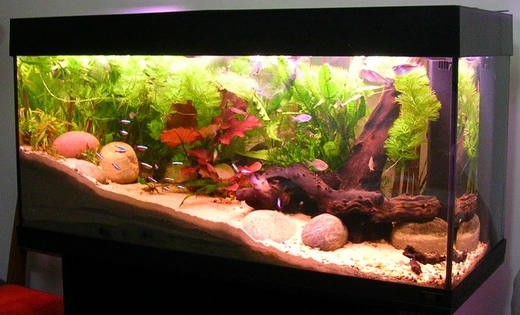
Corydoras
Armoured catfish genus with venomous spines and diverse South American distribution.

Corydoras are a group of small, armored freshwater catfish native to South America. They belong to the family Callichthyidae and the subfamily Corydoradinae. While individual species tend to have very limited home ranges, the genus as a whole is found across a vast area: from east of the Andes to the Atlantic coast, and from Trinidad down to the Río de la Plata in northern Argentina. They are absent from Panama.
These fish come in a wide variety of shapes and colors. They are small, measuring between 2.5 and 12 cm (1.0 to 4.7 in) in standard length. Their main defenses are a bony body armor and sharp, usually venomous spines.
The name *Corydoras* comes from the Greek words *kory* ("helmet") and *doras* ("skin"). For a long time it was the largest genus of Neotropical fishes, with over 160 species, but it has since been split into several genera. It is sometimes placed in the tribe Corydoradini alongside *Brochis*. The type species is *Corydoras geoffroy*. Many species kept by aquarists are still scientifically unnamed; these are given "C-numbers," a system started by Hans-Georg Evers in 1993 for the magazine DATZ. As of February 2014, 158 C-numbers had been assigned, with 32 later linked to proper scientific names. Three species (*C. barbatus*, *C. macropterus*, and *C. prionotos*) have been moved to the genus *Scleromystax*. *Brochis* differs from *Corydoras* in having more dorsal fin rays, though some researchers now consider *Brochis* a synonym of *Corydoras*—a change that is not universally accepted. The sixray corydoras belongs in *Aspidoras*.
In the wild, Corydoras live in small streams, along the edges of larger rivers, in marshes, and in ponds. They prefer slow-moving or nearly still water that is shallow and murky, but not stagnant. Most are bottom-dwellers, sifting through sand, gravel, or detritus. They are often found along stream banks thick with plants. They tolerate a range of water types but favor soft water with a neutral to slightly acidic or slightly alkaline pH and a hardness of 5–10 degrees. They cannot handle much salt (some species none at all) and avoid tidal areas. They are social fish, usually seen in shoals, and many species form schools of hundreds or even thousands, mostly of a single species but sometimes mixed. Unlike many catfish, they are active both day and night.
- Size range
- 2.5 to 12 cm (1.0 to 4.7 in) SL
- Type species
- Corydoras geoffroy
- Number of species
- more than 160 species (with several hundred not yet classified)
- C numbers assigned as of february 2014
- 158
- C numbers with scientific names
- 32
- Longevity example
- C. aeneus said to have lived 27 years in captivity; 20 years not uncommon
- Exports from amazonas 2006 to 2015
- over 8,600,000 Corydoras, roughly 6.06% of the state's ornamental fish exports
Lore & Background
The name Corydoras is derived from the Greek kory ('helmet') and doras ('skin'). It was by far the largest genus of Neotropical fishes with more than 160 species, but has since been split into a number of genera. It is sometimes regarded as being in the tribe Corydoradini, along with Brochis. Several hundred species are not yet classified but kept by aquarists, given 'C-numbers' devised by Hans-Georg Evers for the German fishkeeping magazine DATZ in 1993. As of February 2014, 158 C-numbers had been assigned, of which 32 had been assigned appropriate scientific names. The species C. barbatus, C. macropterus and C. prionotos have been reclassified into the genus Scleromystax. Brochis is differentiated from Corydoras due to the higher number of dorsal fin rays; however, Brochis has recently been suggested to be a synonym of Corydoras, though this is contested and not universally accepted. The sixray corydoras belongs in Aspidoras.
Corydoras are generally found in smaller-sized streams, along the margins of larger rivers, in marshes, and in ponds. They are native to slow-moving and almost still streams and small rivers of South America, where the water is shallow and very murky. Most species are bottom-dwellers, foraging in sand, gravel or detritus. They inhabit a wide variety of water types but tend toward soft, neutral to slightly acidic or slightly alkaline pH and 5–10 degrees of hardness. They can tolerate only a small amount of salt and do not inhabit environments with tidal influences. They are often seen in shoals, with many species found in aggregations of hundreds or even thousands of individuals. Unlike most catfishes, which are nocturnal, these species are nocturnal while also being active during the daytime. Corydoras are capable of breathing both water and air, often swimming to the surface to quickly ingest air before re-submerging, a behavior that increases when exposed to low oxygen availability.
Their main food is bottom-dwelling insects and insect larvae and various worms, as well as some vegetable matter. Although no Corydoras are piscivorous, they will eat flesh from dead fishes. Their feeding method is to search the bottom with their sensory barbels and suck up food items with their mouth. In several species, it has been observed that after initial evasive reaction to threat, they lie still, suggested to be a form of cryptic behavior, though it is also argued that most species do not have cryptic coloration nor freezing behavior and continue to exist due to their armor and venom. A few species of Otocinclus are considered to be Batesian mimics of certain former Corydoras species. A unique form of insemination has been described in Osteogaster aenea, involving the female drinking sperm, which then moves through her intestines and is discharged with her eggs into a pouch formed by her pelvic fins. Because the T-position is exhibited in other species, it is likely this behavior is common in the subfamily.
Reader's Guide
The genus is well known among aquarists for its many ornamental species. Corydoras are quite placid and well suited to tropical freshwater community aquariums, as they get along well with most other species and are not aggressive. They are recommended to be kept in shoals of four to six or more. Corydoras are mostly bottom feeders, so they should be offered sinking pellets as well as supplements of live and frozen foods. Most Corydoras prefer water with a slightly basic pH between 7 and 8, and temperatures between 72–78 °F (22–26 °C). They do not do well in fish tanks with high nitrate levels, which can lead to infection of the barbels. Contrary to popular belief, these fish can be kept in a tank with gravel without affecting their barbels, as long as there are no sharp edges on the gravel, although they do prefer sand substrate. It is a myth that salt cannot be used on this species as a means of parasite medication; salt can be added to rid the fish of ich infection. These fish are fairly easy to keep, being peaceful, hardy, active and entertaining. Occasionally they will dart to the surface to take a breath of air, which is normal, but if done in excess can indicate poor water conditions. Where investigated, Corydoras species have been shown to be diurnal and crepuscular rather than nocturnal, with activity peaking at twilight. Corydoras are a very popular choice for a community aquarium and are widely kept throughout the world. Between 2006 and 2015, over 8,600,000 Corydoras were exported from the state of Amazonas, accounting for roughly 6.06% of the state's ornamental fish exports. Their longevity in the aquarium is noteworthy; C. aeneus is said to have lived 27 years in captivity and 20 years is not uncommon.
Did You Know?
- Corydoras are protected from predators by their body armor and sharp, typically venomous spines.
- The name Corydoras comes from Greek words meaning 'helmet' and 'skin'.
- A unique insemination method in Osteogaster aenea involves the female drinking sperm, which then passes through her intestines.
Taxonomy and a Long History of Misidentification
The pygmy corydoras, scientifically named Gastrodermus pygmaeus, received its formal description in 1966 through the work of Joachim Knaack, a German biologist and physician who published in Aquarien und Terrarien-Zeitschrift. The species name draws on the Latin word pygmaeus, carrying the meaning of dwarf or pygmy. Knaack designated one holotype specimen and one additional paratype. What makes the taxonomy of this fish particularly interesting is its long history of misidentification. A visually similar species, Corydoras hastatus, had been described back in the 1880s. For decades, hastatus stood as the only known miniature member of the Corydoras genus. As a result, specimens of the pygmy corydoras collected and catalogued between the 1920s and 1950s were routinely mislabeled as hastatus in the scientific literature. This confusion persisted until Knaack's 1966 work finally separated the two species and gave the pygmy corydoras its proper identity.
Striking Coloration and Rapid Juvenile Development
The adult pygmy corydoras presents a beautifully patterned silver body. A bold, unbroken black stripe runs horizontally along the center of the flanks, stretching from the very tip of the snout all the way to the caudal peduncle. A second, thinner black line traces the lower body, beginning behind the ventral fins and continuing into the tail. The upper surface carries a wash of light black or dark gray shading from snout to tail. Males typically reach about 1.9 centimeters, while females grow to roughly 2.5 centimeters and develop a rounder, broader body, particularly when carrying eggs. The absolute maximum recorded length is approximately 3.2 centimeters. The developmental journey of the young is equally fascinating. Newly hatched fry display vertical stripes along their sides, but these fade by the end of the first month as the adult horizontal markings emerge. Coloration begins appearing around five days after hatching, and the body shape and barbels become more pronounced by about two weeks. By the one-month mark, the signature black lateral line is clearly visible. Growth is rapid, with young reaching 13 millimeters within six to eight weeks.
Range, Habitat, and a Distinctive Breeding Ritual
The pygmy corydoras occupies tropical inland waters across three South American countries. In Peru, it is found in tributaries of the Nanay River; in Ecuador, in tributaries of the Aguarico River; and in western Brazil, in tributaries of the Madeira River. The original holotype was collected at Calama, Brazil, along the Madeira River near where the Ji-Paraná River flows in. The species tolerates a pH range of 6.0 to 8.0, water hardness between 2 and 25 dGH, and temperatures from 22 to 26 degrees Celsius. Its natural diet includes worms, benthic crustaceans, insects, and plant matter. Breeding behavior is quite distinctive. The female produces a clutch of roughly 100 eggs. She holds two to four eggs at a time in a pouch formed by her pelvic fins while the male fertilizes them, a process lasting about 30 seconds. She then swims to a safe spot and attaches the sticky, opaque eggs, which carry a slight tan and opal sheen, to a surface. They remain attached for approximately three days before hatching.
Life in the Community Aquarium
In the aquarium, the pygmy corydoras is a gentle, social species that thrives in groups. While four individuals represent a minimum, ten or more allow the fish to display their most natural shoaling behavior. Unlike the larger, more commonly kept Corydoras species, these tiny fish are often seen swimming through mid-water and lower regions of the tank rather than hugging the bottom. They pair well with small community fish such as ember tetras, small shrimp like Neocaridina species, and snails. Substrate choice matters greatly: fine sand is strongly recommended because sharp substrates can injure or cause the loss of their delicate barbels. A pH of 6.5 to 7.0 is typical in captive setups. While they will accept most sinking foods, flakes, frozen items, and wafers, they appear to do best when live foods such as microworms or newly hatched Artemia nauplii are included alongside prepared options. Aggressive tankmates are a poor match, as the pygmy corydoras simply will not thrive under stress. A planted community aquarium is often considered the ideal environment for this species.
Frequently Asked Questions
What are Corydoras?
Corydoras are a large genus of small, armored freshwater catfish in the family Callichthyidae, native to South American rivers and streams. They are one of the most popular community-tank fish among hobbyists due to their gentle behavior and striking variety of patterns.
How big do Corydoras get?
Species in the genus range from about 2.5 to 12 cm (roughly 1 to 4.7 inches) in standard length, so they stay small enough for most home aquariums. They do not continue growing into large adults, which makes them a long-term fit for community setups.
How long can Corydoras live in captivity?
While a typical lifespan is around five to ten years, some individuals far exceed that; C. aeneus has been reported to reach 27 years in a home tank. Reaching twenty years is not uncommon when water quality and diet are well managed.
What makes Corydoras different from other catfish?
Instead of smooth skin, their bodies are encased in interlocking bony plates that form a rigid armor. They also carry venomous spines on their dorsal and pectoral fins, a defensive trait that distinguishes them from most other small aquarium catfish.
Where are Corydoras found in the wild?
The genus spans a vast region of South America, from east of the Andes to the Atlantic coast and from Trinidad south to the Río de la Plata in northern Argentina. They are notably absent from Panama, and any single species usually occupies only a relatively narrow stretch of river or tributary.
More in Fishkeeping, Part 2 1-24
Spotted an error? Know more?
Reader corrections go straight into our review queue. Suggest an edit · How this site is sourced