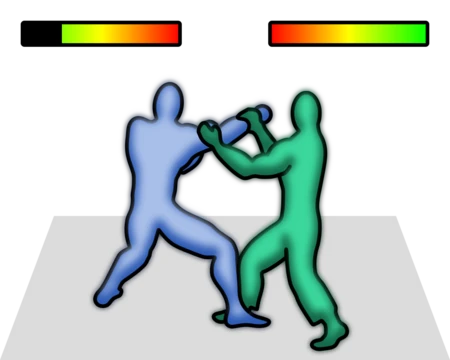
Asuka 120%
A bishōjo fighting series set in a school club tournament.

Asuka 120% (あすか120%), subtitled Burning Fest., is a Japanese bishōjo fighting video game series from FamilySoft. Set in a school where members of school clubs fight each other in a fighting tournament, the series was originally released on the FM Towns home personal computer in 1994. It is notable for its unique gameplay systems and its focus on female characters, humor, and fan service, placing it among similar bishōjo fighting games of the era.
Quick Facts
- Title
- Asuka 120%
- Platforms
- FM Towns, Sharp X68000, PC-Engine, Sega Saturn, PlayStation, Microsoft Windows
- Developer
- Fill-in-Cafe / Success / (Final and Return)
- Publisher
- FamilySoft, NEC Avenue, ASK Kodansha
- Genre
- Fighting game, bishōjo
- Creator
- Masatoshi Imaizumi
- Artist
- Aoi Nanase, Atsuko Ishida
- Composer
- Keishi Yonao
- First Release Version
- Asuka 120% BURNING Fest.
- First Release Date
- JP · March 11, 1994
- Latest Release Version
- Asuka 120% Return BURNING Fest.
- Latest Release Date
- JP · September 24, 1999
Facts from the source article.
Lore & Background
The series is set at the Ryōran Private School for Women, where each year the school's clubs hold a martial arts tournament called the 'Club Rivalry Budget Contest Mega Fight' to compete for increased budget. The story begins with the Chemistry Club president, Tetsuko Ōgigaya, scouting and training Asuka Honda to become the winner after repeated poor performances. Asuka must defeat members of several school clubs to succeed.
Gameplay is a 1v1 fighting game in the vein of Street Fighter II, but each character employs a fighting style unique to their club rather than a particular martial art. The series introduced a standard input system for special moves across the entire cast, which was uncommon at the time. It also features a 'clash system' where simultaneous hits cause no damage and lead to cancel options, and a '120%' meter that fills beyond 100% and grants unlimited super meter while draining.
The series was produced by just two full-time programmers at Fill-in-Cafe, with Masatoshi Imaizumi leading development, artwork by manga artist Aoi Nanase, and music by Keishi Yonao. Several distinct versions were released between 1994 and 1999 across multiple platforms (e.g., Asuka 120% Burning Fest., Asuka 120% Limited, Asuka 120% Final, etc.). In March 2021, Opera House announced two new entries: Asuka 120% Reborn for Mega Drive and Nintendo Switch, and Asuka 120% O-Nyuu with 3D models. At EVO Japan 2024, exA-Arcadia announced Asuka 120% EXALLENT.
Reader's Guide
Asuka 120% holds significance as a distinctive entry in the 1990s bishōjo fighting game boom, standing alongside titles like Tōkidenshō Angel Eyes, Pretty Fighter X, and Variable Geo. Its combat system, based on the beat-em-up Mad Stalker, introduced mechanics that set it apart from contemporaries: a universal special move input system, a clash system that encourages aggressive play, and a 120% meter that redefined resource management. The series' focus on school club themes and character-specific fighting styles (e.g., chemistry beakers, tennis rackets, rhythmic gymnastics) gave it a unique identity. Despite limited commercial reception—Famitsu scored Maxima Burning Fest 21 out of 40—the series maintained a cult following, leading to multiple ports and sequels across platforms. Its legacy is underscored by the 2020s revival announcements, indicating enduring interest. The series also highlights the cross-platform development practices of the era, with Fill-in-Cafe handling ports for various systems.
Did You Know?
- The '120%' in the title refers to the special meter gauge filling up at 120% instead of 100%.
- The game's clash system allows players to cancel into special moves, movement options, or throws during a simultaneous hit.
- New entries were announced in March 2021 by Opera House, including a Mega Drive version and a 3D model game.
More in Fighting games 1-24
Spotted an error? Know more?
Reader corrections go straight into our review queue. Suggest an edit · How this site is sourced