Fighting game community
A competitive gaming community centered on fighting games.

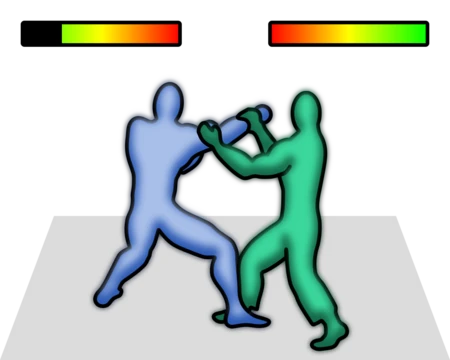
The fighting game community (FGC) is a collective of competitive gamers who play fighting games, also referring to the fan community surrounding a particular game. It started as local arcade groups in the 1990s and expanded to regional gatherings throughout the 2000s, growing to international levels in the 2010s due to esports, online gaming, and live streaming sites such as Twitch.
- Field
- Competitive gaming (fighting games)
- Known for
- Organizing tournaments such as the Evolution Championship Series (Evo), iconic moments like Evo Moment 37, and fostering a racially diverse and LGBTQ-accepting community
- Notable events
- B3: Battle by the Bay (1996), Evo 2004 (Moment 37), Evo 2023 (7,061 attendees for Street Fighter 6), Evo 2024 (9,221 unique competitors)
Lore & Background
The FGC began in the 1990s with the release of Street Fighter II: The World Warrior in 1991, which popularized direct player-versus-player competition. Local arcade communities formed in places like Chinatown Fair in New York City, Super Just Games in Chicago, and Golfland arcades in California. In 1996, B3: Battle by the Bay was held to settle debates over the best Street Fighter player, though earlier nationwide tournaments like the 1995 'World Championship of Street Fighter II' organized by Nintendo Power had already taken place. The community grew online via forums like Shoryuken.com, created in 2000, which became a central hub for organizing major tournaments such as the Evolution Championship Series (Evo).
Reader's Guide
The FGC's significance lies in its grassroots origins and its role in shaping competitive gaming culture. It introduced iconic moments like Evo Moment 37, where Daigo Umehara parried every hit of Chun-Li's super art at Evo 2004, a moment hailed as 'esports' most thrilling moment' by Rolling Stone. The community has been noted for its racial diversity and acceptance of LGBTQ competitors, with top players like SonicFox and Magi being open about their identities. Despite the rise of esports, many FGC members have rejected the esports label. The community has faced challenges, including sexual assault and harassment allegations involving prominent organizers and players. The COVID-19 pandemic paused offline events, but post-pandemic tournaments have grown, with Evo 2024 setting a record for unique competitors in any esports event. The FGC remains a small but influential part of the fighting game market, with tournaments drawing thousands of competitors and millions of viewers.
Did You Know?
- The first nationwide fighting game tournament is often debated, but earlier events include the 1995 'World Championship of Street Fighter II' organized by Nintendo Power, predating B3: Battle by the Bay (1996).
- Evo Moment 37, a comeback by Daigo Umehara at Evo 2004, is described by Rolling Stone as 'esports' most thrilling moment.'
- The FGC has been noted as relatively accepting of LGBTQ competitors, with top players like SonicFox and Magi being open about their gender identity.
- Evo 2024 drew 9,221 unique competitors, a record for the Evolution Championship Series, though it is not confirmed as the highest across all esports events.
From Arcade Floors to National Stages
The competitive fighting game scene traces its roots to 1991, when Street Fighter II: The World Warrior transformed the genre by letting two players face off directly rather than simply chasing a high score. That shift in design—along with the introduction of combos and a character roster—ignited a grassroots tournament culture across American arcades. By the mid-1990s, tight-knit competitive groups had formed around specific venues: Chinatown Fair in New York, Super Just Games near Chicago, and the Golfland arcade halls in Sunnyvale and Stanton, California. Players also began coordinating through early internet message boards. The movement's first truly national moment came in 1996 with B3: Battle by the Bay, a tournament conceived to settle an ongoing argument over who held the top Street Fighter seat in the country, yet it still drew competitors from abroad. Across the Atlantic, the scene was equally alive; London arcades from the basement of Hamleys to the Casino Leisure Centre hosted regular matches, and the first known official tournament took place in 1994 at the Trocadero, featuring Super Street Fighter II Turbo.
Scaling Up: Forums, Online Play, and the Esports Crossover
The turn of the millennium brought two forces that reshaped how players connected. In early 2000, the Shoryuken.com forum launched—named after a signature Street Fighter move—and quickly became the central hub where competitors shared strategies and organized events. That same era saw the birth of the Evolution Championship Series, which grew into one of the most globally recognized fighting game gatherings. Meanwhile, 2004 marked a technological milestone: Mortal Kombat: Deception, Dead or Alive Ultimate, and the Xbox Street Fighter Anniversary Collection became the first titles in the genre to offer online multiplayer, removing geography as a barrier. The mid-2000s brought a lull as Capcom's output slowed and the genre's commercial momentum waned, creating a vacuum that titles like Tekken, Soulcaliber, and Virtua Fighter filled. Then in 2007, Dead or Alive 4 entered the Championship Gaming Series, becoming the first fighting game broadcast as a televised competitive sport on DirecTV in partnership with BSkyB and STAR TV. By the 2010s, the convergence of esports culture, persistent online infrastructure, and live-streaming platforms like Twitch propelled the scene to a genuinely international scale.
The Street Fighter IV Renaissance
After nearly eight years without a mainline entry following Street Fighter III: 3rd Strike, Capcom's announcement of Street Fighter IV in 2007 sent shockwaves through the community. The game earned widespread critical acclaim and is widely regarded as the single greatest catalyst for the fighting game community's revival. Its release flooded the scene with fresh competitors and gave rise to a generation of players who would become household names in the genre—SonicFox, Momochi, Snake Eyez, and GamerBee among them. The momentum did not stop at one title. In the years following, a wave of new fighting games entered development, and the tournament circuit expanded accordingly. Events began being broadcast live on Twitch, opening the spectacle to audiences far beyond the physical venue. Corporate sponsorship also entered the picture, with organizations such as Evil Geniuses, Broken Tier, and Mad Catz providing financial support to players in exchange for advertising exposure. For the first time, a meaningful number of competitors could treat the scene as a viable professional pursuit rather than purely a hobby.
Identity, Turmoil, and a New Era
Despite the growing overlap with mainstream esports, many FGC members have consistently resisted applying the "esports" label to their community, preferring to maintain a distinct identity. The numbers underscore that distinction: while blockbuster titles like Tekken 7, Super Smash Bros. Ultimate, and Mortal Kombat 11 each surpassed ten million copies sold, the largest fighting game tournaments still field roughly three to seven thousand competitors. Viewership, however, has exploded—Evo events peak at around four hundred thousand concurrent viewers, with cumulative unique viewership exceeding 3.7 million across all games. The community has also faced serious internal challenges, including sexual assault and harassment allegations that led to legal proceedings involving prominent figures such as Evo co-founder Joey Cuellar and high-profile Super Smash Bros. players. On a more constructive note, 2020 saw the Japan Fighting Game Publishers Roundtable unite development leads from seven major franchises for a public discussion, later expanded to include King of Fighters and Virtua Fighter developers. The pandemic forced a sudden shift to online play, yet the scene rebounded powerfully: Evo 2023 drew 7,061 attendees for its Street Fighter 6 bracket, and Evo 2024 set a record for the most unique competitors in any esports event in history.
Frequently Asked Questions
What is the Fighting Game Community (FGC)?
The FGC is the collective of players, tournament organizers, and fans who compete in and follow competitive fighting games. It covers both the active competitive circuit and the broader fanbase surrounding individual titles.
Where did the FGC originate?
Its roots trace back to small local arcade groups that formed in the 1990s, where players challenged one another face-to-face. Those gatherings expanded into regional meetups during the 2000s and eventually became a global scene by the 2010s, fueled by esports, online play, and streaming.
What is 'Evo Moment 37'?
It refers to a jaw-dropping 2004 Evolution Championship Series clip in which Justin Wong landed a last-second combo that stunned the entire arena. The moment became one of the most iconic pieces of competitive gaming lore and is often cited as a defining highlight of the FGC.
What are the biggest FGC tournaments?
The Evolution Championship Series (Evo) is the flagship annual event, with recent editions drawing thousands of competitors—Evo 2024 logged over 9,000 unique players. Other landmark events include B3: Battle by the Bay, which dates to 1996 and helped shape the early competitive scene.
Why is the FGC considered important in gaming culture?
The community is widely recognized for fostering a notably inclusive environment that has been welcoming to players of all races and sexual orientations. Its evolution from local arcades to a globally connected competitive sport, accelerated by platforms like Twitch, made it a model for how niche gaming scenes can grow into major cultural phenomena.
More in Fighting games 1-24
Spotted an error? Know more?
Reader corrections go straight into our review queue. Suggest an edit · How this site is sourced