
Apple cider vinegar
A vinegar made from fermented apple cider.
Last updated

JFVelasquez Floro · CC0
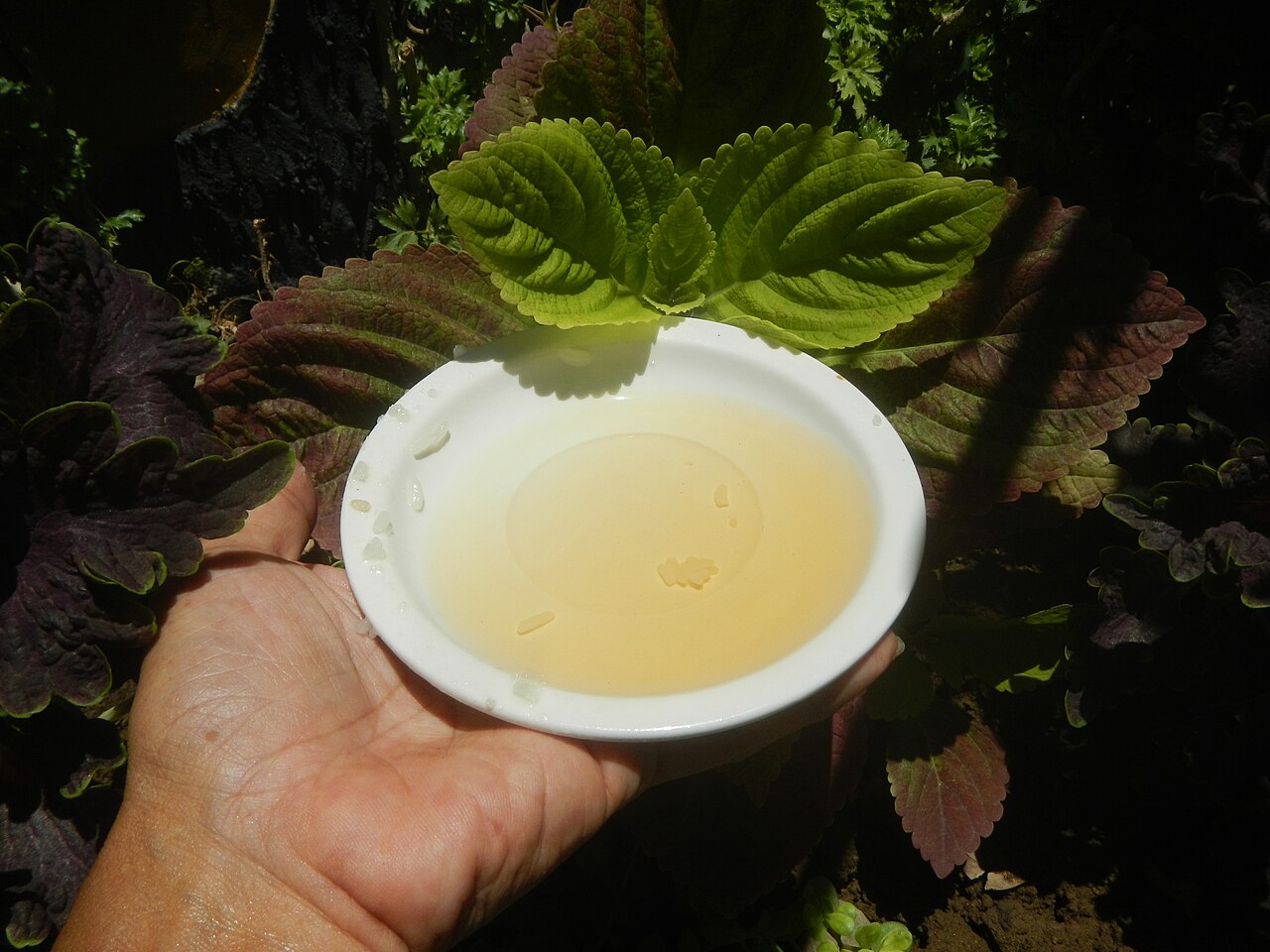
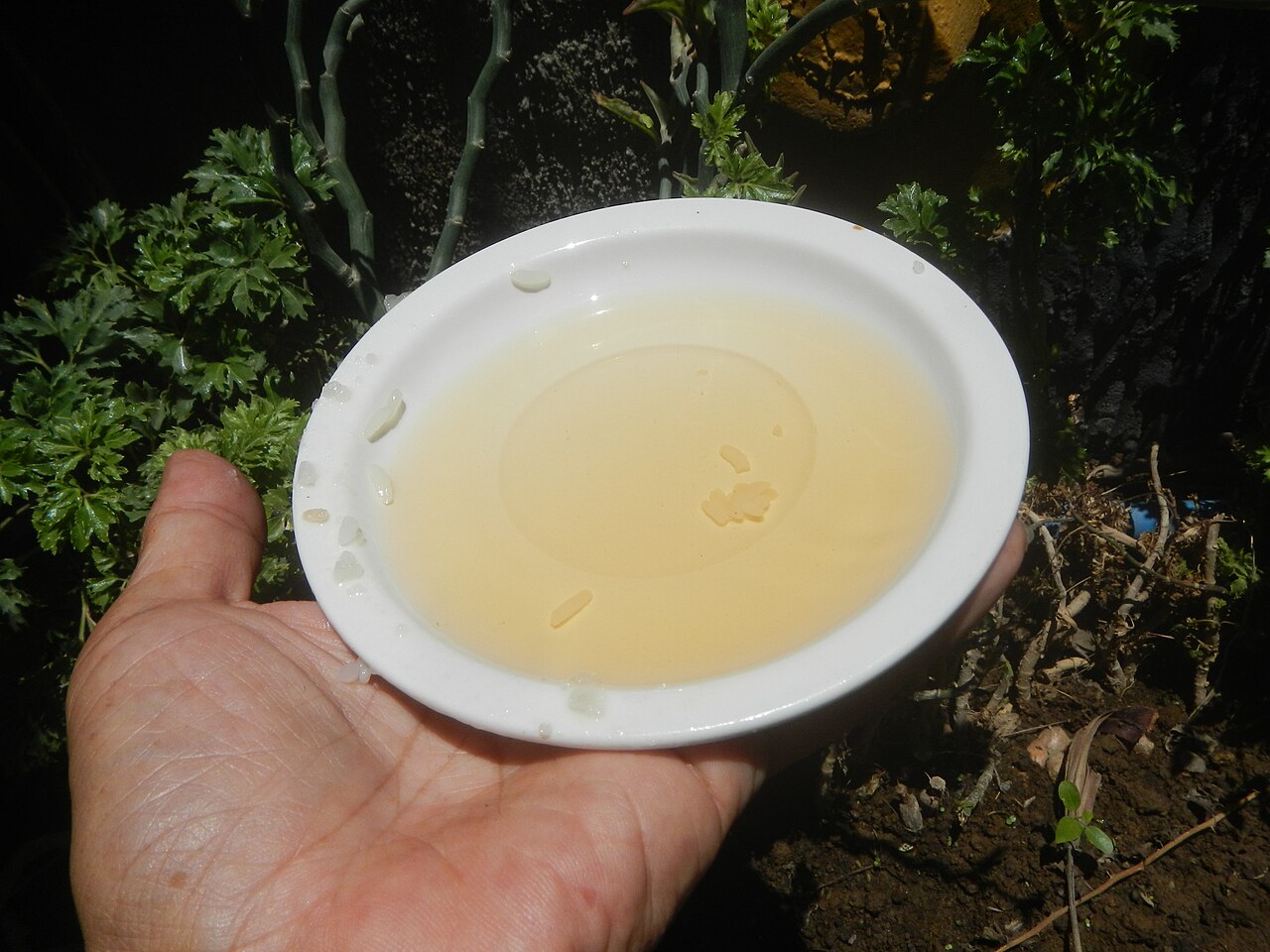
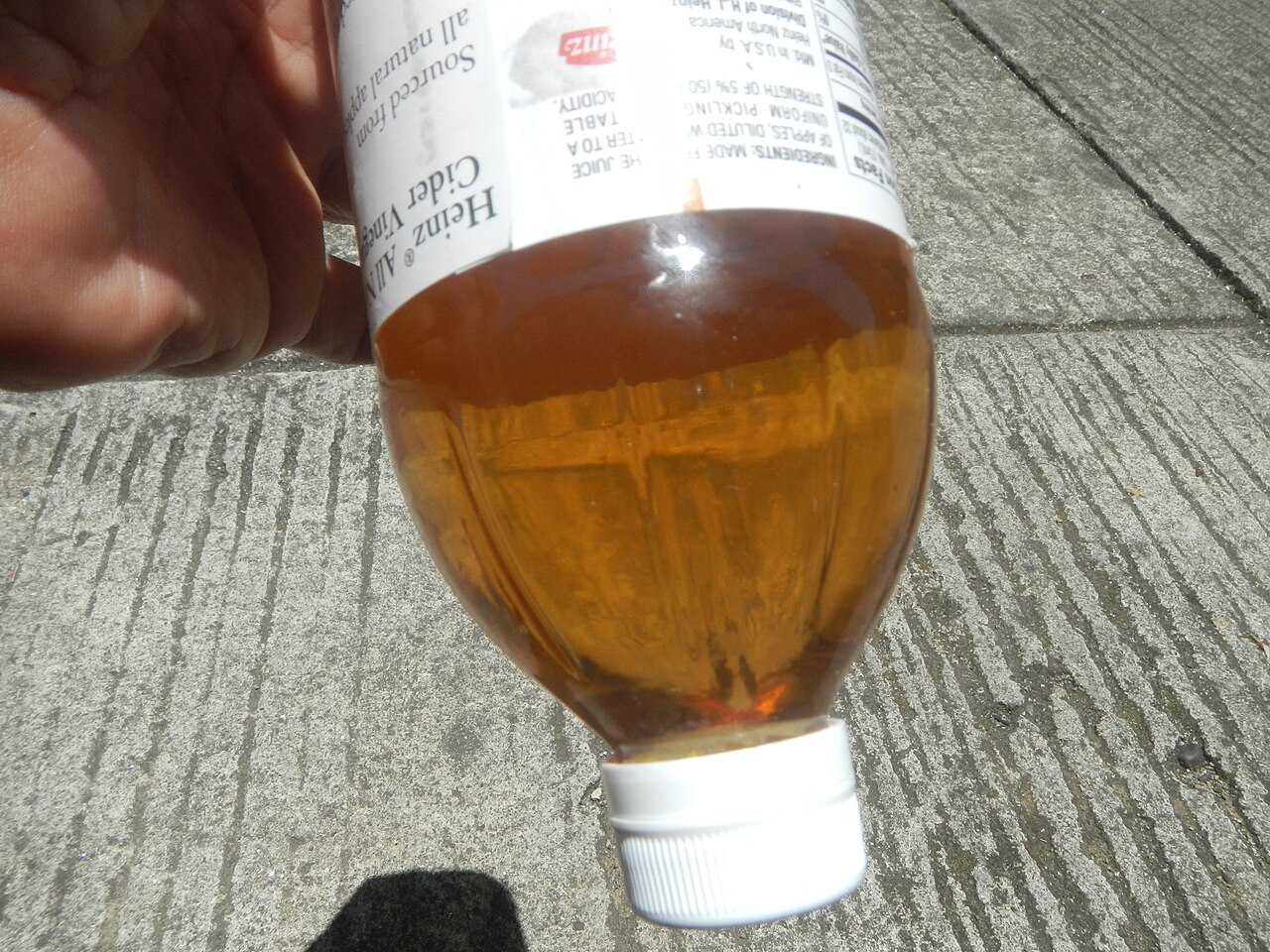
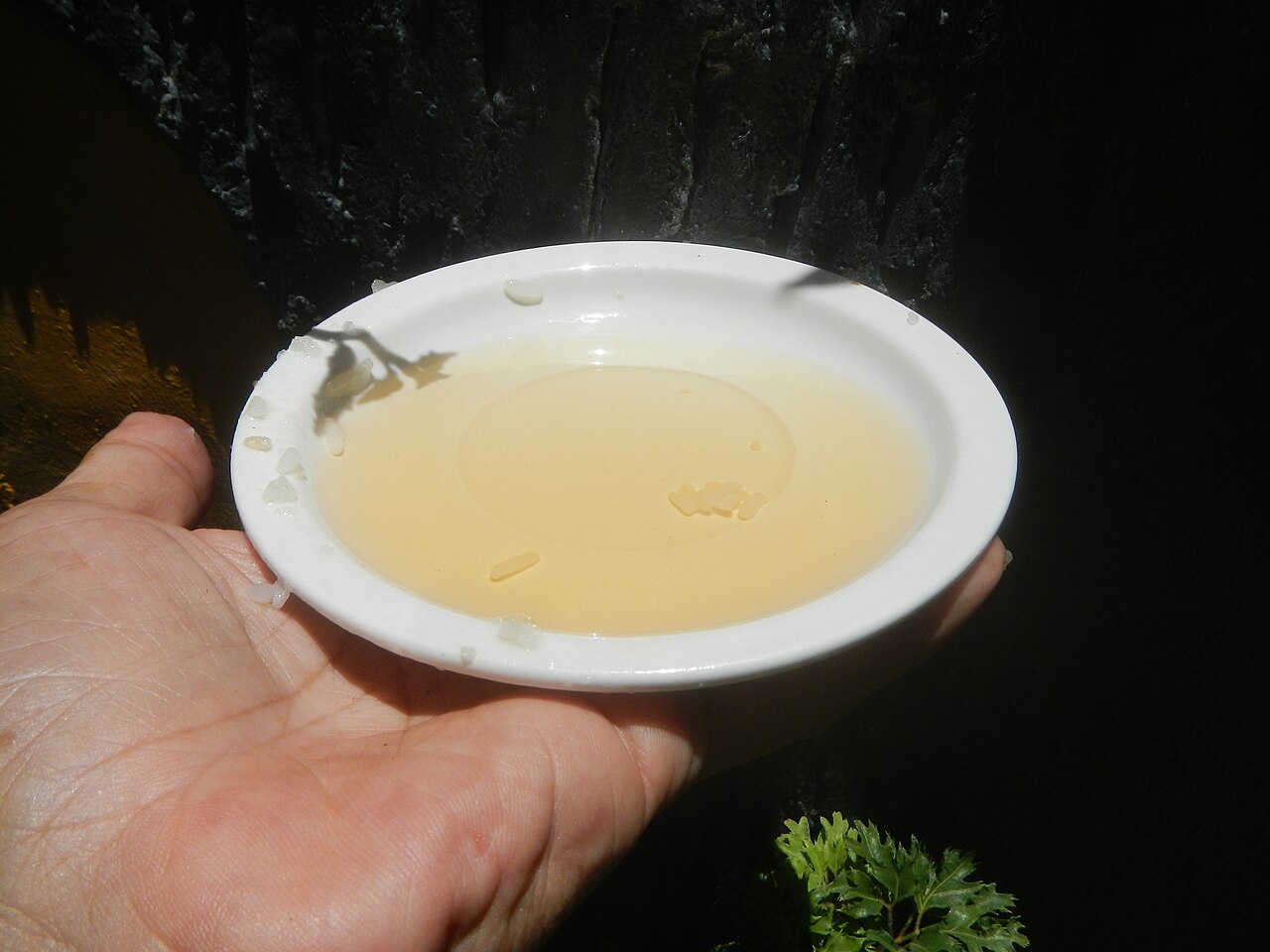
Apple cider vinegar, also called cider vinegar, is made from cider and commonly used in salad dressings, marinades, vinaigrettes, food preservatives, and chutneys. To produce it, apples are crushed and pressed to extract juice.
Yeast—either naturally present or added—ferments the juice, turning its sugars into ethanol. In a second fermentation step, acetic acid bacteria (from the Acetobacter genus) convert that ethanol into acetic acid. The sour taste comes from both this acetic acid and the malic acid already in the apple juice.
Health effects
There is no strong clinical evidence that regularly consuming apple cider vinegar helps with weight loss or maintenance, or that it effectively controls blood sugar or lipid levels.
History
Historically, vinegar was made from whatever foods were available. In the early 1800s, vinegars using fruits common in the North Atlantic region became popular. A cookbook from 1810 includes recipes for apple cider vinegar, gooseberry vinegar, and raisin vinegar.
Production
In production, apples are washed, crushed, and pressed to extract juice. Alcoholic fermentation, mainly by Saccharomyces cerevisiae yeast, converts the juice’s sugars into ethanol, creating apple cider. This cider is then inoculated with either a pure culture of acetic acid bacteria or some "mother vinegar"—a cellulose-rich biofilm of acetic bacteria that may remain in unfiltered vinegar. This starts a secondary fermentation that turns the ethanol into acetic acid.
Nutrition
Nutritionally, apple cider vinegar is about 94% water and 5% acetic acid, with 1% carbohydrates and no fat or protein. In a 100-gram serving, it provides 90 kilojoules of energy and negligible amounts of micronutrients.
Evidence for any health benefits—such as weight loss, blood sugar control, or treating skin infections—is weak. Major public health organizations and regulatory agencies do not recommend it for any medical therapy.
Moderate, diluted consumption of apple cider vinegar is generally safe, and side effects appear low when used as directed. Reported adverse effects include esophageal damage from swallowing tablets incompletely, tooth enamel erosion from consuming too much, and increased burping, flatulence, and bowel movements. Vinegar can also increase tooth sensitivity. Contact with eyes often causes irritation and redness, and corneal injury is possible.
Lore & Background
Vinegar has historically been made with whatever foods are available, and vinegars using fruits commonly available in the North Atlantic became popular in the early nineteenth century. One 1810 cookbook includes recipes for apple cider vinegar, gooseberry vinegar, and raisin vinegar.

The production process involves washing, crushing, and pressing apples to extract juice, then initiating alcoholic fermentation with autochthonous or inoculated yeasts, mainly Saccharomyces cerevisiae, converting sugars into ethanol and producing apple cider. The cider is then inoculated with either a pure culture of acetic acid bacteria or a proportion of 'mother vinegar', resulting in a secondary acetic fermentation that converts ethanol to acetic acid. The 'mother' is a cellulose-rich biofilm of acetic bacteria that may remain in unfiltered vinegar.
Ancient Origins & Global Reach
Cider's story stretches back further than most people realize. When Julius Caesar led his first invasion of Britain in 55 BCE, he encountered native Celts already fermenting crabapples into an alcoholic drink. That discovery traveled back across the English Channel with his retreating soldiers, seeding the beverage's spread through continental Europe.
Over the centuries, cider became deeply embedded in the cultures of Western Europe, particularly in Britain's West Country and Ireland, where together they still hold the world's highest per capita consumption and house the industry's largest producers. The drink's popularity radiated outward through the Anglosphere, finding devoted audiences in India, South Africa, Canada, Australia, New Zealand, Hong Kong, and across the United States, especially New England and the Midwest. Beyond the English-speaking world, France (notably Normandy and Brittany), Portugal's Minho and Madeira regions, northern Italy's Friuli, and northern Spain's Asturias and Basque Country all maintain vibrant cider traditions, each shaped by local apple varieties and fermentation customs.

Etymology & Linguistic Journey
The word we now use to describe this fermented apple drink has traveled an extraordinary linguistic path. In Old English, the beverage was simply called æppelwīn, meaning apple wine. The term cider first surfaced in Middle English during the 13th century in biblical contexts as sicer or ciser, referring broadly to strong drink. By the 14th century, it had narrowed to specifically mean a beverage made from apple juice.
The borrowing likely came from Old French sizre, a term for fermented beverages, which the Norman chronicler Wace used as early as 1130 to 1140 to describe an apple-specific drink. Tracing further back, the Old French form derives from Gallo-Romance cisera, found in Medieval Latin texts, which itself was an altered version of Church Latin sicera. That Latin word was borrowed from Greek sīkéra, ultimately rooted in Hebrew šēkār, meaning intoxicating liquor. The word spread into Spanish and Portuguese as sidra and sidro, into German as Zider, and into Breton and Welsh as chistr and seidr, demonstrating just how deeply this single beverage is woven into the linguistic fabric of Europe.
Production Styles & Regional Character
Cider's character is shaped by a remarkable interplay of apple variety, fermentation method, and local tradition. In England, the West Country produces ciders that are generally higher in alcohol, often using bittersweet and bittersharp heritage apples in open fermentation vats to create a drier, stronger result. France, by contrast, developed a sweeter, lower-alcohol cidre, leveraging sweeter apple varieties and the keeving process. The alcohol content across traditional English ciders ranges from 1.2% to 8.5% ABV or higher, while continental ciders span 2.5% to 12%.
Historically, producers worked with whatever apples were locally available, and techniques evolved through trial and error, influenced by spontaneous fermentation, vessel type, and environmental conditions. The market today divides into standard ciders made from culinary apples like Gala, and speciality ciders crafted from heritage, crab, or wild varieties such as Golden Russet. Germany's Rhineland-Palatinate and Hesse regions contribute their own tart Apfelwein, while perry, made from fermented pear juice, sits as cider's closest relative.
Modern Identity, Law & Classification
Defining what counts as real cider has become a matter of both law and cultural debate. UK legislation requires the drink to contain at least 35% apple juice, whether fresh or from concentrate, while the Campaign for Real Ale insists that genuine cider must be at least 90% fresh apple juice. The United States sets a 50% minimum, and Canada mandates that cider fall between 2.5% and 13% ABV. In France, the rules are strictest: cider must be made solely from apples.
In North America, the term hard cider distinguishes the alcoholic product from non-alcoholic sweet cider sold at cider mills. Appearance and flavor vary enormously, with ciders ranging from nearly colorless to amber to brown, from cloudy with sediment to perfectly clear, and sparkling varieties being more common than still. Mass-produced modern ciders closely mimic sparkling wine in look, while traditional brands tend to be darker, cloudier, stronger, and more intensely apple-forward. White ciders, nearly colorless and typically 7 to 8% ABV, require careful blending of multiple apple varieties to achieve their clarity.
Reader's Guide
Apple cider vinegar is notable primarily as a culinary ingredient, used in dressings, marinades, vinaigrettes, preservatives, and chutneys. Its production relies on two sequential fermentations: alcoholic fermentation by yeast, then acetic fermentation by Acetobacter species. Despite widespread popular claims, there is no high-quality clinical evidence that regular consumption helps maintain or lose body weight, or effectively manages blood glucose and lipid levels.
Major public health organizations and regulatory agencies do not recommend its use for any therapy. Moderate consumption is safe, especially when diluted, but adverse effects can include esophageal damage from tablets, tooth enamel erosion from excessive intake, and increased burping, flatulence, and bowel movements. Topical use may cause burns, and contact with eyes can cause irritation or corneal injury.
It should not be mixed with chlorine bleach, as this may release chlorine gas. People with apple allergies may experience allergic reactions, and it may interact with prescription drugs such as insulin or diuretics. Different commercial brands have inconsistent acid levels, and some have been contaminated by molds and yeast.
Frequently Asked Questions
Why does apple cider vinegar taste so sharp?
The tangy bite comes from two acids working together: the acetic acid generated during the second fermentation and the malic acid that was already present in the original apple juice.
What do people commonly use apple cider vinegar for in cooking?
It is a staple in salad dressings, vinaigrettes, and marinades, and it also appears in chutneys and as a food preservative. Its acidity makes it a versatile seasoning and flavoring agent across many dishes.
More in Cider
Elsewhere in Cider and Mead
Sources
Compiled from Wikipedia and the sources listed below. Text from Wikipedia is available under CC BY-SA 4.0; this entry is adapted from it.
- Wikipedia: Apple cider vinegar (CC BY-SA 4.0).
- Word definitions: the Codexery glossary, each quoted from its Wikipedia article.
Spotted an error? Know more?
Reader corrections go straight into our review queue. Suggest an edit · How this site is sourced